

Note: If you're reading this in your inbox, be sure to check out the full post online — it includes great videos you won’t see in the email version!
Shelf Meets Silver Screen Series
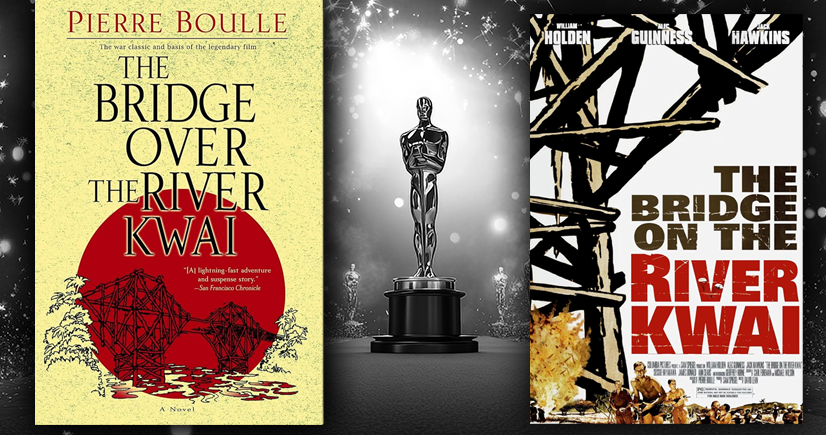
Book Awards:
- 🥇 Prix Sainte-Beuve 1952
- 🥇BAFTA Award Winner Best Adapted Screenplay 1957
Oscar Awards:
- 19579 Nominated for 8 Academy Awards
- Won:
🏆 Best Picture
🏆 Best Director: David Lean
🏆 Best Actor: Alec Guinness
🏆 Best Adapted Screenplay: Pierre Boulle, Carl Foreman, and Michael Wilson
🏆 Best Cinematography: Jack Hildyard
🏆 Best Film Editing: Peter Taylor
🏆 Best Original Score: Malcolm Arnold
From a slim French war novel to a seven‑Oscar epic, The Bridge on the River Kwai is one of those rare cases where both book and film crashed the culture and stayed there. It’s also a fascinating study in how a psychologically intense, quietly bitter novel became a sweeping movie that older viewers still quote, hum, and argue with.
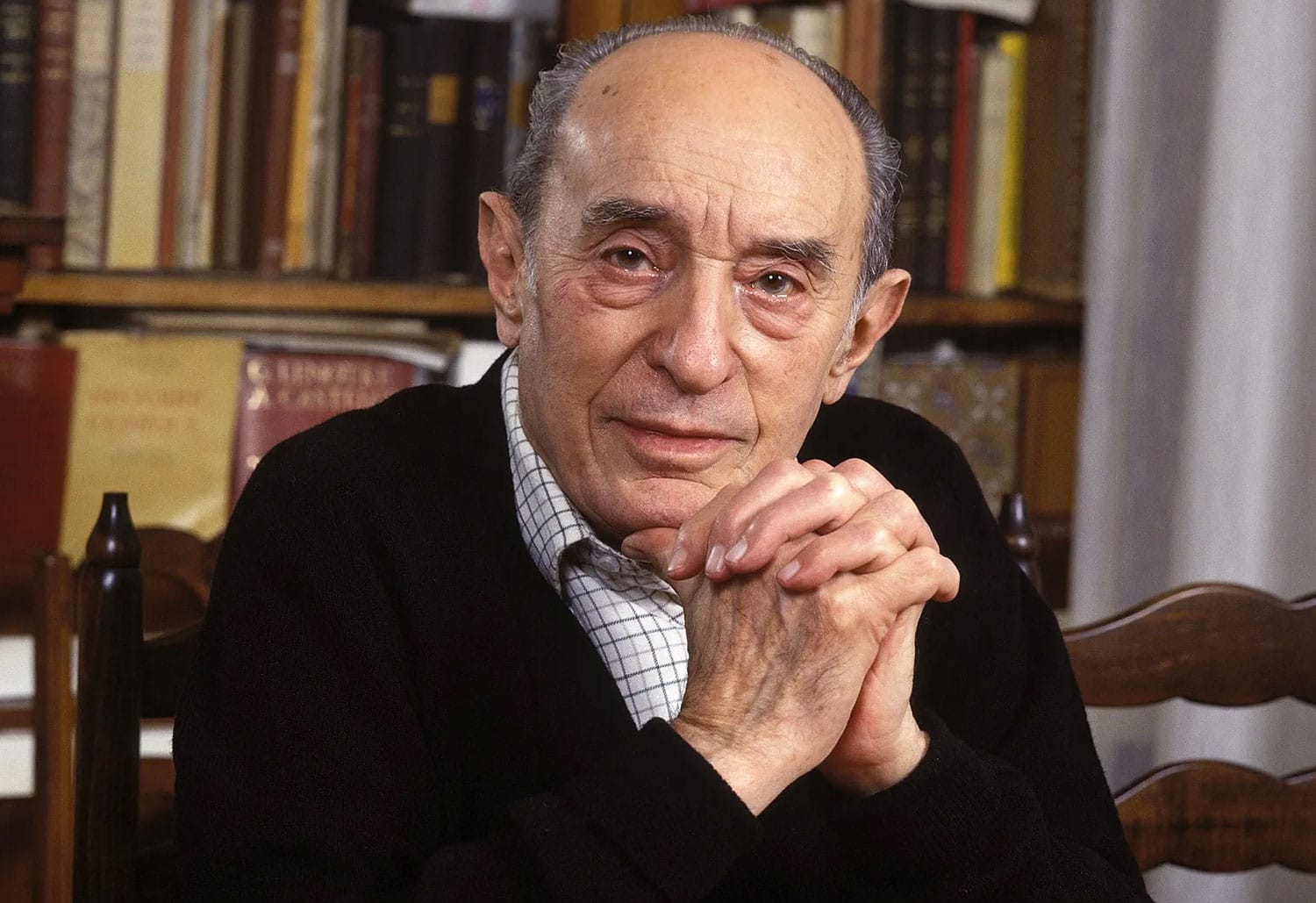
The book: a cool, ruthless little classic
Pierre Boulle published The Bridge Over the River Kwai in French in 1952; it arrived in English in 1954, just a decade after the real Burma Railway was built with Allied POW labor. Drawing on his own World War II experience in Southeast Asia, he used a single bridge project to probe duty, pride, and the absurdity of war rather than to document literal history.
Critics at the time praised the novel’s “cool, deliberate” tone and its portrait of Colonel Nicholson, a British officer whose overdeveloped sense of duty slowly curdles into something ruinous. Instead of explosions, Boulle gives us procedure, discipline, and psychological pressure—perfect for readers who like their war stories brisk, ironic, and more talk than gunfire.
Hollywood circles the bridge
A tightly focused, high‑concept war story— POWs forced to build a bridge for the enemy—was catnip to postwar filmmakers. Producer Sam Spiegel bought the rights, hired screenwriters Carl Foreman and Michael Wilson, and brought in David Lean, who would become famous for large‑scale epics like Lawrence of Arabia, to direct.
The 1957 film kept Boulle’s basic spine: British prisoners under Colonel Nicholson, a brutal Japanese commandant (Saito), and the bridge over the River Kwai on the Burma Railway. But Lean and his team immediately started reshaping things to work on screen—widening the cast, punching up action, and bending the ending toward something audiences would feel in their bones.
Page to screen: what changed (and why it worked)
Adaptations always reveal what each medium values, and Kwai is a textbook example. For those of us in the “Readers with Wrinkles” demographic, it’s also a fun “spot the difference” exercise:
For book‑first readers, the novel’s ending—where Nicholson never fully realizes the consequences of his pride and the bridge stands—can feel colder but thematically sharper. The film chooses emotional payoff: the bridge collapses, the mission “succeeds,” and war’s madness is summed up in that shocked “What have I done?” and the doctor’s closing “Madness!”
Bridge Building, Reality Check
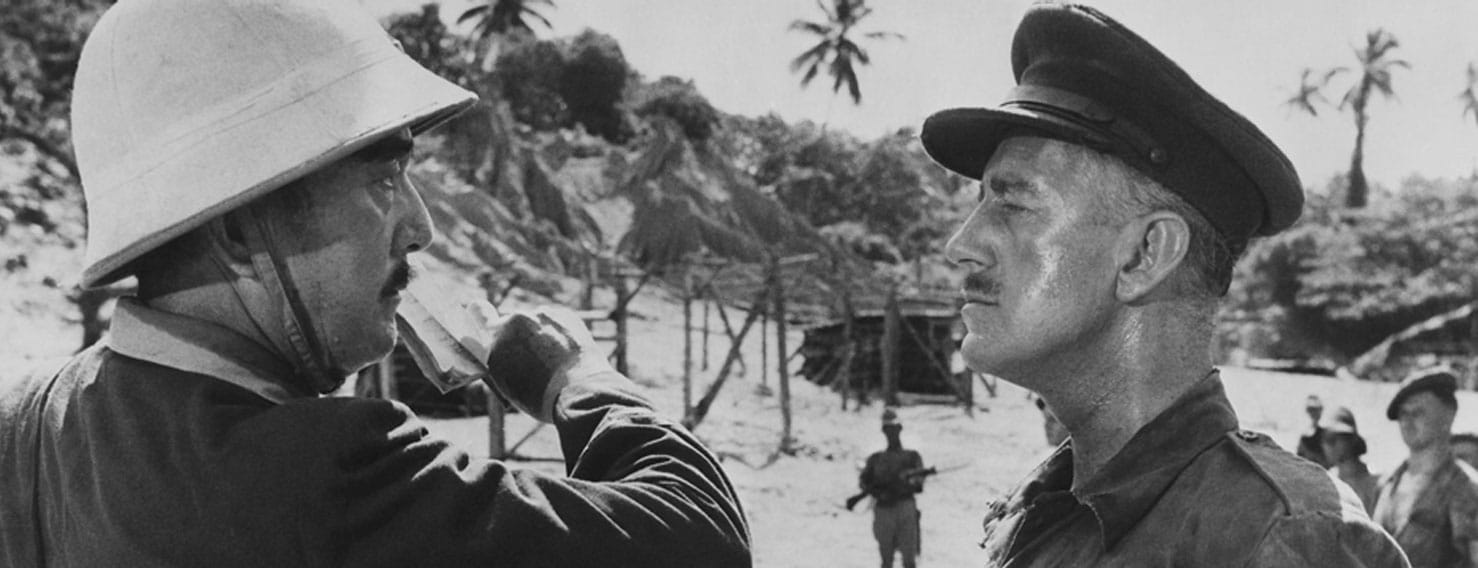
The Bridge on the River Kwai was an unusually arduous production, shaped by its remote locations, technical ambition, and a director obsessed with realism. David Lean and his team chose to shoot in Ceylon (now Sri Lanka), far from studio comforts, which meant building much of the film’s world from scratch rather than relying on soundstages or miniatures. The prison camp was created in an abandoned stone quarry, while the bridge site itself lay miles away in jungle terrain, requiring heavy equipment, generators, and cameras to be hauled over rough roads every day.
The heat was punishing: extras and crew suffered sunstroke, and Lean frequently pushed actors to endure uncomfortable conditions, even insisting that Alec Guinness’s “hotbox” actually be heated so the shimmering air would read authentically on camera.
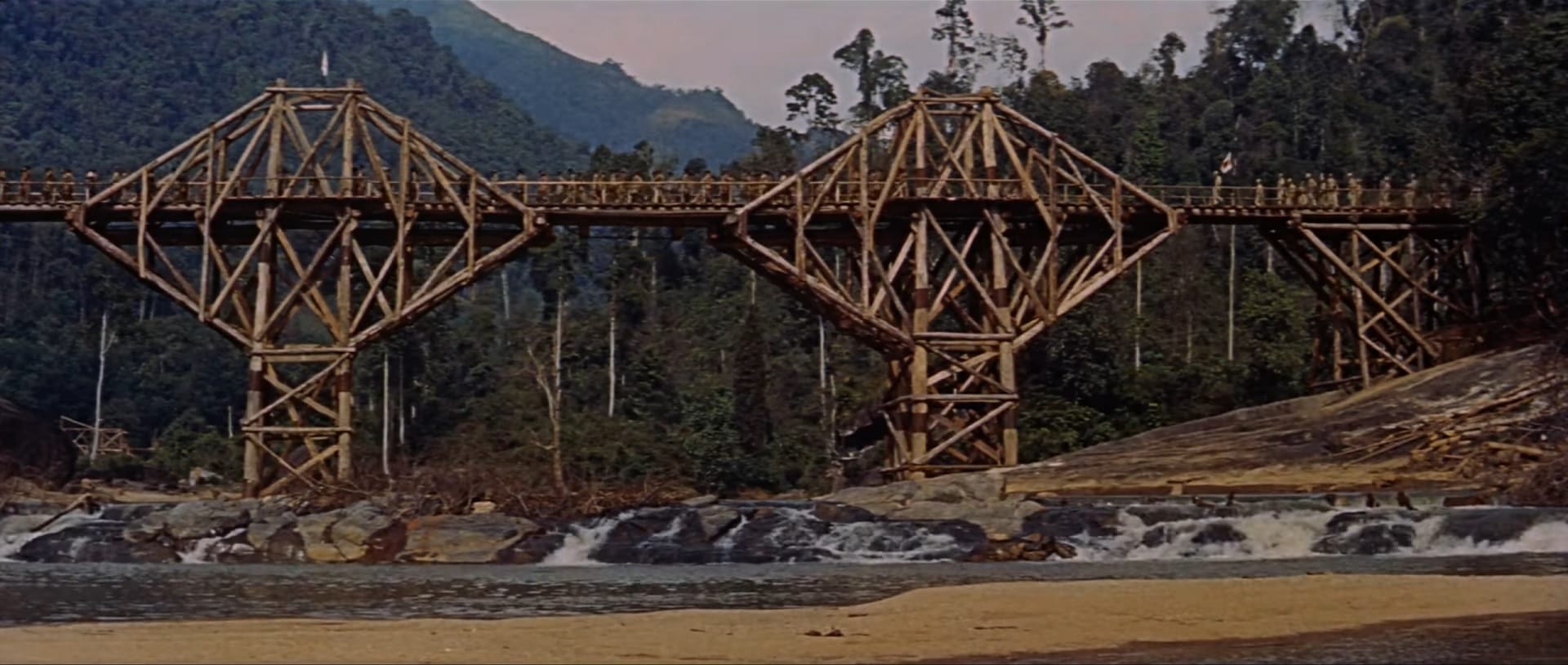
The most famous element of the shoot was the bridge itself, effectively treated as a full-scale engineering project rather than a movie prop. Lean and production designer Donald Ashton arrived months ahead of the main unit to oversee construction of a wooden bridge 425 feet long and 90 feet high over the Kelani River, using local labor, nearby timber, and even elephants to help drag and position the massive logs. Contemporary publicity trumpeted a quarter‑million‑dollar price tag, but Ashton later noted that clever use of local resources kept the real cost much lower, around fifty thousand dollars, despite requiring roughly eight months of work and the involvement of hundreds of workers and engineers. The Sri Lankan (Ceylonese) government contributed soldiers as extras and labor, further embedding the production in its local context.
All that effort led to perhaps the most nerve‑wracking challenge: blowing the bridge up. Because the bridge and train were real, the crew effectively had only one usable chance to film the climactic destruction, so Lean positioned multiple cameras and devised a system of signal lights to confirm every camera was rolling and that the train driver had safely jumped clear before detonation.
Heavy rain complicated matters by raising the river level more than eight feet, forcing an eleven‑day delay while they waited for conditions to match their carefully planned setup. On the first attempt, the train charged across the bridge but the explosion never came: one cameraman simply forgot to switch on his confirmation light, and Lean aborted the detonation at the last moment, leaving the locomotive to derail into the truck powering the lights instead of plunging into the river. Only on a second attempt did everything work—cameras rolling, driver clear, charges timed correctly—yielding the sequence that became one of the most iconic and expensive practical stunts of its era.
Behind the camera there were also creative and cultural tensions that colored the filmmaking process. The production mixed British and American talent and money, and accounts describe recurring friction, with some British crew resenting what they saw as American interference, while American executives considered the British methods slow and overly fastidious.
Lean’s perfectionism, such as traveling long distances to capture a single sunset or insisting on complex compositions packed with extras, further stretched the schedule but also contributed to the film’s enduring visual power. The result of these logistical gambles, physical hardships, and artistic clashes was a war film whose sense of place and danger comes directly from the fact that, for the cast and crew, the bridge on the River Kwai had to be built—and destroyed—for real.
Oscar night and afterlives
Whatever Boulle thought about the altered climax (he reportedly disliked the bridge’s destruction but still enjoyed the film overall), audiences flocked to Lean’s version. Released in 1957, it became the highest‑grossing film of the year and quickly settled into “instant classic” status.
At the 30th Academy Awards, The Bridge on the River Kwai won seven Oscars, including Best Picture, Best Director for David Lean, Best Actor for Alec Guinness, Best Cinematography, Best Editing, Best Original Score, and Best Adapted Screenplay. It also picked up multiple BAFTA and Golden Globe awards, cementing its reputation as one of the standout films of the 1950s.
Is it worth reading and watching now?
OMG, YES! For Readers with Wrinkles folks who remember whistling that marching tune—or who have only seen it parodied—the pleasure now is in the double exposure. I've been humming and marching around the house to it all last week. I'm not so good at whistling, so my husband has authentically filled in the gaps. Read Boulle’s lean, psychologically charged novel and you get a brisk meditation on pride and duty; watch the film and you see those ideas inflated into a grand, visually lush spectacle that still grapples with the madness of war, just in broader strokes. I love this movie.
If you like:
- Tight war fiction with a moral sting, start with the book.
- Character‑driven epics, gorgeous location shooting, and old‑school star power, start with the movie.
Either way, the real fun—very on‑brand for us—is in comparing them over coffee, arguing about whether Nicholson is tragic or infuriating, and deciding which ending lingers longer in your mind once you close the book or turn off the screen.
Overall, I encourage you to spend some time with both the book and the movie. You'll thank me.
You should absolutely read (or reread) The Bridge on the River Kwai because it’s one of those rare book–movie pairs where both are brilliant, and together they get under your skin in the best possible way. Here are some conversation‑ready reasons to read this book:
The book and the movie are having two different conversations
The novel leans into psychology and moral ambiguity, while the film adds high-stakes tension and that unforgettable commando raid and explosion. Reading Boulle and then watching the movie feels like getting both the interior monologue and the cinematic highlight reel of the same obsession.
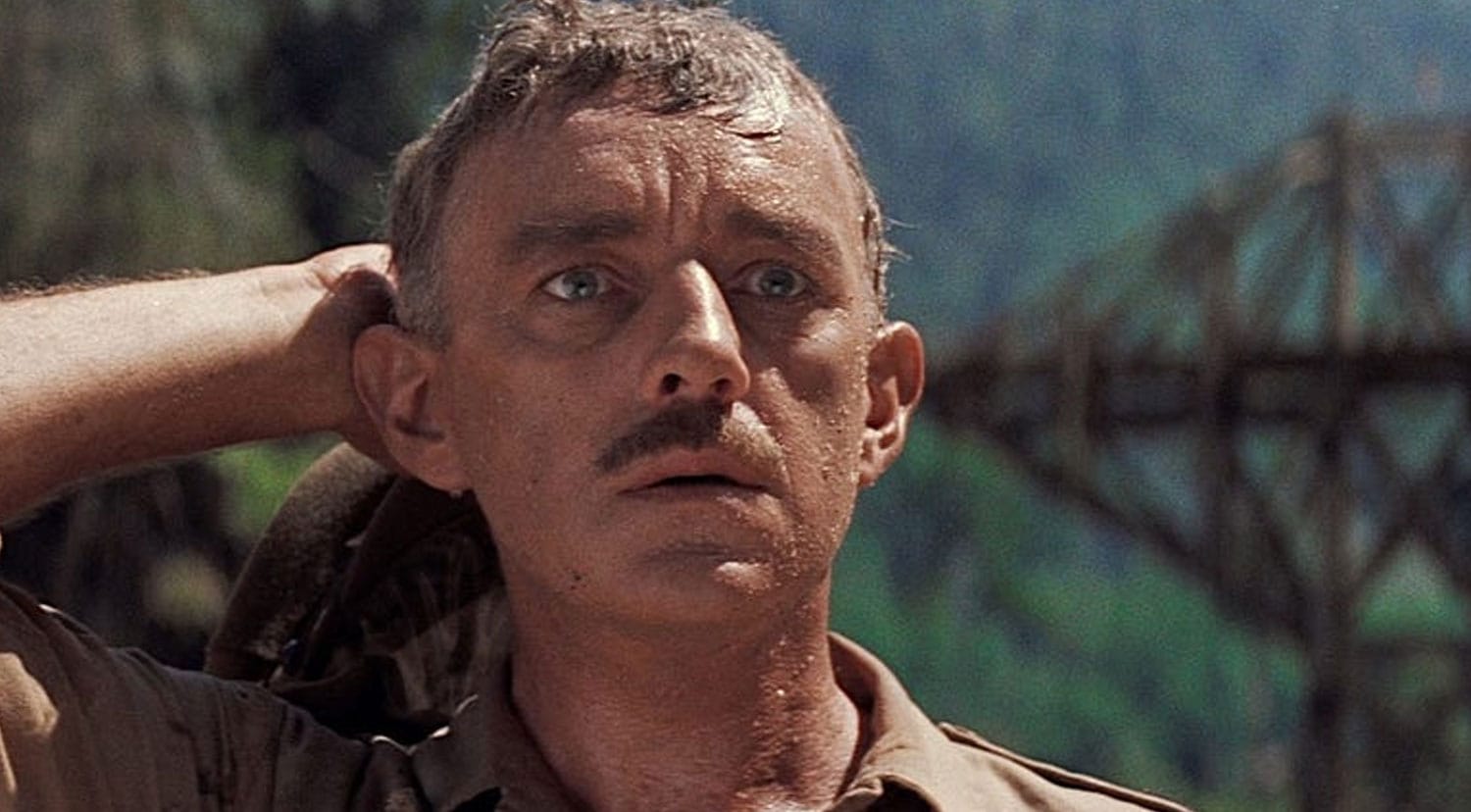
Colonel Nicholson is a masterclass in “what have I done?”
On the page, Nicholson’s rigid sense of duty morphs into an obsession with building the “perfect” bridge, even though he knows it aids the enemy. The film makes that inner blindness visible, culminating in his horrified recognition of the consequences of his pride.
The bridge itself is one of the great literary symbols
The bridge is simultaneously a feat of engineering, a weapon, and a monument to human folly. It’s “progress” that will literally help move troops and supplies, yet it also becomes the perfect target and the stage for the story’s cruel irony.
It scratches that “war novel, but make it philosophical” itch
Instead of just battles, you get clashes of culture, ego, and ethics: British POWs, Japanese officers, and Allied commandos all navigating their own codes of honor. If your liked All the Light We Cannot See or The Things They Carried, this gives similar moral complexity in a more compact, old‑school package.
The historical angle is grim, but the storytelling is razor sharp
The novel is set along the real “Death Railway,” where huge numbers of POWs and forced laborers died building a Japanese supply line during World War II. Boulle filters that reality into tight, tense scenes instead of sprawling history-lesson chapters, which makes it highly readable for a modern audience.
The ending hits differently on reread
Once you know how the bridge, the train, and Nicholson’s choices collide, going back through the story becomes a slow-motion character study in self-delusion. You start catching every little moment where someone could have stepped back, asked a question, and changed everything.
It’s surprisingly short for how much it gives you
For a book that’s been labeled “one of the finest war novels ever written,” it’s relatively lean, tightly plotted, and not a doorstop. That’s ideal for Readers with Wrinkles followers who want something substantial but don’t necessarily want to move in with a 700-page tome this month.
You get to watch a French author write British, Japanese, and American characters—and then see Hollywood answer back
Pierre Boulle (yes, also the author of Planet of the Apes) gives us this very French, ironic take on British and Japanese codes of honor. Then the film adapts it into a very cinematic, very mid‑century Anglo-American war epic, and putting those visions side by side is half the fun.
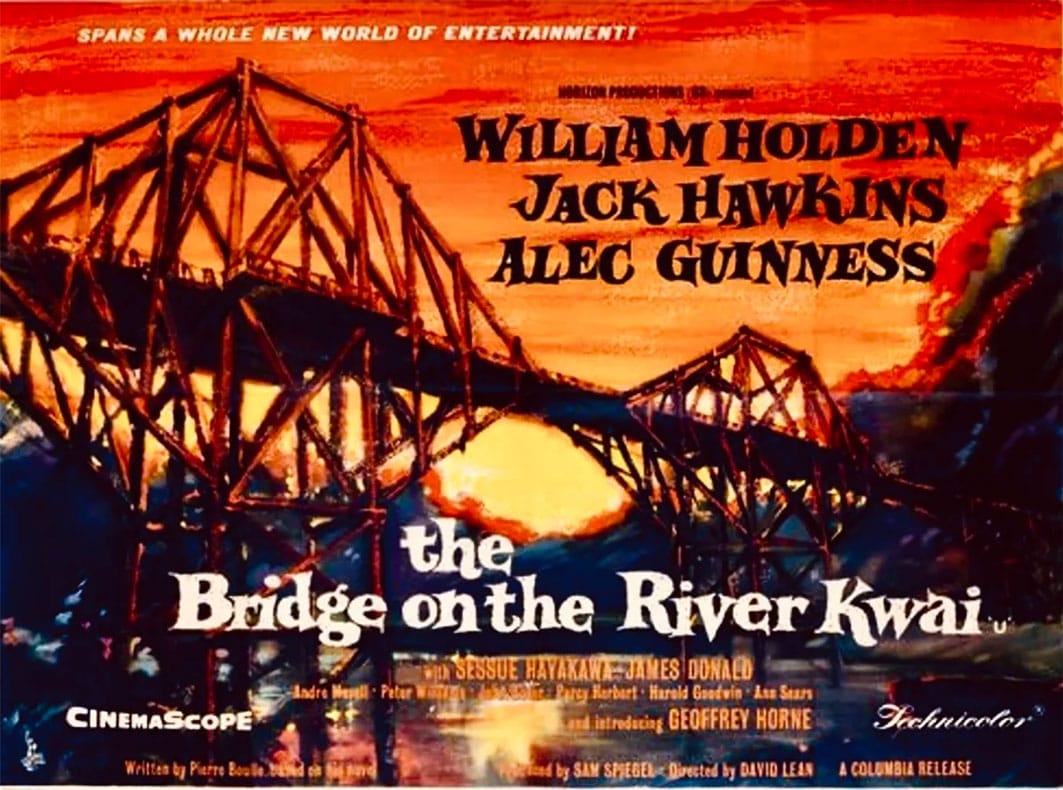
You should absolutely watch (or rewatch) The Bridge on the River Kwai, because it’s one of those rare “canon” movies that actually earns every minute of your time.
It’s a towering piece of film history
This is one of the great war epics of the 1950s, and it basically set the template for every “serious” war film that came after. It won seven Oscars, including Best Picture, Best Director, and Best Actor for Alec Guinness, and it’s preserved in the U.S. National Film Registry—this is the kind of movie cinephiles and critics quietly assume you’ve seen.
The central moral dilemma is brutal (in a good way)
The film lives inside one big haunting question: what happens when “duty” and “honor” drag you toward the wrong side of history. Watching Nicholson pour his soul into building the perfect bridge for the enemy, and then collide with the Allied mission to destroy it, is the kind of slow-burn ethical train wreck that sticks with you for years.
The climax is still gasp‑worthy
Even if you know the bridge is going to blow, that final sequence is almost unbearably tense. Between the exposed detonation wire, Nicholson’s late flicker of self-awareness, and that chaotic, “What have I done?” stumble toward the plunger, it’s the rare classic whose ending still feels genuinely shocking and emotionally raw.
The “Madness! Madness!” moment nails the whole movie
The last line—“Madness! Madness!”—isn’t just famous; it’s the film’s thesis boiled down to two words. After watching all these men cling to pride, protocol, and nationalism while people literally die around them, that horrified recognition hits like a gut punch and re-colors everything you just saw.
The craft is jaw‑dropping, even if you’re not a “war movie” person
David Lean’s direction, the jungle landscapes, the bridge itself—it all has that big, sweeping, old-Hollywood grandeur, but with real psychological weight. The film picked up Oscars for cinematography, editing, and score for a reason; it’s the kind of meticulous visual storytelling that makes 2 hours and 41 minutes feel earned, not indulgent.
It’s an Alec Guinness performance you need to see
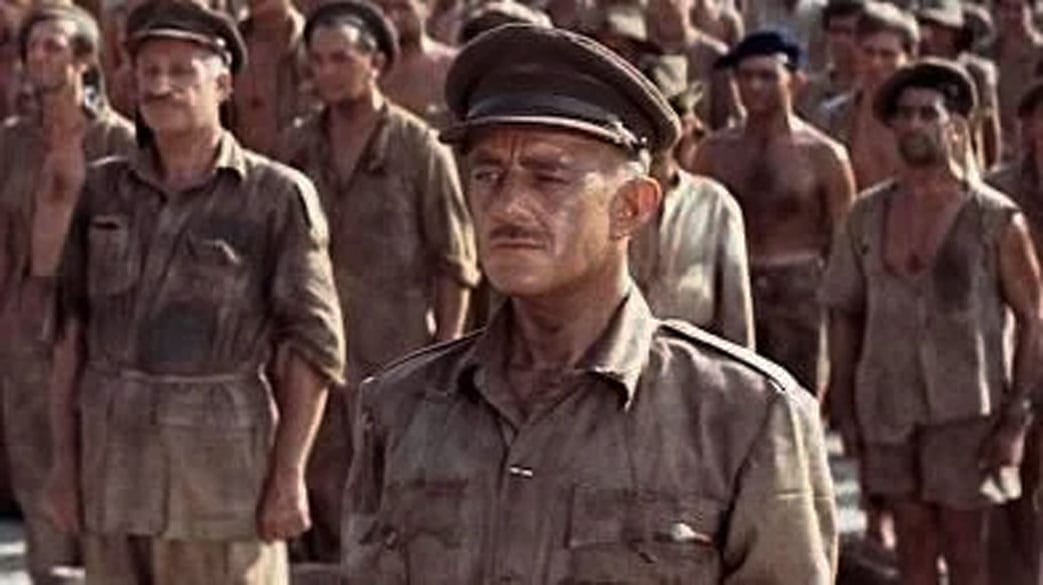
If you mostly know Guinness as Obi-Wan, this is a revelation. He builds Nicholson from stiff, almost comic rigidity into genuine tragedy, and you can literally watch his sense of self warp around the bridge until that final moment of horrified clarity.
The 98th Academy Awards (2026 Oscars) will air live on Sunday, March 15, 2026, at 7 p.m. ET (4 p.m. PT). The ceremony will be broadcast from the Dolby Theatre in Hollywood on ABC and available to stream on Hulu. Comedian Conan O'Brien is set to host the event.
Comments