

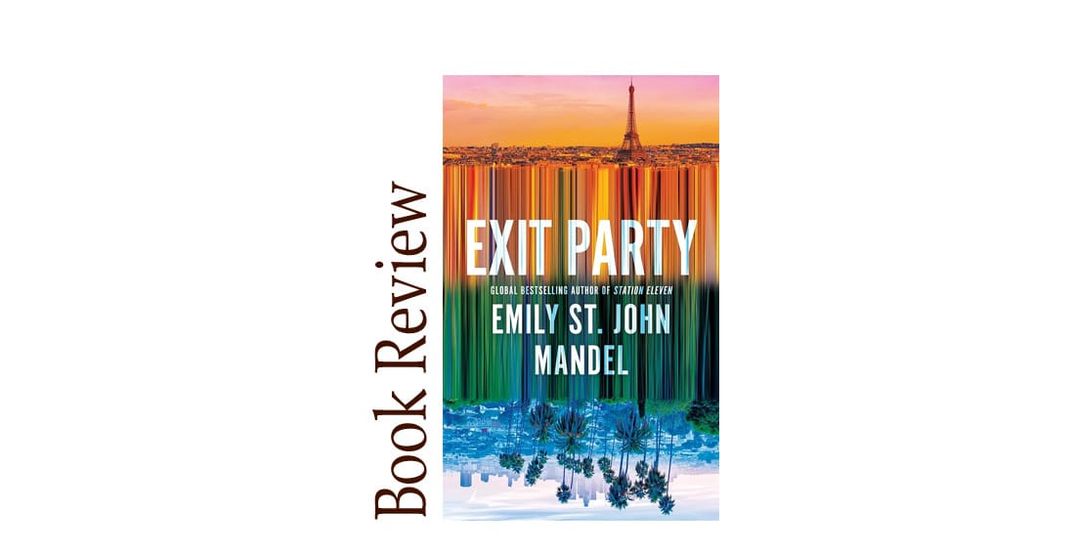
- Date Published:
September 15, 2026 - Length:
320 pages—Listening Time: 12 hours 29 minutes - Genre:
Science Fiction, Dystopian, Mystery - Setting:
2031 and years after; Los Angeles (Republic of California), Paris, Greece - Awards
Golden Poppy Book Award Shortlist Fiction 2026
(too early for many awards and distinctions) - Languages:
English - Sensitive Aspects:
Civil war and societal collapse, authoritarian government and mass surveillance, political repression and arrests of pro-democracy dissidents, militia and revolutionary violence, attempted murder and criminal history, imprisonment, weapons dealing and gunrunning, shantytowns and displacement, poverty and black-market survival, sexual content including a brief casual encounter, alcohol intoxication, disappearances and reality-distortion/parallel-world themes, dystopian anxiety, loss and grief, and implied abuse - Movie
The upcoming screen adaptation of Exit Party is being developed as a live-action television series, rather than a feature film. After a highly competitive bidding war, Laika Studios acquired the rights to the novel to serve as their first-ever live-action television project. - Recommended for Book Club:
Yes

I’ll be the first to admit it: I’m still something of a rookie when it comes to science fiction and dystopian novels. Give me a complicated timeline, a crumbling society, or a parallel universe, and there’s a decent chance I’ll be clutching the book with one hand and Googling terms with the other. But Emily St. John Mandel is one of those writers I’ll follow almost anywhere—even into the literary equivalent of a foggy corridor marked Proceed at Your Own Risk.
I loved her novel, Station Eleven. Loved it. Its beauty, its quiet devastation, its belief that art and human connection matter even when everything else has gone sideways. So when I picked up Exit Party, a novel set largely in 2031 after the United States has collapsed, it had my full attention from the start. Honestly, it didn’t take much convincing. A fractured country, an uncertain future, characters trying to make sense of a world that no longer resembles the one they knew? That premise practically tapped me on the shoulder and said, “You’re reading this next.”
And read it I did—sometimes with awe, sometimes with confusion, and sometimes with the distinct feeling that my brain needed a snack and a nap.
The alternate, parallel-universe element threw me at first. I won’t pretend otherwise. The opening requires patience, especially as the novel begins moving among replicated lives, altered outcomes, and versions of people who are both familiar and not quite the same. The doppelgänger concept is deeply intriguing, though. Who hasn’t wondered what might happen if they met the version of themselves who made one different choice at exactly the right—or wrong—moment? Would you recognize them? Would you like them? Would you ask them where they got the audacity to make the better decision?
Still, I kept waiting for the two sides of these replicated characters to meet face-to-face and somehow fix everything. I wanted a reckoning. A cosmic group therapy session. A big, messy conversation where everyone could compare notes and figure out how to put the pieces back together. But Mandel is much more interested in uncertainty than easy answers, and that may be precisely why this book will not be for everyone.
What struck me most was how exhausted everyone seemed. Not sleepy-exhausted. Soul-tired. World-weary. The kind of tiredness that settles behind your eyes after too many years of bad news, impossible choices, and trying to function while everything around you feels increasingly unstable. Sound familiar? In that sense, Exit Party feels less like far-off speculative fiction and more like a reflection of the emotional consensus many of us are carrying around right now: it is tiring to be alive in a world that keeps asking us to adapt.
And yet, beneath all that fatigue, this novel asks an achingly human question: if you could escape into another reality, would you? Most of us have imagined taking a swan dive into something else—a different life, a different country, a different version of ourselves where the news is better and the laundry is somehow already folded. But Mandel reminds us that there is no perfect world. No perfect existence. Every reality has its fractures, its losses, its people doing their best with what they have.
Except, perhaps, in art.

Exit Party drops readers into a near-future America that has already come undone. It’s 2031, the United States has collapsed, and the familiar rules of work, travel, safety, and even identity no longer feel particularly reliable. In the middle of that uncertainty, Emily St. John Mandel follows a group of people whose lives are connected by art, ambition, survival, and a strange disruption that opens the door to something far bigger than one broken country.
At the heart of the novel is the unsettling possibility of alternate realities: parallel versions of the same world, with familiar people living lives that have shifted in subtle—and sometimes startling—ways. As the characters move through a landscape shaped by instability and loss, they must confront the uncomfortable question at the center of every great speculative story: if another version of your life existed somewhere else, would it really be better?
This isn’t science fiction built around flashy gadgets, alien invasions, or pages of technical explanations. Instead, Mandel uses a fractured future and a doppelgänger-infused premise to explore the things that haunt us in any era: regret, longing, love, creative purpose, and the choices that quietly redirect a life. The speculative elements give the novel its eerie momentum, but the emotional stakes are what make it linger.
Readers who enjoy literary science fiction, parallel-universe stories, dystopian settings, and character-driven speculative fiction will find plenty to sink into here. Think less “everything explodes on page one” and more “what happens to ordinary people when reality itself starts feeling unreliable?” It’s a moody, intelligent novel with an imaginative premise—and it invites you to consider whether escape is ever as simple as stepping into another world.

You don’t have to be a science-fiction reader to appreciate Exit Party. Its strange premise is really a doorway into a deeply human story about exhaustion, identity, art, and the temptation to believe another life might finally have all the answers. Here is why readers may enjoy it:
It’s speculative fiction with a human pulse
The alternate-reality premise is intriguing, but the book’s real interest lies in people: their regrets, relationships, ambitions, grief, and attempts to make peace with the lives they have.
It understands modern exhaustion
The characters are worn down in a way that feels painfully recognizable. They aren’t simply dealing with an imagined future; they’re carrying the emotional weight of uncertainty, disappointment, overstimulation, and a world that never seems to calm down.
It gives you something to think about after closing the book
Have you ever wondered what your life would look like if one decision had gone differently? Or whether another version of your life would truly be happier? Mandel takes those familiar “what if” thoughts and gives them real emotional weight.
It’s beautifully written without being showy
Mandel has a gift for creating vivid, unsettling scenes and then grounding them in quiet, intimate observations. Her writing can be elegant, but it never feels like it’s trying to impress you from across the room.
It’s about escape—and why escape isn’t always the answer
Most of us have wanted to disappear into a different life for a while. A better job, a calmer country, a cleaner slate, a reality where everything is somehow fixed. This novel understands that urge, then gently complicates it.
Art matters here
If you’re drawn to books about creativity, performance, storytelling, or the ways art helps people survive difficult times, this one has a lot to offer. Mandel suggests that art may not repair the world, but it can help us recognize ourselves within it.
It rewards patient readers
The parallel-world structure can feel disorienting at first, especially if you prefer a straightforward plot. But if you’re willing to settle into the uncertainty, the book’s emotional connections and larger ideas become much more satisfying.
It isn’t a neat-and-tidy kind of novel—and that’s part of the point
If you need every thread tied with a bow, this may test your patience. But if you appreciate books that leave room for ambiguity, interpretation, and a little lingering unease, Exit Party offers a thoughtful, memorable reading experience.


Get Emily St. John Mandel Books
Emily St. John Mandel crafts haunting, beautifully human novels where fractured worlds, shifting realities, and unforgettable characters reveal how art, connection, and hope endure when everything else falls apart.
Bookshop.org was created as a socially conscious alternative to Amazon, with the goal of helping local, independent bookstores thrive. This is why Readers With Wrinkles supports their efforts. Please join us in this effort by purchasing your next read here.

If Exit Party pulled you in with its fractured America, uneasy doubles, and big questions about art, identity, and whether another life could ever be better, these eight books should be next on your reading list. They range from intimate and literary to boldly mind-bending, but all understand that the strangest speculative premise works best when there’s a very human ache underneath it. Exit Party itself moves through a post-collapse 2031 Los Angeles and parallel, fractured realities, making these especially fitting companions.
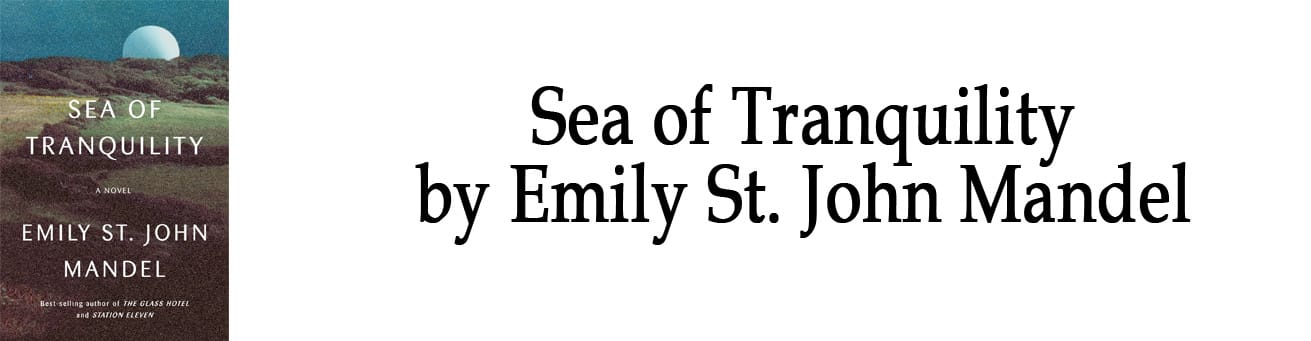
Sea of Tranquility by Emily St. John Mandel
A sweeping, time-bending novel that connects a young man exiled from early-20th-century Canada, a novelist living on a moon colony, and a detective investigating a possible glitch in reality. It was an instant New York Times bestseller and was selected as one of the best books of the year by outlets including The Washington Post, Time, and NPR. If you loved the elegant strangeness of Exit Party, this is the natural next stop: it delivers Mandel’s signature blend of parallel realities, art, memory, and quietly devastating questions about what makes a life real.

Station Eleven by Emily St. John Mandel
After a devastating pandemic reshapes civilization, a traveling Shakespeare troupe moves through the Great Lakes region, carrying stories, music, and the stubborn belief that survival is about more than staying alive. The novel was a finalist for the National Book Award, won the Arthur C. Clarke Award, and was named one of the best books of the year by numerous major publications. Readers drawn to Exit Party’s broken America and belief in art as a lifeline will find Station Eleven equally haunting but perhaps even more tender in its portrait of people trying to build meaning after collapse.
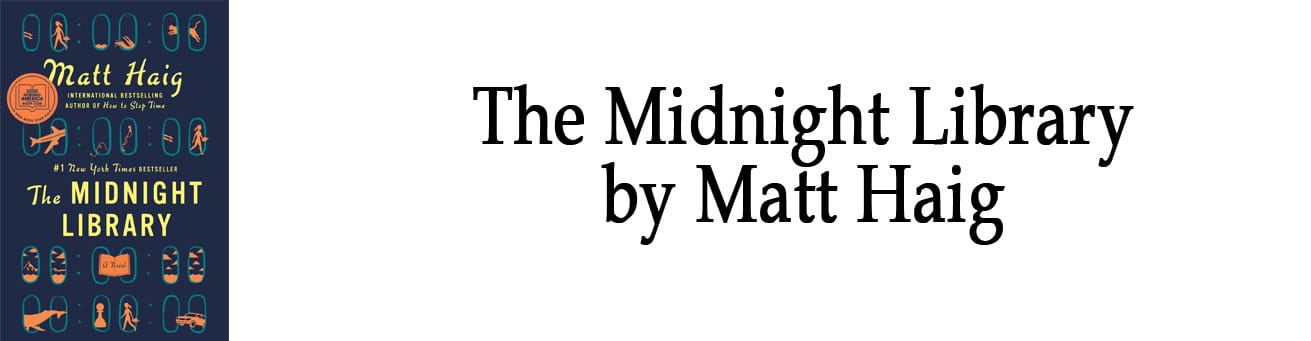
The Midnight Library by Matt Haig
Between life and death, a deeply unhappy woman enters a mysterious library where each book offers her the chance to experience a different version of the life she might have lived. It became an international bestseller and won the Goodreads Choice Award for Fiction in 2020. Like Exit Party, this novel takes the irresistible “what if?” of alternate lives and turns it into an emotionally accessible story about regret, possibility, and the realization that perfection is a fairly impossible standard to live up to.
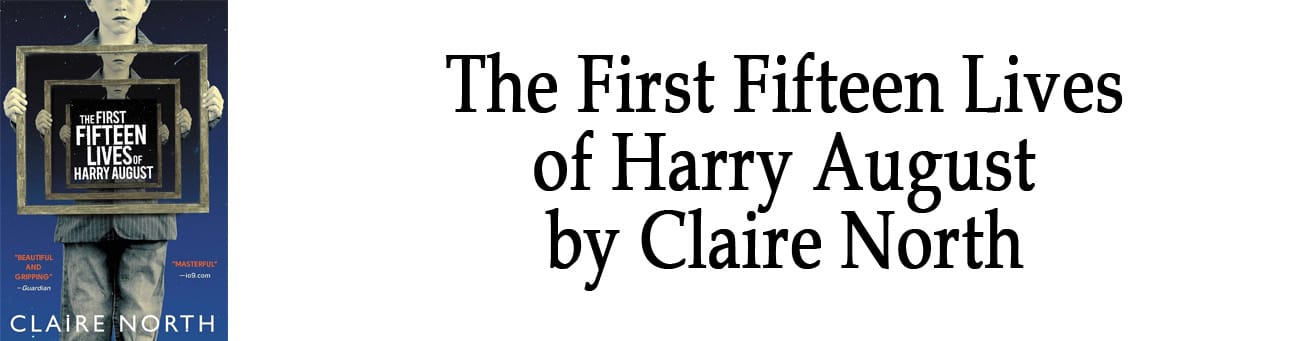
The First Fifteen Lives of Harry August by Claire North
Harry August discovers that whenever he dies, he returns to his birth with all his memories intact, forcing him to live his life again and again as a looming threat begins to endanger the future itself. The novel won the John W. Campbell Memorial Award for Best Science Fiction Novel and was shortlisted for the World Fantasy Award. Readers who enjoyed the shifting realities and existential unease of Exit Party will appreciate this book’s clever structure, high-stakes mystery, and deeply personal exploration of whether knowing more would actually help us live better.
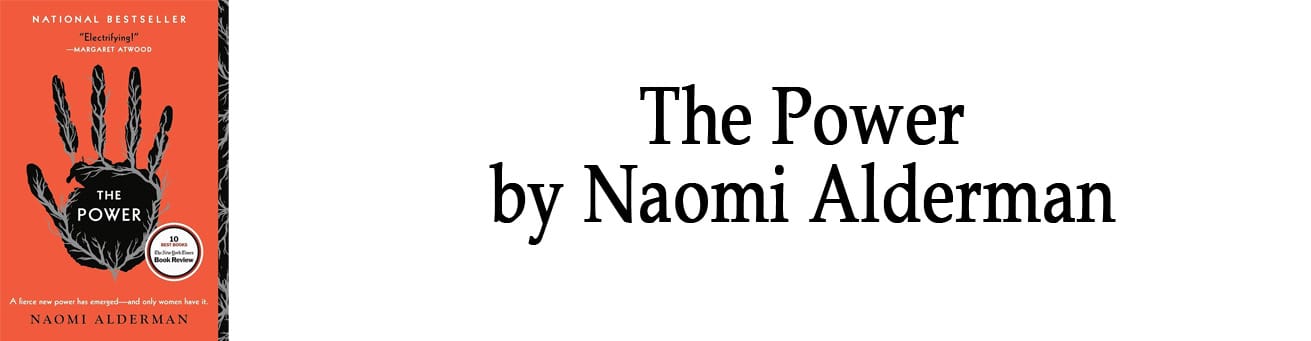
The Power by Naomi Alderman
In a world where teenage girls develop the ability to deliver fatal electric shocks, the global balance of power begins to tilt in ways that are thrilling, frightening, and impossible to control. The novel won the 2017 Baileys Women’s Prize for Fiction, becoming the first science-fiction novel to receive the award. Like Exit Party, The Power uses a bold speculative premise to examine the systems people build, the violence they excuse, and what happens when the world changes faster than anyone can emotionally process.
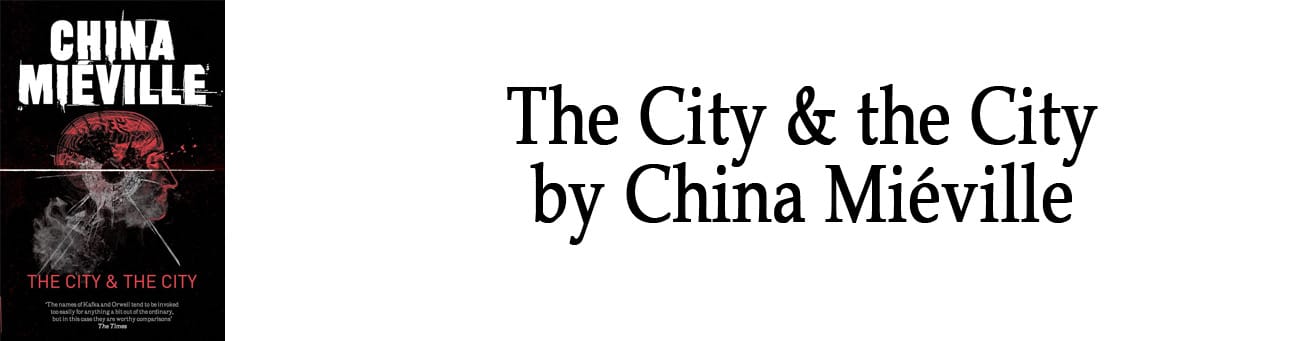
The City & the City by China Miéville
A detective investigating a murder must navigate two cities that occupy the same physical space yet are treated by their inhabitants as entirely separate places. It won the Arthur C. Clarke Award, the Hugo Award, the World Fantasy Award, and the Locus Award for Best Science Fiction Novel. If the parallel-world logic of Exit Party fascinated you—even when it made you pause and reread a paragraph—this atmospheric mystery offers another wonderfully disorienting reality where what people choose not to see becomes as important as what is right in front of them.

The Memory Police by Yōko Ogawa, translated by Stephen Snyder
On an unnamed island, objects—and the memories attached to them—begin disappearing, while a writer risks everything to protect someone whose memories cannot be erased. The English translation was shortlisted for the International Booker Prize in 2020 and was a finalist for the National Book Award for Translated Literature. Readers who responded to Exit Party’s mood of surveillance, loss, and quiet emotional fatigue will be gripped by this spare, unsettling dystopia, where the erosion of reality feels both surreal and disturbingly familiar.
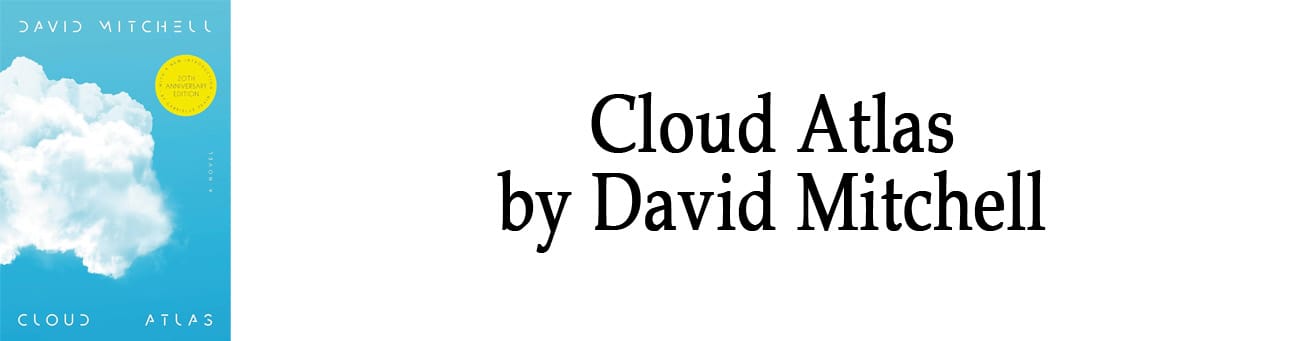
Cloud Atlas by David Mitchell
Six nested stories stretch from the 19th century to a distant, corporate-controlled future, revealing how individual acts of cruelty, courage, greed, and love echo across generations. It was shortlisted for the Booker Prize, the National Book Critics Circle Award, and the Arthur C. Clarke Award, and it won the British Book Awards Literary Fiction Award. Like Exit Party, this is a novel for readers willing to trust a daring structure: its connected lives, shifting eras, and recurring questions about freedom and power make it feel expansive, cerebral, and surprisingly emotional.

Paid Subscriber Perk!
Love the book we just reviewed? Paid subscribers can now download an exclusive printable list of books with a similar vibe—perfect for planning your next read or curating your book club’s picks. It’s a handpicked, beautifully designed list guide you won’t find anywhere else.
Unlock your next favorite reads—become a paid subscriber today to get instant access to these printable book lists!
Comments