

Table of Contents
- Date Published:
2025 - Length:
464 pages—Listening Time: 17 hours 53 minutes - Genre:
Fiction - Setting:
1940s-2000s, Japan, North Korea and the United States - Awards
National Book Award Longlist Fiction 2025; Booker Prize Shortlist 2025; Women's Prize for Fiction Longlist 2026; Anisfield-Wolf Book Award Finalist 2026; Andrew Carnegie Medals for Excellence in Fiction Longlist Fiction 2026; Washington Post Top 50 Notable Works of Fiction 2025; Barnes & Noble Best Books of the Year Fiction 2025; Vulture's Best Books Winner Jasmine Vojdani’s Top Five Books 2025; Vulture's Best Books 2025; Booklist Editor's Choice: Adult Books 2025; NPR: Books We Love 2025; Boston Globe Best Book Fiction 2025; Kirkus Reviews Best Book of the Year 2025; Globe and Mail Top 100 Book International Fiction 2025; The Guardian Book of the Day 06-30-2025; The Economist Best Books 2025; Los Angeles Times Best Books of the Year 2025; Chicago Public Library Best of the Best: Adults 2025; Time Magazine's Must-Read Books of the Year 2025; New Yorker Best Books of the Year 2025; The Guardian Books of the Year Fiction 2025; NZ Listener 100 Best Books of the Year Fiction 2025; Libby Life: BBC Culture: Best Books of the Year 2025; LARB Radio Hour Best of the Year 2025; Book Riot Best Books of the Year 2025; Financial Times Books of the Year Fiction 2025 - Languages:
English - Sensitive Aspects:
Parental death (drowning), ambiguous disappearance/kidnapping, child grief and trauma, generational trauma, serious parental illness/degenerative disease, emotional neglect, strained mother–daughter relationship, resentment toward an ill parent, child anger and rebellion, theft, depiction of an unlikeable child protagonist, family tragedy, political abductions by a totalitarian state, state violence and oppression, separation of children from parents by governments, cultural displacement and immigration stress, historical tensions between Korea and Japan, xenophobia and nationalism, government-enforced disappearances, psychological distress and therapy scenes - Movie:
As of March 2026, there are no full-length feature movie adaptations of the 2025 novel Flashlight. - Recommended for Book Club:
Yes

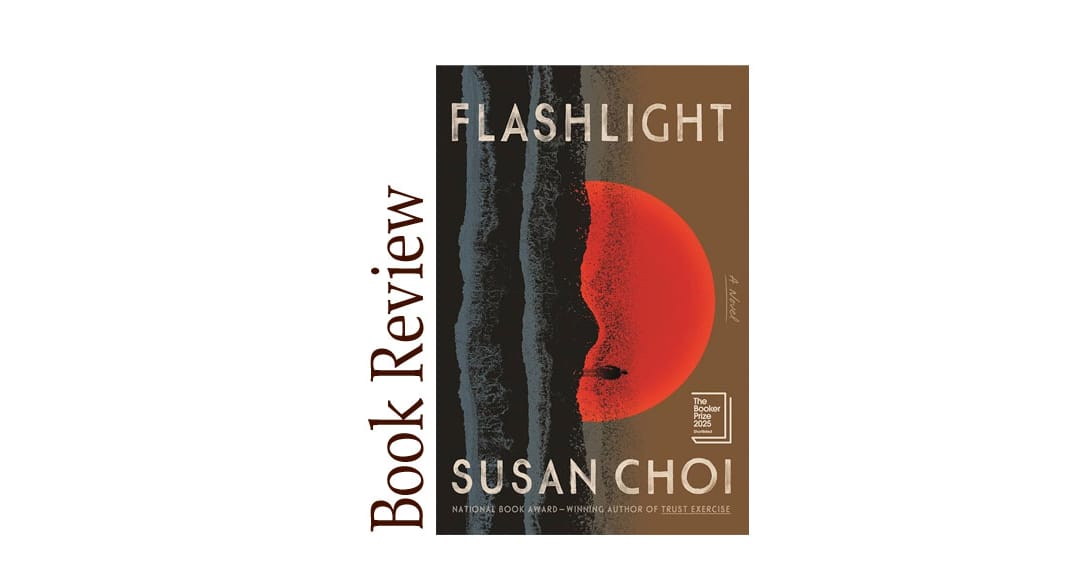
A few months ago, Flashlight by Susan Choi was sitting squarely on my DNF pile. You know the one—where promising novels go when your patience runs out and your TBR stack starts glaring at you in judgment. I’d tried to get into it, really. The opening was sharp, the sentences practically hummed, but something about the pacing made me drift away. So, I did what every book blogger secretly dreads doing: I quietly set it aside.
Then came the buzz. Reviewer after reviewer whispered the same thing—“This one’s a safe bet for a Pulitzer nomination.” My curiosity, ever the stubborn little imp, got the better of me. I picked it back up with a mix of skepticism and FOMO. And let me tell you—I’m so glad I did.
Flashlight isn’t an easy book. It’s layered, deliberate, and sometimes as emotionally confusing as real life. But when I gave it a full second chance, the story opened up like a lens adjusting in the dark. What looked like stillness at first flickered into a tense, brilliant illumination—one that made me think not just about power or identity, but about belonging, betrayal, and how history haunts us long after we stop looking at it.
What surprised me most, though, was how much I learned. Choi threads through the knotty relationship between Japan and North Korea with unsettling grace—how personal wounds mirror political ones, and how culture can both connect and divide. I wasn’t prepared to walk away knowing so much about the quiet, uneasy friction between those two nations, but it’s now one of the things I value most about the novel.
So here we are—me, once the hasty DNF-er, now the very person urging you not to give up too soon. Flashlight rewards patient readers. And if you stick with it, you might just find yourself blinking in its glow, wondering how you almost missed the brilliance hiding in plain sight.

Louisa is ten the night everything changes, the night that should’ve been nothing more than a slightly boring walk with her dad along a Japanese breakwater, under a sky she can’t quite see and a sea she’s been warned to fear. Her father, Serk, is cautious to a fault—he can’t swim, he worries constantly, yet he insists on this walk, flashlight in one hand and Louisa’s wrist in the other, both of them moving through the dark like they’re the only people in the world. By morning, Louisa is found half-drowned on the beach, hypothermic and barely alive, her mouth choked with sand, and Serk is simply gone. The flashlight, which she remembers falling soundlessly into the sand, becomes the last solid thing she can cling to from that night—and even that memory feels slippery.
From there, the novel doesn’t move in a straight line; it ripples out. We stay with Louisa as she stumbles through the aftermath, a girl whose father is presumed dead and whose own mind won’t give up a clear story of what happened. Her American mother, Anne, already half-cut off from her Midwestern family after a wild, youthful break from them, now has to parent in the shadow of a catastrophe that’s stolen her husband and scrambled her daughter. Their little household in Indiana becomes a tense orbit of two: Anne and Louisa, Louisa and Anne, bound by grief, prickling with resentment, trying to live a normal life that never quite manages to feel normal.
Behind Serk’s disappearance lies another, earlier vanishing: the family he lost long before he married Anne. Serk grew up Korean in Japan, poor and marginalized, until his parents and siblings were seduced by the propaganda of postwar Pyongyang and “returned” to North Korea, chasing a dream of socialist paradise that cut him off from them almost completely. That old abandonment shadows him even before he walks onto the breakwater with his daughter, and it haunts the story after he’s gone, shaping how Louisa understands the holes in her own life.
And then there’s Tobias—the secret that doesn’t stay secret. Long before Louisa, Anne had an illegitimate son she didn’t raise; Tobias’s eventual reappearance in their lives crashes into the fragile structure Anne and Louisa have built. His presence forces mother and daughter to confront parts of their family story they’ve either buried or never been told, dragging old choices into the light the way a beam from a flashlight picks out what the dark has been hiding.
The novel keeps circling that night on the beach, but it refuses to give you one neat, official version. Instead, it shifts perspectives—Serk’s, Anne’s, Louisa’s—and leaps across years and continents, from Indiana suburbs to Japanese shores to the long shadow of North Korea, tracing how a single disappearance echoes through four generations. Everyday scenes, like a strawberry-picking outing or an academic trip, sit right beside moments of near-mythic weight, and again and again a literal flashlight crops up: in a therapist’s office, at a séance, at an archaeological dig, each one a little circle of illumination surrounded by a whole lot of unknown.
Through all of this, Louisa grows up trying to build a life on ground that never feels entirely solid, knowing her father as both an intimate presence and an almost legendary absence. The story follows the way she and Anne keep moving forward—sometimes together, sometimes barely tolerating each other—while the unanswered question of “What really happened to Louisa’s father?” keeps tugging them, and you, back toward that dark water and that dropped beam of light.

Readers with Wrinkles would likely connect with Flashlight on several levels.
Rich, layered family drama
The novel traces the Kang family across decades and four generations, focusing on how one catastrophe reshapes their lives over time. Parents, children, and half-siblings remain entangled in love, resentment, and obligation, giving plenty of emotionally complex dynamics to unpack in discussion.
Focus on memory and what we can’t know
Louisa’s partial amnesia about the night her father disappears turns the book into an exploration of how memory blurs, edits, and sometimes invents the past. The recurring flashlight motif underscores how each character only ever sees a narrow beam of truth, which makes for fertile ground for book-club conversations about unreliable perception.
Cross-cultural and geopolitical depth
Serk’s history as an ethnic Korean raised in Japan whose family is lured to North Korea brings in themes of exile, propaganda, and divided homelands. The narrative moves from Indiana to Japan, North Korea, and Europe, weaving personal drama together with Cold War and postwar political currents.
Strong literary craft and narrative experimentation
Choi is known for inventive structures, and here she plays with shifting perspectives and time jumps that mimic the stop‑start quality of memory. The prose is described as emotionally precise yet formally ambitious, rewarding close reading, annotation, and craft-focused discussion.
Exploration of grief, absence, and identity
The book is repeatedly described as a “history of loneliness,” following characters who are physically present but emotionally distant, or simply gone. Questions of who you are when your family history is missing or distorted will resonate with readers interested in identity, inheritance, and intergenerational trauma.
Excellent fit for award-focused and serious readers
Flashlight is Choi’s sixth novel and comes after her National Book Award–winning Trust Exercise, positioning it as a major work in contemporary literary fiction. Its shortlisting for the 2025 Booker Prize signals both critical acclaim and rich thematic material, aligning well with a club that gravitates toward prize-listed books.

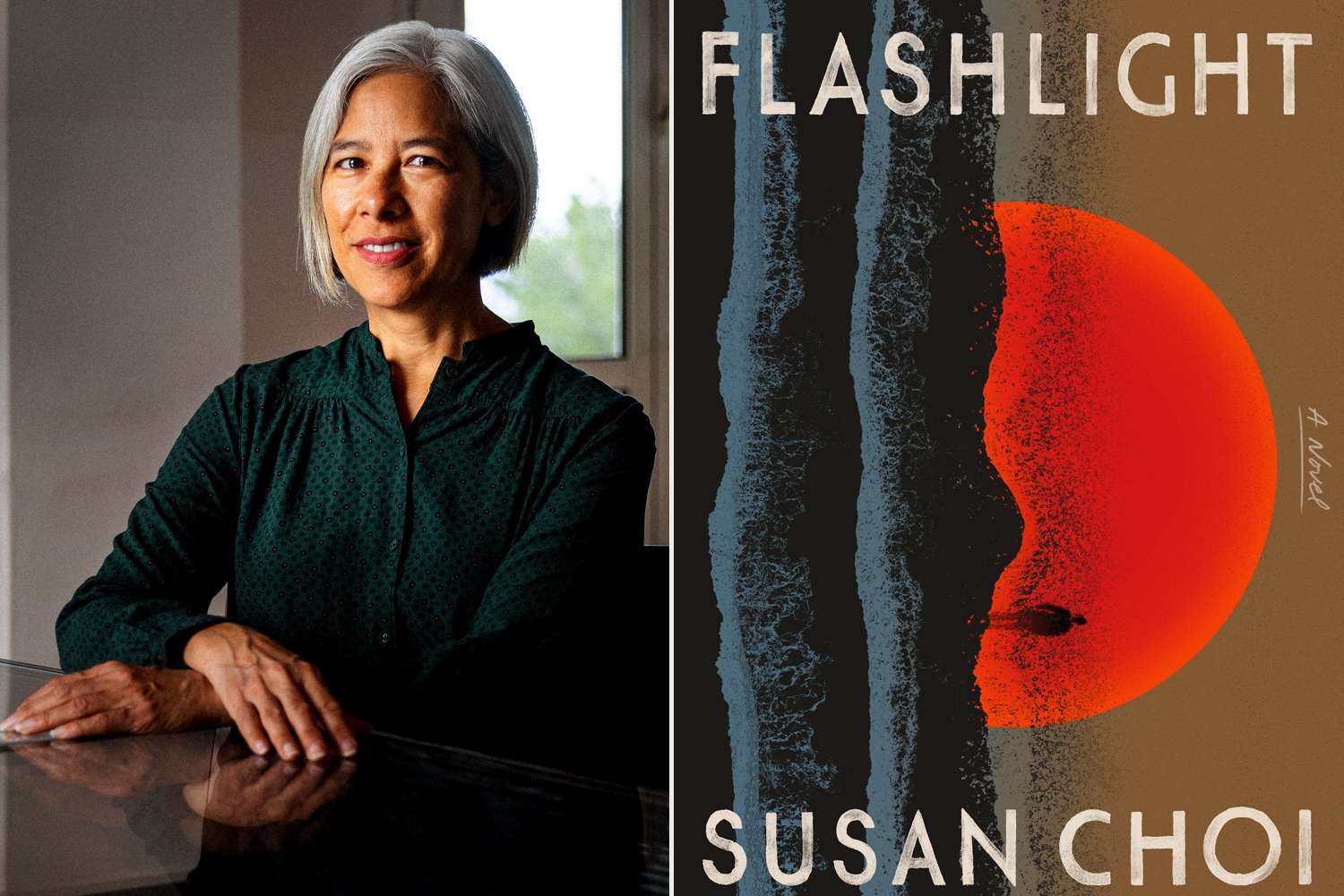
Get Susan Choi Books
Susan Choi’s novels fuse psychological intensity, formal daring, and sharp social insight into unforgettable stories about desire, power, and the fractured truths of memory and identity.
Bookshop.org was created as a socially conscious alternative to Amazon, with the goal of helping local, independent bookstores thrive. This is why Readers With Wrinkles supports their efforts. Please join us in this effort by purchasing your next read here.

Here are some books that share elements with Flashlight—family disappearance, diasporic Korean history, fractured memory, and politically charged backdrops.
Multigenerational / Diaspora Sagas
- Pachinko by Min Jin Lee
A sweeping saga of four generations of a Korean family in Japan (1910–1989), tracing poverty, racism, and questions of identity under Japanese rule and beyond. Like Flashlight, it links intimate family ruptures to the long shadow of empire and migration. - The Kinship of Secrets by Eugenia Kim
Two Korean sisters are split between Seoul and the U.S. after the Korean War, and a family secret about why they were separated slowly comes to light. It offers a measured, emotionally controlled look at displacement, “forgotten” war, and the way silence shapes children’s lives, echoing Louisa’s partial memory and her parents’ buried histories. - The Liberators by E.J. Koh
A Korean family emigrates to the U.S. as Korea undergoes rapid political and economic change, and the novel moves across generations, wars, and geopolitical upheaval. The focus on how national trauma filters into intimate family relationships and memory sits close to what Choi is doing with Korea–Japan–U.S. tensions.
Family Mystery and Disappearance
- The Past Is a Foreign Country by Gina Apostol (tone/structure comp)
A domestic novel braided with spy-thriller elements that spans the latter half of the twentieth century and multiple countries. Like Flashlight, it uses secret histories and political intrigue to recast a family’s past, blurring the line between mystery plot and psychological portrait. - The Great Believers by Rebecca Makkai
Not about Korea, but similarly toggles between timelines to show how a past catastrophe (the AIDS crisis) echoes decades later in the lives of survivors. If you like the way Flashlight keeps circling back to one night on the beach and following its “shock waves” through time, this structure will feel familiar.
Intense Psychological / Structural Play
- Trust Exercise by Susan Choi
Choi’s earlier novel about drama students and a manipulative teacher uses radical shifts in point of view and unreliability to expose how stories are told and retold. Readers who appreciate Flashlight’s intricate, unsentimental characterization and formal risk-taking will likely respond to the narrative “quilt” of Trust Exercise as well. - My Education by Susan Choi
A campus novel about an affair that revisits its characters years later, forcing them to reinterpret their own memories and desires. While smaller in scope than Flashlight, it shares Choi’s interest in difficult, often unlikeable characters and the instability of what we think we know about our past.
Books Centering Korean War / Secrecy
- Haunting the Korean Diaspora by Grace M. Cho (nonfiction, but very thematically close)
A hybrid work about “shame, secrecy, and the forgotten war,” recovering silenced stories of Korean women around U.S. military camptowns. Its argument—that family shame often hides geopolitical secrets—mirrors the way Flashlight fuses private disappearance with buried histories of Korea, Japan, and the U.S. - A Little Life by Hanya Yanagihara (for emotional intensity)
Not geopolitical, but similarly follows damaged characters over decades, exploring trauma, illness, and the difficulty of connection in unsentimental, often harrowing detail. If what drew you to Flashlight was the “aching, beautiful, utterly compelling” long-arc character study, this might scratch that itch.
Comments