
Table of Contents
Note: If you're reading this in your inbox, be sure to check out the full post online — it includes great videos you won’t see in the email version!
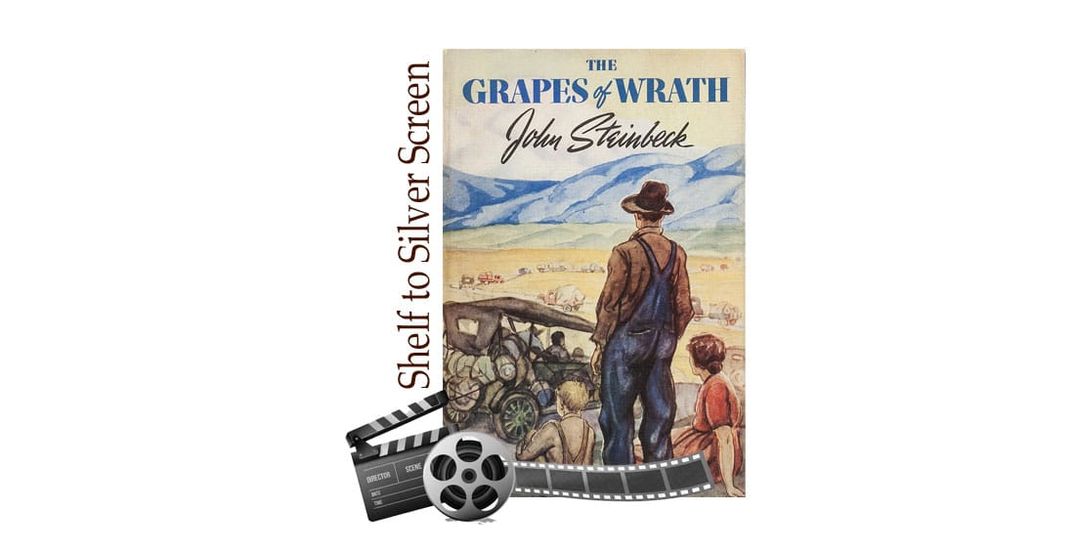
Shelf Meets Silver Screen Series
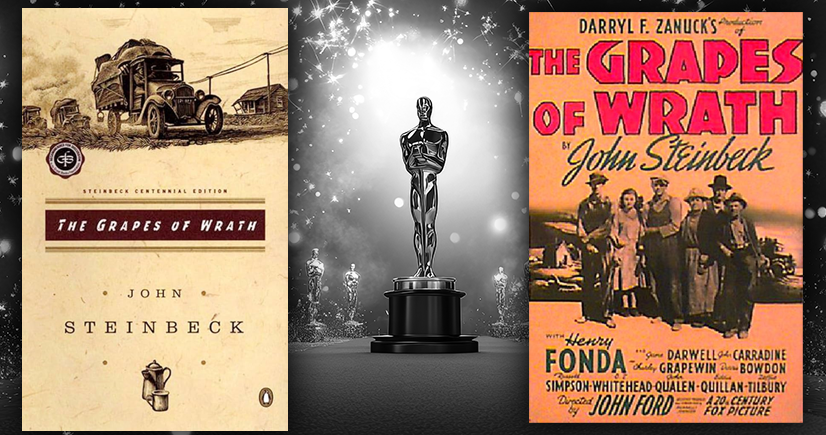
Book Awards:
- 🥇 National Book Award Winner Fiction 1939
- 🥇Pulitzer Prize Winner Novel 1940
- 🥇Audie Award Winner Classics 1999
- 🥇 Commonwealth Club of California Book Awards Silver Medal 1939
Oscar Awards:
- 1940 Nominated for 7 Academy Awards
- Won:
🏆 Best Director—John Ford
🏆Best Supporting Actress—Jane Darwell
Some books don’t just tell a story—they define a moment in history. John Steinbeck’s The Grapes of Wrath is one of those rare works. Published in 1939, this sweeping tale of Dust Bowl migration captured both the despair and dignity of American families scraping for survival. Within a year, the book wasn’t just a bestseller—it had become a cultural touchstone, a Pulitzer Prize winner, and the blueprint for one of Hollywood’s most important films.
So how did Steinbeck’s words make their way from heartland realism to Oscar gold? The answer lies in timing, talent, and a bit of Hollywood daring.
The Book That Shook America
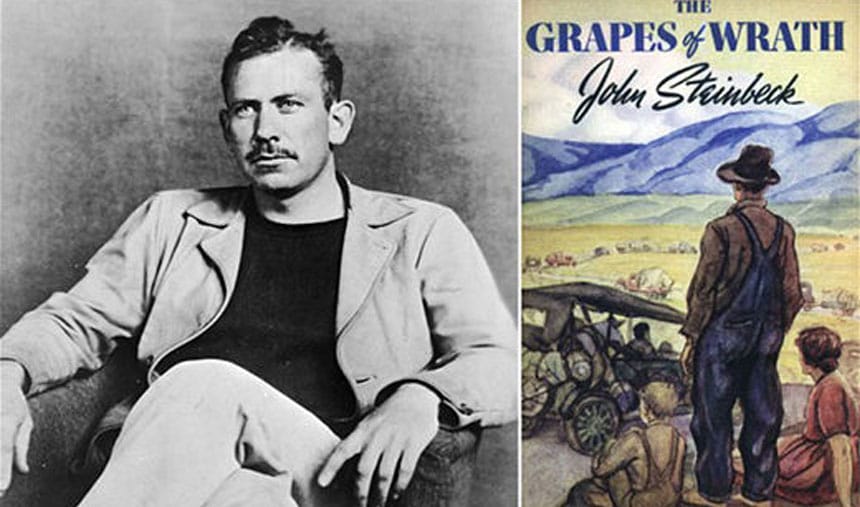
When The Grapes of Wrath hit shelves in 1939, it was instantly controversial. Readers hailed it as a masterpiece of empathy; critics and politicians called it “un-American.” But its gritty depiction of migrant families—the Joads in particular—resonated deeply during the final throes of the Great Depression. For many, Steinbeck gave a voice to those history tried to overlook.
The novel went on to win both the Pulitzer Prize for Fiction and the National Book Award, cementing Steinbeck’s reputation as a literary trailblazer. And that success caught the eye of Hollywood.
Hollywood Takes a Risk
Enter 20th Century Fox and director John Ford, who saw cinematic gold in Steinbeck’s modern epic. Adapting such a politically charged book in 1940 was no small feat. The country was still raw from economic hardship, and themes of injustice and displacement were uncomfortable for the big screen. Yet screenwriter Nunnally Johnson managed to strike the balance between realism and hope, crafting a script that honored the Joads’ struggles while giving audiences a glimmer of resilience.
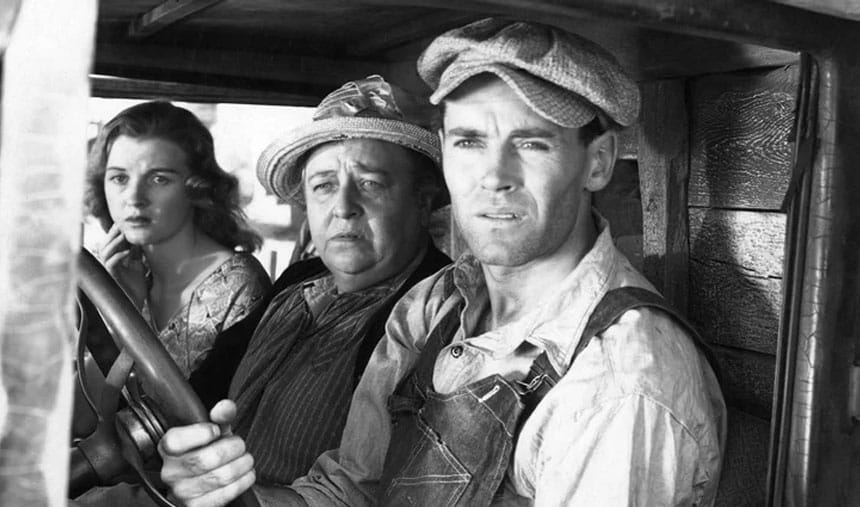
Henry Fonda’s portrayal of Tom Joad became career-defining—his quiet conviction still feels modern today. And Ford’s stark black-and-white cinematography gave the film a documentary-like authenticity that critics adored.
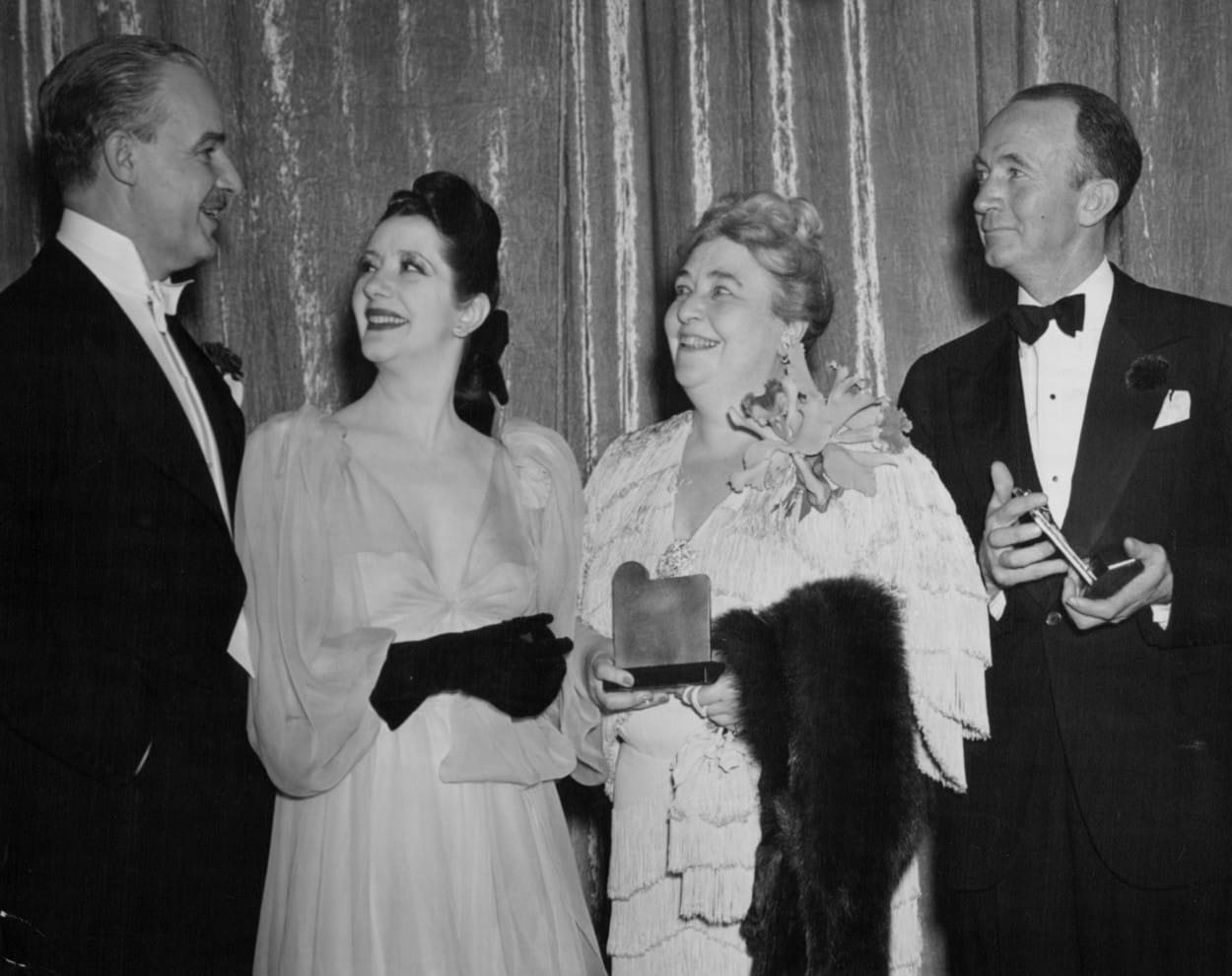
From Banned Book to Oscar Stage
Despite some censorship battles and social pushback, the 1940 film was a triumph. The Grapes of Wrath won two Academy Awards—Best Director for John Ford and Best Supporting Actress for Jane Darwell as the indomitable Ma Joad. It was also nominated for Best Picture, Best Actor, and several others.
That journey—from banned bookshelves to Oscar night applause—remains one of the great redemption stories in American art. Both versions, novel and film, remind us that storytelling can expose injustice and inspire empathy across generations.
Why It Still Matters
For modern readers (especially us seasoned ones who’ve lived through our own waves of change), The Grapes of Wrath feels timeless. It speaks to endurance, family, and the search for dignity when the world turns hard. And its film adaptation—powerful in its restraint—still shows how art can reflect social truth without losing human heart.
So the next time you settle into a reread or revisit the film, think of how this story made the leap from typewriter to sound stage—and how, nearly a century later, we’re still talking about it. That’s the true mark of greatness.
The Grapes of Wrath rewards readers with richer layers every time they pick it up, especially for readers who enjoy big themes, historical depth, and heartfelt discussion. Here are reasons to read or reread this powerful masterpiece.
It’s a cornerstone of American literature.
Published in 1939 and awarded the Pulitzer Prize, Steinbeck’s novel is one of the definitive portraits of the Great Depression and migrant life, and it still anchors many conversations about “the great American novel.”
The history hits harder as an adult.
The Dust Bowl, failed farms, and mass migration to California become more vivid when you understand mortgages, precarious work, and economic shocks, making the Joads’ journey feel less like “old history” and more like lived experience.
Its themes feel eerily current.
Economic inequality, housing insecurity, corporate power, and the fragility of the working class could have been written about in today’s headlines, which is why so many critics still point to the novel’s relevance in discussions of social justice and “late-stage capitalism.”
It’s a masterclass in collective resilience.
Steinbeck shows how strangers form communities in camps and on the road, sharing food, tools, and information, suggesting that survival depends as much on fellowship as on individual grit.
The tension between dignity and dehumanization is unforgettable.
The book juxtaposes banks and agribusiness as faceless “monsters” against workers who are treated like disposable labor, yet still cling fiercely to their sense of worth and moral code.
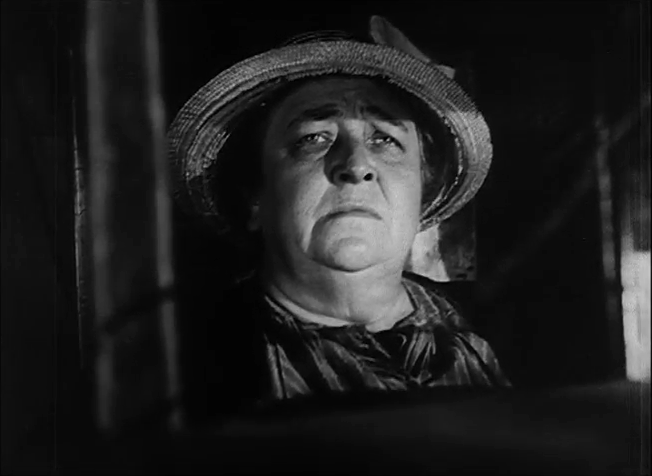
Ma Joad comes into focus as a quiet powerhouse.
Rereading as a mature reader makes it easier to see how leadership shifts from the patriarchs to Ma, whose steady resolve and practical compassion hold the family together and gesture toward a new, more matriarchal vision of strength.
It deepens empathy for displaced people.
The Joads’ forced migration from Oklahoma to California mirrors later and current stories of refugees, climate migrants, and families displaced by economic or environmental disaster, inviting readers to see those headlines through human faces.
The critique of the American Dream is sharper with hindsight.
The promise of “work and plenty” in California collapses into exploitative wages and crowded camps, offering a clear-eyed look at how the dream of prosperity can be used to justify systemic inequality.
The intercalary chapters invite slow, thoughtful reading.
Those shorter, almost essay‑like chapters that zoom out from the Joads to “all migrants” read like prose poems or sermons, and older readers often appreciate their rhythm, imagery, and social commentary in a way they might not have in school.
It’s rich material for book club conversation.
From questions about moral responsibility and protest to gender roles, grief, and that haunting final scene, the novel offers scene after scene that practically begs for discussion, disagreement, and personal reflection.
You notice more symbolism on a reread.
Images like the “grapes of wrath,” the road itself, the “monster” bank, and Rose of Sharon’s pregnancy gather extra weight when you revisit them with more life experience and a better sense of the whole arc.
It helps connect literature, art, and history.
The novel sits alongside Dust Bowl photographs like Dorothea Lange’s “Migrant Mother” and other Depression-era art, making it a perfect anchor text for readers who enjoy seeing how history, politics, and culture braid together.
The blend of bleakness and compassion lingers.
Yes, it’s a hard book—poverty, death, and injustice are everywhere—but it’s also full of small generosities, acts of kindness, and stubborn hope that stay with readers long after they close the last page.
It’s a different book at different ages.
Younger readers may focus on the plot and hardship; middle‑aged and older readers often gravitate toward questions of purpose, aging parents, adult children leaving, and what it means to keep going when life has narrowed, making a reread feel almost like meeting a new novel.
It offers a powerful lens on capitalism and morality.
Steinbeck’s depiction of a system that forces ordinary people to hurt others just to survive prompts tough, timely questions about profit, power, and what we owe each other—ideal for readers who like their classics with a moral edge.
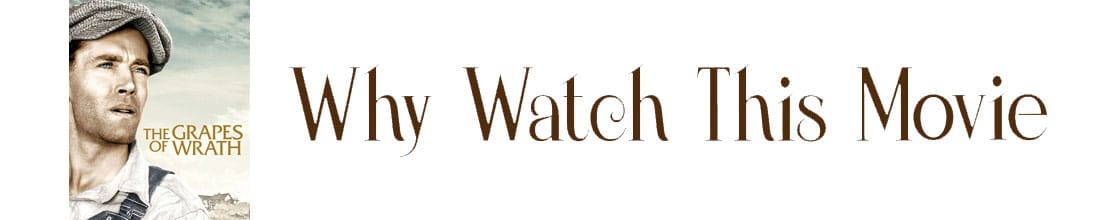
If you have never watched this classic, do it. You won't be disappointed. Here are a few reasons to watch or rewatch The Grapes of Wrath:
It’s a cornerstone of American film history
The 1940 adaptation is widely regarded as an American classic of the studio era, often cited among John Ford’s best works and still carrying “universal acclaim” on modern review aggregators.
A powerful visual companion to the novel
While you and your readers may know Steinbeck’s prose, the film translates his Dust Bowl world into stark black‑and‑white images, using expressive cinematography to evoke poverty, displacement, and resilience in ways that complement the book rather than duplicate it.
Henry Fonda’s definitive Tom Joad
Fonda’s performance as Tom, including his famous closing speech about standing with the poor and dispossessed, is often singled out as one of his career-defining roles and earned him an Academy Award nomination.
Ma Joad as an unforgettable matriarch
Jane Darwell’s portrayal of Ma Joad, emphasizing quiet strength and moral steadiness, won the Oscar for Best Supporting Actress and remains a quintessential representation of the Depression‑era mother holding a family together.
A vivid portrait of the Great Depression and Dust Bowl
The film dramatizes bank foreclosures, forced migration, and life in makeshift camps, giving viewers a concrete sense of the economic and environmental forces that uprooted families like the Joads in the 1930s.
Themes that still resonate for modern readrs
Injustice, exploitation of workers, the tension between individual gain and the common good, and the necessity of community solidarity are central to the story and feel strikingly contemporary when you watch the Joads navigate predatory wages and hostile authorities.
A rich text for book‑to‑film comparison
The adaptation stays remarkably faithful to the main plot and many lines of dialogue while softening the novel’s most radical and bleak elements, especially the ending, which makes it ideal for discussion about what Hollywood could and couldn’t show in 1940.
A more hopeful, discussion‑worthy ending
Instead of Steinbeck’s grim, ambiguous closing scenes, the movie ends with Ma Joad’s hopeful speech and the family driving away from the government camp, inviting conversation about optimism versus realism in storytelling.
A masterclass in black‑and‑white cinematography
The film’s harsh lighting and deep shadows create a visual language of “temporary winners and all‑time losers,” turning landscapes, roadways, and camp scenes into haunting images that stick with viewers long after the credits roll.
Awards pedigree that earned its classic status
The Grapes of Wrath won Academy Awards for Best Director and Best Supporting Actress and received major nominations including Best Picture, signaling from its release that it was an ambitious, serious work of art rather than a routine literary adaptation.
A compelling way into social history for book and film clubs
For mature readers who enjoy context, the film serves as an accessible gateway to discussions of Depression‑era labor struggles, migration, and systemic inequality, grounding those topics in a tightly focused family story.
Enduring emotional impact on rewatch
Critics note that the movie has “lost none of its power” as a social document or as cinema, and many viewers find that returning to it as older, more experienced readers deepens their response to its grief, anger, and hard‑won moments of grace.
The 98th Academy Awards (2026 Oscars) will air live on Sunday, March 15, 2026, at 7 p.m. ET (4 p.m. PT). The ceremony will be broadcast from the Dolby Theatre in Hollywood on ABC and available to stream on Hulu. Comedian Conan O'Brien is set to host the event.
Comments