

In this kit:
- Book Summary Page (Online & Printable Kit)
- Main Characters Page (Online & Printable Kit)
- Discussion Questions Page (Online & Printable Kit)
- Book Quotes Page (Online & Printable Kit)
- Icebreaker Games (Printable Kit only)
- About the Author Page (Online & Printable Kit)
- Historic Facts Surrounding the Book (Online & Printable Kit)
- List of Podcasts and Videos About This Book (Online only)
- Meeting Decoration Ideas (Online & Printable Kit)
- Meeting Decorations Printable Images (Printable Kit only)
- Meeting Menu Ideas (Online & Printable Kit)
- Email Templates for Announcing the Book Club Meeting (Printable Kit only)
- Meeting Food Recipes (Printable Kit only)
- Bookmarks for Lady Tremaine (Printable Kit only)
- Bookmarks for Readers With Wrinkles (Printable Kit only)

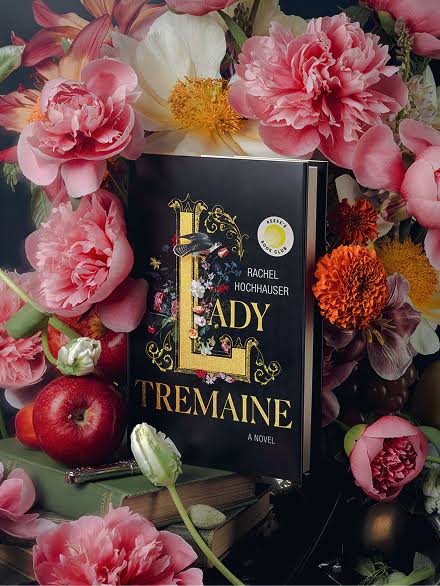
We all know the story—or at least we think we do. There’s a beautiful, mistreated girl. A cruel stepmother. Two ridiculous stepsisters. A ball, a prince, and one very inconvenient shoe. But Rachel Hochhauser’s Lady Tremaine turns the familiar tale inside out and asks a wonderfully uncomfortable question: what if the “wicked” stepmother has been misunderstood all along?
Lady Etheldreda Verity Isolde Tremaine Bramley—Ethel, if you’re lucky enough to be on friendly terms—is not lounging around plotting ways to ruin anyone’s life. She is twice widowed, deeply short on money, and trying to hold together Bramley Hall, a once-grand manor that is deteriorating almost as quickly as her options. She has two daughters, Rosamund and Mathilde, a sharp-eyed peregrine falcon named Lucy, a household to feed, and a stepdaughter, Elin, who has never exactly welcomed Ethel’s attempts at mothering.
Ethel’s past unfolds alongside the present-day story. Born the daughter of a brewer, she grows up outside the world of titles and inherited security. She falls in love with Henry Tremaine, a wealthy young man she meets through his family’s hunting visits. Their shared love of falconry gives them a connection that feels rare—and, naturally, complicated by the fact that love is never allowed to be simple when money, class, and family expectations are standing in the room with folded arms.
After Henry’s death and then the death of her second husband, Ethel is left with a title but little real power. Her daughters’ futures depend on making good marriages, because in this world a woman’s security can vanish with a husband, a signature, or an unpaid bill. So when news arrives that the royal family will host a ball for the prince, Ethel sees it for what it is: not a glittery fantasy, but a possible escape hatch.
She works desperately to get all three girls invited. Yet the invitation goes to Elin—the reserved, stubborn stepdaughter Ethel views as both a responsibility and an obstacle. Elin’s chance at the prince becomes the household’s chance, too, though none of them quite realizes the danger hidden behind palace walls and royal charm.
As Elin’s connection to the prince grows, Ethel uncovers unsettling truths about the royal family and the future Elin is being offered. Suddenly, the marriage Ethel once might have considered salvation begins to look far more like a trap. Forced to choose between the financial security she has spent years chasing and the well-being of the girl who has resisted her at every turn, Ethel must decide what kind of mother she is willing to be.
Lady Tremaine strips away the fairy dust and gives us a Cinderella story grounded in survival, class, grief, female ambition, and complicated family love. The glass slipper may be missing, but the emotional stakes? Very much intact.

Lady Etheldreda “Ethel” Verity Isolde Tremaine Bramley
The novel’s narrator and the woman history has labeled Cinderella’s “wicked stepmother.” Ethel is twice widowed, nearly broke, and determined to protect her daughters’ futures while keeping up appearances at the crumbling Bramley Hall. She is sharp, proud, resourceful, and often funny in a dry, cutting way. She loves falconry, bends rules when survival demands it, and spends much of the novel wrestling with the painful gap between what she wants to provide and what her world allows women to control.
Elin
Ethel’s stepdaughter and this retelling’s Cinderella figure. Elin is the daughter of Ethel’s first husband and has money set aside for her dowry—money Ethel and her daughters cannot access, no matter how desperate their situation becomes. Pretty, sheltered, proper, and fond of sayings that can sound more polished than helpful, Elin has a fraught relationship with Ethel. Her unexpected appeal to the prince places her at the center of the family’s hopes—and dangers.
Rosamund “Rosie” Tremaine
Ethel’s younger biological daughter. Warm-hearted, practical, and gifted with a needle, Rosie helps her mother sustain the family’s fragile façade through sewing and quiet cooperation. She understands that appearances, clothing, and charm are not frivolities in their world; they can be tools of survival.
Mathilde Tremaine
Ethel’s older biological daughter. Mathilde is more skeptical and sharp-edged than Rosie, with a clear-eyed understanding of the family’s precarity. She is perceptive, less willing to perform gentility for society’s benefit, and often sees through the stories other people tell themselves. If Rosie brings warmth, Mathilde brings the raised eyebrow.
Henry Tremaine
Ethel’s first husband and Mathilde and Rosie's father. Although he is dead during the novel’s main timeline, Henry remains hugely important through Ethel’s memories of their courtship and marriage. Their early relationship is rooted in a shared passion for falconry, but his death leaves Ethel with the title of Lady Tremaine and far less practical security than that title suggests.
Prince Simeon
The "not so charming" royal heir whose search for a wife drives the familiar fairy-tale plot into motion. When he notices Elin, he seems to offer a breathtaking solution to the family’s financial and social problems. But Hochhauser makes us look beyond the shiny royal surface: being chosen by a prince is not automatically the same thing as being safe, happy, or free.
Queen Sigrid
The reigning queen and a formidable presence in Ethel’s life. Sigrid and Ethel share a complicated history from before Sigrid’s royal rise, one marked by old resentment, social imbalance, and their connection to Henry. Her power—and her judgment—make her someone Ethel cannot afford to ignore.
Lucy
Ethel’s razor-taloned peregrine falcon and, honestly, one of the most reliable members of the household. Lucy is tied to Ethel’s memories of Henry and her own sense of self beyond widowhood, motherhood, and social expectation. She also helps Ethel hunt when the pantry is thin, proving that sometimes the household’s most useful provider has feathers.
Otto
Otto becomes an invaluable ally to Ethel, traversing the countryside with her to rescue her stepdaughter, Elin. Reviewers note that he is a refreshing romantic interest for the anti-heroine because he deeply respects Ethel and never demands that she compromise her fierce principles to be with him. By the epilogue, they find mutual romance and happiness together at Bramley Hall. Add these two entries to the character list:
Lord Robert Bramley
Ethel’s second husband, now deceased, and the aristocratic owner of Bramley Hall. Ethel’s marriage to Lord Bramley gives her and her daughters a measure of social protection and keeps their family together—but it is far from a fairy-tale rescue. After his death, she inherits the manor and its impressive name, along with substantial debt, a decaying estate, and very little cash to keep it running. In other words, he leaves Ethel a grand house, but not the means to heat it, feed everyone in it, or maintain its illusion of prosperity.
Alice
Ethel’s servant, trusted confidante, and one of the few people willing to speak plainly when Ethel is tempted by a comforting illusion. Alice understands exactly how precarious the household’s situation is and offers loyalty that goes well beyond the duties of a servant. Practical, perceptive, and skeptical of the wealthy people and systems holding power over the family, she warns Ethel to consider the risks behind Elin’s engagement to Prince Simeon. She may not always tell Ethel what she wants to hear, but she is often the person telling her what she most needs to hear.
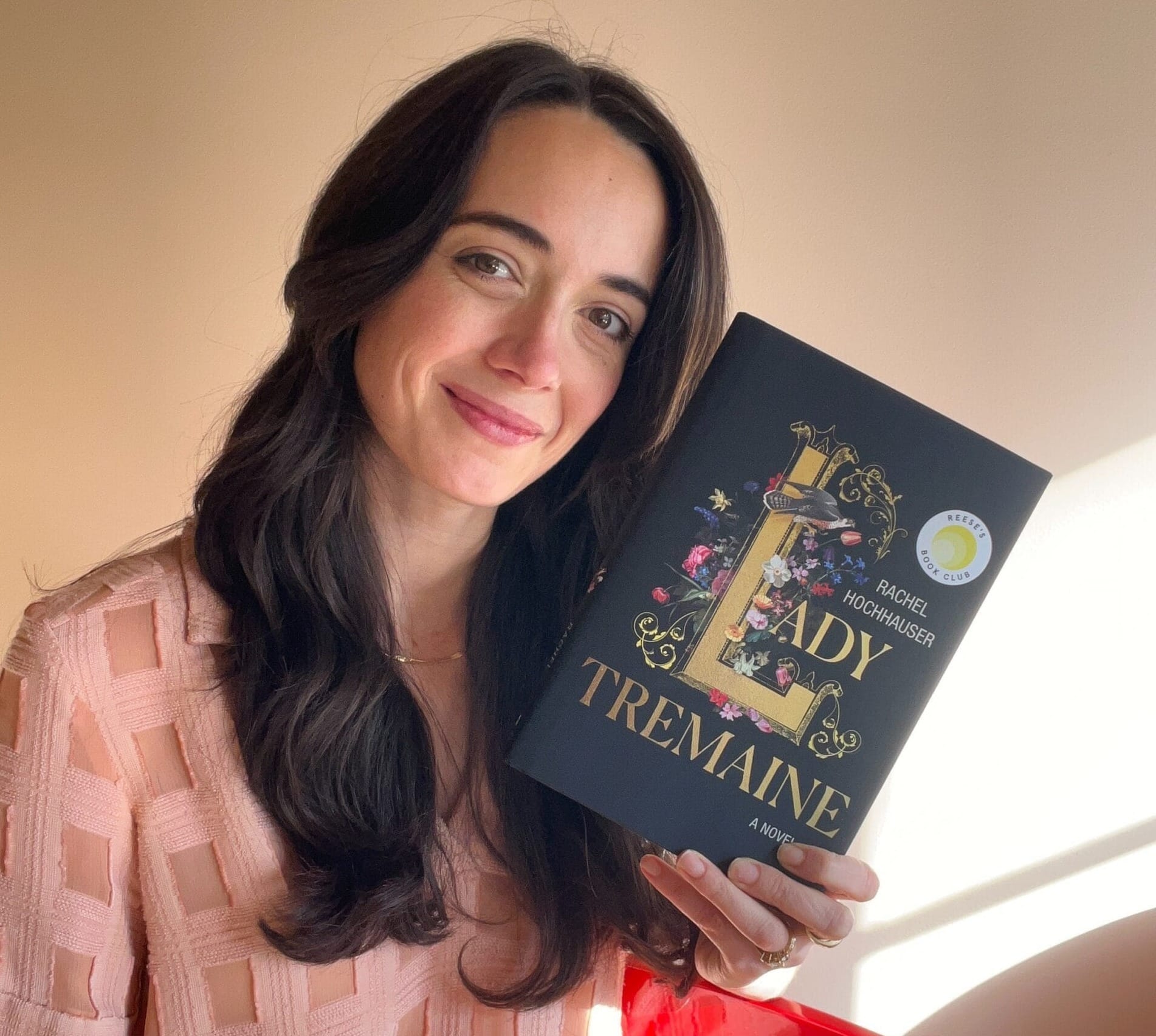
Rachel Hochhauser is a writer, creative entrepreneur, and the author of Lady Tremaine, her debut novel. Raised in Santa Barbara, California, she studied at New York University before earning a master’s degree in professional writing at the University of Southern California. She now lives in Portland, Oregon, with her husband and two daughters.
Before publishing fiction, Hochhauser built a career in brand strategy and creative entrepreneurship. She co-founded Major Studio, a branding agency, and later co-founded Piecework, a design-forward puzzle company known for turning jigsaw puzzles into artful, collectible objects. That background in visual storytelling and building imaginative worlds is easy to spot in the rich atmosphere and distinctive perspective of Lady Tremaine.
Although Lady Tremaine is her first published novel, Hochhauser’s route to publication was not instantaneous. After completing her graduate work, she wrote an earlier novel that was never published. In interviews, she has described that disappointment as formative: it took additional years of work, life experience, motherhood, and persistence before she found the story she felt meant to introduce her as a novelist.
The inspiration for Lady Tremaine emerged during an especially difficult period in 2023, when Hochhauser was pregnant, caring for her young child, running her businesses, and supporting her husband through emergency brain surgery and recovery. While sitting in a hospital waiting room, she encountered an image of Cinderella’s supposedly “evil” stepmother and began to see the character differently—not as a simple villain, but as a mother fighting fiercely for her children’s survival and security.
That question sits at the heart of Lady Tremaine: Who gets called selfish, cruel, or ambitious—and who gets to tell her own story? Hochhauser’s debut invites readers to reconsider a familiar fairy-tale antagonist through the lenses of motherhood, class, sacrifice, female ambition, and the complicated choices women make to protect the people they love. For book clubs, her journey makes the novel’s central challenge especially resonant: sometimes the most familiar stories look entirely different when the “villain” is finally allowed to speak.
“A map is made and then the land changes and the map does not change with it. And yet we respect maps as if they are the law.”
—Lady Etheldreda “Ethel” Tremaine, Chapter 1, p. 4
This early observation introduces one of the novel’s central concerns: systems of inheritance, gender, land, and respectability can look fixed on paper even when real lives have changed beyond recognition.
“Lady Tremaine did not exist. Or rather, she was not a real person. But, though it was not the world’s name for me, it was my truest one.”
—Ethel Tremaine, early in the novel, in the opening chapters
Ethel reframes the famous fairy-tale label as an identity shaped by marriage, loss, and the versions of herself she has had to become.
“You do not need to be afraid. / You do not have to be good. / You do not need to hide your fleshy interiors behind a carapace of frills and lace.”
—Ethel Tremaine, later reflection in the novel
One of the book’s boldest declarations, this line rejects the narrow rules that demand women be pleasing, modest, and harmless in order to deserve safety or love.
“Live like this and you will know with certainty: / You are the scariest thing in the woods.”
—Ethel Tremaine, continuing her “book of maxims” reflection.
This is an ideal quote for discussing the novel’s transformation of female fear into female agency—and its decision to reclaim the supposed “villain” of Cinderella.
“All wives are puppets until they learn to master the strings.”
—Ethel Tremaine, mid-novel reflection.
A concise expression of the novel’s skepticism about marriage as rescue. Ethel recognizes that women often have limited power within the social arrangements meant to protect them.
“Marriage is not a savior. Just a choice.”
—Ethel Tremaine, later in the novel.
The line complicates the fairy-tale promise of a wedding as an ending. For Ethel, marriage can bring security, but it can also bring dependency, obligation, violence, and loss of self.
“Any mother who tells you she loves all her children—or appraises them—equally is lying.”
—Ethel Tremaine, during a reflection on motherhood.
Hochhauser gives Ethel an uncomfortable but honest voice here. The novel insists that maternal love is not abstract or evenly distributed; it is shaped by knowledge, fear, need, temperament, and protection.
“There is no way to measure or balance love. Love is an animal of its own bidding and inclination; it prowls and pounces and feels; it grows and it hurts and it withers.”
—Ethel Tremaine, continuing her meditation on her daughters.
This richly figurative passage captures the book’s refusal to sentimentalize motherhood. Love is powerful and necessary, but it can also be uneven, painful, and beyond anyone’s control.
“No one tells you how to mother. It is presumed to be buried within you, a deep primordial instinct that awakens in your body—in your breast—when the time is right.”
—Ethel Tremaine, reflecting on motherhood.
Ethel challenges the expectation that mothers should know instinctively what to do. It is a useful starting point for a conversation about maternal judgment, responsibility, and social pressure.
“My experience of happiness is that it comes in two forms: a potent dose so extreme that you are overwhelmed with fear it will disappear, or a subtle kind that envelops you with such stealth you’re hardly aware of its presence.”
—Ethel Tremaine, reflective passage.
This line conveys the novel’s emotional intelligence: happiness may be dazzling but precarious, or so ordinary and sustained that we fail to recognize its value until it is gone.
“Because our happiness was not overwhelming—because it was subtle and constant and threaded through every day and every interaction—I did not know to covet it, to hold on to it, that it might suddenly be taken away.”
—Ethel Tremaine, reflecting on loss.
A poignant companion to the previous quotation, this passage speaks to grief and hindsight—the realization that ordinary contentment can be one of life’s rarest gifts.
“Respectability was a lifeboat that would float the girls along the gentle tides of stability, straight onto the secure banks of marriage.”
—Ethel Tremaine, early in the novel.
This metaphor explains Ethel’s driving motivation. Her pursuit of social standing is not simply vanity; in a world that restricts women’s options, she sees respectability as her daughters’ route to survival.
“Walls were designed to keep danger out. A cage was built to keep a threat contained.”
—Ethel Tremaine, reflective passage.
This spare, haunting contrast invites discussion about the difference between protection and imprisonment—especially in relation to marriage, family duty, reputation, and power.
“And when you are gray, you will see it is nothing but a color.”
—Ethel Tremaine, reflective passage.
A memorable closing-style sentiment for a meeting discussion, this line suggests that labels, appearances, and supposedly fixed meanings can be reinterpreted. It also echoes the novel’s larger project of seeing Lady Tremaine anew.

Lady Tremaine is a modern historical novel, but its imaginative power comes from its relationship to one of the world’s oldest and most frequently retold story patterns: Cinderella. Rachel Hochhauser revisits that tradition from the point of view of the woman most often cast as its villain, inviting readers to look at fairy tales not as fixed moral lessons but as stories reshaped by changing ideas about women, family, money, beauty, and power.
The Cinderella Story
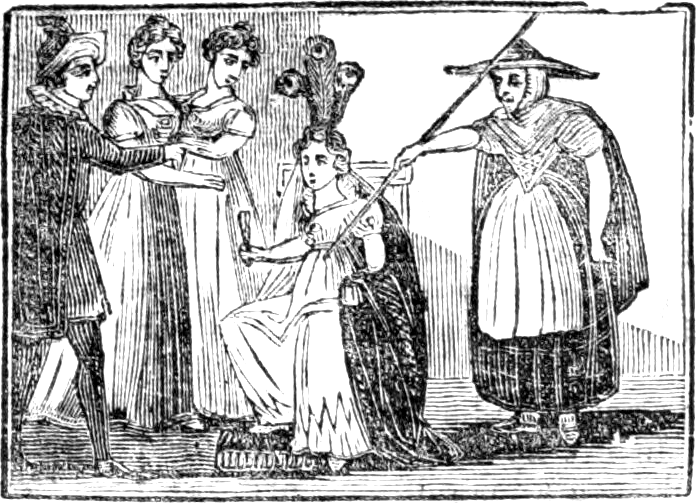
There is no single “original” Cinderella. Instead, the story belongs to a broad family of related tales that circulated across regions and centuries. Folklorists commonly group these tales under the international “Cinderella” story type, distinguished by a persecuted young woman, extraordinary assistance, a recognition object, and a changed social fate—often marriage.
Some of the earliest surviving written parallels include
Rhodopis: First-century BCE/CE account
In Strabo’s account, an eagle carries a sandal belonging to Rhodopis, a Greek woman in Egypt, to the Egyptian king. The shoe leads him to seek and marry its owner.
- Ye Xian: Around 850–860 CE
In a Chinese tale recorded by Duan Chengshi, a mistreated young woman receives magical help, attends a festival, loses a golden shoe, and is identified by its fit. - “La Gatta Cenerentola”: 1634
Giambattista Basile’s Neapolitan literary version features a young woman named Zezolla, a cruel stepmother, and a pathway to marriage. - “Cendrillon”: 1697
Charles Perrault’s French version established many features most familiar to modern readers, including the fairy godmother, the pumpkin coach, and the famous glass slipper. - “Aschenputtel”: 1812
The Brothers Grimm’s German version is darker and more violent. Cinderella receives help from a tree growing at her mother’s grave rather than from a fairy godmother.
The exact relationship among these tales is debated. Rhodopis and Ye Xian demonstrate that the “lost shoe leads to a royal match” motif appeared in very different cultural settings long before the best-known European versions. Rather than originating neatly in one place, Cinderella is better understood as a collection of stories that migrated, blended, and changed as storytellers adapted them for new audiences.
For Lady Tremaine, that long tradition matters. Hochhauser’s novel does not merely retell the version most readers learned as children; it asks us to recognize that every version has chosen who deserves sympathy. By centering Ethel, a twice-widowed mother dealing with property, social status, and her daughters’ futures, the novel shifts the tale from romantic wish fulfillment to a question of female survival.
Where Fairy Tales Come From
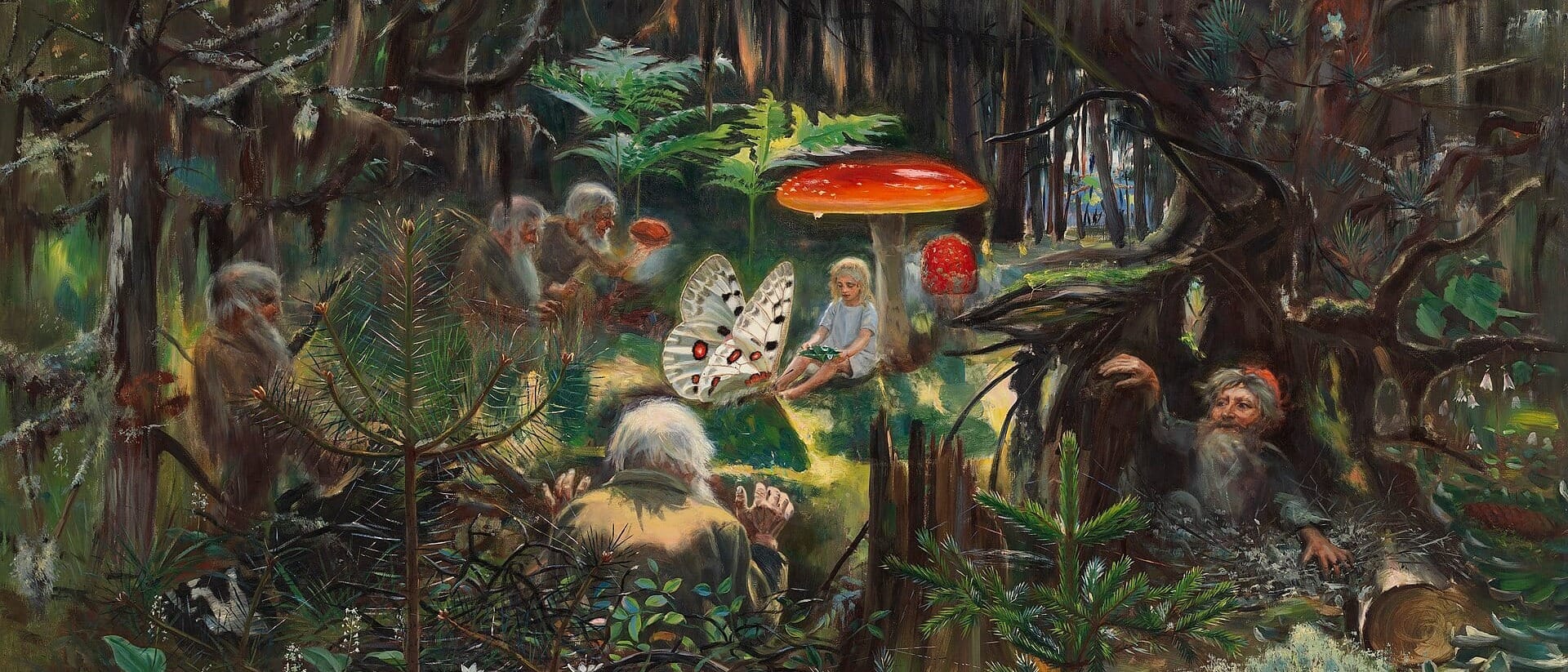
Fairy tales began primarily as oral stories: narratives told aloud, remembered, altered, and passed from person to person and generation to generation. Most have no single identifiable author. A storyteller might preserve the central plot while changing the setting, a character’s motivation, a punishment, a magical helper, or the ending to suit a local culture and its listeners.
Despite their modern association with nursery rooms and animated films, fairy tales were not originally written exclusively for children. They often addressed adult concerns:
- Marriage and the economic vulnerability of women.
- Inheritance, property, hunger, and class mobility.
- The dangers of strangers, abusive family members, and unequal power.
- Death, childbirth, jealousy, desire, betrayal, and revenge.
- Community rules about obedience, beauty, work, sexuality, and social behavior.
That context makes the stepmother figure more complicated than she may initially seem. Historically, remarriage was common after death in childbirth, illness, or war, and a blended household could create intense conflicts over food, land, inheritance, dowries, and parental loyalty. Folktales often turned those real pressures into dramatic family conflicts: the favored child and the neglected child, the biological mother and the stepmother, and the beautiful daughter and the practical daughter. Lady Tremaine takes those pressures seriously, asking what it might mean to be a mother trying to protect her own children in a society where marriage and reputation determine their safety.
Fairy tales therefore endure not because they are simple, but because they are flexible. They give each generation a framework for discussing fears and desires that may be difficult to name directly. Lady Tremaine is part of that ongoing tradition: a contemporary “untelling” that changes the moral center of a familiar story.
The Brothers Grimm
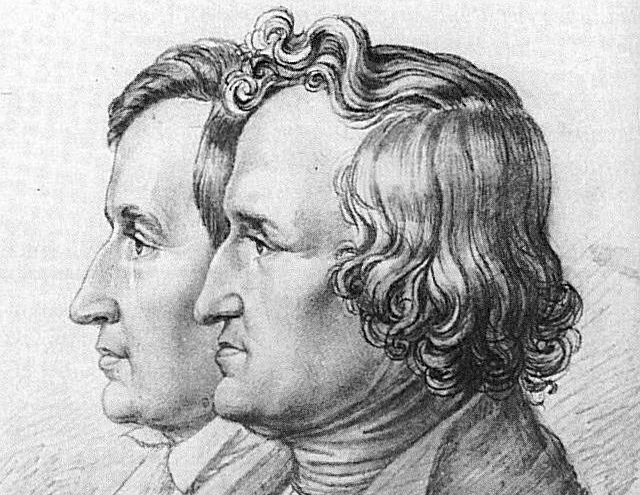
Jacob Grimm (1785–1863) and Wilhelm Grimm (1786–1859) were German scholars, linguists, and collectors of folklore. They are now often remembered as writers of children’s stories, but their original project was more scholarly and nationalistic: they wanted to collect, preserve, and study German-language oral traditions during a period of political fragmentation and cultural change.
Their collection, Kinder- und Hausmärchen—usually translated as Children’s and Household Tales—first appeared in two volumes: the first in 1812 and the second in 1814/1815. It eventually grew to 211 tales through later editions. The book included stories now known worldwide, such as “Snow White,” “Hansel and Gretel,” “Rapunzel,” “Rumpelstiltskin,” “Little Red Riding Hood,” and “Aschenputtel,” the Grimm version of Cinderella.
The Grimms did not simply transcribe stories word for word from anonymous peasants, as popular legend sometimes suggests. They gathered material from a range of informants and written sources, then edited, revised, combined, and reshaped tales across multiple editions. Their work helped define the modern idea of a national folklore tradition, even though many of the stories had clear international roots and parallels.
Their Cinderella, “Aschenputtel,” differs sharply from the familiar Perrault-and-Disney version:
- There is no fairy godmother. Aschenputtel receives aid from a hazel tree growing on her dead mother’s grave, along with helpful birds.
- The heroine attends the royal festival for three nights, not just one ball.
- The slipper is generally presented as golden, not glass.
- The stepsisters mutilate their feet to force them into the shoe.
- Birds expose the deception and later peck out the stepsisters’ eyes as punishment.
These darker elements reveal that fairy tales historically were not gentle moral entertainments. They could be brutal stories about justice, envy, family rivalry, punishment, and social survival.

Reading Lady Tremaine
Knowing this history deepens a reading of Lady Tremaine. Hochhauser writes in the shadow of Perrault’s elegant French Cendrillon, the Grimms’ harsher Aschenputtel, and centuries of oral storytelling in which the details were never stable.
For discussion, consider this question: If a fairy tale changes every time it is retold, is Lady Tremaine a villain being redeemed—or a character whose side of the story was always missing?

- Before reading the novel, what did “Lady Tremaine” mean to you? How did Hochhauser’s portrayal challenge—or reinforce—your existing image of Cinderella’s stepmother?
- Did the novel change your sympathies toward Ethel? At what moment, if any, did you begin to understand her choices differently?
- The book calls into question the idea of a clear-cut villain. Do you think Ethel is a victim of her circumstances, an agent of her own choices, or both?
- Which scene stayed with you longest after finishing the book? What made it emotionally or thematically memorable?
- If this story had been told by Cinderella rather than Ethel, how might readers interpret the same events differently?
Motherhood and Family
- Ethel’s love for her daughters is the emotional engine of the novel. What does she believe she owes them—and where does that sense of obligation become empowering, damaging, or both?
- Ethel suggests that mothers do not necessarily love or understand each child in identical ways. Did the novel’s portrayal of unequal or complicated maternal love feel honest, unsettling, or familiar?
- How does Ethel’s relationship with her daughters differ from her relationship with Cinderella? Are those differences based on affection, biology, social status, fear, resentment, or something else?
- Ethel often acts from a desire to protect her children’s future. When does protection become control? Did you agree with where she drew that line?
- The novel refuses the sentimental image of motherhood as purely instinctive or selfless. What does it suggest mothers are expected to sacrifice—and who benefits from those expectations?
- How does grief influence Ethel’s parenting, romantic decisions, and ability to trust? Does the novel portray grief as something a person overcomes, carries, or transforms?
Marriage, Class, and Power
- In this world, marriage is presented less as a romantic reward than as an economic and social survival strategy. How did that shift affect your reading of the Cinderella framework?
- Ethel sees respectability as a kind of protection for her daughters. What does “respectability” cost her, and what does it actually secure?
- The novel repeatedly links property, inheritance, status, and female vulnerability. Which forms of power are available to Ethel, and which are withheld from her?
- Ethel’s choices can be read as ambitious, calculating, practical, or desperate. Which word best describes her, and why?
- Does the novel argue that women can achieve meaningful freedom within the social structures around them, or must they bend and manipulate those structures to survive?
- How does Hochhauser complicate the traditional fairy-tale promise that a marriage—or a wealthy prince—guarantees a happy ending?
Retelling the Fairy Tale
- What does the novel gain by retelling Cinderella from the stepmother’s perspective rather than creating an entirely original story?
- Which familiar elements of Cinderella—the ball, the house, beauty, marriage, rivalry, the glass slipper, or the stepfamily—felt most transformed in this version?
- The novel asks readers to reconsider who gets called “wicked.” What behaviors are condemned in Ethel that might be praised as resourcefulness or determination in a male character?
- Is it possible to reclaim Lady Tremaine’s humanity without minimizing the harm she causes? Where did the novel succeed or struggle with that balance?
- Does reframing a villain risk excusing her actions, or does it simply demand that readers understand the full context behind them?
- If every fairy tale has a narrator with an agenda, whose version of Cinderella have readers traditionally been taught to believe—and why?
Big Questions
- What does Lady Tremaine suggest about the difference between being perceived as cruel and being forced to make cruel choices?
- Ethel thinks deeply about fear, goodness, and the need for women to conceal their “fleshy interiors” behind manners and appearance. What kinds of emotional performance does the novel ask women to undertake?
- Who in the novel has the freedom to be selfish without being punished? Who is expected to be self-sacrificing?
- The novel treats happiness as fragile and sometimes difficult to recognize while it is happening. How does this idea shape Ethel’s regrets and decisions?
- What role does beauty play in the story? Is it a form of power, a burden, a commodity, a source of danger, or all of these at once?
- Did the ending feel like justice, tragedy, liberation, compromise, or something more complicated? What outcome would you have wanted for Ethel and her daughters?
- After reading Lady Tremaine, what does “happily ever after” mean to you? Is it safety, love, independence, financial security, being understood—or something else entirely?


Lady Tremaine practically begs for a book club gathering that feels a little grand, a little weathered, and just one unpaid bill away from disaster. Lean into Ethel’s world: faded manor-house elegance, falconry, wildflowers, candlelight, and the tension between polished appearances and hard-earned survival.
The Fading Manor Table
Start with a cream, ivory, or pale gray tablecloth, then layer a slightly rumpled velvet runner in moss green, wine red, or deep teal. Add mismatched brass candlesticks, thrifted teacups, and a few books with worn-looking covers. The goal is “Bramley Hall trying very hard to look respectable,” not “perfectly coordinated wedding reception.” If a candlestick is a little tarnished, congratulations—you’ve nailed the mood.
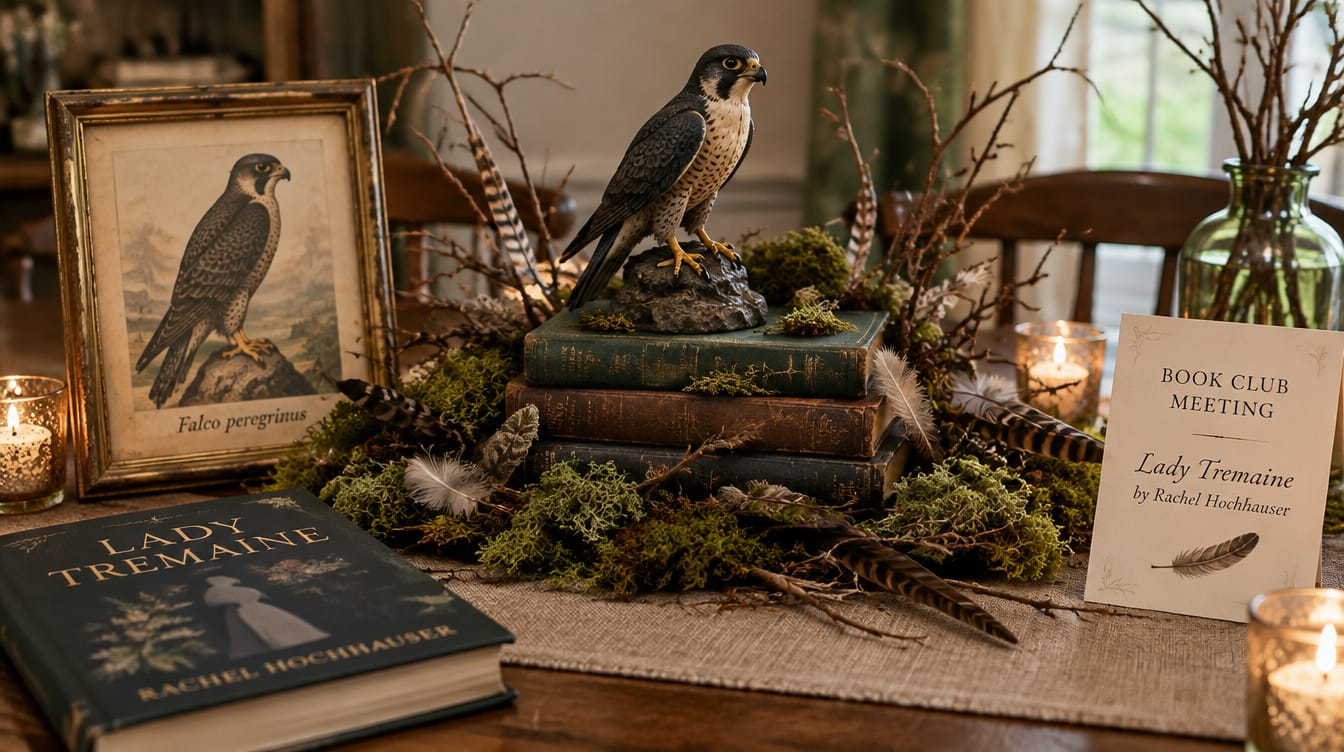
Falconry-Inspired Centerpiece
Give Ethel’s love of falconry a starring role with a simple bird-themed centerpiece. Place a small faux falcon, owl, or raven figurine on a stack of old books, then surround it with faux moss, bare twigs, and a few feathers. No bird figurine? Print a vintage-style image of a peregrine falcon, pop it into a thrifted frame, and place it at the center of the table. It’s inexpensive, unexpected, and a lovely nod to the part of Ethel that existed long before everyone began defining her by marriage and motherhood.
“Keeping Up Appearances” Silver and Glass
Ethel’s household is running low on resources, but she still understands the importance of a well-appointed room. Recreate that tension by gathering whatever looks most elegant from around the house: silver trays, glass vases, a crystal bowl, china plates, or even a single fancy serving dish. Use those polished pieces only in one area—perhaps the food table or entryway—while keeping the rest casual. The visual contrast quietly captures the novel’s central struggle: what people see versus what it costs to make them see it.
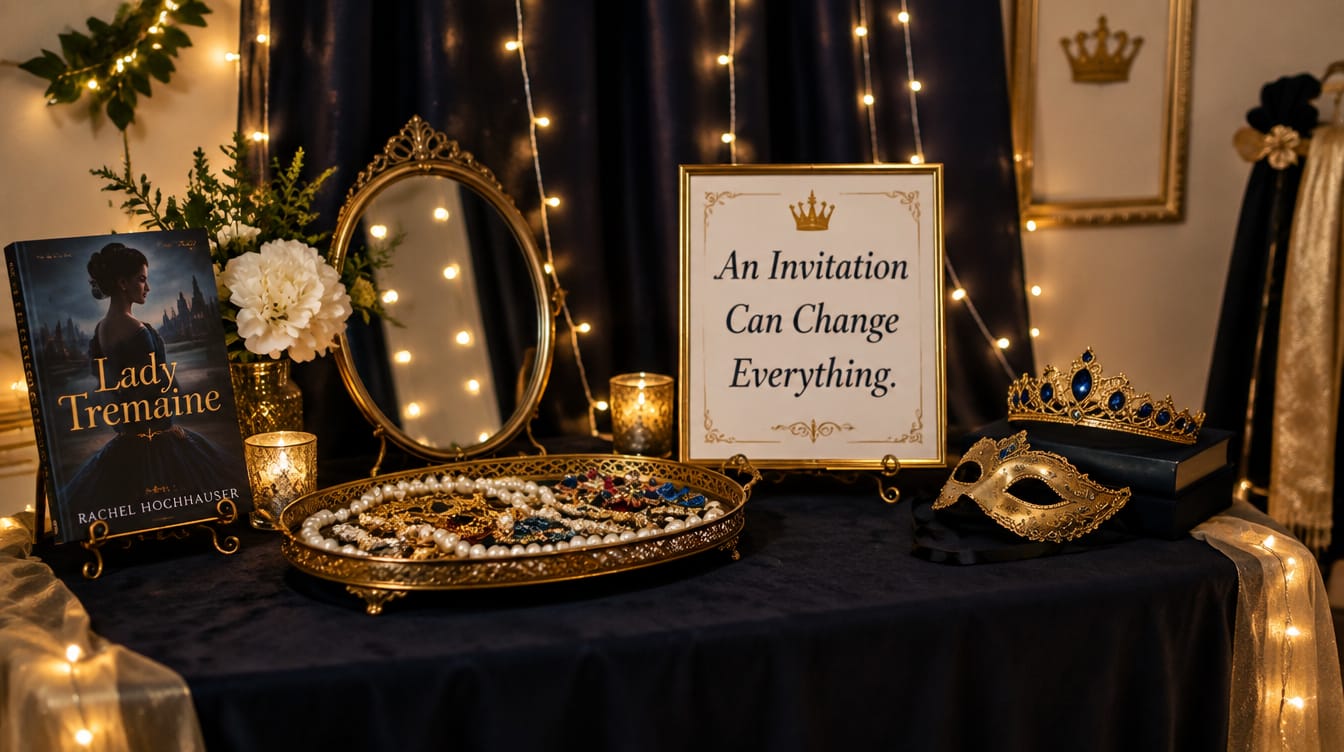
The Royal Ball Corner
Create a modest “royal ball” vignette with gold accents, a navy or black tablecloth, and strings of warm-white lights. Add a small mirror, a tray of inexpensive costume jewelry, and a printed sign that reads, "An Invitation Can Change Everything.” You don’t need a ballroom—or a chandelier that requires its own insurance policy. A single decorated corner gives guests a playful spot for photos and reminds everyone that the ball is not merely a romantic fantasy in this story; it is a high-stakes opportunity with consequences.
Candlelit Castle Ambiance
Turn down harsh overhead lights and use LED candles, pillar candles, or simple lamps to create a softer, older-world glow. Place candles at different heights using cake stands, overturned bowls hidden beneath fabric, or stacks of books. For safety and sanity, LED candles are ideal if people will be reaching across the table for snacks. You want “medieval manor at twilight,” not “book club meeting interrupted by a visit from the fire department.”
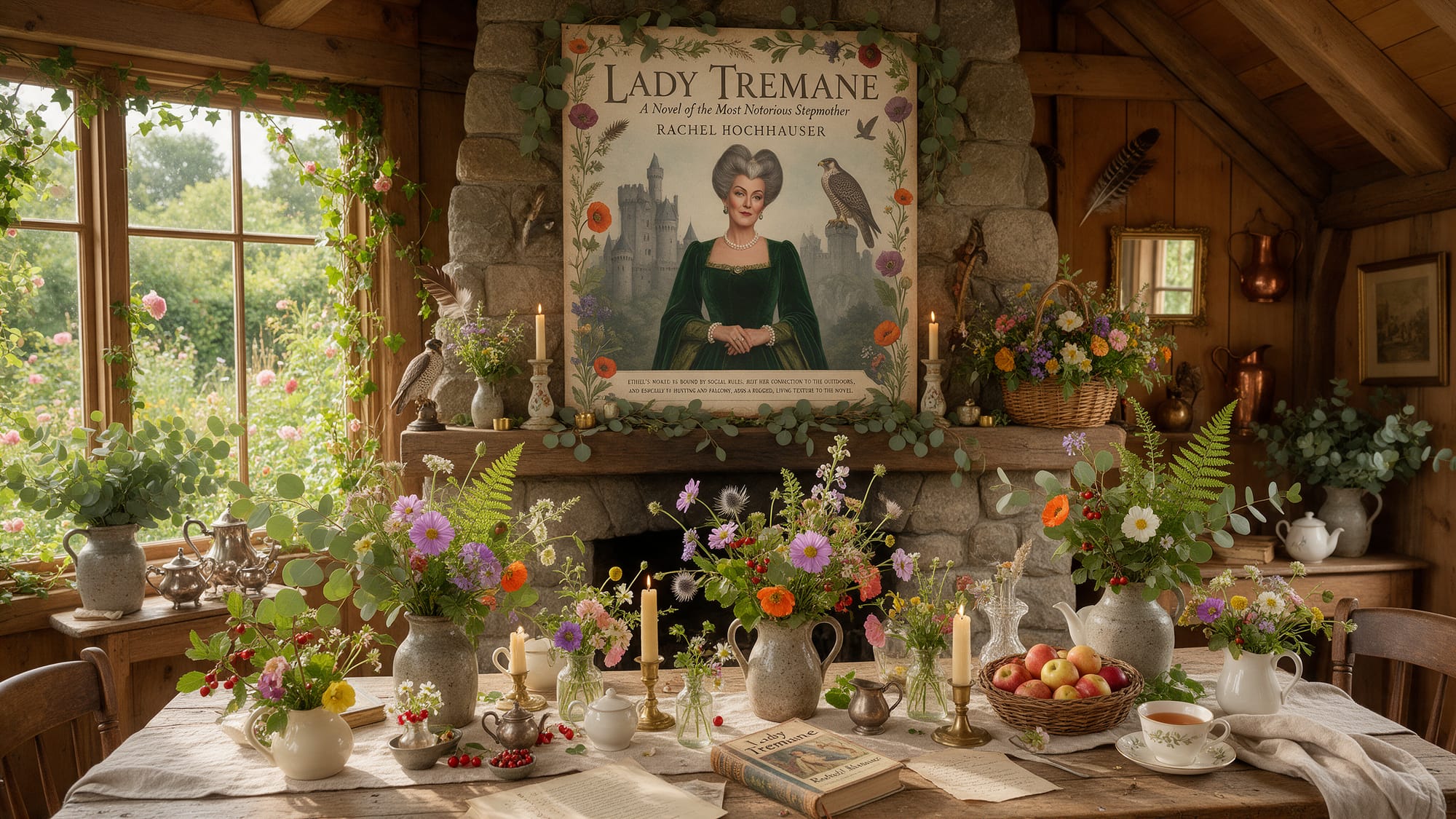
Wildflowers and Foraged Greenery
Skip expensive florist arrangements. Instead, fill small jars, bottles, or bud vases with grocery-store flowers, clipped greenery, eucalyptus, branches, or wildflower-style stems. Choose loose, slightly untamed arrangements rather than tight, formal bouquets. Think hedgerow rather than palace garden. Ethel’s world is bound by social rules, but her connection to the outdoors—and especially to hunting and falconry—adds a rugged, living texture to the novel.
The Marriage Market Place Cards
Make each guest a simple place card in the style of an old invitation. Use cream cardstock or torn-edged kraft paper, write each name in calligraphy or a decorative font, and add a small gold sticker or wax-seal-style adhesive. For an extra bit of mischief, place a tiny conversation prompt on the back, such as
- “Would you attend the royal ball?”
- “Is security worth a loveless match?”
- “What would you sacrifice for your children?”
- “Who has the most power in this story?”
It is decor that does double duty, which every busy organizer can appreciate.
The Threadbare Luxury Detail
Wrap plain glass vases with ribbon, lace, twine, or strips of velvet. Use a few gold-painted faux leaves or small metallic accents, but do not make everything shiny. The charm lies in mixing “luxury” materials with humble ones—like lace around a recycled jar or velvet ribbon tied around a plain napkin. This visually echoes Ethel’s life: she has the title, the manor, and the expectations of gentility, but not necessarily the money to sustain them. Beautiful, a bit frayed, and very much making it work.
Fairy-Tale Bookshelf Display
Create a small display near the entrance or refreshment table with copies of Lady Tremaine, a few editions of Cinderella, and other fairy-tale retellings your group may enjoy. Add a sign with a question such as "Who gets to be the villain?” Layer in a small crown, a vintage key, a pocket watch, or a single slipper-shaped ornament if you have one. Keep it restrained; one clever reference is charming, while twelve glittery slippers can quickly turn the room into a children’s birthday party.
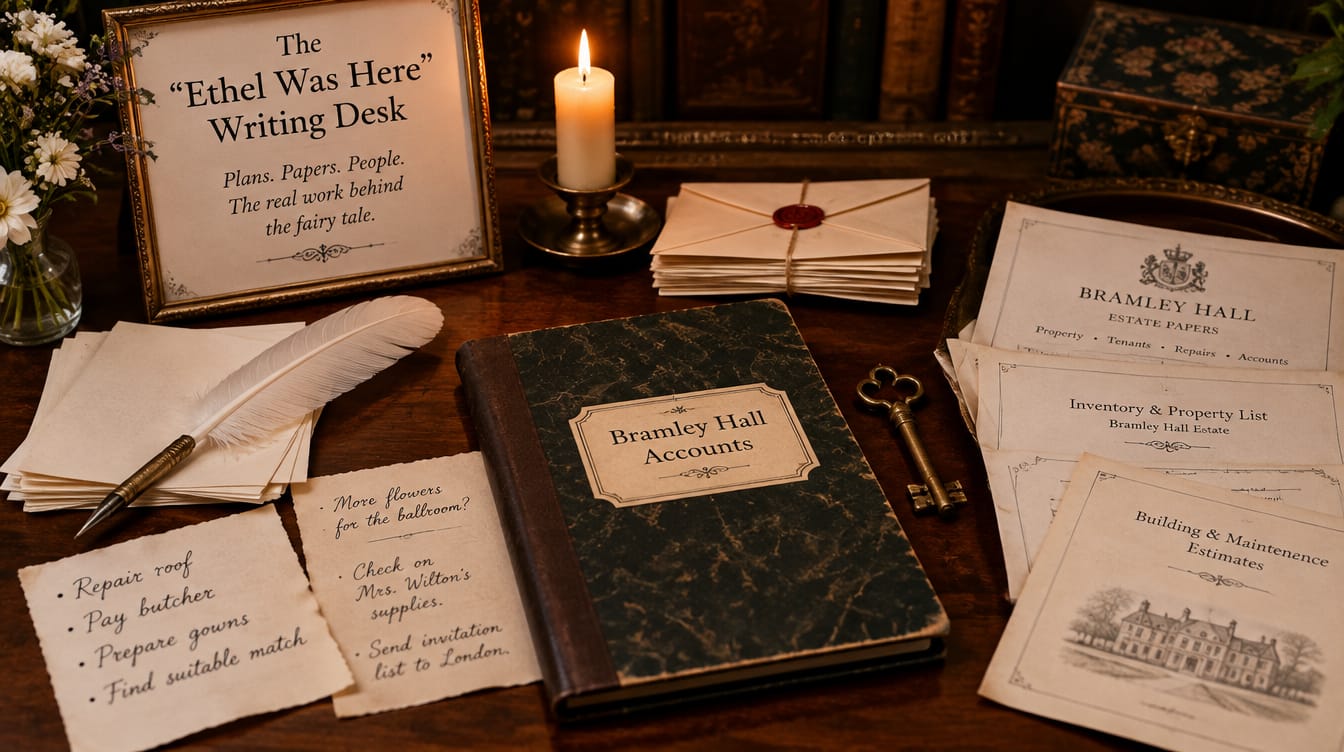
The “Ethel Was Here” Writing Desk
Set up a small desk, side table, or tray as Ethel’s imagined planning station. Include a feather pen or regular pen, a small stack of paper, sealed envelopes, a ledger-style notebook, a key, a candle, and a few “estate papers” you print yourself. Label the notebook “Bramley Hall Accounts” and scatter a few handwritten notes nearby: “Repair roof,” “Pay butcher,” “Prepare gowns,” or “Find suitable match.” It gives guests an immediate visual reminder of the invisible labor and relentless calculation beneath the fairy-tale surface.

- Icebreaker: Falconer for a Day (Activity in printable kit)
- Icebreaker: Fairy-Tale Fact or Fiction Quiz Activity (In printable kit)
- Icebreaker: The Glass Slipper Case File Activity (In printable kit)
- Icebreaker: Cinderella’s Impossible Choices Activity (In printable kit)
A Lady Tremaine book club menu should feel like it was assembled for a royal ball on a very non-royal budget: elegant enough to impress the court, practical enough to feed a roomful of readers, and not so complicated that the host ends up resenting every guest before discussion even begins. These ideas draw on the novel’s woodland manor, falconry, royal-ball ambitions, and the fragile polish Ethel works so hard to preserve.
Appetizers
Bramley Hall Cheese and Fruit Board
Arrange sharp cheddar, brie, crackers, apple and pear slices, grapes, dried apricots, walnuts, and a small bowl of honey on a wooden board. It looks suitably manor-house elegant but comes together with almost no cooking—exactly the kind of respectable display Ethel would appreciate.
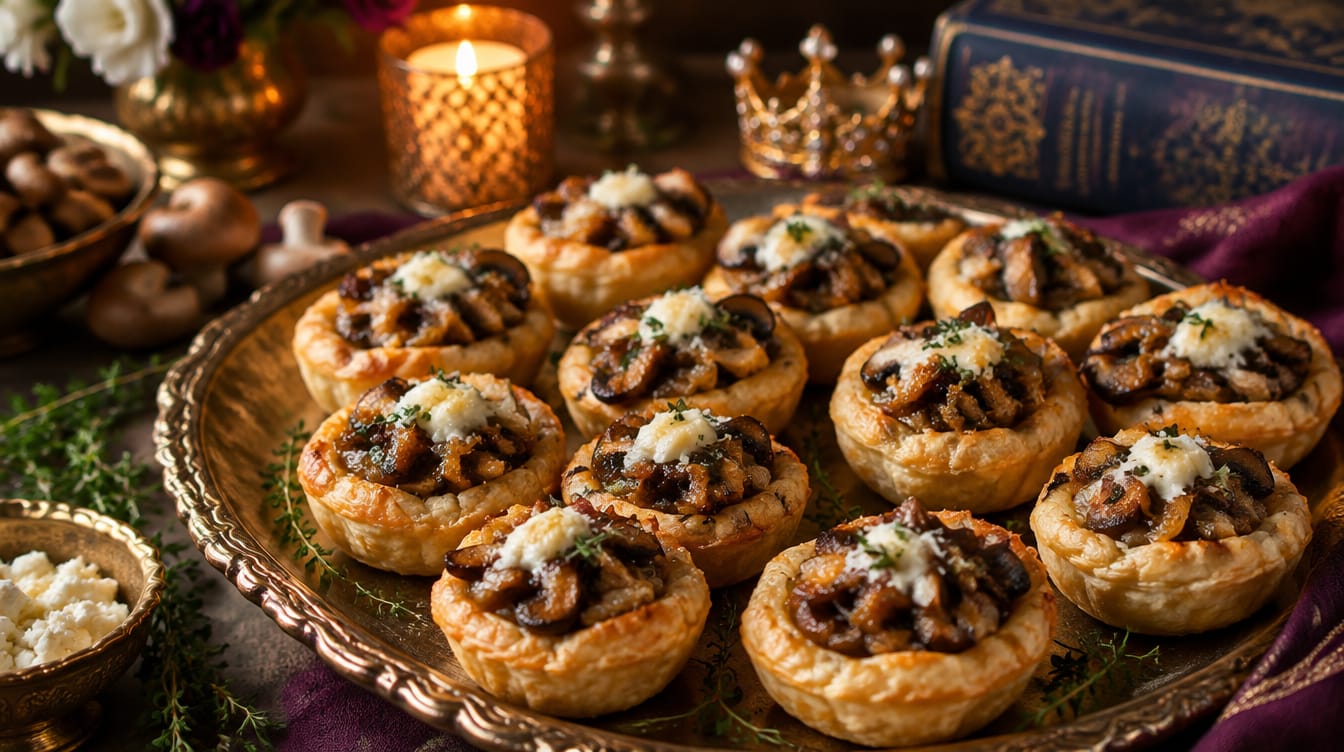
Royal Ball Mushroom Tartlets
Use frozen puff pastry, sautéed mushrooms, caramelized onions, and a little goat cheese or gruyère to make bite-size tartlets. They feel rich and party-ready without requiring anyone to wear a crown while standing over the stove.
Falconer’s Woodland Skewers
Thread cubes of roasted chicken, grapes, and mild cheese onto small skewers, then garnish the platter with rosemary sprigs. The savory-sweet combination gives a small nod to Ethel’s hunting and falconry life while remaining easy to eat during conversation.
Entrees
The Crumbling Manor Chicken Pot Pie
Serve a large chicken pot pie or individual mini pies filled with chicken, carrots, peas, celery, and a creamy herb sauce. It is warm, comforting, and a little rustic beneath its golden pastry lid—rather like Bramley Hall itself: fraying at the edges but still trying to look grand.
Royal Ball Herb-Roasted Chicken
Roast chicken thighs or breasts with rosemary, thyme, garlic, lemon, and a drizzle of olive oil. Pair with roasted potatoes and green beans for a meal that reads as “special occasion” without demanding palace-level kitchen staffing.

Ethel’s Woodland Mushroom Pasta
Toss pasta with sautéed mushrooms, garlic, butter or olive oil, fresh herbs, parmesan, and a splash of cream or vegetable broth. This is a hearty vegetarian choice with an earthy, woodsy feel that suits the manor’s forest setting and keeps the menu friendly to non-meat eaters.
The Prince’s Feast Meatball Sliders
Serve beef, turkey, or plant-based meatballs in small rolls with a sweet onion jam or cranberry sauce. Add a platter of roasted root vegetables on the side. It is more relaxed than a formal feast but still feels festive—and much easier to balance while someone is passionately defending Ethel’s choices.
Desserts
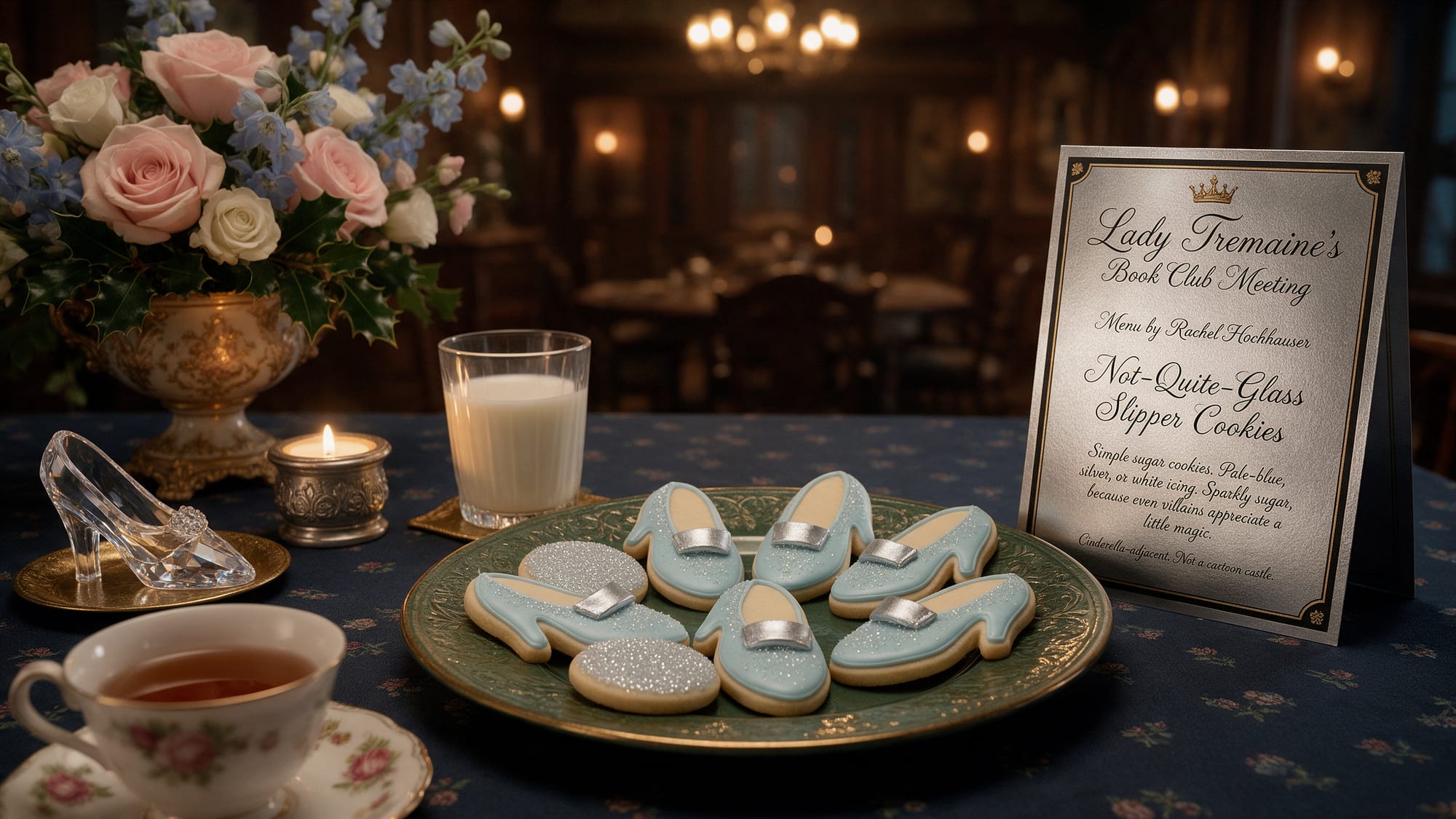
Not-Quite-Glass Slipper Cookies
Bake or buy simple sugar cookies, then decorate them with pale-blue, silver, or white icing. A slipper-shaped cookie cutter is fun but optional; a round cookie topped with sparkly sugar still gets the point across. This is Cinderella-adjacent without turning the gathering into a cartoon castle.
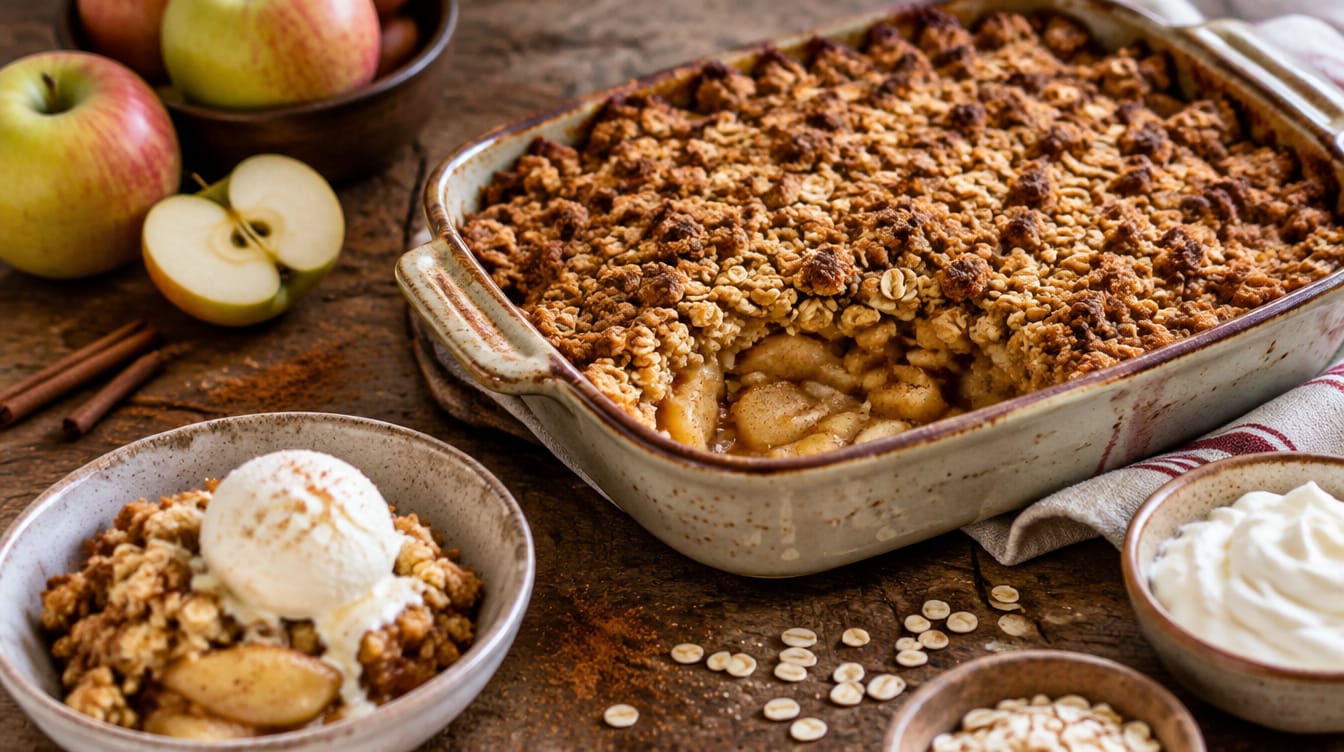
Bramley Apple Crumble
Bake sliced apples with cinnamon, brown sugar, oats, butter, and a crunchy topping. Serve warm with whipped cream or vanilla ice cream. It feels humble, cozy, and appropriate for a household trying to stretch an apple harvest into dessert for everyone.
Royal Ball Chocolate Truffles
Set out store-bought or homemade truffles in gold or silver candy cups. Choose a mix of dark chocolate, sea salt, raspberry, and caramel flavors for a dessert that looks glamorous even if it was purchased five minutes before the meeting. No judgment in this manor.

Peregrine’s Nest Cupcakes
Make chocolate cupcakes topped with chocolate frosting, toasted coconut “nests,” and two or three candy eggs. They are a playful tribute to Ethel’s peregrine falcon—and a conversation starter for anyone who needs a break from analyzing traumatic family dynamics.
Beverages
The Lady Tremaine Sparkling Punch
Mix sparkling apple cider, ginger ale, orange slices, apple slices, and frozen berries in a punch bowl. Serve it in glasses with a rosemary sprig for an easy drink that looks far fancier than it is. Add prosecco for an optional grown-up royal-ball variation.

Bramley Hall Mulled Cider
Warm apple cider with orange slices, cinnamon sticks, cloves, and a little ginger. This is especially lovely for a fall or winter gathering, when everyone wants to hold something warm while deciding whether the prince deserves the benefit of the doubt.

The Falconer’s Blackberry Lemonade
Combine lemonade with muddled blackberries or blackberry syrup, then add lemon wheels and fresh mint. Its deep berry color looks suitably dramatic on a drinks table, and the tart-sweet flavor makes it feel more special than standard lemonade.
Midnight at the Ball Mocktail
Mix sparkling water or lemon-lime soda with cranberry juice, a splash of lime, and a few frozen grapes or berries. Serve in clear glasses with a sugar rim if you are feeling ambitious. It has the right dramatic color and sparkle for a drink inspired by an evening when everything changes—usually just before midnight.
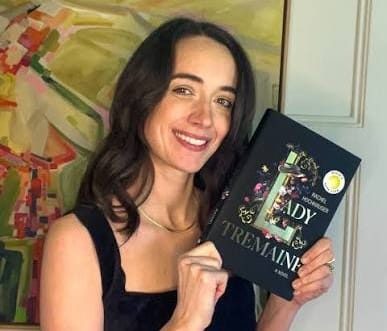
Get Rachel Hochhauser's Lady Tremaine
Rachel Hochhauser writes with the kind of sharp, immersive clarity that makes history feel immediate, flawed women feel fiercely real, and a familiar fairy tale impossible to see the same way again.
Bookshop.org was created as a socially conscious alternative to Amazon, with the goal of helping local, independent bookstores thrive. This is why Readers With Wrinkles supports their efforts. Please join us in this effort by purchasing your next read here.
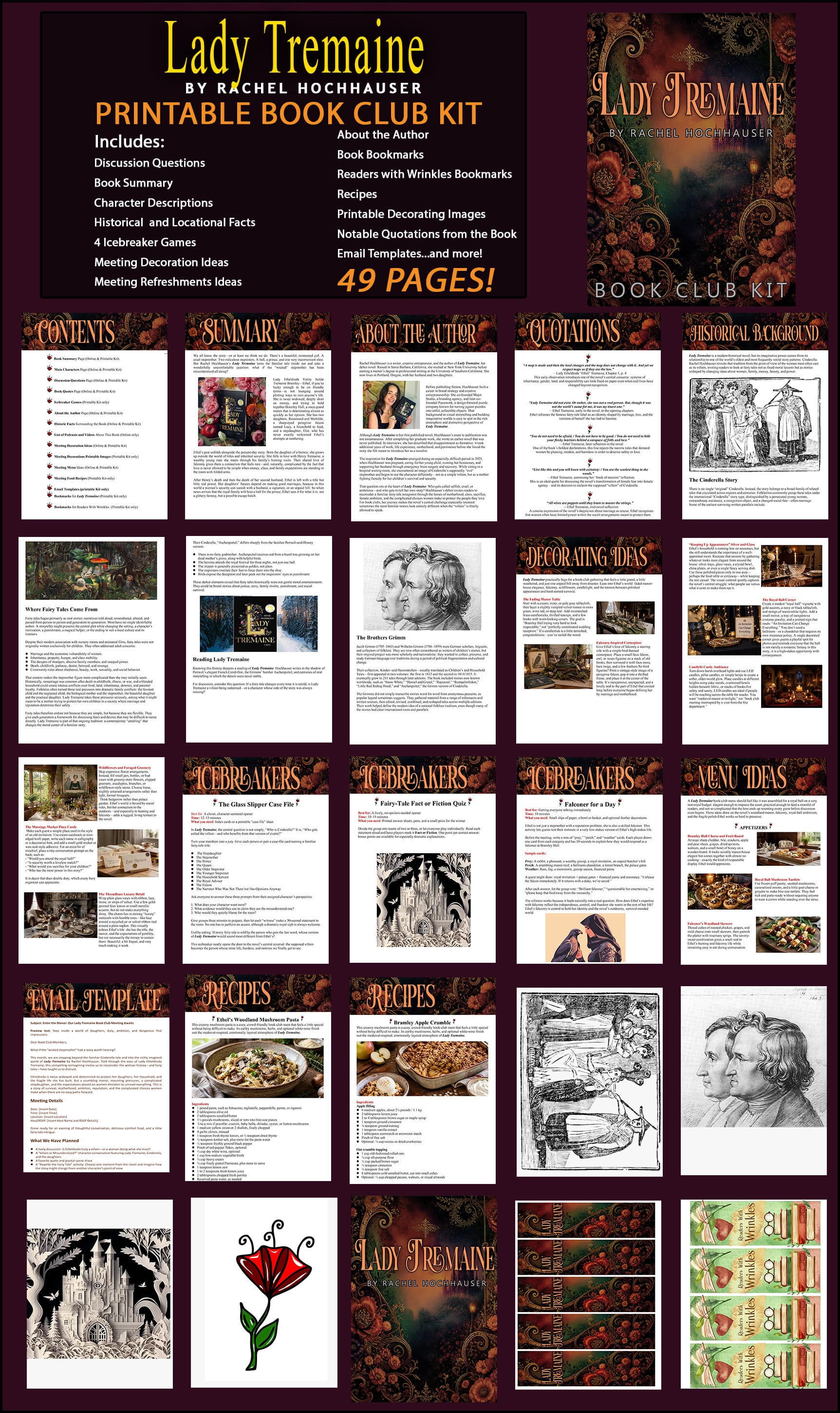
Lady Tremaine printable BOOK CLUB KIT
The RWW book club kits provide everything you need to organize a great meeting with insightful discussions. These resources simplify book club preparation with character lists, book quotes, refreshment suggestions, recipes, and carefully prepared book club questions!
Comments