


Table of Contents
March is a funny month. It can't make up its mind — one day you're reaching for a sweater, the next you're squinting at actual sunshine like you've never seen it before. It's the month of false starts and sudden warmth, of Daylight Saving Time stealing an hour of your sleep and giving you nothing but a longer evening in return. And honestly? That extra light is exactly what I used to read thirteen books.
Thirteen. I'm not bragging — okay, maybe a little — but mostly I'm here to tell you that every single one of these books had something to say, and some of them said it so loudly I'm still thinking about them weeks later.
We've got a psychological thriller that made me distrust everyone in my house (My Husband's Wife), a novel that tackles family silence with the subtlety of a grenade (We Don't Talk About Carol), and a biography so monumental it practically has its own gravity (American Prometheus). There's heartbreak, humor, historical weight, and at least two books I finished in a single sitting with cold coffee and zero regrets.
So whether you're building your spring reading list, hunting for your next book club pick, or just looking for someone to tell you what's actually worth your time — you're in the right place. Let's get into it.
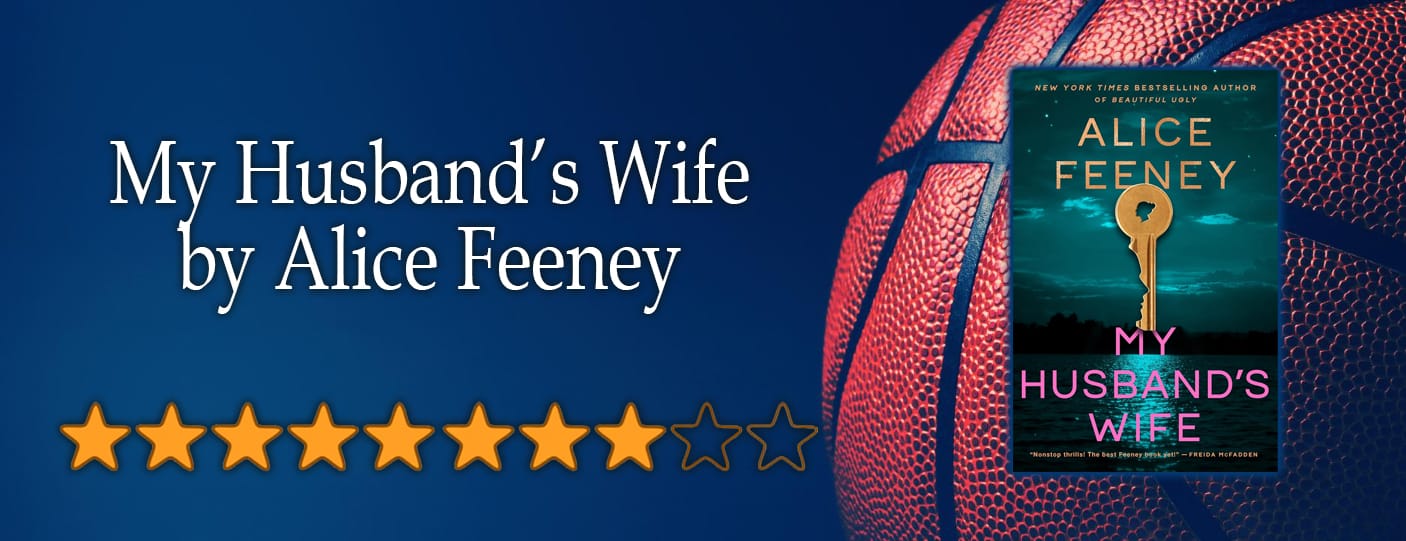
You go out for a quick run before the biggest night of your career, come home sweaty and happy—and your key doesn’t work. There’s a woman inside your house who looks disturbingly like you, opening your door like she belongs there. Your husband? He smiles at her, wraps an arm around her, and calmly tells you that she is his wife.
That’s the nightmare Alice Feeney drops you into in My Husband’s Wife. You’re pulled into the lives of Eden, an artist about to break big, and Birdy, a reclusive woman who’s inherited the same seaside house, Spyglass, along with access to a company that claims it can predict the exact date you’ll die. Two women, one house, one very questionable husband, and a tangle of lies that mess with your sense of identity and memory in the best “I can’t put this down” way.
If you love domestic thrillers with sharp edges—messy marriage dynamics, morally complicated women, and reveals that actually surprise you—this one is absolutely worth clearing an evening for.

After her grandmother dies, Sydney Singleton flies home to North Carolina expecting dusty photo albums and family drama, not a secret relative staring back at her from an old picture. The little girl in the photograph looks uncannily like Syd—and turns out to be Carol, the aunt no one has mentioned in decades, one of six Black girls who vanished in the 1960s while the town collectively looked the other way.
Syd is a former crime reporter trying to start a family of her own, but once she learns who Carol was, that old investigative instinct kicks in hard. What begins as a search for answers about one missing girl pulls her into a buried history of ignored victims, ugly small-town secrets, and the kind of generational silence that seeps into everything—marriages, motherhood, even how you see yourself. As she digs deeper, Syd has to reckon not just with what happened to Carol, but with her own past trauma, her father’s alcoholism, her grandmother’s pride, and a very real fear that this obsession might cost her the future she’s trying to build.
This is a mystery, yes, but it’s also a deeply emotional story about Black girls whose pain never made the headlines, about the rot at the roots of a family tree, and about a woman who refuses to stay quiet anymore—even if the truth blows everything up. If your book club loves layered family secrets, true-crime-adjacent plots, and complicated, flawed women trying to heal, this one belongs on your stack.

At a bar in Louisiana, a woman who looks like money and trouble—red lips, designer heels, Negroni in hand—comes in. It’s “Camille Bayliss.” Except it isn’t. It’s Aubrey Price, and she’s slipped into Camille’s life like it’s a costume she’s been rehearsing for years.
Camille has the glossy, old‑money existence—married to high‑powered lawyer Ben Bayliss, living the country‑club dream—but she’s pretty sure her husband’s secrets are darker than his suits, and he tracks her every move so she can’t prove a thing. Aubrey, on the other hand, has been haunted for a decade by one terrible night and is convinced Ben knows exactly what happened; she just needs a way in. So these two women—strangers, really—make a wildly reckless, wildly compelling deal: for twelve hours, Aubrey will become Camille, phone, car, and credit cards included, while the real Camille disappears into the shadows to spy on Ben and finally get answers.
By morning, Ben is dead. Now both women desperately need an airtight alibi, but only one of them actually has one, and every tiny lie starts to matter. If you love thrillers where “just one little plan” turns into a full‑blown disaster, where every alibi has hairline cracks, and where you catch yourself muttering, “Oh no, do not do that” while hunched over the pages at 1 a.m., Anatomy of an Alibi is that book. It doesn’t just ask who killed Ben; it keeps poking at a sharper question: what would you risk—your freedom, your reputation, your own sense of self—to finally drag the truth into the light?

A thirty-year-old man, living in small-town Minnesota with his elderly mom, his blind-and-deaf Saint Bernard, and a job scraping roadkill off the highway—somehow manages to convince himself, “Yeah, this is a pretty good life.” That’s Denny Voss. On paper, he’s “developmentally delayed” after an accident at birth; in reality, he’s funny, stubborn, literal to a fault, and quietly more perceptive than most of the “normal” people judging him.
Now jump to the part where this same guy is sitting in jail, charged with murdering a mayoral candidate after crashing a sled full of guns into a tree. Yes, a sled. Full of guns. As Denny waits for trial, a court-appointed therapist walks him back through the disastrous year that led here: the time he “rescued” (okay, kidnapped) a neighbor’s vicious goose; the time he somehow ended up assisting a bank robbery; and all those moments when he tried to do the right thing and the universe responded, “Absolutely not.”
The book unfolds through Denny’s own sideways, detail-crammed storytelling, blending laugh-out-loud chaos with gut-punch honesty as pieces of the murder mystery fall into place. While you’re wondering who really pulled the trigger, the novel is quietly asking much bigger questions: What happens when a whole town decides who you are before you even open your mouth? How do you claim your life when everyone treats you like a problem to be managed?
By the time Denny begins to uncover the truth—about the crime, his family, and the ways people have failed and protected him—you’re not just hoping he beats the charges; you’re rooting for him to be seen, fully, for the first time. If you like stories that are darkly funny, emotionally sharp, and willing to wade into messy territory like prejudice, trauma, and gun violence without losing their heart, this is one of those rare novels that will stay lodged under your skin long after you close the cover. Read the full review of this wonderful book here.
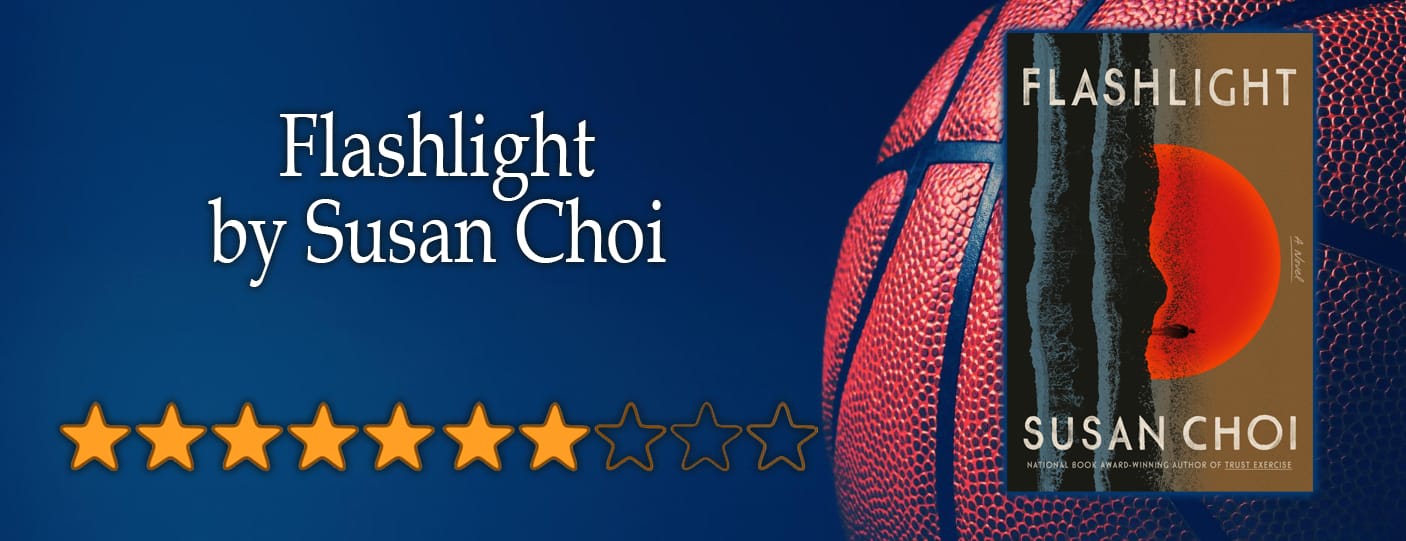
Ten-year-old Louisa is walking a Japanese beach at night with her dad, watching his flashlight beam skim the dark water—and then wakes up in a hospital, blue with cold, sand in her mouth, and her father is simply…gone. That’s where Flashlight starts, and Susan Choi never lets you look away from the blast radius of that one night.
Louisa survives, but she doesn’t remember what happened; her father, Serk, a Korean man who grew up poor and stateless in Japan before reinventing himself as a math professor in the U.S., is presumed drowned. Her American mother, Anne, is already estranged from her own family and soon develops a debilitating illness, so this isn’t your tidy “heal together after tragedy” story—it’s messier, sharper, and more honest about how grief can warp a life. The novel keeps circling back to that night on the breakwater, shifting across decades, continents, and perspectives—Serk, Anne, Louisa, and the half-brother whose return cracks the family open again—as the truth of what happened gets refracted through memory, secrecy, and political history.
Choi threads in the very real North Korean abductions off the Japanese coast, so Serk’s disappearance is never just “a sad accident”; it’s tangled up with propaganda, prison camps, and the way ordinary families get used as raw material by powerful regimes. This is a big, ambitious, time-hopping novel that asks you to pay attention and rewards you with a slow, devastating accumulation of insight rather than neat answers. If you like family stories that aren’t afraid of political complexity, that take trauma seriously but still make room for love, anger, and the weird ways people keep going, Flashlight is very likely your kind of book. Read the full review here.
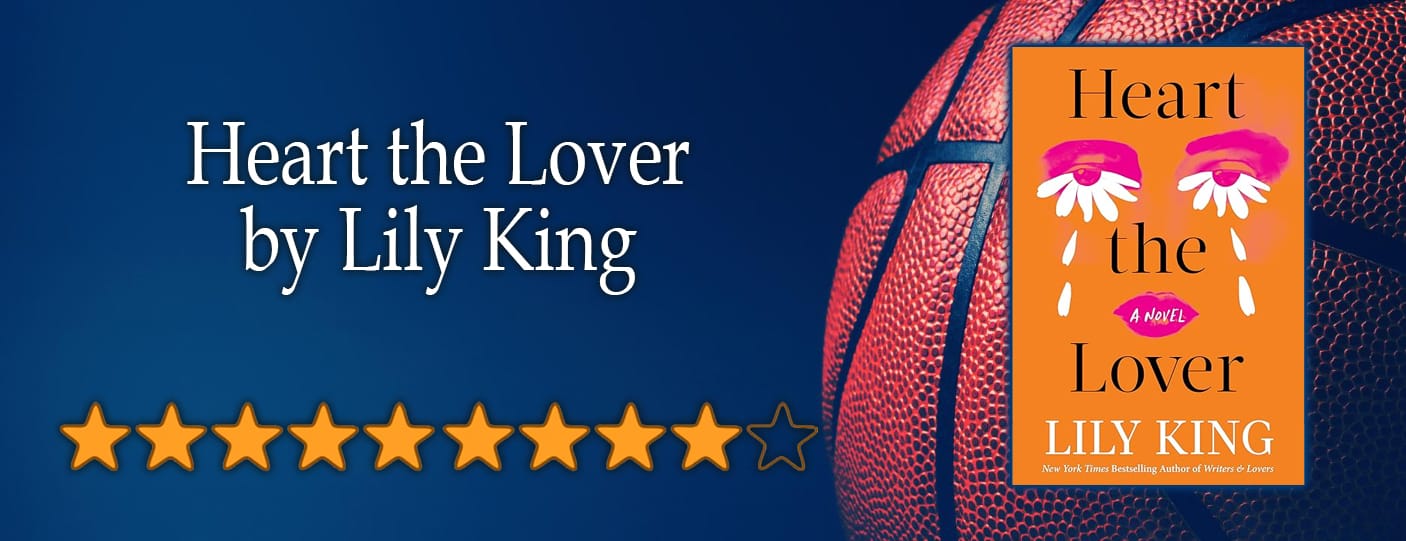
You know that one person from your past you’ve carefully packed in bubble wrap and shoved onto the highest shelf of your memory closet? Heart the Lover is what happens when they walk back through the door and ask, very calmly, “So… what did we do to each other?”
Lily King’s novel follows a woman in her senior year at a Southern university in the late 1980s, when she stumbles into an intense friendship with two dazzling lit class boys, Sam and Yash. They read, debate, flirt, play cards, and basically live in that crackling, sleep-deprived universe where everything feels like it might matter forever. The guys nickname her “Jordan,” and within this little triangle, desire starts tilting the table: first toward one boy, then the other, until a single choice shatters what felt unbreakable.
Decades later, “Jordan” is a married writer and mother, finally living the life she once only argued about in seminar rooms—until news of a terminal illness drags the past straight into her present. The book moves between three timelines: college, the messy in-between years, and a gut-punch of a reunion in a hospital room where three middle-aged people try to make sense of a love story they never really finished.
This isn’t just “nostalgic campus romance” or “bittersweet first love.” It’s about how smart people can still be idiots at twenty‑one, how loyalty and desire don’t always want the same things, and how the stories we tell ourselves about “the one that got away” age right along with us. There’s humor here, and sex, and gloriously petty moments, but also the kind of emotional precision that makes you suddenly remember your own college hallway, your own terrible haircut, your own almosts. Read my full review of this book here.

Vernice (Niecy) and Annie are “cradle friends,” two Black girls in 1950s Honeysuckle, Louisiana, bonded first by proximity—houses side by side—and then by something much deeper: both of their mothers are gone before they can remember them. Niecy’s mother is murdered by her father, leaving Niecy to be raised by an aunt, while Annie’s mother walked away and left her with a strict grandmother. They grow up in a segregated South where a bus seat can change your future, a wrong move can get you hurt, and a girl is expected to be “good” before she’s allowed to be herself.
By the time they’re on the edge of adulthood, the fork in the road is impossible to ignore. Niecy, the rule follower, claws her way toward possibility—college at Spelman in Atlanta, a ticket into an elite Black world that’s polished on the outside and complicated underneath. Annie, restless and furious with the limits of Honeysuckle, bolts in the opposite direction: she chases a rumor of her mother to Memphis, falling in with two local boys, a bar, and a new “family” that’s as messy as it is intoxicating. The story slides between their perspectives, so you’re never just watching them—you’re sitting beside them, feeling every bad decision, every small, hard-won joy.
Kin isn’t content with “friendship is powerful” and a pat on the head; it digs into sisterhood when it’s lopsided, when jealousy creeps in, when class and geography turn childhood equals into very different kinds of women. The novel wrestles with racism, poverty, colorism, reproductive rights, and the blunt fact that sometimes the family you get is a wound, and the family you choose is the bandage. As years pass and a devastating tragedy pulls Niecy and Annie back into each other’s orbit, Jones forces you to ask what we owe the people who knew us before we knew ourselves and what it costs to finally claim the life you want.
If you like your historical fiction lush but not fussy, full of complicated women who make choices you’ll want to argue with, this is that book. And if you’re in the mood for a story that might leave your heart a little bruised but also strangely steadier—because you’ve just watched two girls scrape meaning out of a world determined to shrink them—go ahead and clear a weekend for Kin. Read the full review here.
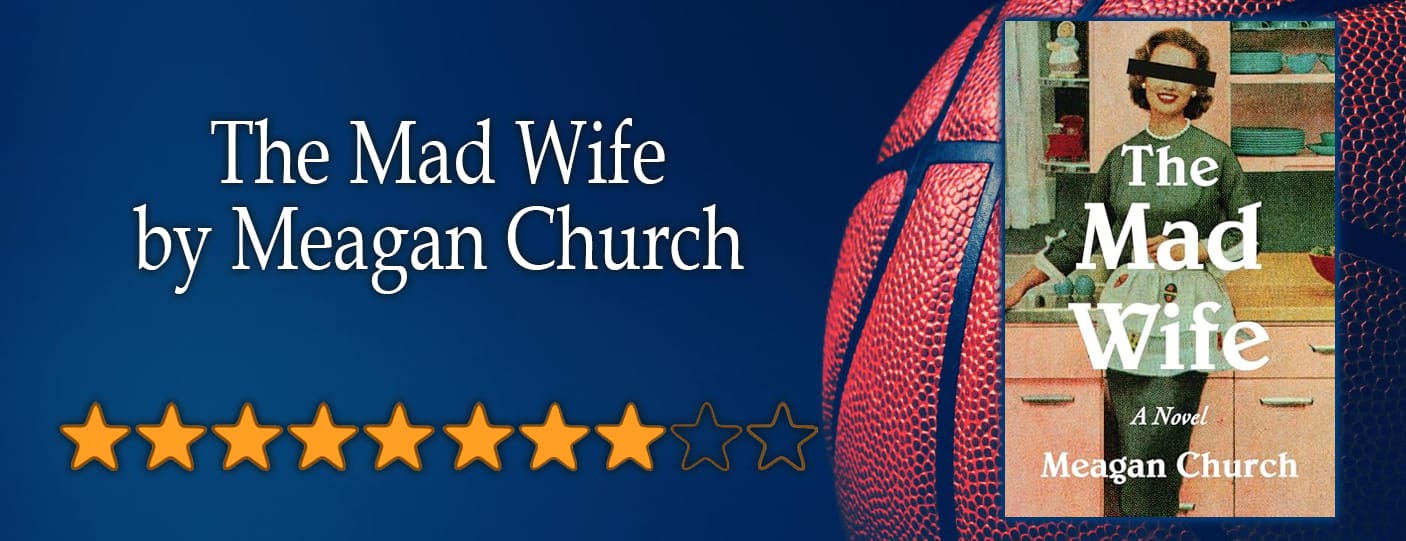
Remember the days when every time a woman felt exhausted, scared, or not quite right in her own skin, the world patted her on the head, called it “hysteria,” and told her to smile for the neighbors’ benefit. That’s the suffocating world Lulu Mayfield lives in.
On paper, Lulu has nailed the role of the perfect 1950s housewife: the polished home, the agreeable husband, the kids, and the gelatin salads that make her the unofficial queen of the cul-de-sac. But after the birth of her second child, the cracks start to show—bone-deep fatigue, strange physical symptoms, gnawing guilt, and a sense that something is very wrong, not just with her, but with the life she’s been told to want. Then Bitsy, the relentlessly cheerful new neighbor, moves in across the street with her picture-perfect family with a fixed, almost too-bright smile, and Lulu’s unease shifts into obsession: what, exactly, is hiding behind Bitsy’s immaculate façade?
The suspense tightens as Lulu digs into Bitsy’s past and uncovers links to another woman, another life, and the brutal reality of what can be done to a “difficult” wife with just one husband’s signature and a doctor eager to “fix” her. Is Lulu unraveling, or is she finally seeing the truth of a world built on keeping women quiet, compliant, and easy to manage? Meagan Church threads psychological tension with meticulous historical detail—postpartum suffering, misdiagnosed illness, the looming threat of institutionalization, and lobotomy—until you’re not just turning pages; you’re clenching your jaw, wondering how many real women lived versions of Lulu’s nightmare.
If you love character-driven psychological suspense where the monster isn’t a masked stranger but a culture that insists you’re “mad” for wanting to be heard, The Mad Wife is absolutely your lane. It’s the kind of book that gets under your skin, makes you side-eye the word “hysterical,” and lingers long after you close the cover, daring you to ask: when a woman finally refuses to play along, is she sick—or is she the only one seeing clearly? Read the full review here.

Let me warn you up front: Nobody’s Girl is not an easy read, but it is a necessary one—and if you pick it up, you’re not just reading a story; you’re sitting with Virginia Giuffre while she finally gets to finish her own sentence. This memoir starts long before Epstein’s townhouses and private jets, in a childhood already cracked by sexual abuse and adults who failed her, showing you how a vulnerable girl gets pushed, step by step, toward the kind of men the headlines like to call “powerful.”
When Virginia lands a job at Mar-a-Lago, it feels like a small lifeline—steady work, a chance at something normal—until Ghislaine Maxwell walks in and offers what sounds like opportunity and turns out to be a trap. From there, the book pulls you into Epstein’s world: the pink house on El Brillo Way, the “massages” that are actually orchestrated assaults, the flights, the hotel rooms, the expectation that she will be “childlike” for a parade of rich, connected men who treat her body like a membership perk. Virginia doesn’t gloss over anything—she writes about sadistic sex, being trafficked around the globe, the encounters with Prince Andrew, even an ectopic pregnancy and the chilling plan to use her as a surrogate, all with a bluntness that makes it impossible to pretend you didn’t see.
But this isn’t just a catalogue of horrors; it’s also the story of a girl who runs, escapes at nineteen, and somehow builds a life from the rubble—finding love with Robbie, moving to Australia, becoming a mother, and then realizing that survival and healing are two very different battles. The trauma doesn’t politely fade; it follows her into her marriage, her intimacy, and her daily anxiety that Epstein and Maxwell might find her again. What makes the book so gripping is that Virginia keeps turning to you as a reader, breaking the fourth wall to say, basically, “I know this is a lot, but please don’t look away; I need you here with me,” and you feel that plea in your gut.
You also see her transform from “runaway nobody” into the woman who takes on billionaires, a royal, and the institutions that protected them, becoming the first survivor to publicly confront Epstein and then an advocate for others trapped in the same machinery. Knowing this book was finished shortly before she took her own life, and that she insisted it be published gives every page the weight of a last testimony—this is what happened, this is what it cost, and this is what power looks like up close. If you’re willing to let a survivor tell you the whole ugly truth—no euphemisms, no tasteful fade-to-black—and still stay in the room with her, Nobody’s Girl will stay with you long after you close it, and that’s exactly the point.
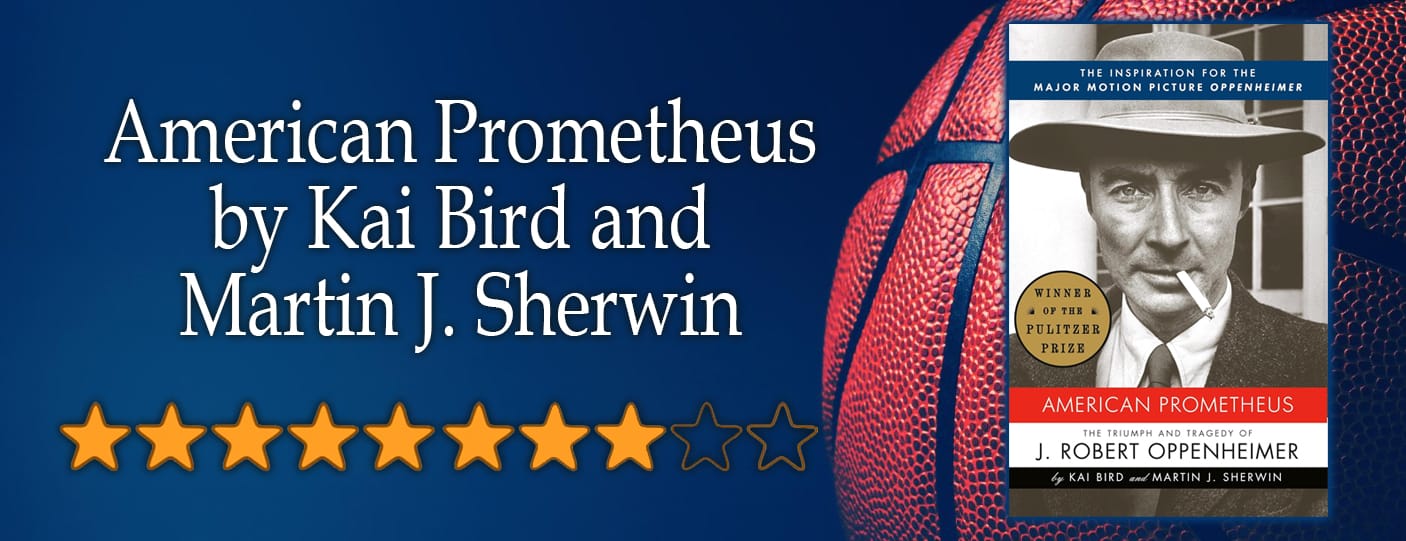
If you’ve ever watched history happen in grainy black‑and‑white footage and thought, “Okay, but what did that feel like from the inside? " American Prometheus is the book that finally gives you answers. This isn’t just “the Oppenheimer book”; it’s a full-bodied, doorstop-size biography that walks you into his life and then quietly refuses to let you stay at a safe moral distance.
Kai Bird and Martin J. Sherwin follow J. Robert Oppenheimer from his intense New York childhood and awkward, brilliant student years at Harvard, Cambridge, and in Germany, where he’s absorbing quantum physics from the giants, into his transformation at Berkeley into the charismatic center of American theoretical physics—and a man increasingly entangled with leftist politics and social justice causes. Then they take you to that bleak mesa at Los Alamos, where he turns a patch of New Mexico into the most powerful weapons lab on earth and becomes the face of the Manhattan Project, orchestrating genius, paranoia, secrecy, and wartime urgency into the first atomic bomb.
But the real punch of this book lands after Hiroshima and Nagasaki, when the triumph curdles into tragedy. Oppenheimer becomes the scientist who can’t stop seeing the moral fallout of his own work, pushing for international control of atomic energy and opposing the hydrogen bomb while the U.S. barrels into the Cold War. Bird and Sherwin show you the slow-motion character assassination: the FBI files, the whispered suspicions, and the 1954 security hearing where powerful enemies like Lewis Strauss and allies-turned-accusers like Edward Teller help strip him of his clearance and turn him from national hero into political cautionary tale.
What makes this so compelling isn’t just the sweep of events; it’s how intimate it feels. You see Oppenheimer as a vain, brilliant, insecure, magnetic, often maddeningly opaque human being, not a marble statue labeled “father of the atomic bomb.” The book lets you sit with his contradictions: the man who helps “capture the fire of the sun" then spends the rest of his life trying, in however limited a way, to put it back in the box. If you like biographies that read with the tension of a novel, that take a man you think you know and make you constantly revise your verdict on him, this one is absolutely worth clearing some serious reading time for.
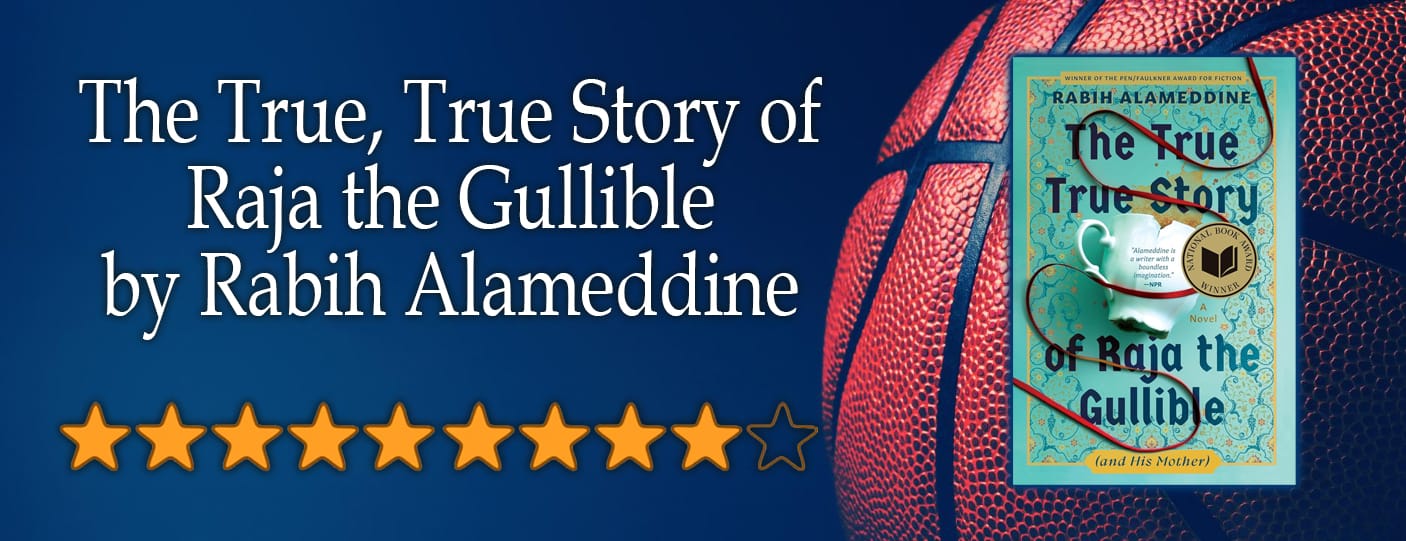
Rabih Alameddine’s The True, True Story of Raja the Gullible drops you into a cramped Beirut apartment where sixty‑three‑year‑old Raja, a gay high school philosophy teacher, is just trying to live a quiet, bookish life—with his octogenarian mother Zalfa loudly sabotaging that plan at every turn. He wants peace, walks, and privacy; she wants details, drama, and the last word in every argument, preferably delivered at full volume. Their days are a ping-pong match of insults, affection, and boundary violations, as Zalfa befriends his students, tangles with the neighborhood generator mafia, and generally behaves like chaos wrapped in lipstick.
Then an email arrives: an all‑expenses‑paid writing residency in America, even though Raja hasn’t written in 25 years. On the surface, it’s a golden ticket out—away from his mother, from a brother who swindled her savings, from a country battered by civil war, economic collapse, Covid, the port explosion, and endless political betrayals. But to explain why he deserves that residency, Raja has to actually tell his story, which means digging into the memories he’s spent a lifetime dodging: being “the neighborhood homosexual” in a place where that label is dangerous; surviving war and sectarian violence; and, at the book’s devastating core, the long‑buried kidnapping in his teens by Boodie, a young militia recruit from his school, an ordeal that is equal parts terror, abuse, and confusing, shame‑soaked desire.
The novel unfolds like sitting across from Raja while he confides in you—funny, irritable, self‑aware, constantly undercutting his own pain with dry one‑liners, even as you feel the weight of what he’s endured. Alameddine layers story inside story, veering from drag queen fabulousness and neighborhood gossip to shelling, blackouts, and heartbreak, showing how a life can be both ridiculous and harrowing in the same breath. What keeps it from collapsing under the grief is the fierce, messy love between Raja and Zalfa: she drives him up the wall, but she is also his anchor, his sparring partner, his proof that tenderness can survive even in a country determined to fall apart.
If you like fiction that’s formally playful but emotionally honest, that lets its queer characters be complicated and fully human, and that can make you snort-laugh on one page and sit in stunned silence on the next, Raja’s “true, true story” is absolutely worth your time. It reads less like a distant novel and more like a friend finally trusting you with the version of their life they don’t usually tell. Read my full review of this delightful book here.
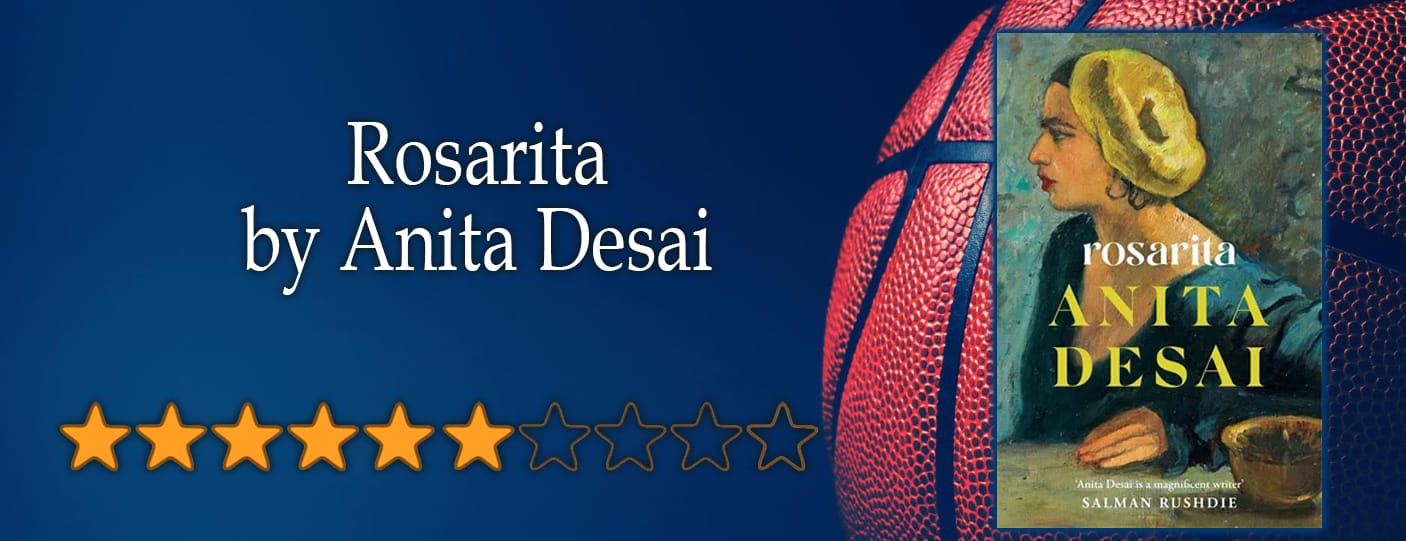
Imagine you’re sitting on a sun‑drenched bench in a Mexican plaza, minding your own business, when a wildly dressed older woman swoops in, looks you straight in the eye, and says you are the image of her beloved Rosarita—an art student who came here from India years ago and changed everyone’s life. That would get under your skin, right? That’s exactly what happens to Bonita, an Indian student in San Miguel, hoping to quietly learn Spanish and maybe outrun some grief, when a stranger insists she once knew Bonita’s mother, not as Sarita the dutiful wife, but as Rosarita, a vibrant, secret self her daughter has never been allowed to see.
From there, the book becomes a kind of haunted road trip: Bonita is drawn—half willingly, half warily—into following this "trickster" woman’s clues through Mexico, from an artists’ commune to old houses and half-forgotten studios, trying to piece together whether her mother really lived a hidden life here as an artist. The more she walks in Rosarita’s imagined footsteps, the more she has to confront not just what her mother never told her but what she herself has been ducking: her own loneliness, her anger, and the uncomfortable possibility that the women in her family have been quietly suffocating for generations.
Desai tells all this in an intimate, second‑person, almost dreamlike voice that keeps pulling you in, so you feel as if you’re the one being addressed, the one being asked to remember, doubt, and choose. Mexico and India bleed into each other—the Mexican Revolution and the Partition flicker in the background—so that personal pain and historical violence sit side by side, asking how women are supposed to build a life when the world keeps rewriting their stories for them. Rosarita isn’t “feel‑good” so much as “feel‑deep”: a slim, luminous novel about mothers’ secrets, daughters’ quests, and that unnerving moment when you realize you might have to invent yourself from the fragments you’ve been left.
If you’ve ever wished you could ask a dead parent who they really were before they became “Mom,” this book is basically that wish turned into a strange, beautiful, slightly unsettling journey—and yes, it wants you to come along.

If you’ve only ever known Schindler’s List as “that devastating Spielberg movie,” here’s the thing you need to know about the book: it’s not just sad, it’s morally electric. This is Thomas Keneally taking a true story and handing it to you almost like reportage, but with the emotional voltage of a novel. You’re not kept at a safe, historical distance; you’re dropped into Nazi‑occupied Kraków, standing uncomfortably close to people whose lives can be erased with a gesture.
At the center is Oskar Schindler, who is absolutely not introduced as anyone’s idea of a saint. He’s a charismatic German businessman, a war profiteer, a womanizer, and someone who joins the Nazi Party because it’s good for business. He takes over a formerly Jewish enamelware factory because cheap Jewish labor and military contracts mean fast money. And at first, that’s all he wants: profit, status, good food, good liquor, and good company.
Then the machinery of the Holocaust stops being background noise and becomes impossible for him to ignore. He sees the Kraków ghetto emptied, families ripped apart, people shot in the street for existing. He watches the creation of Płaszów, a labor camp ruled by the sadistic commandant Amon Goeth, who treats murder as a casual sport. And very quietly at first—almost grudgingly—Schindler starts to shift. He leans on his charm, his Nazi connections, and his talent for bribery and bluff, not just to keep his factory running, but to keep his Jewish workers alive.
The power of the novel is in those details. You feel the terror of people waiting to hear if their name is on Schindler’s list or on a train manifest. You feel the sick lurch when a train of women is mistakenly sent to Auschwitz instead of to his new munitions factory in Brünnlitz—and the surreal relief when Schindler spends yet more money and influence to drag them back from the edge of death. By the time he’s secretly sabotaging his own factory’s production so his “munitions” will never actually work, you’re watching a man who has quietly decided that squandering his entire fortune is a fair price for other people’s lives.
What makes this book worth your time isn’t just that it’s “important” or “moving,” although it’s very much both. It’s that Keneally refuses to give you comfort. He shows you how goodness sometimes comes wrapped in very flawed people, and how survival can depend on something as fragile as one man’s conscience holding, just long enough. You get the horror, yes, but also the daily, stubborn acts of care—sharing food, bending rules, lying on official forms—that add up to a thousand people who walk out of the war alive.
If you’re looking for a Holocaust book that doesn’t just ask you to mourn but to wrestle—with complicity, courage, self-interest, and what we owe each other when the world goes off the rails—Schindler’s List is that book. If you are worried it will be too heavy, it is indeed heavy. But it’s also deeply human, surprisingly propulsive, and the kind of story that sits with you not because it breaks you, but because it quietly insists that individual choices still matter, even in the worst possible times.
Thirteen books. One "mad" month. Zero regrets—okay, maybe one regret, which is that I didn't start American Prometheus sooner, because wow.
If you're standing at the edge of your TBR pile wondering where to jump in, let me make it easy: start with the book from this list that scares you a little. The one that feels too heavy, too literary, or too outside your comfort zone. That's the one. And remember, you don't have to read thirteen books to have a great reading month. You only need to read one book that brings about change. April is wide open. Go find yours.
Comments