

Note: If you're reading this in your inbox, be sure to check out the full post online — it includes great videos you won’t see in the email version!
Shelf Meets Silver Screen Series
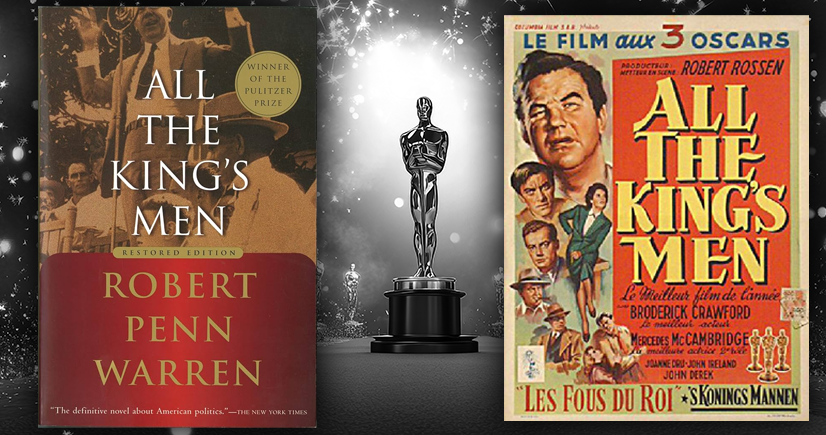
Book Awards:
- 🥇 Pulitzer Prize Winner Novel 1947
- 🥇Audie Award Finalist Literary Fiction & Classics 2007
- 🥇New York Times Bestseller Fiction 1946
Oscar Awards:
- 1949 Nominated for 7 Academy Awards
- Won:
🏆 Best Movie
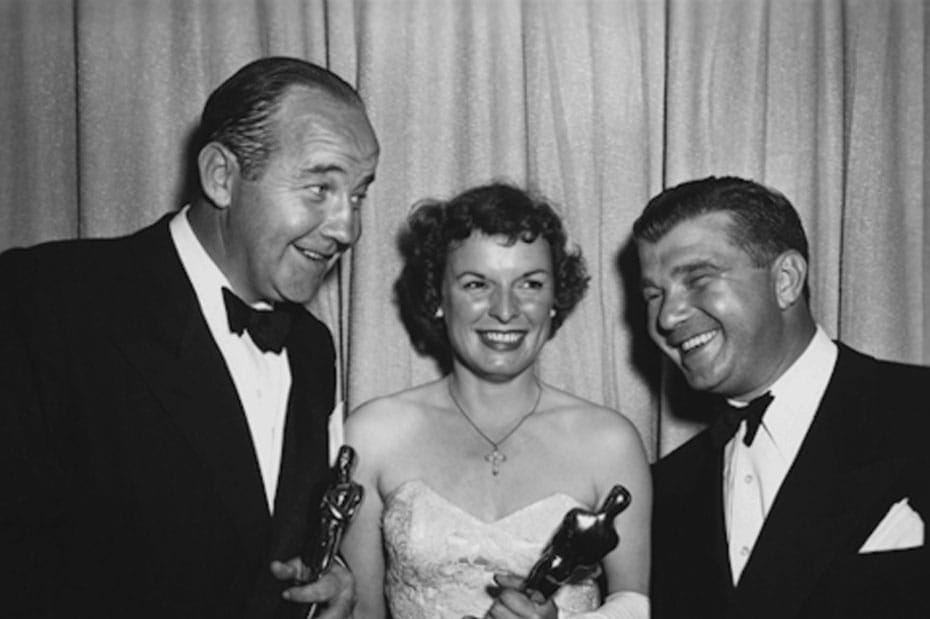
🏆 Best Actor: Broderick Crawford
🏆 Best Supporting Actress: Mercedes McCambridge
When you read All The King’s Men and then watch the 1949 film, you’re really experiencing two versions of the same moral hangover: one told in Robert Penn Warren’s dense, looping sentences, and one cut down to a lean 109‑minute gut punch of political rise and ruin. Both circle the same question that haunts grown‑up readers and viewers alike: what happens to your soul when you decide that the ends really do justify the means?
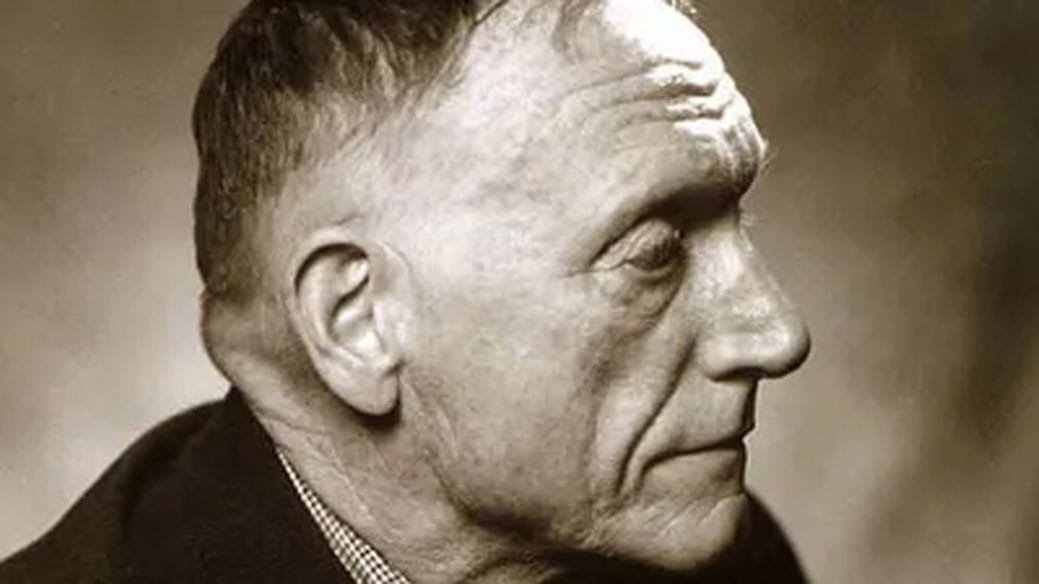
The book: swampy sentences and moral murk
On the page, Warren gives us time to stew in the political and emotional humidity. Jack Burden’s narration doubles back, digresses, and sinks deeply into memory, making the novel less a simple “corrupt governor” story and more a meditation on responsibility, complicity, and how history keeps its receipts.
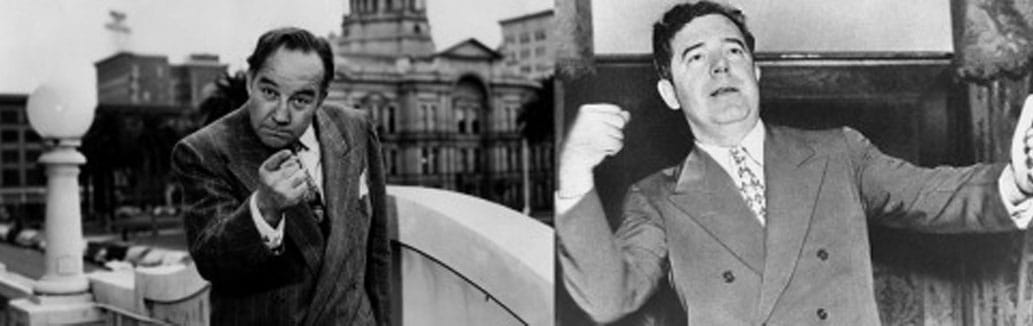
Willie Stark’s arc feels both mythic and uncomfortably specific. He begins as an idealistic champion of “the folks,” then slowly trades principle for power, one compromise at a time, until his justifications sound eerily plausible even as they curdle your stomach. It’s no accident that the state in the novel is never named; we’re told only that it’s a Deep South state on the Gulf of Mexico with bayous, lagoons, oil, and a capital that strongly echoes Baton Rouge, all of which makes it widely assumed to be Louisiana. That geographical “almost but not quite” is part of Warren’s strategy: this is clearly Huey Long territory, but it is also meant to be anywhere power concentrates and corrodes.
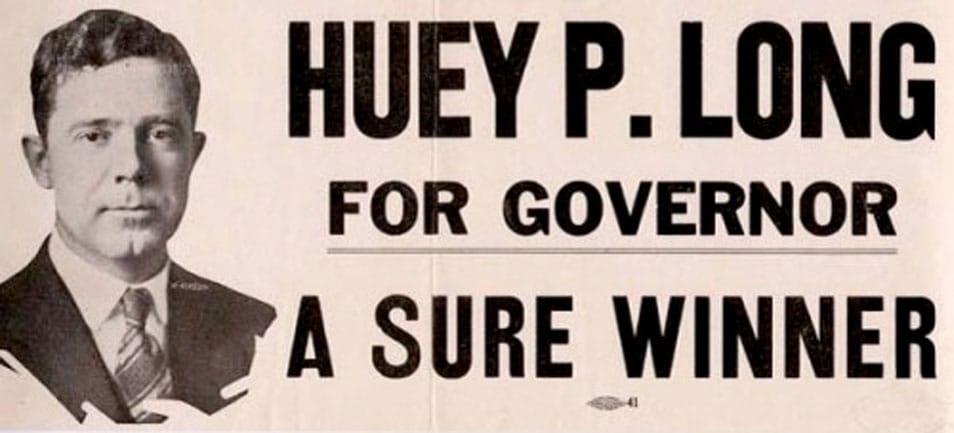
And then there’s Willie Stark himself, the blazing center of the book’s moral weather. Warren denied he was simply writing a roman‑à‑clef, but the parallels to Huey P. Long—the populist, larger‑than‑life governor of Louisiana who built a political machine and was ultimately assassinated—are too many to ignore. Like Long, Stark is a flamboyant, tireless campaigner, a builder of public works, and a man who convinces himself that any sin is forgivable if it keeps the machine running for “the people.”
The film: cutting a 250‑minute monster down to a bullet
If the novel is swampy and expansive, the 1949 film adaptation is a hard, fast river. Writer‑director Robert Rossen optioned the book and wrote the screenplay himself, determined to turn Warren’s brooding philosophical novel into a fiercely topical drama about American politics. He worked as an independent producer (Robert Rossen Productions) with Columbia handling distribution, which gave him unusual freedom—but also meant he shot mountains of footage and then had to wrestle it into shape.
Early cuts reportedly ran over four hours, and editor Al Clark struggled to find a coherent line through all that material. Columbia boss Harry Cohn brought in editor Robert Parrish as a kind of narrative paramedic; at one point, Rossen told Parrish to identify the heart of each scene, then literally chop off about a hundred feet of film before and after, even if that meant cutting straight through dialogue or music. The result was a taut, 109‑minute film that moves with the ruthless efficiency of a campaign manager on a deadline, and that’s the version that hit theaters in November 1949.
Rossen shot largely on location in California’s San Joaquin Valley and filled smaller roles with non‑actors, which gives the rallies and crowds a rough, documentary feel. That choice matters: where the novel is psychologically rich, the film is physically immediate. The sweat, dust, and noise of those campaign scenes make Willie Stark’s populism feel less like abstract theory and more like a bodily experience.
Fun Hollywood footnote: Rossen first offered the role of Willie Stark to John Wayne, who reportedly rejected the script as unpatriotic. The part went instead to Broderick Crawford, whose performance fuses bluster, charm, and an undercurrent of panic; he doesn’t play a villain so much as a man who’s permanently in over his own moral head.
Oscars night and the film’s legacy
The Academy had no trouble recognizing what Rossen and his team had pulled off. At the 22nd Academy Awards, All The King’s Men received seven nominations and won three Oscars.
Those Oscars stamped the film as the definitive screen take on Warren’s story for decades. It also became a textbook example—both for editors and for book‑to‑film adapters—of how you can slash a sprawling literary text down to its dramatic spine without losing its moral punch.
Reading first, then watching: what changes?
If you start with the novel, the film can feel almost shockingly stripped down, like someone took Warren’s layered meditation and scraped it to the bone. You may miss Jack Burden’s digressive philosophy, the long historical backstories, and the sense that time itself is a character. But that leanness also lets the movie highlight something the book sometimes buries under its prose: the sheer velocity with which a “good man for the folks” can become exactly the kind of boss he once denounced.
Knowing that Willie Stark is modeled on Huey Long and that the unnamed state might as well be Louisiana adds a slightly queasy thrill to both experiences. On the page, you feel that thrill as you notice each parallel; on the screen, it’s in the way the rallies look just familiar enough to contemporary politics to make you shift in your seat. In both versions, the story lands less as history lesson and more as an uncomfortable mirror.
If your TBR stack is already groaning, All the King’s Men might not be the first book you’re reaching for—but it absolutely deserves a spot near the top. This is one of those big, chewy, American novels that rewards you whether you’re meeting it for the first time or coming back with a few more wrinkles and a lot more life experience under your belt. Think: politics, power, memory, guilt, and the messy question of whether we can ever really stay “on the sidelines.”
Here are some reasons to read or reread All the King’s Men:
You get a front-row seat to the rise and fall of a populist politician
Willie Stark’s arc—from idealistic small-town figure to ruthless, backroom-deal governor—is propulsive and disturbingly familiar in our current political climate. Watching him trade ideals for influence is like a slow-motion car wreck you can’t look away from, and it sparks great “ends vs. means” conversations for thoughtful readers.
It’s about more than politics—it’s about what power does to people
The novel uses elections and backroom deals as a stage to talk about loyalty, betrayal, and the ways we use (and sometimes destroy) each other to get what we want. If you love character-driven stories where the real drama is happening in quiet conversations and shifting loyalties, this one is rich territory.
Jack Burden is a perfect narrator for midlife readers
Jack is smart, cynical, and emotionally avoidant—basically the poster child for “I’ll just observe, thanks” until life refuses to let him sit in the balcony anymore. Watching him wrestle with responsibility, complicity, and his own past hits differently once you’ve had time to regret a few choices yourself.
It’s a novel obsessed with memory, history, and the stories we tell ourselves
The book keeps circling back to old secrets, dusty archives, and half-understood histories to ask how much the past really shapes who we are. If you enjoy books that dig into family history, regional memory, or that one event everyone in town remembers differently, this will scratch that itch.
The “Great Twitch” vs. the “spider web” is A+ book club material
Jack’s flirtation with the idea that everything is just random impulses (“the Great Twitch”) lets him dodge guilt—until he can’t. His eventual move toward the “spider web” idea—that actions connect and have consequences—gives you a built-in philosophical debate for group discussions or margin scribbles.
The writing is lush, lyrical, and unapologetically extra
Warren’s prose is saturated with metaphor, Southern atmosphere, and long, winding sentences that feel like sitting on a porch listening to someone who really knows how to tell a story. If you like language you can linger over, this is the kind of book you read with a pencil in hand, underlining like it’s your job.
It captures the mood of the 1930s American South—with all its beauty and ugliness
The novel immerses you in a fictional Deep South state that closely resembles Louisiana, complete with poverty, racial injustice, and intense regional identity. It doesn’t shy away from racism and corruption, which can be uncomfortable but also makes it a powerful text for talking about how that history still echoes today.
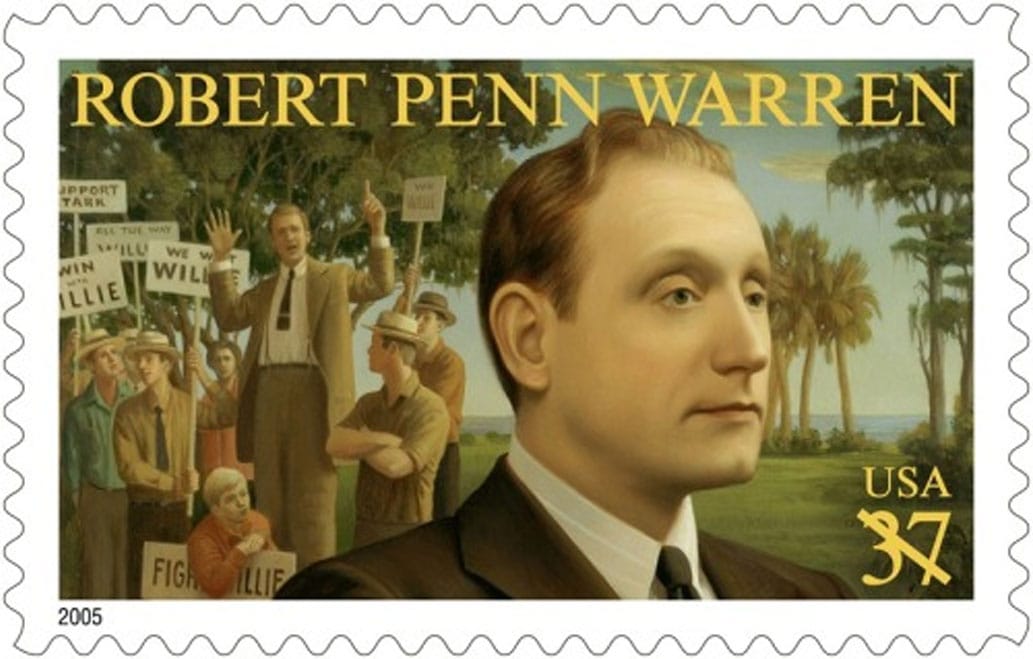
It’s a cornerstone of 20th‑century American literature
The book won the 1947 Pulitzer Prize and has been praised as one of the major American novels of its century, often mentioned alongside heavy hitters like The Great Gatsby. If you’re building a “must-have” canon shelf or like understanding the books other writers are quietly in conversation with, this one earns its spot.
It shows how “good intentions” can warp into something darker
Willie Stark genuinely wants to help “the people”—he builds roads, schools, and a major hospital—but he increasingly believes any tactic is justified to get there. That tension between real reforms and moral rot makes the book feel eerily current in a world where we’re constantly weighing policy wins against ethical compromises.
It’s a master class in complicity
Jack’s job—digging up damaging history on people Willie wants to control—seems like “just research” to him, until he starts facing what his work actually enables. The book nudges us to ask how we participate in systems we claim to dislike, whether that’s politics, workplaces, or even family dynamics.
The side stories are novels inside the novel
Sections like the Cass Mastern story are essentially self-contained novellas about guilt, slavery, and moral responsibility that mirror Jack’s own struggles. On a reread, these embedded narratives shine even brighter because you can see how carefully they’re echoing and amplifying the main plot.
It reminds us you can’t really stay “above” the mess
One of the novel’s core messages is that trying to remain neutral or detached doesn’t actually remove you from the web of consequences. For Readers with Wrinkles who have lived through a few election cycles, workplace dramas, or family crises, that question—“What happens if I don’t pick a side?”—lands differently now than it might have in our twenties.
If you loved the novel or you’re All the King’s Men–curious, the 1949 film is one of those adaptations that actually earns your reading time back. It’s lean, punchy, and ruthless in a way that feels uncomfortably current for anyone watching politics with one eye half‑closed. Think of this segment as your nudge to make it a movie night—whether it’s a first watch or a “wow, I did not catch that the first time” rewatch.
Here are some reasons to queue it up:
It’s a bona fide classic, not just “homework”
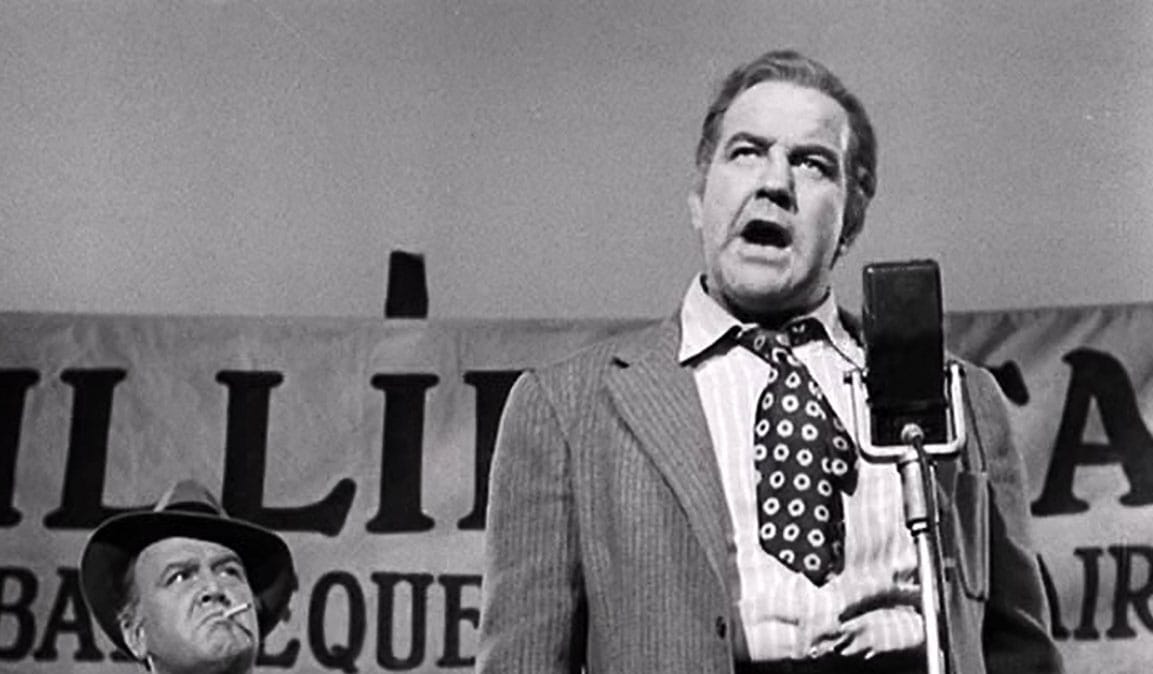
The film won the Academy Award for Best Picture, plus Oscars for Broderick Crawford (Best Actor) and Mercedes McCambridge (Best Supporting Actress), with additional nominations across major categories. That means you’re not just watching an adaptation—you’re watching one of Hollywood’s canonical political dramas that has earned its place in film history. )
It gives the novel’s politics a sharp visual edge
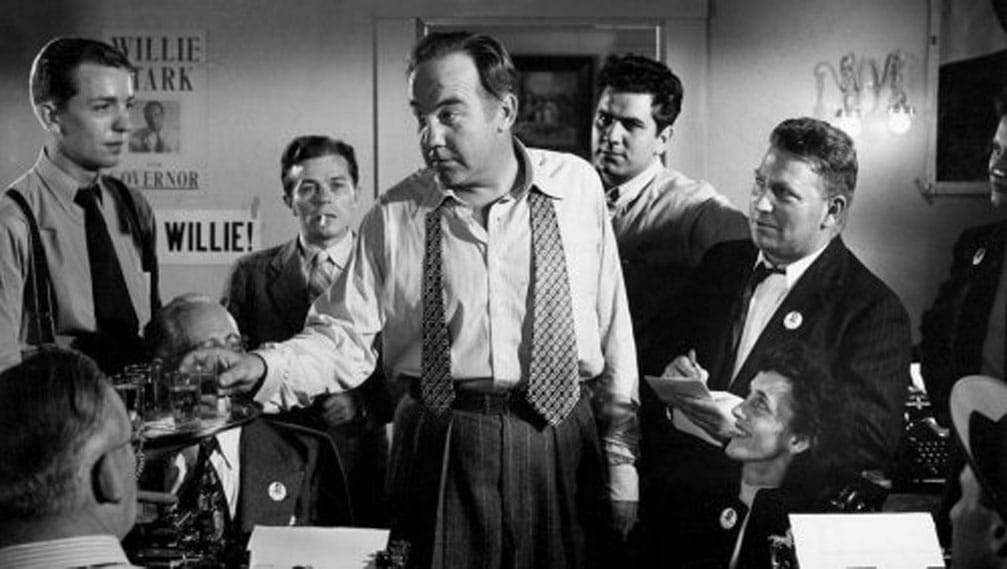
On the page, Willie Stark’s rise and fall is chilling; on screen, watching him transform from awkward small‑town crusader to full‑blown demagogue is something else entirely. Seeing the rallies, the crowds, and the backroom deals play out makes the themes of corruption, compromise, and “ends justify the means” feel painfully tangible.
The performances are big, messy, and worth savoring
Broderick Crawford’s Willie Stark is all physicality and volume—he stomps, bellows, and bullies his way through every frame, which is exactly why the Academy handed him Best Actor. Mercedes McCambridge’s debut as Sadie Burke is cracklingly sharp, giving us the perfect cynical‑but‑complicit insider energy that readers of the novel will recognize instantly.
It strips the story down in a way that’s great for comparison
The film shifts attention away from Jack Burden’s interior, reflective narration and centers Willie Stark himself, trimming a lot of the novel’s historical and philosophical digressions. For readers, that makes a rewatch a fun exercise in “what got cut, what got streamlined, and what that says about how we tell political stories on screen.”
It feels eerily timely for modern readers
Even though it’s loosely inspired by Louisiana governor Huey Long and set in an unnamed Southern state, the film intentionally avoids specific place‑names to make Stark’s story feel universal. For a contemporary audience watching populism, disinformation, and institutional distrust play out daily, that universality hits a little too close to home—in the best, most discussion‑worthy way.
It leans into noir vibes your book club can chew on
Critics have described the adaptation as a “hard‑hitting noir” with a darkly inevitable sense of doom, full of graft, betrayal, and the slow corrosion of idealism. If your group likes dissecting tone and genre, it’s fascinating to watch a literary political novel get filtered through mid‑century Hollywood’s love of fatalism and shadows.
It’s officially “culturally significant”
The Library of Congress selected the film for preservation in the National Film Registry, citing its cultural and historical significance. That stamp of approval basically says, “Yes, this is one of the texts future humans will look at to understand American politics and storytelling,” which is catnip for serious readers.
The 98th Academy Awards (2026 Oscars) will air live on Sunday, March 15, 2026, at 7 p.m. ET (4 p.m. PT). The ceremony will be broadcast from the Dolby Theatre in Hollywood on ABC and available to stream on Hulu. Comedian Conan O'Brien is set to host the event.
Comments