
Table of Contents
Shelf Meets Silver Screen Series: Final Cut
If you’re planning to watch the 2026 Oscars with a remote in one hand and a TBR pile in the other, this is your cheat sheet to the bookish heavy-hitters on Sunday night: Frankenstein, Hamnet, One Battle After Another, Train Dreams, Little Amélie, and The Lost Bus.
How to Use This Guide on Oscar Night
Think of this post as your Readers With Wrinkles spotter’s guide: the place you keep open on your tablet while pretending you definitely saw all these movies in theaters and did not in fact finish three of the books yesterday.
Use it to remember which movie came from which book when the presenter speed-mumbles the nominations. Use it to decide which title to casually name-drop so your group thinks you’ve secretly been on the awards circuit all year. Use it to pick your “I’m rooting for this one because the book emotionally ruined me” favorite.
Frankenstein: Gothic Classic, Del Toro Mood
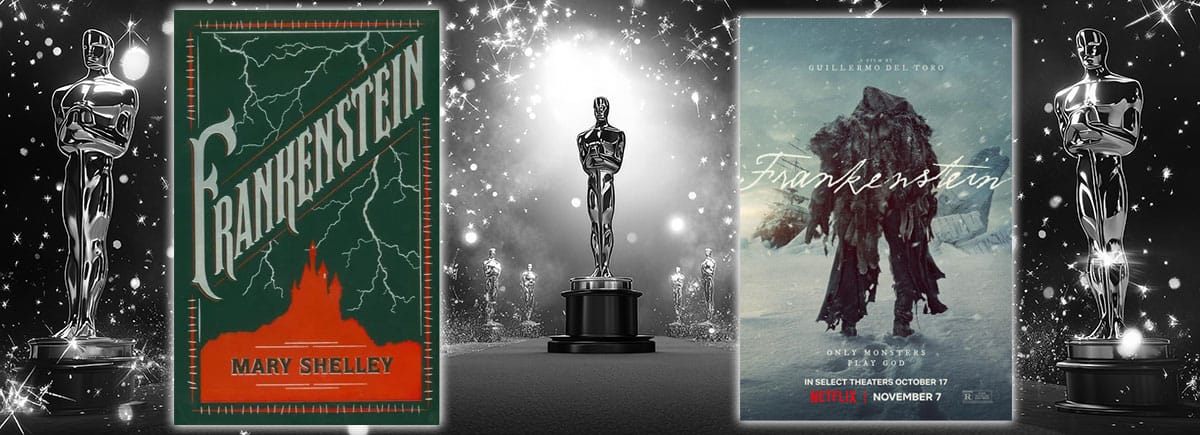
Guillermo del Toro finally brought his lifelong passion project, Frankenstein, to the screen, and the Academy responded with nine nominations, including Best Picture and Best Adapted Screenplay. Oscar Isaac plays Victor Frankenstein, with Jacob Elordi as the Creature, in a version that leans hard into loneliness, fathers and sons, and the eternal "Who's the real monster here?” question we book people love to argue about.
Readers will recognize Mary Shelley’s DNA—gothic atmosphere, moral anguish—but del Toro also fills in emotional backstory and Romantic-era trauma that the novel only hints at. This is the one to champion if you like your classics dark, lush, and just philosophical enough that your group chat can’t agree on the ending.
Hamnet: Grief, Shakespeare, and a Lot of Nominations
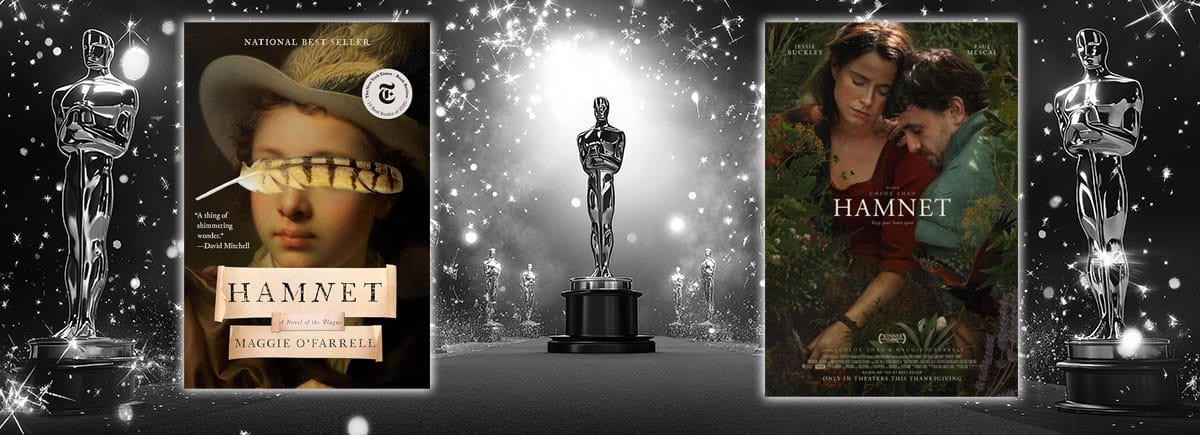
Hamnet, adapted from Maggie O’Farrell’s novel, has turned into an awards magnet with eight Oscar nominations, including Best Picture, Best Director (Chloé Zhao), and Best Adapted Screenplay. The film follows Shakespeare and Agnes (Anne in the novel) processing the death of their eleven-year-old son, with Jessie Buckley’s performance scooping up Best Actress buzz everywhere it goes.
If you loved the book’s mix of historical detail and quiet emotional devastation, you’ll feel very at home—and slightly wrecked—here. On Oscar night, this is your “literary grief” candidate: when its category comes up, pause the snacks and announce, “This one already owns the tragedy vote.”
One Battle After Another: Pynchon Gets Chaotic
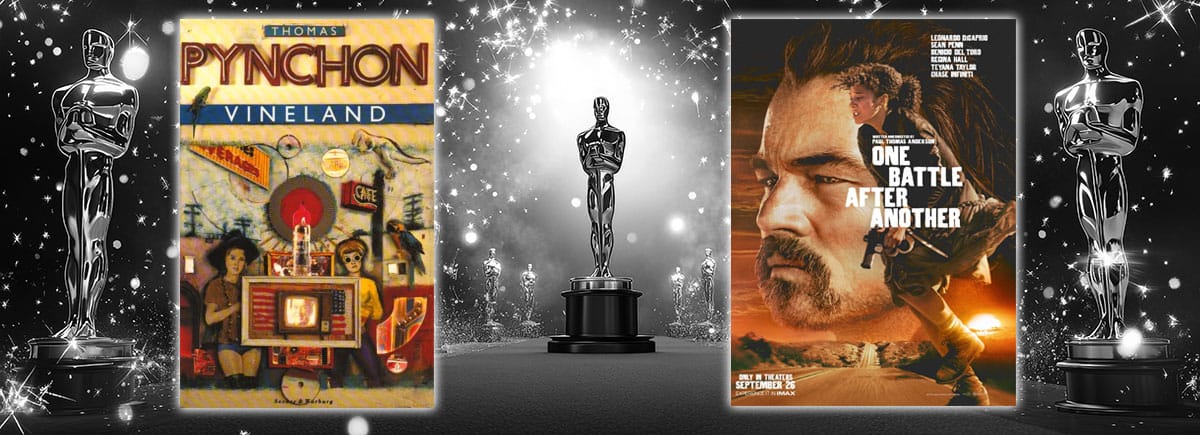
One Battle After Another is “loosely based” (Hollywood code for “we respected the vibes”) on Thomas Pynchon’s 1990 novel Vineland and has become one of the season’s big frontrunners, racking up 13 nominations overall and winning Best Film at the BAFTAs. Directed by Paul Thomas Anderson and starring Leonardo DiCaprio, it follows former revolutionaries pulled back together years later to confront an old enemy, with family drama, politics, and paranoia swirling in true Pynchonian fashion.
For book lovers, this is the “I read Pynchon back when my eyesight was better” flex title. On Sunday, this is a major threat in the top categories, so if you’re filling out a ballot, you ignore it at your own peril—and at the cost of your household bragging rights.
Train Dreams: Quiet Epic, Big Emotions
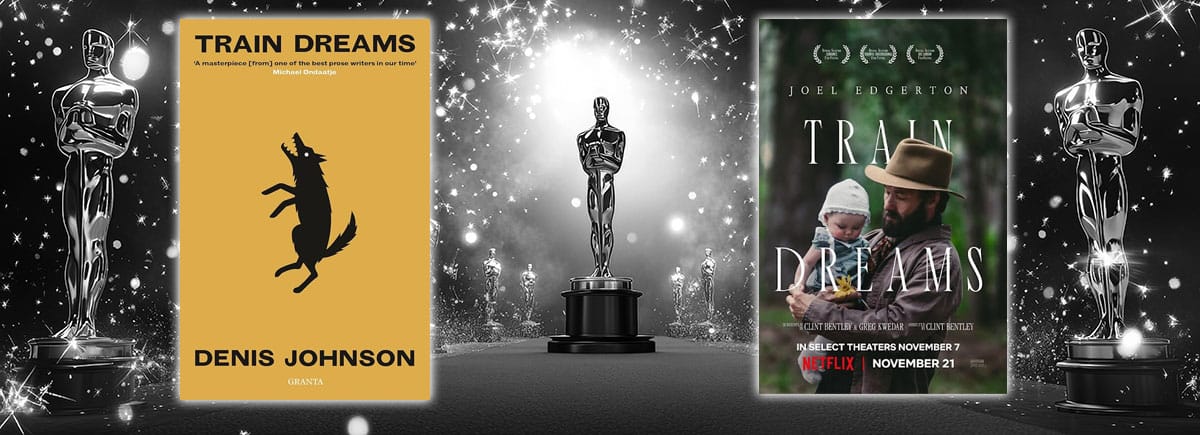
Train Dreams adapts Denis Johnson’s novella into a full, sweeping film about a rural logger, played by Joel Edgerton, whose life stretches across the seismic changes of early 20th-century America. The movie has four Oscar nominations, including Best Picture, Best Adapted Screenplay, and Best Cinematography, and it just won Best Feature at the Film Independent Spirit Awards, which has cranked the buzz up several notches.
This is your “quiet but will haunt you later in the week” option—the one your non-reader friend calls slow and you call meditative because you’re polite. When the cinematography category rolls around, this is a strong one to back if you like big landscapes and small, precise heartbreak.
Little Amélie: Childhood, Memory, and Rain
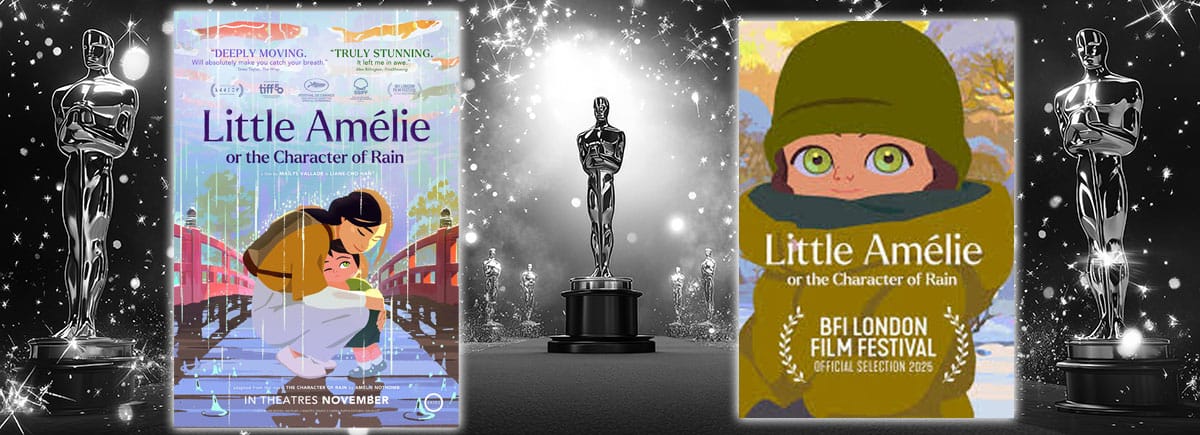
Little Amélie (often subtitled Or the Character of Rain) springs from the acclaimed novel that explores a child’s inner world in 1960s Japan, reimagined here with meticulous period detail and an emphasis on memory, imagination, and identity. The film built its reputation on the festival circuit, including Cannes and Annecy, where it collected both praise and hardware before gliding into the Oscar race as one of the more delicate literary adaptations in the mix.
If you prefer introspective, almost dreamy storytelling over explosions and yelling, this is your pick. On Sunday, this is the film you mention when you want to sound discerning: “Oh, I’m actually really pulling for Little Amélie; its sense of place is extraordinary.”
The Lost Bus: Nonfiction Nerve-Shredder
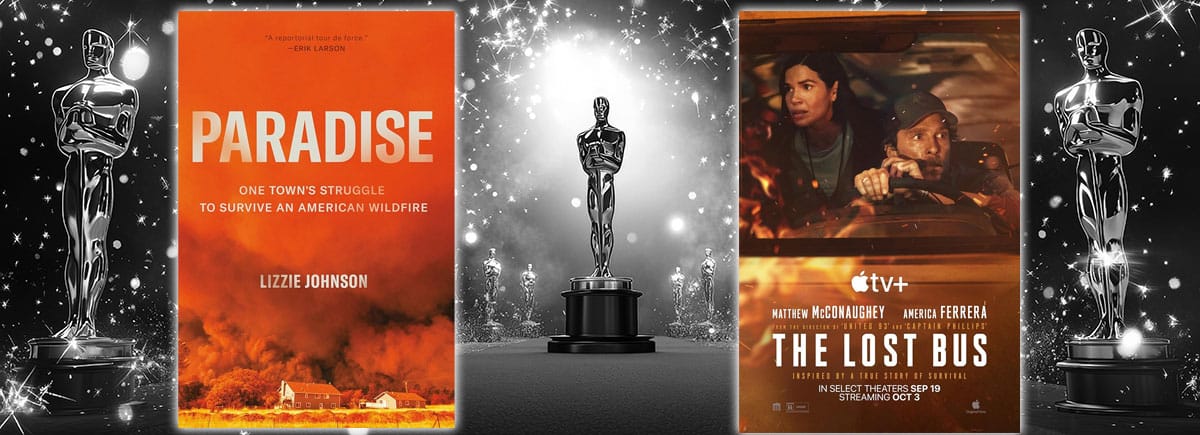
The Lost Bus is based on the book Paradise: One Town's Struggle to Survive an American Wildfire and is a true story of a school bus driver and a teacher who worked together to save 22 children during the 2018 Camp Fire in Paradise, California, one of the most devastating wildfires in the state’s history. Directed by Paul Greengrass and released by Apple Original Films, it surprised pundits by landing an Oscar nomination for Best Visual Effects—because apparently recreating a nightmare inferno counts as an “effect” even when your blood pressure spikes watching it.
Bookish viewers who gravitate toward narrative nonfiction and disaster reporting will find this one right in their wheelhouse: real events, moral decisions, and enough tension to make you consider switching to herbal tea. When they read out the visual effects nominees, this is the “how did this become an underdog?” you can root for.
How to Turn This Info Into an Oscar-Watch Game
If you’re watching with fellow readers (or civilians you’re gently converting), here are a few easy games:
- Book-to-film bingo: Make a card with squares like “someone says ‘the book was better,’” “adapted screenplay winner thanks their high school English teacher,” and “someone mispronounces Hamnet.”
- Page-count pick: Before each category, vote on which adaptation did the most with the least page count (Train Dreams fans, this is your category) or wrangled the densest source (Pynchon people, enjoy your moment).
- TBR consequences: Promise yourself that whichever adaptation wins Best Picture, you’ll read—or reread—the book before next year’s ceremony. Your future self may complain, but your bookshelf will be delighted.
So as the credits roll on this year’s Oscar circus, consider this installment of the Readers With Wrinkles Bookshelf to Silver Screen series your friendly reminder that the real red carpet starts on your nightstand. The Academy may hand out little gold men, but we’re here for the dog‑eared paperbacks, the annotated margins, and the “wait, that was NOT in the book” arguments that keep group chats alive long after the show ends.
Frankenstein, Hamnet, One Battle After Another, Train Dreams, Little Amélie, and The Lost Bus all prove the same thing: the stories that shake up Oscar night usually started shaking up readers first. This whole series exists to trace that journey—from first line to final cut, from reading lamp glow to Dolby Theatre spotlight—so you always know which stories to read, watch, and relentlessly overanalyze.
Whether you’re joining me for this post, catching up on past Bookshelf to Silver Screen entries, or bookmarking everything for a future reading binge, you’re part of the Readers with Wrinkles tradition: we don’t just watch the Oscars, we annotate them. See you on Sunday night—remote in one hand, TBR in the other, and plenty of opinions ready for the next page-to-screen adventure.
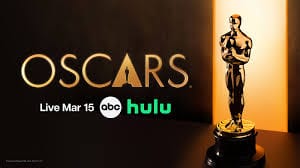
The 98th Academy Awards (2026 Oscars) will air live on Sunday, March 15, 2026, at 7 p.m. ET (4 p.m. PT). The ceremony will be broadcast from the Dolby Theatre in Hollywood on ABC and available to stream on Hulu. Comedian Conan O'Brien is set to host the event.
Comments