

Table of Contents
- Date Published:
2025 - Length:
433 pages—Listening Time: 10 hr 56 minutes - Genre:
Fiction, Historical Fiction, Magical Realism - Setting:
1935 Nebraska in the Dust Bowl, focusing on the fictional town of Uz - Awards:
National Book Award Finalist Fiction 2025; Esquire Best Books of the Year (So Far) Fiction 2025; Pacific Northwest Book Award Finalist Fiction 2025 - Languages:
English - Sensitive Aspects:
Sexual assault (rape), animal cruelty and death, murder, institutional violence, colonial and Indigenous oppression, genocide, physical and psychological abuse, pregnancy, confinement, abandonment, fabricated memories to conceal crimes, systemic racism, homophobia, exploitation and coercion of women and girls, historical trauma and land theft - Movie:
As of November 2025, there is no movie adaptation of Karen Russell's novel The Antidote. - Recommended for Book Club:
YES!

Have you ever finished a book and had to just sit with it for a moment, letting the world of the story slowly fade and your own reality seep back in? It’s a rare feeling, that perfect blend of satisfaction and sorrow when a truly magnificent story ends. That’s precisely how I felt after turning the last page of Karen Russell’s The Antidote, a book so masterful, so deeply affecting, that I immediately knew it was something special. As I listened to the final 30 minutes of the audiobook, I sequestered myself into our bedroom with the door closed. I knew that I would probably get emotional. Sure enough, I did.
Russell transports us to one of the most harrowing times and places in American history: Nebraska, 1935. We’re not just in farm country; we are in the epicenter of the Dust Bowl. It's a world suffocating under a constant siege of dirt. Imagine dust storms, the infamous "Black Blizzards," so thick they blotted out the midday sun, turning day into a gritty, terrifying night. This was a time of profound despair, when the very air was a menace, crops withered to nothing, and economic ruin was as certain as the next dust-choked sunrise.
But the tragedy of this land didn't begin with the drought. It's impossible to talk about this place without acknowledging the ghosts beneath the dust. Decades before the topsoil blew away, this was the ancestral home of Indigenous peoples like the Pawnee and the Omaha, who were systematically and brutally forced off their land. Russell never lets you forget this layered history, this sense that the suffering of the 1930s is just one more chapter in a long, sorrowful story written on the prairie.
So, how can a story set in such a bleak landscape be anything but relentlessly grim? This is where Karen Russell performs her alchemy. She infuses this gritty reality with a breathtaking dose of magical realism. This isn't about wizards or dragons; it’s a more subtle, potent magic that feels born of the land itself. It’s found in the folklore, the peculiar illnesses that defy science, and the strange miracles that offer a glimmer of hope when all seems lost. This touch of the supernatural doesn't soften the story's harsh edges. Instead, it illuminates them, suggesting that in times of impossible hardship, the only true antidote might be found in the inexplicable power of belief and the mysteries we can’t quite name.

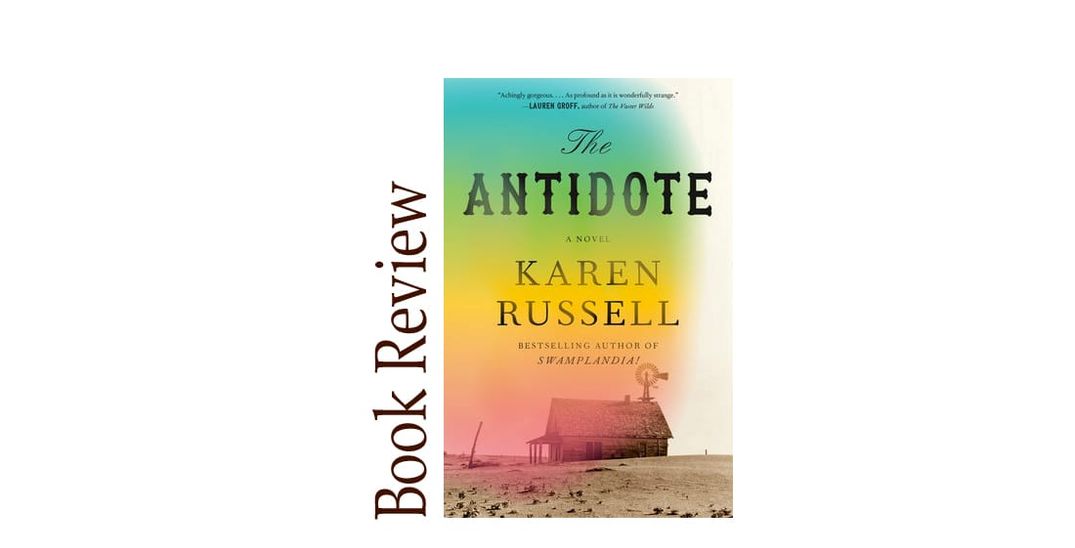
Karen Russell’s The Antidote is a haunting, lyrical masterpiece that weaves together the threads of memory, trauma, and resilience in 1930s Dust Bowl-era Nebraska. At its heart is a mysterious “Prairie Witch,” known as The Antidote, who offers a radical service to her neighbors: she will absorb their most painful memories, allowing them to forget the burdens that weigh them down. In a world where the land itself is scorched and the soil is gone, memory becomes both a weapon and a cure, a currency traded in silence and desperation.
The novel unfolds through the interlaced stories of five unforgettable characters: The Antidote, a teenage girl basketball star fleeing grief; a Polish wheat farmer whose field miraculously survives the dust storms; a voluble scarecrow; and a New Deal photographer whose camera seems to capture more than just the present moment. Each character’s journey is shaped by the legacy of loss, the politics of memory, and the quiet acts of resistance that define survival in a collapsing world.
Russell’s prose is lush and sharp, drawing readers into a dreamlike landscape where the boundaries between reality and folklore blur. The novel explores the ways in which communities cope with collective trauma, the cost of forgetting, and the fragile power of truth. It asks profound questions: What happens when the stories we bury come back to haunt us? Can healing begin only when we confront the past, even if it means facing pain and complicity? And what does it mean to remember together, rather than in isolation?.
For book clubs and seasoned readers, The Antidote is a rich tapestry of themes—memory, justice, resilience, and the enduring strength of women and girls in the face of adversity. It invites deep discussion about the stories we tell, the secrets we keep, and the ways in which history echoes in our present lives. With its blend of magical realism and historical fiction, Russell crafts a novel that is both timeless and urgently relevant.

Each of these aspects makes The Antidote a compelling pick for Readers with Wrinkles’ audience, offering both literary richness and emotional resonance:
Rich, Speculative Themes
The novel explores the loss of memory, the weight of history, and the legacy of injustice, making it a poignant meditation on the American past and the ways we collectively confront (or ignore) trauma. It uses the idea of a “prairie witch” who collects and holds others' memories as a metaphor for the power and danger of forgetting, resonating with readers interested in psychology, history, and the complexities of collective memory.
Engaging, Multigenerational Characters
The story follows a diverse set of characters—including a teenage girl, a farmer, a Black photographer, and even a sentient scarecrow—whose interconnected lives reflect the tapestry of rural America during the Dust Bowl era. Each character’s journey includes challenges of identity, loss, and resilience, providing rich material for book club discussion and group reflection.
Magical Realism with Historical Context
Mixing historical fiction with magical realism creates a unique reading experience that is both imaginative and grounded in real social and ecological issues. The novel addresses themes such as environmental disaster, Native American displacement, prejudice, and the resilience of marginalized communities, encouraging mature readers to consider broader historical and ethical questions.
Literary Craft and Emotional Depth
Karen Russell’s lyrical prose and vivid imagery make a rewarding read for those who appreciate excellent writing and nuanced storytelling. The emotional core of the novel, especially the Antidote’s personal quest and the teenagers’ burgeoning hopes, offers a mix of sorrow and inspiration that resonates with older readers familiar with the weight of both personal and collective history.
Thought-Provoking Discussion Material
The book’s layered narrative and historical references provide ample opportunities for book club debate, introspection, and intergenerational dialogue. Its blend of magical and historical elements encourages members to reflect on both the past and present, making it a standout choice for clubs seeking meaningful conversation starters.


Purchase Karen Russell Books
Step into Karen Russell’s wildly imaginative worlds, where the strange and the beautiful collide in stories that make the ordinary feel otherworldly.
Bookshop.org was created as a socially conscious alternative to Amazon, with the goal of helping local, independent bookstores thrive. This is why Readers With Wrinkles supports their efforts. Please join us in this effort by purchasing your next read here.

Books similar to The Antidote blend magical realism, quirky characters, historical settings, and profound social themes. Here are several books and collections to appeal to fans of Russell’s style and the atmospheric, surreal tone of The Antidote:
- Swamplandia! by Karen Russell
A coming-of-age story about a girl whose family runs an alligator-wrestling theme park in the Florida Everglades, blending family drama with ghostly encounters and quirky fabulist elements. - Fire Exit by Morgan Talty
A powerful novel set in a Native American community, where a father secretly watches over the daughter he can’t raise due to cruel federal laws. The story explores family, identity, and the pain of separation with magical undertones. - An Exact Replica of a Figment of My Imagination by Elizabeth McCracken
A moving memoir that blurs boundaries between reality and imagination, focusing on loss, hope, and the persistent presence of memory—similar in spirit to the emotional core of Russell’s work. - The Strange Case of Jane O. by unknown (likely a pseudonym or new voice with metafictional style)
A metaphysical thriller about a woman whose unusual symptoms might unlock cosmic secrets or signal shared madness. This novel weaves mystery, psychiatric dilemmas, and love, echoing Russell’s blend of psychological intrigue and the surreal. - A Guide to the Fruits of Hawa’ii by Alaya Dawn Johnson
A story from the collection "Reconstruction," set in a prison camp where vampires harvest humans. It explores otherness, power, and survival with speculative, fabulist twists reminiscent of Russell’s short fiction. - Orange World and Other Stories by Karen Russell
A short story collection featuring tales with haunted houses, witches, and surreal landscapes—an excellent match for those who loved the unique characters and magical realism in The Antidote. - The Bus Driver Who Wanted To be God and Other Stories by Etgar Keret
Inventive, strange, and darkly humorous stories about quirky characters navigating bizarre worlds, ideal for admirers of Russell’s voice and oddball scenarios. - Geek Love by Katherine Dunn
A cult classic novel about a carnival family who breed their own “freaks,” blending grotesque spectacle, familial bonds, and magical realism into an unforgettable literary experience.
Comments