

Table of Contents
- Date Published:
March, 2026 - Length:
416 pages—Listening Time: 15 hours 28 minutes - Genre:
NonFiction, Historical - Setting:
1880s-1940s, The United States - Awards
Too early for awards - Languages:
English - Sensitive Aspects:
Graphic descriptions of mass bird slaughter, detailed accounts of hunting “for sport” with crippling and slow deaths, large‐scale killing of waterfowl, purposeless killing of millions of birds, trophy and market hunting driven by greed and status, exploitation of birds for fashion, depictions of near‑extinction and extinction of bird species due to human actions, emotionally distressing focus on cruelty toward defenseless animals and environmental destruction - Movie:
While the book has received critical attention and is described as a dramatic, "epic work of American history" that would lend itself to a visual medium, there are no official announcements, confirmed film, or documentary adaptations currently in the works at this time. - Recommended for Book Club:
Yes, for the right group who enjoys narrative history and environmental themes

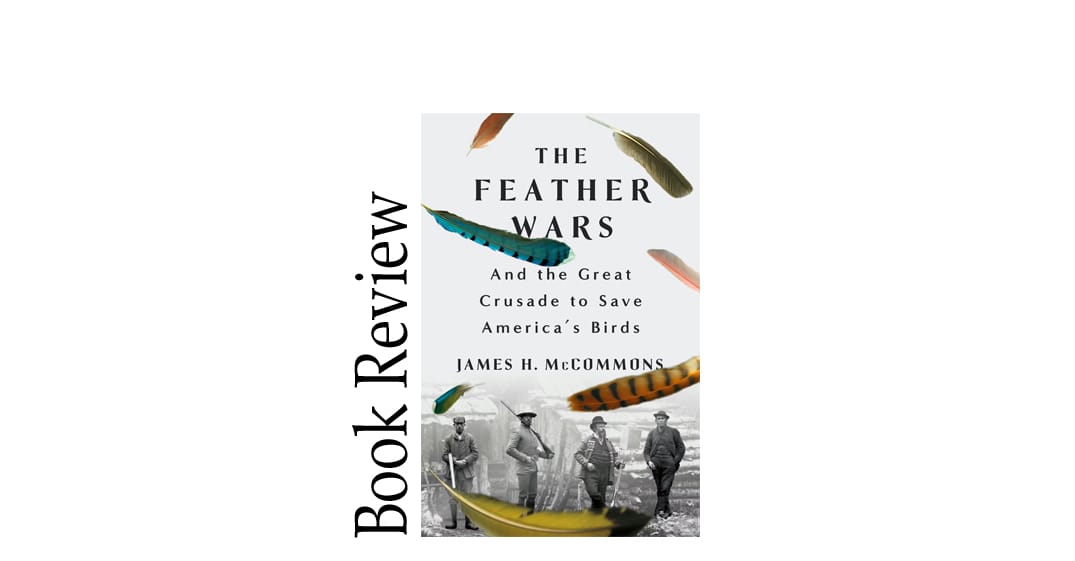
I thought I knew the story of America’s early conservation movement—or at least the broad strokes: Teddy Roosevelt, a few national parks, and a growing awareness that maybe turning a whole species of birds into fashion accessories wasn’t a good idea. Then I opened The Feather Wars by James H. McCommons and realized there was so much I didn’t even know that I didn’t know. This book didn’t just fill in the blanks—it rewired the way I think about our relationship with nature, fashion, and power.
McCommons drops you headfirst into an era when feathers were currency, egos were larger than the egrets, and women’s hats could signal social standing or ecological disaster. It’s an astonishing mix of glamour and greed, activism and audacity. One moment, you’re in the glittering parlors of New York society; the next, you’re knee-deep in Florida wetlands alongside early bird protectors fending off plume hunters.
I was completely mesmerized—both by the sweep of historical detail and by how alive McCommons makes it all feel. This isn’t a dry textbook; it’s a time machine lined with ostrich plumes. And the best part? You come away realizing that history doesn’t just repeat itself—it migrates, season after season, always wearing a new feather.

Before Instagram sunsets and “Hot Girl Walks,” there were plume hunters stalking egrets in Southern swamps so fashion‑forward women in Boston and New York could pin entire birds to their hats. That’s where James H. McCommons drops us in The Feather Wars: And the Great Crusade to Save America’s Birds—into a United States that treated birds as an infinite resource, right up until the skies started to empty. His story stretches from the 19th century into the New Deal era, tracing how Americans went from shooting anything with wings to building an entire conservation movement around protecting them.
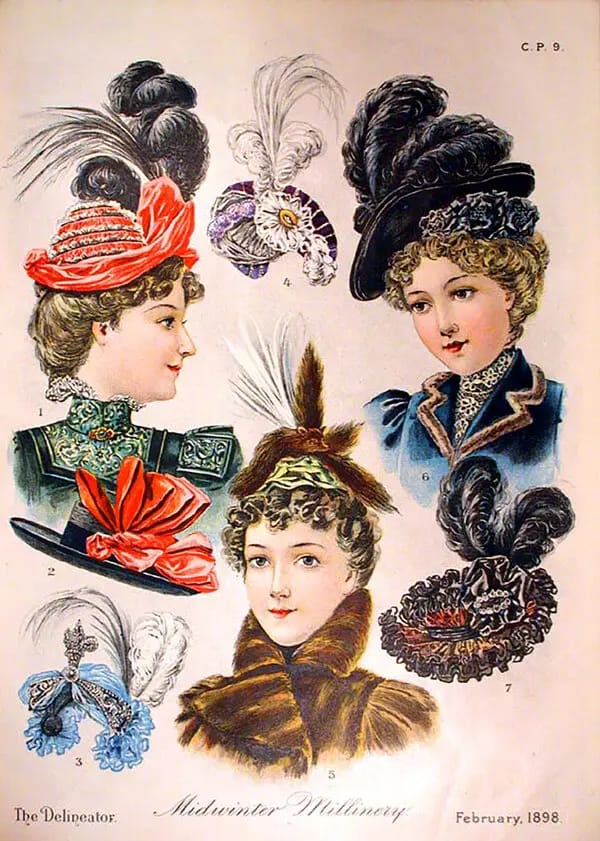
McCommons opens with a stark reality: early Americans assumed the continent’s natural wealth, including birdlife, could never run out and acted accordingly. Birds were food, sport, fashion, and raw material, hunted for the table, for millinery feathers, for scientific collections, and for profit as “market shooters” supplied booming city restaurants. That mindset fueled ecological disasters like the rapid extinction of the passenger pigeon and the steep decline of waterfowl and coastal birds such as terns and plovers. At the same time, an egg-collecting craze—oologists scaling cliffs and treetops to strip nests—added another layer of pressure, all in the name of science, status, profit, or all three.
Against this backdrop, the book follows an unexpectedly motley cast of characters who slowly realize that the killing has gone too far. McCommons profiles society women organizing boycotts of feathered hats, nature writers and artists popularizing birds as beings to be watched rather than shot, and progressive politicians and bird‑loving presidents who start to fold wildlife protection into national policy. He shows game wardens risking—and sometimes losing—their lives to confront poachers and even gunmakers and business leaders backing new laws once the economic and moral costs become impossible to ignore. Many of the early ornithologists he describes are complicated figures: social outsiders who killed tens of thousands of birds for specimens, then pivoted toward advocacy as they witnessed the scale of the damage.
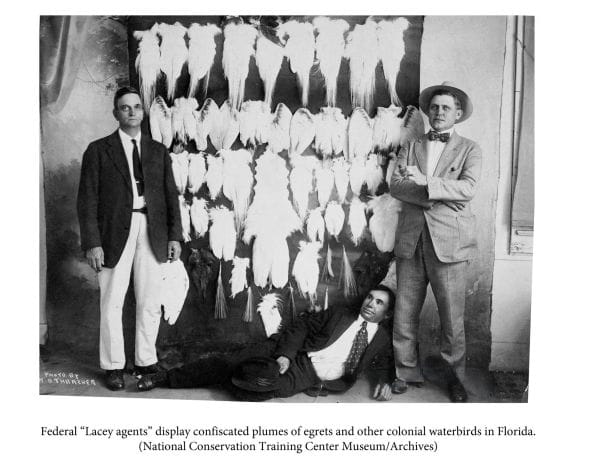
The “wars” in the title are more than a metaphor. McCommons charts legal battles over state and federal authority, street‑level confrontations between wardens and market hunters, and cultural clashes between consumers who loved lavish plumage and reformers who called those same hats “badges of cruelty.” The campaigns eventually yield landmark protections, from early state laws restricting plume hunting to the growth of Audubon societies and the creation of refuges that would reshape the American landscape. By the time he brings the story into the Franklin D. Roosevelt era and the land‑reclamation efforts of the Great Depression, McCommons has effectively woven a parallel history of the United States—one told through birds, their near‑destruction, and the long, messy crusade to save them.

Here are some “talking to your book club friends” reasons the Readers With Wrinkles crowd might want to pick up The Feather Wars:
You’ll meet a whole cast of unlikely heroes.
This isn’t just “bird science”; it’s a people story full of politicians, society women in fancy hats, nature writers, bird‑loving presidents, gunmakers, business tycoons, and stubborn game wardens who all somehow end up on the same team trying to save birds. If you enjoy watching very different personalities collide and then cooperate (more or less), this book scratches that itch.
It turns dusty history into high-stakes drama.
The book covers a time when Americans treated birds as an endless resource—until we hunted some species almost out of existence—and the “wait, we might lose them” realization lands with real emotional weight. The battles over laws, hats, hunting, and money read more like a slow-burn thriller than a textbook, which makes it ideal for readers who say they’re “not really nonfiction people.”
The bird facts are genuinely jaw‑dropping.
We’re talking flocks of passenger pigeons that darkened the sky for hours and sounded like thunder and hunting guns so huge they had to be mounted on boats. If you like those "Can you believe this?!” moments to share at meetings, this book gives you a bunch.
It connects directly to the world outside your window.
The story doesn’t stop with the past; McCommons points out that bird populations are still under pressure today and that things like keeping cats indoors and paying attention to local birds actually matter. For readers who like to close a book feeling a nudge toward real-world action (without a guilt trip), the message will resonate.
It’s perfect for bird lovers and bird dabblers
If you are already watching backyard feeders or only noticing birds when they’re loud at 5 a.m., everyone will find an entry point. The book has enough detail for serious nature buffs but is written so general readers can follow the story without a biology degree.
There’s plenty to chew on for discussion
The book raises big questions: What do we owe to the natural world? Who gets to decide how we use shared resources? How much sacrifice is “enough” when we’re trying to fix past damage? That gives a club like yours lots of angles—ethical, historical, political, even fashion and consumer culture—to unpack around the table.
It affirms the value of late-blooming conservationists.
Many of the people who helped save birds didn’t start out as obvious heroes—they were hunters, collectors, or socialites who changed their minds as they learned more. For older readers especially, it’s encouraging to see proof that your perspective can shift and still count for something meaningful.
It fits beautifully with your club’s vibe.
The Feather Wars is exactly the kind of serious, story‑driven nonfiction that tends to land well with thoughtful, life‑experienced readers who like to learn something and then talk it to pieces. It gives you history, heart, and a sense that what happened on those marshes and in those meeting rooms is still echoing every time you hear birdsong today.

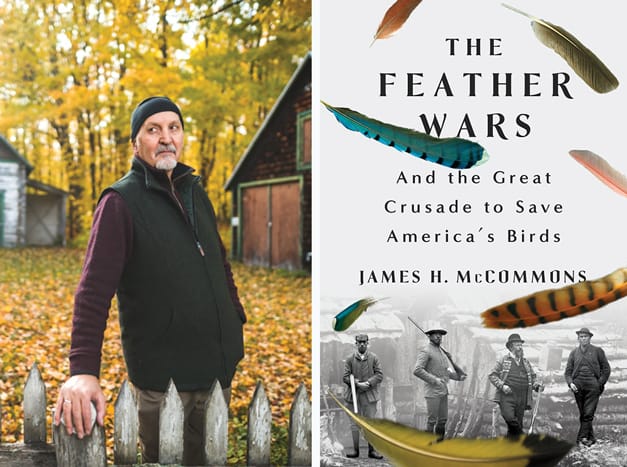
Get James H. McCommons Books
Explore the urgent beauty of nature, history, and infrastructure through James H. McCommons’s vivid narrative nonfiction, where endangered birds, wildlife pioneers, and passenger trains become powerful lenses on how we live with the land.
Bookshop.org was created as a socially conscious alternative to Amazon, with the goal of helping local, independent bookstores thrive. This is why Readers With Wrinkles supports their efforts. Please join us in this effort by purchasing your next read here.

Here are some well-matched titles that echo The Feather Wars’ mix of narrative history, conservation politics, and focus on birds and extinction-era nature writing.

A global, story-driven look at bird migration that blends cutting-edge science with on-the-ground reporting, much like The Feather Wars’ sweeping historical canvas. It highlights the pressures modern birds face and the people racing to understand and protect them.

Explores bird intelligence through vivid anecdotes and field research, giving individual species the kind of narrative presence McCommons gives to early conservationists. It’s science-forward but highly readable and deeply engaged with how we think about birds’ place in the world.

Reconstructs the bizarre true story of a young man who stole rare bird skins from a British museum, then uses it to probe the legacy of Victorian feather lust and specimen collecting. It reads like a true-crime thriller while raising ethical questions very close to the “feather wars” era.

Part travelogue, part birding memoir, this book follows Dunne across North America in search of iconic bird encounters. It captures the passion of bird lovers and the landscapes they move through, echoing the human-and-bird focus of early conservation narratives.

Recreates vanished ecosystems across deep time, including many bird-rich environments, to show how extinction reshapes life. While broader than avian history, it shares The Feather Wars’ concern with what is lost when species and habitats disappear.

The classic that exposed how pesticides were devastating bird populations and catalyzed modern environmentalism. It can feel like a later, scientific coda to the political and cultural battles McCommons chronicles around hunting and fashion.

A companion in spirit to The Genius of Birds, this book focuses on surprising behaviors—communication, parenting, and play—that show how adaptable and vulnerable birds are. It offers a contemporary behavioral counterpoint to the historical slaughter and protection efforts in The Feather Wars.

A photo-rich, narrative account of wildlife decline in East Africa that mixes art, history, and conservation politics. Though centered on mammals, it shares the elegiac, documentary tone of tracing how fashion, hunting, and imperial ambitions drove species toward extinction.

The book recounts the tale of the 1910 wildfire that significantly shaped U.S. conservation policy during Roosevelt's administration. Many of the same Progressive Era political and institutional forces that appear in The Feather Wars are at play here, giving a parallel case study in early conservation battles.

This book provides a historical survey of Americans' understanding and responses to extinction since the early republic. It dovetails neatly with McCommons’ period and themes, broadening the lens from birds to the larger culture of conservation and loss.

A blend of natural history, myth, and conservation writing centered on the Klamath Mountains’ ecosystems. Like The Feather Wars, it threads biography, ecology, and politics into a narrative about how people come to value (or undervalue) particular landscapes and species.

Follows three obsessive birders competing to spot the most species in North America in a single year. It’s lighter in tone than McCommons but reveals how the passion that once fueled collecting and killing has evolved into nonlethal, conservation-minded obsession.
Comments