

Table of Contents
- Date Published:
2025 - Length:
352 pages—Listening Time: 9 hours 15 minutes - Genre:
Fiction, Historical Fiction - Setting:
1950s, Suburban America - Awards
New York Times bestseller; USA Today bestseller; Shortlisted for the Bridgeman Images Book Cover Awards 2026 - Languages:
English - Sensitive Aspects:
Mental illness, postpartum depression, postpartum psychosis, medical gaslighting, forced institutionalization, lobotomy, electroconvulsive therapy, pregnancy complications, infant death, grief, suicide, self-harm ideation, domestic emotional abuse, marital coercion, sexism, misogyny, 1950s patriarchal gender roles, lack of bodily autonomy for women, ableism toward mentally ill and disabled people, polio and chronic illness, addiction to or misuse of tranquilizers (e.g., Miltown), verbal cruelty, neighbor surveillance, and stalking behaviors - Movie:
There is no public information indicating any movie or TV adaptation deals have been announced for The Mad Wife as of March 2026. - Recommended for Book Club:
Maybe, there is a lot to discuss with this book, but it is dark

Some books don’t just ask for your attention—they grab it by the collar and say, sit down, we’re doing this now. The Mad Wife by Meagan Church did exactly that. I picked it up this past weekend, expecting to read a few chapters before bed. Instead, I blinked, and suddenly it was midnight, the real world fading behind the hum of the 1950s and the sharp whisper of a story that refused to be put down.
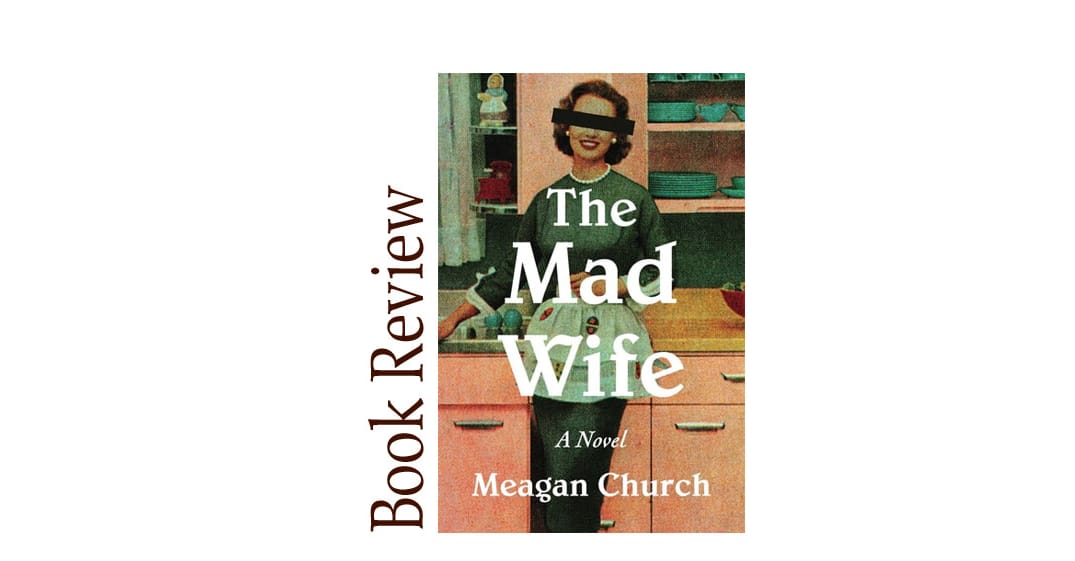
Let’s talk about that cover first, because—wow. It’s one of those designs that both invites and warns you: elegant curves, muted tones, and an edge of unease. It promises mystery and delivers it in full.
What really got me, though, was how effortlessly Church transports you straight into the postwar haze of the 1950s—a time polished on the outside but cracked underneath. You can almost smell the starch in the aprons, feel the pressure thickening in the air, and, of course, taste the gum on the back of S&H Green Stamps. It’s a strange thrill, revisiting that era from the safety of a page, knowing what the women inside those tidy kitchens couldn’t yet say out loud.
This book? You live through it rather than read it, even if you weren't alive in the 1950s. Even if you've never been pregnant and have no children. And once it’s done with you, you’re left staring at the cover again, wondering how something so alluringly beautiful could hold so much quiet madness inside.

The Mad Wife drops you into a flawless 1950s subdivision where the lawns match, the smiles never crack, and the Jell-O molds are as much a performance as the marriages behind them. That’s Greenwood Estates, and it’s where Lulu Mayfield has spent five years turning herself inside out to be the “perfect” wife—pressed dresses, hot dinners, and gelatin showstoppers that keep the neighbors talking. On paper, her life is exactly what every magazine ad promises. In her body and mind, though, something is starting to go very, very wrong.
After the birth of her second child, Lulu’s carefully arranged life begins to fray at the edges. Exhaustion settles into her bones in a way sleep can’t fix. Her heart races, her joints ache, and waves of dread roll in without warning, but the doctors dismiss her complaints as nerves, hysteria, or just the strain of being a housewife who should be grateful for everything she has. Her husband, Henry, wants solutions that look neat: pills, rest, and reassurance that his world—and therefore hers—remains under control. Lulu wants something more basic and far more dangerous in this era: to be believed.
Then new neighbors move in across the street, and everything that’s been simmering under Lulu’s surface starts to boil. Bitsy, the wife, arrives with a blinding smile, a perfectly bobbed haircut, and an eagerness to fit in that should be harmless… but isn’t. There’s something off about her cheerful chatter, the way her story doesn’t quite line up, the unsettling quiet that flickers in her eyes when she thinks no one’s looking. Lulu can’t stop watching, can’t stop wondering: what happened to make a woman so determinedly “fine”?
That curiosity curdles into obsession. Lulu digs into Bitsy’s past and uncovers a link to another woman whose life ended in a chilling “cure” for being too complicated, too emotional, too much. Old newspaper clippings and medical records hint at a history of husbands signing on the dotted line while doctors turned women’s pain into pathology and their personalities into something that needed to be cut away. As Lulu connects Bitsy to this terrifying legacy, she starts to see her neighborhood differently: the card games, the backyard barbecues, the gossip over coffee—all suddenly laced with the threat of what happens to wives who don’t behave.
The more Lulu questions, the more the community questions her. Her anxieties are chalked up to postpartum mood swings, her physical symptoms to stress, her suspicions about Bitsy to “female imagination.” Henry, already unnerved by her unpredictability, grows more distant, and Lulu begins to understand how quickly a woman can be recast from devoted mother to “mad wife” with a few careful words and a doctor’s signature. Is she unraveling under the weight of her own trauma and illness—or finally seeing the brutal reality beneath suburbia’s glossy surface?
As the story tightens, Lulu is forced toward an impossible choice: comply with the role everyone expects of her and risk losing herself entirely, or keep pushing for the truth and risk losing everything else. Bit by bit, she uncovers devastating truths about Bitsy, about the women who came before them, and about the thin line separating the life she has from the institution she’s been taught to fear. The danger isn’t just that someone might call her crazy—it’s that in a world designed to silence her, “crazy” becomes the easiest label for men to use when a woman refuses to keep pretending.

Reasons to read The Mad Wife
It’s a haunting look at 1950s housewife life
Lulu Mayfield has spent five years crafting herself into the “perfect” mid‑century suburban wife, from keeping her husband happy to making her gelatin salads the talk of the neighborhood. The book peels back that shiny surface to reveal the exhaustion, isolation, and quiet despair that role demands.
It captures the pressures of motherhood with raw honesty
After the birth of her second child, Lulu’s carefully arranged life begins to unravel, and the story follows her sleepless nights, buried guilt, and spiraling self‑doubt. Reviewers highlight how the novel explores motherhood and identity in a way that feels incisive, haunting, and painfully relevant for women today.
Perfect for fans of The Bell Jar and The Yellow Wallpaper
Critics repeatedly compare The Mad Wife to classics like The Bell Jar, The Hours, and The Yellow Wallpaper for its blend of domestic drama and psychological unease. If your followers love literary fiction that probes women’s mental health and societal expectations, this belongs on their TBR.
Slow-burn psychological suspense instead of cheap thrills
This isn’t a twist‑every‑chapter thriller; it’s a slow, simmering psychological story where ordinary events start to feel off, and you’re never quite sure what’s real. Readers describe a steady build of tension that pays off with a shocking twist that reframes everything that came before.
A sharp critique of how women’s pain gets dismissed
Doctors label Lulu with “housewife syndrome,” prescribe tranquilizers, and discuss electroconvulsive therapy over her objections, echoing real mid‑century attitudes toward “hysterical” women. The novel makes it clear how women’s suffering is pathologized, minimized, or silenced instead of truly heard—paralleling many modern conversations.
Compelling, complicated female characters
Lulu is far from a “likable” stereotype; she’s messy, haunted, and deeply human, which makes following her unraveling both unsettling and empathetic. Bitsy, the seemingly perfect neighbor with a shadowy past, adds another layer as Lulu’s obsession with her exposes uncomfortable truths about both women.
Beautifully written, emotionally intense prose
The book is frequently praised for its “razor‑sharp insight” and “aching lyricism,” balancing lyrical writing with an undercurrent of dread. Many reviewers mention being left emotionally raw and still thinking about Lulu long after they turned the last page.
Timely for readers worried we’re “going backward”
Several reviewers point out how the novel feels disturbingly relevant as contemporary culture flirts with nostalgic, regressive ideals of domestic womanhood. It’s the kind of historical novel that lets your followers talk about the 1950s while really talking about their own lives right now.
Ideal fit for literary‑leaning, mature readers
The Mad Wife leans more literary than commercial thriller, with atmospheric storytelling, nuanced characters, and thematic heft over constant action. That makes it especially well‑suited to your audience of thoughtful, mature readers who enjoy layered, emotionally resonant fiction.

Get Meagan Church Books
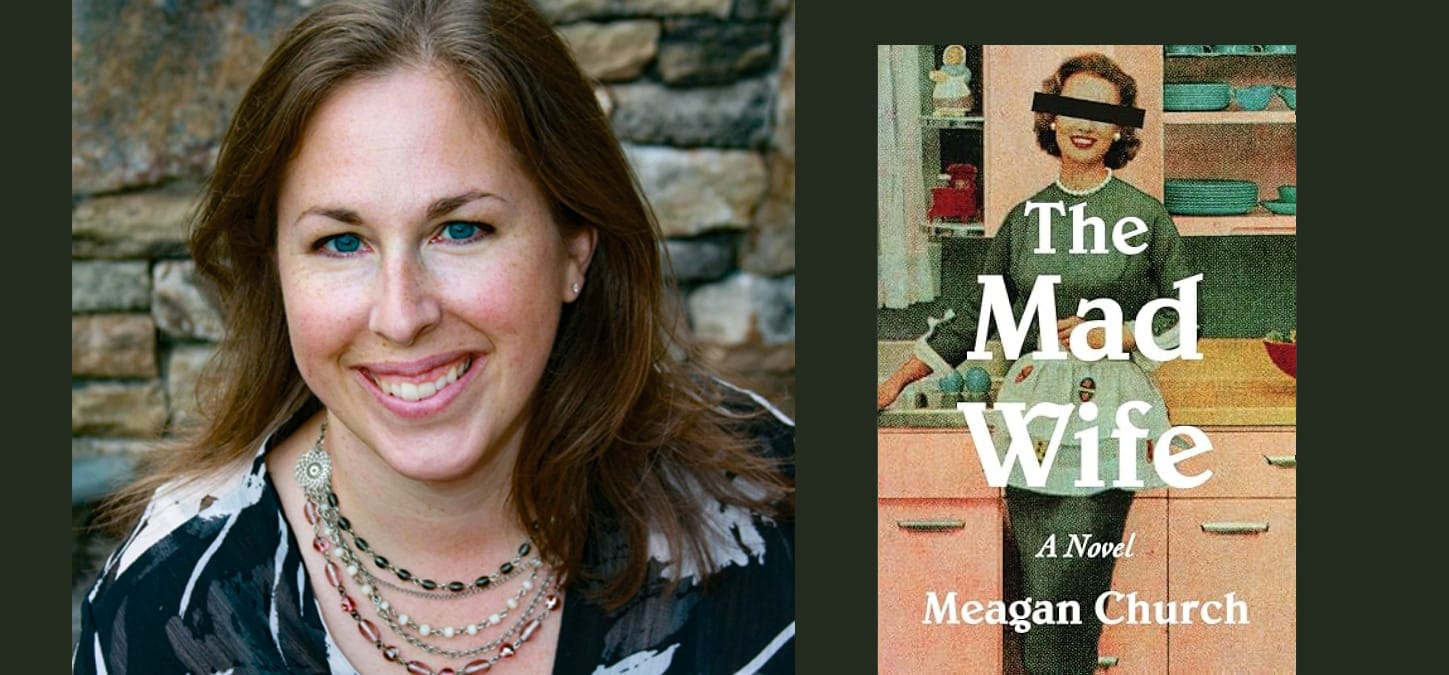
Meagan Church writes emotionally searing historical fiction that shines a light on forgotten women, exposing the hidden costs of societal expectations while celebrating their fierce resilience and fight to reclaim autonomy.
Bookshop.org was created as a socially conscious alternative to Amazon, with the goal of helping local, independent bookstores thrive. This is why Readers With Wrinkles supports their efforts. Please join us in this effort by purchasing your next read here.

Here are ten novels with similar vibes to The Mad Wife—historical or domestic settings, women constrained by marriage and motherhood, creeping psychological tension, and themes of “hysteria,” gaslighting, or suburban performance.
- The Bell Jar by Sylvia Plath
A semi‑autobiographical novel set in 1950s America about Esther Greenwood, a young woman whose promising future fractures under the weight of societal expectations and untreated mental illness. It explores psychiatric treatment, depression, and the suffocating pressure to conform to traditional femininity in a way that strongly echoes Lulu’s unraveling. - The Hours by Michael Cunningham
This layered novel follows three women in different eras, all haunted by Virginia Woolf’s Mrs Dalloway and by the domestic roles that don’t quite fit their inner lives. Like The Mad Wife, it’s less about overt thriller beats and more about the quiet terror of realizing the life you built may not be survivable. - The Yellow Wallpaper by Charlotte Perkins Gilman
A classic short story about a woman prescribed a “rest cure” for her nerves who slowly descends into apparent madness while confined to a bedroom with unsettling yellow wallpaper. It’s the ur‑text of medical gaslighting and “hysteria,” making it a perfect thematic companion to Lulu’s experience with 1950s mental‑health norms. - The Push by Ashley Audrain
This contemporary psychological drama centers on a mother who fears there is something fundamentally wrong with her child while everyone around her questions her sanity and reliability. It tackles postpartum mental health, maternal ambivalence, and the loneliness of not being believed—very much in line with the emotional core of The Mad Wife. - Little Disasters by Sarah Vaughan
Set in the UK, this novel begins when a pediatric emergency doctor suspects that her friend may have harmed her own baby, pulling apart layers of secrecy about motherhood and mental illness. It’s a compassionate but tense look at postpartum crises and the brutal standards placed on “good” mothers. - Behind Closed Doors by B.A. Paris
On the surface, Jack and Grace are the perfect couple, but privately she is controlled, isolated, and trapped in a meticulously maintained domestic prison. The book amplifies the claustrophobic dread of being a wife whose distress is invisible or dismissed, similar to the social performance required of Lulu in 1950s suburbia. - The Couple Next Door by Shari Lapena
A baby goes missing while her parents attend a dinner party next door, and the investigation exposes buried secrets and marital fault lines. While more overtly suspenseful than The Mad Wife, it shares the interest in suburban appearances, parental guilt, and how quickly a “normal” life can collapse. - The Paper Palace by Miranda Cowley Heller
Set over a single summer day intertwined with decades of memory, this novel follows a woman confronting a lifetime of trauma, infidelity, and complicated family history while deciding whether to leave her marriage. The tone is intimate, emotionally raw, and deeply interested in how women contort themselves to survive within prescribed roles. - The Perfect Nanny by Leïla Slimani
Inspired by a real crime, this novella‑length work explores a Paris family whose seemingly ideal nanny harbors deep resentments that slowly surface. Like The Mad Wife, it uses domestic routines and childcare as the stage for quiet, mounting horror rooted in class, gender, and unspoken expectations. - The Girls We Sent Away by Meagan Church
Another historical novel by Meagan Church, this one follows a girl sent to a 1960s maternity home after an unplanned pregnancy, where institutional rules and shame dictate her future. It shares Church’s signature focus on “dark corners of the past,” women’s constrained choices, and the emotional cost of living inside systems that deny their autonomy.
Comments