

Table of Contents

- Date Published:
2017 - Length:
400 pages—Listening Time: 12 hr 10 minutes - Genre:
Historical Fiction - Setting:
1953-2017, Hollywood, California and New York City - Awards:
Audie Award Finalist Multi-Voiced Performance 2018; Goodreads Choice Awards Nominee Historical Fiction 2017; Amazon's Best Books of the Month June 2017; LibraryReads Monthly Pick Top Ten June 2017; Chicago Public Library Best of the Best: Adults 2017; Mid-Continent Public Library Best Books Pre-2022 Adult Titles 2022; Mid-Continent Public Library Best Books Pre-2024 Adult Fiction 2024 - Languages:
Basque, Czech, Danish, Dutch, English, Finnish, French, German, Indonesian, Italian, Polish, Portuguese, Romanian, Croatian, Spanish, Swedish, Turkish - Sensitive Aspects:
Domestic abuse; sexual assault; rape; child abuse; pedophilia; physical abuse; emotional abuse; gaslighting; domestic violence; death of a child; death of a partner; death of parents in a car accident; terminal breast cancer; grief and loss; suicide and suicidal ideation; suicide mentioned; abortion; miscarriage mentioned; drugs and drug abuse; addiction; alcoholism; drunk driving; smoking; cheating; infidelity; divorce; blackmail; sexism; misogyny; objectification of women; homophobia; lesbophobia; strong language, and sexually explicit scenes - Movie:
The Seven Husbands of Evelyn Hugo is being adapted into a Netflix feature film, with Taylor Jenkins Reid involved as an executive producer, but there's no release date yet, and the project has seen some director changes, with Liz Tigelaar writing and Maggie Betts (as of late 2025) directing. - Recommended for Book Club:
Yes

As book clubs everywhere start finalizing their reading lists for the year ahead, it feels like the perfect time to revisit some timeless classics. I have a long list of books that I have read in years past and rated 9-10 stars, but somehow, I've never had time to write full reviews for them. So, before your book club locks in its 2026 lineup, consider exploring a few of these unforgettable reads.
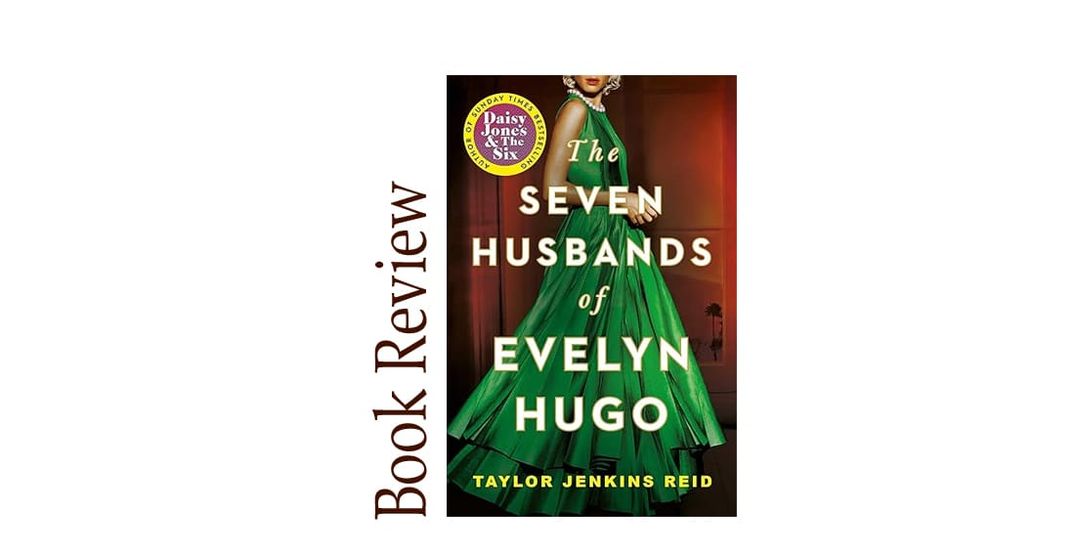
From the cover and the title, you probably think you know what you’re walking into when you start reading The Seven Husbands of Evelyn Hugo, right? A frothy Hollywood tell-all, some scandal, some diamonds, seven bad decisions in tuxedos, and such. But this book is sneakier than it looks. It waits until you’re settled in for the gossip and glitz and then, very gently, starts dismantling the way you think about love, power, and the stories women are allowed to tell about themselves.
On the surface, it’s the life story of Evelyn Hugo, a reclusive, legendary Old Hollywood actress who, at seventy-nine, suddenly decides she’s ready to spill everything. She summons an unknown journalist, Monique Grant, to her Manhattan apartment—no one can figure out why Monique, least of all Monique herself—and announces that she doesn’t just want an interview; she wants a full, unvarnished biography. From there, Evelyn rewinds the tape all the way back to the 1950s: a teenage girl escaping a brutal home, reinventing herself in Los Angeles, and using every tool at her disposal—beauty, sexuality, ambition—to claw her way into the spotlight.
There is plenty of dishy fun. Studios meddling in marriages. Marriages arranged for publicity. Marriages that last long enough to cause a scandal and then conveniently self-destruct in the tabloids. Evelyn’s seven husbands are not just a string of bad romances; they’re stepping stones in a calculated campaign to survive in a world that would happily chew up a poor Cuban girl and spit her out the second she stopped being useful. The men orbit her, but the book is never confused about who the star of this galaxy is.
What makes this novel so sticky, the kind that follows you into the kitchen and the shower and the grocery store line, isn’t just the glamour. It’s the way Taylor Jenkins Reid lets Evelyn talk to you like she knows exactly what you’ve compromised for the life you have. She forces you to sit with uncomfortable questions: If the only power you have comes from your body, are you wrong to use it? How many lies are acceptable if the truth could destroy the person you love? At what point do the choices you make “for survival” become the choices you own with no excuses?
And then there’s the emotional gut punch: this is a queer love story wrapped in a Hollywood epic, and the most important relationship in the book isn’t between Evelyn and any of her husbands. Under the gowns and the gossip, you get a tender, complicated exploration of bisexuality, found family, and what it costs to hide the truest parts of yourself in a brutally homophobic industry. If you’ve ever watched an old movie and wondered who that luminous woman on screen really loved when the cameras were off, this book feels like an answer.
If you’re here because you’re wondering whether this one is worth your time, especially when your TBR is already behaving like an unstable tower of Jenga, the short version is: yes, it is. But not just because it’s wildly readable (it is) or because it’s perfect for a book club argument over who, exactly, was Evelyn’s worst husband (also true). It’s worth it because it gives you something rare: a deeply flawed, brutally honest woman who refuses to apologize for wanting more than the world told her she could have—and then asks you, very quietly, what you’re still apologizing for.
So, let’s talk about it. Let’s talk about those seven husbands, the one great love, the twist that snaps everything into focus, and whether Evelyn Hugo is a monster, a hero, or just a woman who refused to drown. If you keep reading, you’re not just getting a review—you’re getting permission to feel however you need to feel about this story, and maybe a nudge toward the version of it you most want to believe.

Evelyn Hugo, a reclusive, legendary Hollywood actress in her late seventies, invites an unknown magazine journalist, Monique Grant, to her New York apartment and insists that only Monique can write her life story. As they settle into a series of interviews, Evelyn makes it clear that this will be a full confession: every husband, every scandal, and the truth behind the image the world thought it knew. The chapters then move back and forth between Monique’s present-day sessions with Evelyn and the chronological unfolding of Evelyn’s rise from a poor girl in Hell’s Kitchen to one of the most famous movie stars of her era.
As a teenager, Evelyn escapes an abusive home and marries a neighbor to get to Hollywood, where she quickly learns how to wield her beauty and public persona as tools for survival. Each of her seven marriages marks a new phase in her strategic climb: some unions are about gaining access to better roles, some about cleaning up her reputation, and some about hiding aspects of her identity the studio system would never tolerate. Behind the scenes, she forms alliances, makes ruthless choices, and constantly negotiates how much of herself she is willing to trade for power, security, and stardom.
At the heart of her confession is a central, lifelong love that cannot safely exist in public, especially during the height of her fame. Several of her marriages function as shields, designed to protect that relationship and maintain a carefully curated image for the press and the public. Over time, the weight of secrecy, homophobia, and Hollywood’s controlling machinery shapes every major decision Evelyn makes: which scripts she chooses, which scandals she amplifies or buries, and which people she keeps close or betrays to protect her own position.
Meanwhile, in the present-day frame narrative, Monique tries to understand why Evelyn chose her, of all writers, for this blockbuster biography. As Evelyn moves through husbands and decades, Monique’s own life—stalled career, recent separation, uncertainty about her future—begins to run in counterpoint to Evelyn’s story. The more Evelyn reveals, the clearer it becomes that there is a specific, personal reason she has brought Monique here and the connection between them is rooted in one of the ugliest, most consequential events of Evelyn’s past.
The story builds toward that revelation: a secret involving a fatal accident, a series of moral compromises, and a direct link between Evelyn’s actions and Monique’s life. When Evelyn finally explains the connection and concludes her tale, she hands Monique the rights to publish everything after her death, fully aware that the book will both immortalize and condemn her. The plot closes with Monique forced to decide how to tell Evelyn’s story—and how to live with the truth about the woman the world has adored for decades.

I'm confident that you and your club will enjoy this book. My local club read and discussed it a few years back, and it was a huge hit with our group. Here is why.
Big, juicy themes to discuss
This novel is packed with themes—ambition, fame, sexuality, queerness, motherhood, identity, and aging—all wrapped in a fast, glamorous narrative. Mature readers and book clubs can dig into questions like, "What do we owe our younger selves?" What do we sacrifice for security, and is it ever “worth it”?
A heroine who’s gloriously complicated
Evelyn is not here to be “nice,” and that’s exactly what makes her so fun to dissect in a group. She’s magnetic, deeply flawed, strategic, vulnerable, and sometimes morally outrageous, which gives book clubs endless fodder for “Would you have done the same thing?” conversations.
Perfect balance of plot and emotion
The book reads like old Hollywood gossip—divorces, scandals, headline-grabbing stunts—but underneath, the emotional stakes are very real. That balance makes it accessible for casual readers while still satisfying those who want a story with emotional depth and character development.
Rich Old Hollywood atmosphere
The studio system, the contracts, the manufactured images, the fake relationships—it all creates a vivid backdrop that’s fun to inhabit and analyze. Readers get the glamour (gowns, parties, co-stars) and the grit (misogyny, racism, homophobia, exploitation), which keeps the conversation from staying shallow.
A powerful queer love story
Under the “seven husbands” framing is a central queer relationship that reshapes everything readers thought they were getting. Book clubs can talk about representation, closet dynamics, internalized shame, and how much has—or hasn’t—changed for queer people in public-facing industries.
Nuanced look at female ambition
Evelyn is unapologetically ambitious, and the book never lets you forget how limited her options are as a poor, Latina woman in a racist, sexist system. This invites rich discussion about how women are judged for using beauty, sexuality, or calculation to gain power, especially when other doors are locked.
Moral gray areas and “ends justify the means”
The story includes decisions that are ethically murky at best—lies, cover-ups, strategic marriages, and one especially devastating choice. Book clubs can have robust debates about accountability: When someone is acting to survive, are they excused? Where is the line?
Great structure for meeting-by-meeting discussion
The “seven husbands” framework naturally divides the book into neat chunks, perfect for multi-session discussions (a husband or two per meeting). Each marriage has its own flavor—some tender, some toxic, some purely transactional—so every section raises fresh questions.
Generational resonance for mature readers
Older readers may recognize the arc of reinvention, regret, and late-in-life reckoning in Evelyn’s story. There’s also a poignant throughline about aging in a youth-obsessed industry, which can hit especially hard for “Readers with Wrinkles” and spark personal reflection.
Strong intergenerational dynamic
The relationship between Evelyn and Monique mirrors the conversations many older readers wish they could have with younger women: “Here’s what I did. Here’s what it cost. Learn from it—or don’t.” It gives book clubs a built-in lens to talk about mentorship, storytelling, and how each generation rewrites the rules it inherits.
Conversation-starting twists and reveals
Without spoiling details, the connection between Evelyn and Monique, and the full truth of Evelyn’s past, lands with real emotional force. That final stretch practically begs for a book club: How did you feel about Evelyn once you knew everything? Did it change your judgment of her, or confirm it?
Hugely quotable and annotation-friendly
Evelyn delivers bold, quotable lines about love, desire, survival, and regret—the kind of lines readers highlight, screenshot, and bring to meetings. Those sharp moments make it easy to structure a discussion around favorite passages, “Evelyn-isms,” and the lines that hit a little too close to home.

Get Taylor Jenkins Reid Boks
Bookshop.org was created as a socially conscious alternative to Amazon, with the goal of helping local, independent bookstores thrive. This is why Readers With Wrinkles supports their efforts. Please join us in this effort by purchasing your next read here.

Here are some strong read-alikes for The Seven Husbands of Evelyn Hugo, mixing old Hollywood (or adjacent fame), complicated women, dual timelines, and secrets.
Celebrity & old-Hollywood vibes
- Daisy Jones & The Six by Taylor Jenkins Reid
Told as an oral history of a 1970s rock band, this novel follows the rise and implosion of a legendary group and the enigmatic singer who changes everything. The documentary-style interviews and behind-the-scenes scandal echo the confessional feel of Evelyn’s tell‑all. - Malibu Rising by Taylor Jenkins Reid
Set over one wild night in 1980s Malibu, four famous siblings host an infamous end‑of‑summer party that exposes the secrets of their star-powered family. The novel blends celebrity culture, complicated family history, and a slow reveal of painful truths across dual timelines. - City of Girls by Elizabeth Gilbert
In 1940s New York theater circles, naive Vivian is drawn into a glamorous, hedonistic world that leads to scandal and lifelong consequences. As an older woman, she looks back and reframes her “ruined” reputation, much like Evelyn reclaiming her own story. - The Final Revival of Opal & Nev by Dawnie Walton
Structured as an oral history, this follows an Afro-punk singer and her white British collaborator whose 1970s rise is shadowed by a violent, career-defining incident. Decades later, a journalist uncovers buried truths that challenge the public myth around the duo. - The City of Flickering Light by Juliette Fay
Three friends flee a burlesque show in 1920s Los Angeles and try to remake themselves in the early film industry, confronting casting couches, gossip, and moral judgments. The book shows Hollywood’s underbelly behind the shimmering facade, similar to Evelyn’s world of image-making and compromise.
Fierce, complicated women telling their stories
- Great Circle by Maggie Shipstead
This sweeping novel traces a daring female pilot from her Prohibition‑era childhood to a mysterious 1950s flight, while a present‑day actress portrays her in a biopic and uncovers hidden truths. The interplay of real woman vs. public image mirrors Evelyn’s battle between private self and legend. - The Blind Assassin by Margaret Atwood
An elderly woman writes a memoir of her glamorous sister, a 1930s–40s socialite and novelist, intertwining scandal, political upheaval, and a story‑within‑a‑story science‑fiction romance. The confessional, layered narration and slow revelation of long‑buried secrets feel tonally similar to Evelyn’s retrospective narrative. - Lucky Us by Amy Bloom
Two half-sisters hit the road in the 1940s and navigate Hollywood, New York, and wartime Europe, reinventing themselves as they go and making ethically messy choices to survive. It offers morally gray women, queer desire, and show-business illusions in a compact, emotionally sharp package. - Valley of the Dolls by Jacqueline Susann
Following three women chasing fame in mid‑20th-century entertainment, this classic shows how sex, pills, and publicity clash with female ambition. The frank look at the costs of stardom and how the industry consumes women pairs well with Evelyn’s rise and fall.
Gossip, scandal, and socialites
- The Swans of Fifth Avenue by Melanie Benjamin
Truman Capote insinuates himself into the lives of 1950s–60s New York socialites, then betrays their secrets in a sensational story that rocks their world. It is steeped in gossip, glitter, and the devastation that comes when a carefully curated image is shattered. - The Heiress by Rachel Hawkins
A notoriously wealthy woman dies and leaves her fortune—and her dark reputation—to a young heir whose life is upended by gossip, letters, and old scandals. The book reads like a thriller-tinged cousin of Evelyn’s story, full of money, manipulation, and questions about who controls a woman’s narrative. - Work Wife by Alison B. Hart
Over the course of one high‑stakes day at a Hollywood charity gala, three women tied to a powerful producer confront what they’ve sacrificed for his success. The toxic glamour, moral compromises, and shifting loyalties echo Evelyn’s entanglements with powerful men and her own ambition.
Comments