

Table of Contents
- Date Published:
2023 - Length:
352 pages—Listening Time: 8 hours 28 minutes - Genre:
Non-Fiction, Historical - Setting:
1740-1742; England, South Atlantic, Chile, Brazil - Awards:
Audie Award Finalist Non-Fiction Narrator 2024; Audie Award Finalist History/Biography 2024; Baillie Gifford Prize for Non-Fiction Longlist 2023; BookTube Prize Quarterfinalist Nonfiction 2024; BookBrowse Awards Nonfiction 2023; Waterstones Book of the Year Shortlist 2023; Libby Book Award Winner Adult Nonfiction 2024; Goodreads Choice Awards Winner History & Biography 2023; NPR: Books We Love 2023; Boston Globe Best Book Nonfiction 2023; Notable Books List Nonfiction 2024; Amazon.com Best Books 2023; The New York Times Notable Books of the Year Nonfiction 2023; Kirkus Reviews Best Book of the Year Page-Turners 2023; Globe and Mail Top 100 Book International Nonfiction 2023; The Economist Best Books History 2023; Publishers Weekly's Summer Reads Staff Picks 2023; Esquire Best Books of the Year So Far Nonfiction 2023; Chicago Public Library Best of the Best: Adults Top Ten Favorite Books 2023; Chicago Public Library Best of the Best: Adults Selection Must-Read Books: Nonfiction 2023; Fresh Air: Maureen Corrigan's 10 Favorite Books of the Year Nonfiction 2023; King County Library System Best Books Nonfiction Books 2023; NPR Best Book 2023; Time Magazine's Must Read Books of the Year 2023; The Best Books: Book Recommendations from the Multnomah County Library Adults 2023; AIR MAIL’s Best Books of the Year 2023; Barack Obama's Favorite Books 2023; Smithsonian Magazine's Ten Best History Books Listed 2023; Texas Topaz Nonfiction Reading List Adults 2025; Mid-Continent Public Library Best Books Adult Nonfiction 2023; BookPage Best Books Nonfiction 2023 - Languages:
Catalan, Dutch, English, French, German, Portuguese, Spanish, Swedish - Sensitive Aspects:
Cannibalism, graphic gore, gun violence, animal cruelty, racism, slavery, starvation, torture, general physical violence, death, medical trauma, abuse, strong language/cursing - Movie:
Developed for Apple Original Films, Martin Scorsese is set to direct a film adaptation of The Wager: A Tale of Shipwreck, Mutiny and Murder, with Leonardo DiCaprio attached to star. - Recommended for Book Club:
Yes, especially groups that love historical non-fiction

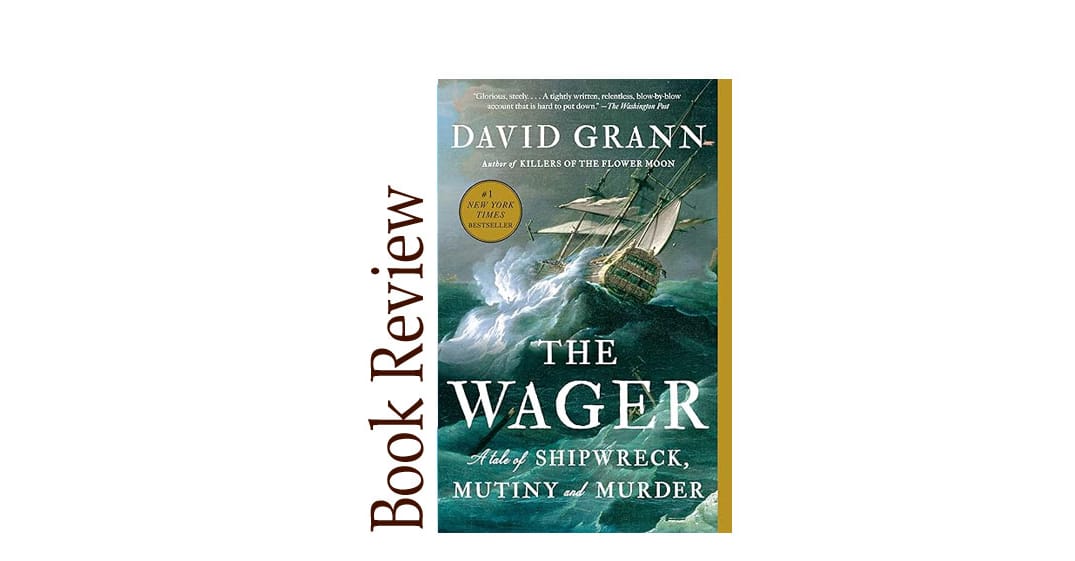
British naval history is probably the very last thing I thought I’d ever be interested in. I mean, give me shipwrecks and mutinies in a movie, sure—but eighteenth-century British sailors, rules of honor, ropes, masts, and endless talk about the Royal Navy? That’s usually my cue to quietly back away from the conversation. And yet, here I am: completely obsessed with The Wager by David Grann, a tale so riveting it made me forget I was technically reading about “naval history.” It’s less “dry textbook,” more “holy ship, what just happened?”
Grann, the journalist behind Killers of the Flower Moon, has a knack for turning meticulous research into narrative lightning. In The Wager, he dives into a true story of survival, betrayal, and moral collapse after a British warship wrecks off the coast of South America in the 1740s. The result is a study not only of endurance but of the fragile line between order and chaos when humans are pushed to their breaking point. It’s gritty, unpredictable, and—dare I say—almost cinematic in its pacing.
And speaking of cinematic: if you’re an audiobook person, do yourself a favor and listen to Dion Graham’s narration. The man could read a grocery list and make it sound epic. His performance brings each officer, sailor, and survivor vividly to life, shifting from controlled authority to raw despair with effortless precision. It’s one of those rare times where the right narrator amplifies the entire story, pulling you straight into the storm.
By the time I finished, I’d gone from reluctant listener to armchair maritime historian, muttering about scurvy and ship manifests like it was normal breakfast conversation. This isn’t just a shipwreck story—it’s a meditation on truth, leadership, and the things we’ll do to survive, told with Grann’s signature storytelling genius. If you think you’re not a “history person,” this book might just surprise you too.

Things go badly wrong for the crew of the Wager long before the ship ever hits the rocks. The story opens in the middle of Britain’s war with Spain in the 1740s, when the Wager—part of a larger squadron—sails from England on a secret mission to capture a Spanish treasure galleon nicknamed “the prize of all the oceans.” The voyage south, around Cape Horn, is brutal: storms, scurvy, disease, and terrible navigation errors thin the ranks and shred morale as the ship is pushed into some of the most dangerous waters in the world.
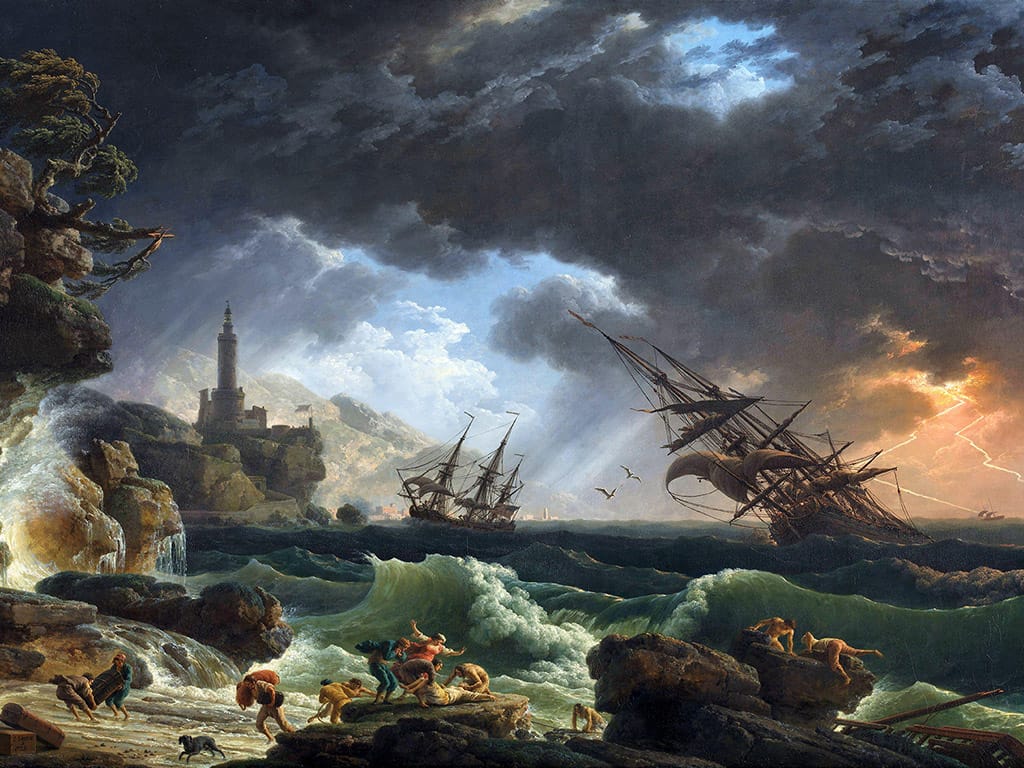
Separated from the rest of the fleet near the tip of South America, the Wager is finally destroyed in a violent storm and wrecks on a desolate island off the coast of Patagonia. The surviving men manage to salvage food, timber, and weapons from the splintered ship, then set up a bleak little camp on what they start calling Wager Island. At first, they cling to naval hierarchy and military discipline, trying to believe they’ve only been temporarily delayed on their glorious mission.
But as weeks turn into months, the situation decays fast. Starvation, cold, and injuries gnaw at the crew, while cliques and rivalries grow sharper. Captain David Cheap insists he’s still in command and that their duty is to preserve order and wait for a rescue—or somehow resume the war against Spain. John Bulkeley, the ship’s skilled and charismatic gunner, becomes the center of a rival faction that believes their only hope is to save themselves, even if it means defying the captain.
As food dwindles and hope evaporates, the island turns into a kind of real-life Lord of the Flies. Orders are ignored, supplies go missing, a separate camp forms, and Cheap responds with bursts of rage and violence, including shooting a sailor in the face without warning. Eventually, part of the crew openly breaks with the captain, seizes a boat cobbled together from the wreckage, and sails away—an act Cheap calls mutiny and they insist is survival.
From there, the narrative splits. One group, led by Bulkeley, undertakes a nearly impossible voyage in a fragile makeshift vessel, crossing thousands of miles of stormy seas to reach Brazil, where they arrive half-dead but alive enough to tell their version of what happened on Wager Island. Months later, a second, even more ragged group—including Cheap—struggles ashore in Chile with a story that flips the script: in their telling, Bulkeley and his followers are not brave survivors but treacherous mutineers.
The rest of the book follows what happens when these competing survivors finally make it back to England and their stories collide. The Admiralty convenes a high-stakes court martial to decide who will live, who will hang, and which version of events will become “official” history. Through journals, testimony, and clashing narratives, the plot tracks not just the disaster at sea and the anarchic months on the island, but the long, ruthless fight to shape the truth once everyone is safely back on shore.

You should absolutely read The Wager if…
You love real stories that read like fiction
This is a true historical event that unfolds with all the twists of a tightly plotted thriller—shipwreck, survival, mutiny, murder accusations, and a courtroom showdown back in England. It has that “if this were a novel, you’d say it was too much” energy, but it all actually happened.
You’re fascinated by people under pressure
The book throws a group of men into the worst circumstances imaginable—starvation, freezing cold, isolation—and watches what happens to loyalty, morality, and sanity. You see how quickly “we’re all in this together” turns into “every man for himself” once survival is on the line.
You enjoy morally messy stories
There are no perfect heroes here, just flawed people making impossible choices. By the time the survivors are pointing fingers at each other in London, you’re left sifting through competing accounts and asking, “Who do I actually believe?” That moral ambiguity makes the story linger.
You like history that doesn’t feel like homework
Even if British naval history sounds like dry toast, this book sneaks the context in through vivid scenes and sharp details. You pick up the politics, the class system on board, and the wartime stakes almost by osmosis while you’re busy worrying who’s going to make it off that island.
You’re drawn to survival stories
If you’re the kind of reader who can’t resist tales of humans battling the elements, this has everything: brutal storms, makeshift shelters, desperate voyages in tiny boats, and men pushed far past what their bodies and minds should manage. It scratches the same itch as mountaineering or stranded-at-sea narratives, just with more gunpowder and court martials.
You’re curious about how “official” history gets written
One of the most compelling threads is what happens after the ordeal, when different survivors tell completely different stories about the same events. The book shows how power, class, self-interest, and spin shape which version of the truth ends up in the record—and which gets quietly buried.
You appreciate rich, immersive settings
From the violent chaos of rounding Cape Horn to the bleak, wind-scoured island where the men try to build a life out of shipwreck scraps, the environments feel almost like characters. You can practically taste the salt, feel the cold, and hear the constant, maddening wind.
You enjoy layered narratives you can discuss
This is the kind of book that sparks conversation: Was it mutiny or justified rebellion? Was the captain a villain, a victim, or both? How would you have acted in their place? It’s perfect for book clubs, buddy reads, or anyone who likes to argue (politely) about what “doing the right thing” really means when survival is at stake.
You like audiobooks that feel like performances
If you’re an audio listener, Dion Graham’s narration turns the story into an experience. His delivery captures the tension, desperation, and shifting power dynamics in a way that makes you forget you’re listening to history and not an epic drama.

Get David Grann Books
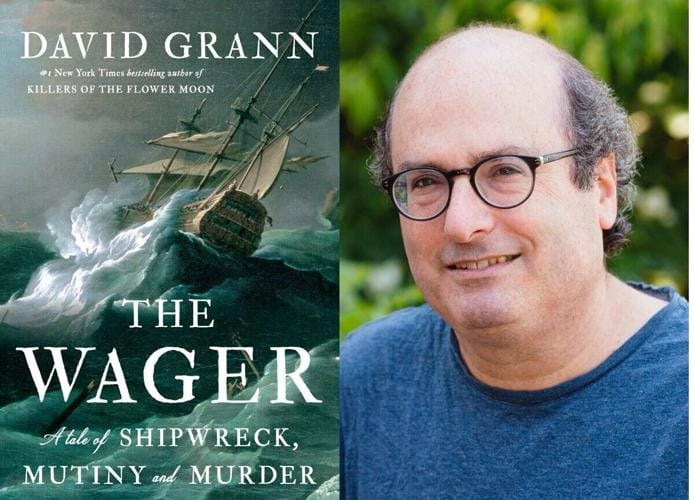
Dive into David Grann’s masterfully crafted nonfiction, where meticulous research and cinematic storytelling transform true tales of adventure, obsession, and justice into page-turning literary thrillers.
Bookshop.org was created as a socially conscious alternative to Amazon, with the goal of helping local, independent bookstores thrive. This is why Readers With Wrinkles supports their efforts. Please join us in this effort by purchasing your next read here.

Here are narrative nonfiction books with a similar blend of shipwrecks, extreme exploration, mutiny, and survival to The Wager.
- Endurance: Shackleton’s Incredible Voyage by Alfred Lansing
A riveting account of Ernest Shackleton’s 1914 Antarctic expedition, in which his ship is crushed in pack ice and the crew must endure a near-impossible journey over ice, sea, and mountains to survive. The narrative reads like a thriller while remaining deeply grounded in primary-source research and crew diaries. - In the Heart of the Sea: The Tragedy of the Whaleship Essex by Nathaniel Philbrick
This book recreates the 1820 sinking of the whaleship Essex by a massive sperm whale, the event that inspired Moby-Dick. Philbrick follows the crew’s desperate struggle in open boats, including starvation, storms, and terrible choices, to examine both maritime history and human endurance. - The Lost City of Z: A Tale of Deadly Obsession in the Amazon by David Grann
Grann investigates the mysterious disappearance of British explorer Percy Fawcett, who vanished in 1925 while searching for a fabled ancient city in the Amazon. The book interweaves Fawcett’s perilous expeditions with Grann’s own journey into the jungle, exploring obsession, myth, and the deadly realities of exploration. - River of Doubt: Theodore Roosevelt’s Darkest Journey by Candice Millard
After his 1912 election defeat, Theodore Roosevelt joins a dangerous expedition to map an uncharted tributary of the Amazon, later dubbed the River of Doubt. Millard chronicles disease, starvation, murder, and near-mutiny as the party battles the jungle and each other, highlighting Roosevelt’s physical and psychological unraveling. - Madhouse at the End of the Earth: The Belgica’s Journey into the Dark Antarctic Night by Julian Sancton
This narrative follows the ill-fated 1897–1899 Belgian Antarctic Expedition, whose ship, the Belgica, became trapped in pack ice, forcing the crew to overwinter in polar darkness. Sancton examines the crew’s isolation, mental breakdowns, and acts of heroism and folly, making the story feel as tense as any modern disaster thriller. - Batavia’s Graveyard: The True Story of the Mad Heretic Who Led History’s Bloodiest Mutiny by Mike Dash
A Dutch East India Company ship wrecks off the coast of Australia in 1629, and in the aftermath, a charismatic psychopath orchestrates a horrific mutiny and reign of terror among the survivors. Dash combines maritime history, true crime, and colonial politics to show how a shipwreck turns into a brutal struggle for power and survival. - The Black Ship: The Quest to Recover an English Pirate Ship and Its Lost Treasure by Dudley Pope
Centered on an infamous mutiny aboard the British warship Hermione in 1797, this book reconstructs the violent uprising and the Royal Navy’s relentless hunt for the mutineers. It offers a detailed look at life aboard a man-of-war and the harsh discipline and grievances that pushed a crew toward rebellion. - Island of the Lost: An Extraordinary Story of Survival at the Edge of the World by Joan Druett
On New Zealand’s remote Auckland Islands in the 1860s, two separate shipwrecks occur on opposite ends of the same island, with each stranded group developing very different systems of leadership and cooperation. Druett contrasts these parallel survival stories to explore how organization, morale, and character shape life-or-death outcomes. - Dead Wake: The Last Crossing of the Lusitania by Erik Larson
Larson narrates the 1915 torpedoing of the passenger liner Lusitania by a German U-boat, weaving together perspectives from the ship’s passengers, the submarine crew, and British intelligence. The result is a slow-burn account of a maritime disaster that helped turn world opinion during World War I. - Lost in Shangri-La: A True Story of Survival, Adventure, and the Most Incredible Rescue Mission of World War II by Mitchell Zuckoff
After a U.S. military transport plane crashes in a remote New Guinea valley during World War II, the surviving passengers must contend with injuries, jungle terrain, and contact with an isolated indigenous community. Zuckoff’s narrative focuses on survival, cultural encounters, and the daring rescue mission mounted to bring the survivors home. - The Long Walk: The True Story of a Trek to Freedom by Slavomir Rawicz
Rawicz recounts his escape from a Soviet gulag during World War II and the subsequent 4,000-mile trek on foot through Siberia, the Gobi Desert, and the Himalayas. Though aspects of its historicity have been debated, the book remains a gripping story of endurance, starvation, and near-impossible odds. - The Indifferent Stars Above: The Harrowing Saga of a Donner Party Bride by Daniel James Brown
Brown follows Sarah Graves, a young bride traveling with the Donner Party, as the wagon train becomes trapped in the Sierra Nevada in winter. Using meticulous historical research, he reconstructs the physical and psychological ordeal of entrapment, hunger, and moral crisis. - Killers of the Flower Moon: The Osage Murders and the Birth of the FBI by David Grann
While not maritime, this book shares The Wager’s investigative depth and narrative drive as Grann unpacks the systematic murder of Osage people in 1920s Oklahoma for their oil wealth. It reads like a crime thriller while exposing corruption, racism, and the origins of modern federal investigative work. - Say Nothing: A True Story of Murder and Memory in Northern Ireland by Patrick Radden Keefe
Another non-nautical pick that matches The Wager’s blend of narrative storytelling and historical rigor, this book examines a notorious 1972 kidnapping and murder during the Troubles and uses it to explore decades of conflict. Keefe builds tension like a novelist while interrogating memory, secrecy, and the costs of political violence. - A Book of Voyages by Patrick O’Brian (ed.)
This curated collection of historical travel and maritime accounts brings together first-hand narratives of voyages, storms, shipwrecks, and far-flung encounters from the age of sail. It offers a patchwork of voices that capture the dangers and fascinations of seafaring life that readers of The Wager often enjoy.
Comments