


Table of Contents
In this kit:
- Book Summary Page (Online & Printable Kit)
- Main Characters Page (Online & Printable Kit)
- Discussion Questions Page (Online & Printable Kit)
- Book Quotes Page (Online & Printable Kit)
- Icebreaker Game: (Printable kit only)
- About the Author Page (Online & Printable Kit)
- Historical Facts (Small Georgia Towns) (Online & Printable Kit)
- List of Podcasts and Videos about this Book (Online only)
- Meeting Decoration Ideas (Online & Printable Kit)
- Meeting Decorations Printable Images (Printable kit only)
- Meeting Menu Ideas (Online & Printable Kit)
- Meeting Food Recipes (Printable kit only)
- Printable decoration images (Printable kit only)
- AIPrompt Instructions for Artistic Portraits (Printable kit only)
- Printable Bookmarks for Theo of Golden (Printable kit only)
- Printable Bookmarks for Readers With Wrinkles (Printable kit only)

Alen Levi’s novel Theo of Golden unfolds the gentle yet quietly disruptive arrival of an elderly stranger in the small Southern city of Golden, a man whose quiet presence and inexplicable generosity slowly rearrange the lives of the people around him. Known only as Theo, he rents a modest room, walks the town with a curious eye, and begins to notice what others have almost forgotten about themselves: their stories, their sorrows, and their longing to be seen. When Theo discovers that a local artist has created ninety-two pencil portraits of townspeople, hanging for sale in the Chalice coffee shop, he begins a personal, almost secretive mission—buying the portraits one by one and returning them to the people whose faces look back from the frames.
As Theo places each drawing into its “rightful” hands, the portraits become invitations to conversation: stories spill out, friendships take root, and neighbors who once passed each other wordlessly begin to truly see one another. Golden, with its bookstores, coffee cups, church pews, and back porches, becomes a kind of living gallery where small acts of kindness accumulate into something luminous. Yet Theo is not merely a benevolent eccentric; he is a man acquainted with sadness and loss, carrying a private history that quietly shapes the way he listens and gives. Questions hover at the edge of every encounter: Who is Theo, really? Why has he come to Golden? And what debt—spiritual or otherwise—is he quietly paying as he walks the streets, buying portraits and blessing strangers?
Without leaning on conventional plot twists, Theo of Golden works as a mosaic of linked vignettes, each centered on one person, one portrait, and one moment of unexpected grace. The novel explores themes of neighborliness, vocation, creative generosity, faith in ordinary clothes, and the surprising ways that a single life can call others toward courage, confession, and hope. For book clubs, it offers a warm, contemplative reading experience—perfect for readers who enjoy character-driven literary fiction, quiet spiritual undercurrents, and stories that linger as invitations rather than pronouncements.


The People of Golden (the portrait “saints”)
The residents whose portraits hang in the Chalice coffee shop form a shifting ensemble of bookstore owners, baristas, businesspeople, church members, artists, and those living more marginal lives at the edges of town. Each person arrives on the page at a particular crossroads—haunted by grief, wearied by routine, discouraged by failure, or tempted by cynicism—and Theo’s gift of a portrait becomes a mirror that asks who they have been and who they might yet become. Over time, these individuals begin to intersect, gradually forming a community that moves from polite acquaintanceship toward something like a found family, learning together what it means to see and be seen.
Theo
(Gamez Theophilus Zilavez, “Zila”)
An elderly Portuguese man and internationally acclaimed artist who arrives quietly in Golden, posing as an unassuming stranger while secretly buying Asher’s portraits and returning them to their “rightful owners,” creating webs of connection and healing. Marked by past grief over the deaths of his wife and daughter, Tita, he embodies a gentle philosophy that sorrow and joy must coexist and channels that wisdom into countless small acts of kindness across the town.
Tony
Tony, a Vietnam veteran who runs the local bookstore, becomes one of Theo’s closest friends and a kind of narrative anchor for readers who love shelves and stories. Scarred by war and wary of sentimentality, he initially meets life with a mix of humor, self‑protection, and deep fatigue; yet Theo’s friendship awakens in him a renewed tenderness toward people and a fresh openness to grace. Their conversations about books, memory, and vocation offer some of the novel’s most poignant reflections on how stories—both read and lived—shape the soul.
Ellen
A homeless woman living with mental illness, Ellen at first appears on the margins of Golden’s life, crafting odd artistic creations and sleeping rough. After receiving her portrait, she shares the story of having her infant daughter taken by authorities decades earlier, and her later late‑night assault—witnessed by Theo from his balcony—sets in motion the events that lead to Theo’s fatal fall.
James Ponder
A meticulous, highly organized consultant and owner of Ponder House, James begins as Theo’s cautious landlord but gradually becomes his confidant and financial facilitator. He manages the large deposit Theo uses to fund portrait purchases and eventually emerges as the guardian of Theo’s artistic legacy and a quiet broker of later reconciliations, including helping to connect Ellen with her daughter.
Asher Glissen
The gifted local artist who drew the ninety‑two pencil portraits hanging in the Bean Scene coffeehouse, Asher is both Golden’s quiet observer and one of the people most transformed when his work, through Theo, begins returning to its subjects.
Minnette Prentiss
A young accountant who feels trapped in a career that does not fit her temperament or gifts is the recipient of Theo’s first portrait “bestowal,” which becomes a catalyst for reexamining what she wants from her life. She is also Asher’s niece, and her connection to both the artist and Theo helps knit together family, vocation, and the novel’s theme of being truly seen.
Anita Gidley
James Ponder’s efficient secretary, Anita, uses her research skills and office resources to help Theo locate many of the portrait subjects scattered around Golden. Her behind-the-scenes work turns Theo’s vague descriptions and names into real addresses and encounters, making her one of the novel’s essential, if understated, connectors.
Shep Carlile
A community figure associated with The Chalice and the local social fabric of Golden, Shep represents the everyday townspeople whose routines are gradually interrupted by Theo’s presence. Though less central than Tony or James, his interactions help show how kindness and curiosity ripple through ordinary lives in the town.
Kendrick Whitaker
A university night custodian and devoted single father who once endured wrongful incarceration, Kendrick initially regards Theo’s unexpected generosity with suspicion. His love for his injured daughter, Lamisha, and his eventual decision to extend mercy to Mateo Mendez, the driver involved in the accident that killed Lamisha’s mother, make him one of the clearest embodiments of the novel’s theme of redemptive forgiveness.
Lamisha Whitaker
Kendrick’s daughter, severely injured in the car accident that killed her mother, Lamisha’s long recovery is financed and supported in part by Theo’s quiet interventions. Her vulnerability and endurance deepen the reader’s understanding of Kendrick’s sacrifices and of Theo’s willingness to invest materially and emotionally in strangers’ lives.
Simone Lavoie
A graduate cello student whose artistry draws Theo’s admiration, Simone becomes part of Theo’s circle as both a friend and a symbol of disciplined creative beauty. After his recital, he intervenes when Ellen is attacked at the town fountain and is himself brutally beaten, underscoring the novel’s recognition that acts of courage and compassion often come with real risks.
Basil Cannonfield
A street musician who brings color and sound to Golden’s sidewalks, Basil is another artist whose life intersects with Theo’s mission. Through Basil, the book broadens its picture of creativity beyond galleries and concert halls, highlighting the dignity and value of everyday performance and the subtle ways small encounters can be life-giving.

Allen Levi is a storyteller at heart—one whose words often linger in that tender space between faith, friendship, and the quiet ache of everyday life. Before writing Theo of Golden, Allen spent much of his life as a musician, attorney, and pastor, weaving art and empathy into every chapter of his journey. Those paths come together beautifully in his writing, where humor, humanity, and spiritual reflection meet on common ground.
Born and raised in Georgia, Allen still calls the rural South home, a place that shapes not just his sense of place but also his understanding of people. His stories feel lived-in—filled with porches and small-town rhythms, yet wide enough to hold the big questions of loss, purpose, and belonging. As a singer-songwriter, he has released numerous albums marked by that same gentle wisdom and storytelling cadence that his readers now recognize in his prose.

What makes Levi’s work stand out is its authenticity. He doesn’t write to impress but to connect. His characters often feel like neighbors or friends you’ve known for years—imperfect, endearing, and unforgettable. Theo of Golden grew out of that very impulse: to honor meaningful lives and the quiet beauty of community.
Through books, concerts, and small gatherings, Allen Levi continues to invite people into conversations about faith, hope, and living a life that matters. He’s a reminder that sometimes the most ordinary stories—told with heart—can shine the brightest.

“For anything to be good, truly good, there must be love in it.”
Speaker: Theo
“Nothing is what it’s supposed to be if love is not at the core.”
Speaker: Theo
“Living with sadness, accepting it, is easier than trying to pretend it isn’t there. It is another of life’s great mysteries that sadness and joy can coexist so compatibly with one another.”
Speaker: Theo
“Theo shook his head. ‘No, my dear. Sadness might be many things, but it is rarely stupid. The good sadness, I think, is always trying to tell us something very important.’”
Speaker: Theo
“There is no virtue in advertising one’s sadness. But there is no wisdom in denying it either. And there is the beautiful possibility that great love can grow out of sadness if it is well‑tended. Sadness can make us bitter or wise. We get to choose.” Speaker: Theo
“A man who loves all women loves no woman. A man who loves only one woman loves all women.”
Speaker: Theo
“The roots can only grow in stony, difficult ground. The pruner’s shears cut deep. The grapes are crushed and kept in the dark for decades. For the sake of the sweetness.”
Speaker: Theo
“If a ledger of the world’s gladness is maintained somewhere, he was confident it had been credited with a considerable deposit from all those meetings at the Fedder. Forty‑three handwritten letters. At least forty‑three hours of conversation. Forty‑three acquaintances and a handful of ongoing friendships.”
Speaker: Narrator
“Do good, bestow kindness, strive for beauty, seek and find the river that leads to life everlasting, and draw from the fountain that never runs dry.”
Speaker: Narrator

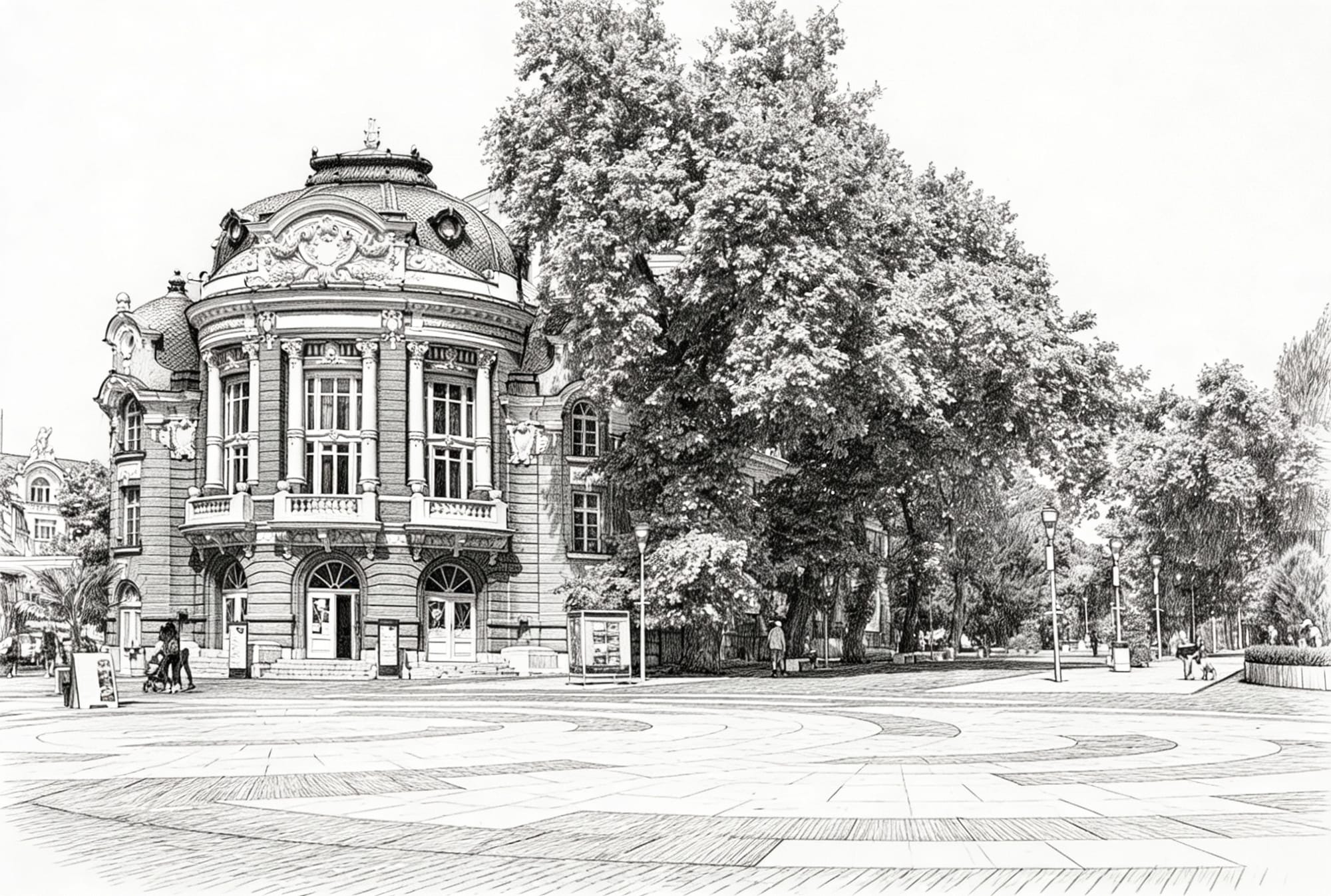
Golden may be fictional, but its world will feel instantly familiar to anyone who has ever driven slowly through a small Southern town and thought, “People know each other here.” The novel unfolds in a compact Georgia city where cobblestone streets, old cotton warehouses, and a tree-lined main avenue compress more than a century of local history into Theo’s first unhurried walk downtown.
A Small-Town Southern Main Street
Golden’s heart beats along its revived downtown: a coffeehouse where everybody’s business quietly circulates, a bookshop, and nineteenth‑century storefronts that now hold galleries and lofts. This “downtown renaissance” echoes real Southern towns that have polished their historic cores to draw coffee drinkers, students, and artists back to streets once shaped by cotton, rail lines, and foundries.
Everyday Rituals and Manners
The culture of Golden is steeped in easy sidewalk greetings, unhurried porch talk, and a shared expectation of basic courtesy, even when people disagree. Longtime residents fold faith-tinged expressions, neighborly favors, and barbecue debates into their days, creating the kind of social web where a stranger like Theo cannot stay anonymous for long.
Shadows Under the Charm
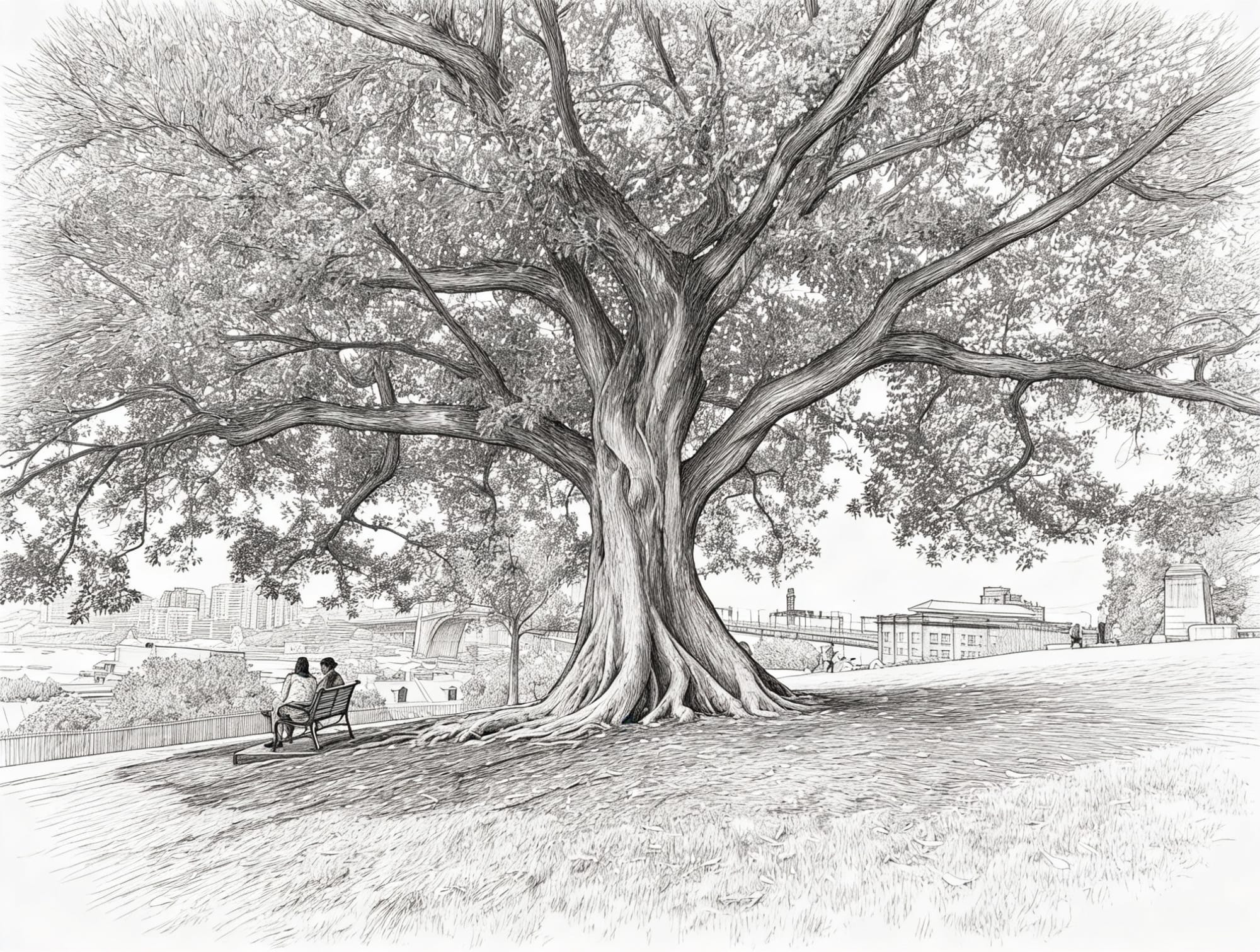
For all its fountains and dogwoods, Golden carries the South’s harder history, from the cotton economy to racial violence remembered in the “Eye of God,” a scarred oak that once witnessed lynchings. The town’s newer bars and late‑night energy hint at gentrification’s costs, as polished façades coexist uneasily with persistent fault lines of class, race, and safety.
A Town In Transition
Golden’s university and music school bring in students and artists, keeping the town outward-looking even as it clings to tradition. Into this layered place—part college town, part old mill village, part modern arts district—Theo steps for a single year, quietly revealing how much story is contained in one small Georgia town.

These questions are designed to encourage thoughtful reflection, personal connection, and close attention to Levi’s craft. Choose 8–10 prompts that best fit your group’s style and time.
- The novel opens with Theo’s quiet arrival in Golden and his first visit to the Chalice Coffee Shop. Which early scene or encounter set the emotional tone of the book for you, and why?
- Theo’s practice of buying portraits and returning them to their subjects is simple but deeply symbolic. What did these portraits come to represent—for the recipients, for the town, and for Theo himself?
- Which character’s story moved you the most, and what about their particular struggle or growth felt especially relatable?
- In what ways does the town of Golden function almost as a character in the book? How did the coffee shop, the bookstore, the streets, or other spaces shape your reading of the story?
- How does Theo of Golden explore the idea of being truly seen—by neighbors, by art, or by God? Where did you notice characters resisting or welcoming that kind of seeing?
- Theo is generous with both money and time, yet the novel hints that he has known grief and loss. How did your understanding of his past affect the way you interpreted his actions in the present?
- Talk about Tony and Ellen as two very different examples of people who are drawn into Theo’s orbit. What does each of them need from him, and what does he, in turn, receive from them?
- Allen Levi structures the book as a series of interlinked encounters rather than a single, tightly plotted arc. How did this shape your reading pace and your emotional engagement with the story?
- Where did you see humor at work in the novel, and how did it interact with the more serious themes of sorrow, regret, or spiritual searching?
- If you could “gift” a portrait the way Theo does, who in your life would you choose, and what moment or expression would you want the artist to capture?
Deep Dive (Post-Ending) Questions
- By the end of the novel, what do you think Theo has accomplished in Golden—and what remains unresolved? Did the ending feel more like closure, an invitation, or something in between?
- Discuss the idea of “saintliness” that surfaces in the book. How does Levi redefine or expand that word through the lives of ordinary townspeople?
- Several characters wrestle with buried grief, strained relationships, or vocational disappointment. Which late-book scene best captured the possibility of healing without erasing pain?
- If Theo had not come to Golden, how do you imagine the town—and a few key characters—might have continued on? What changes in the community feel fragile, and what feels likely to endure?
- If this story were transplanted into your own community today, what would need to change (technology, setting, social dynamics), and what elements of generosity, loneliness, or longing would likely remain the same?



Chalice Coffee Shop Corner
Recreate a cozy corner that feels like the Chalice Coffee Shop where Theo first discovers the portraits. Use café-style tables with mismatched chairs, a simple table lamp, and a small chalkboard listing a “menu” of espresso, tea, and pastries. Add a framed sign that says “Welcome to Chalice” and place a few stacked books or a worn notebook on the table to suggest conversations in progress.
Wall of Pencil Portraits
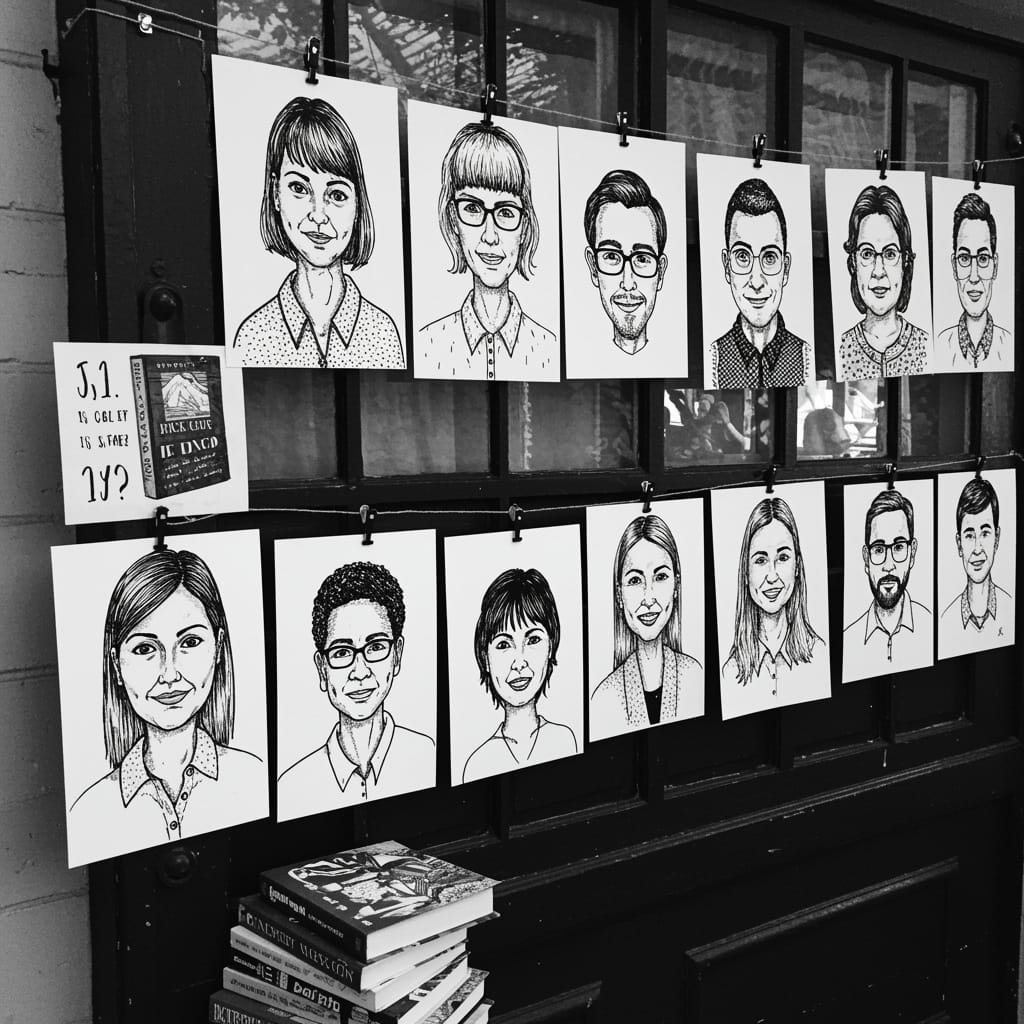
Echo Asher Glissen’s portrait wall by turning one section of your room into a gallery of faces. Print black-and-white headshots of your members (or vintage faces from public domain photos), mount them on plain white paper, and hang them in tidy rows to mimic the Chalice display. Leave a small white border at the bottom of each image where you can handwrite one affirming word (Kind, Brave, Steadfast) to echo Theo’s way of naming people’s “saintliness.”
**AI prompts for making member photo images into pen-and-ink portraits are included in this kit.
Fountain of Invitations
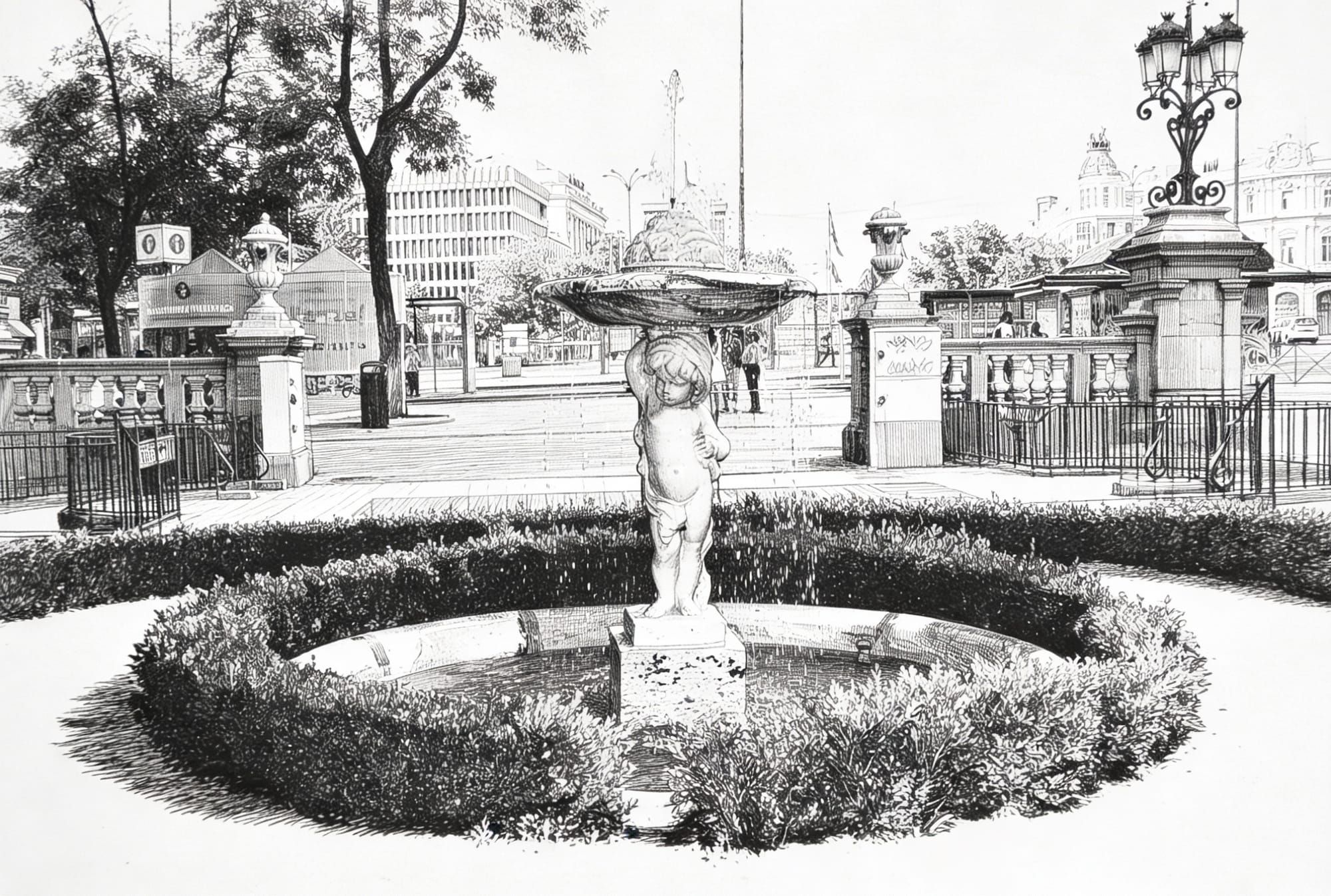
Theo often invites people to meet him at a fountain for the “bestowals,” turning those encounters into quiet rituals. Place a small tabletop fountain or a large glass bowl of water with floating candles in the center of the room as a symbolic meeting place. Arrange handwritten “invitations” on cardstock around it—simple cards that say “Come be seen” or feature gentle questions, nodding to the way Theo draws people into conversation.
The Golden Color Palette
Lean into the town’s name by decorating with warm golds, creams, and soft browns that evoke late-afternoon light on a Southern main street. Use golden table runners, cream napkins, and amber or clear glass jars as vases to create a glow without anything glittery or flashy. Add a few brass or gold-toned picture frames and candleholders for a quiet warmth that feels hopeful rather than showy.
Ordinary Saints Photo Line
The book highlights the holiness of ordinary lives and Theo’s insistence that people are “capable of saintliness.” Hang a twine “clothesline” across a wall and clip small photos or index cards labeled with occupations or everyday roles (teacher, clerk, caregiver, neighbor) using clothespins. Invite members to add their own names or a meaningful role and leave the line visible throughout the discussion as a reminder that everyday lives matter.
Portrait Studio Table
Theo studies each portrait carefully before a bestowal, treating it almost like a sacred task. Set up a small “studio” table with sketch pads, pencils, and erasers where members can doodle simple line portraits or write a few sentences about someone who has “seen” them well. Add a placard titled “Seeing and Being Seen” and encourage guests to leave their sketches or words on the table as part of the decor.

Golden Main Street Vignette
Golden is described as a picturesque Southern town with a tree-lined median, fountains, and nineteenth-century storefronts. Create a mini “main street” vignette with a narrow console table as a sidewalk, a few small potted plants or faux trees, and vintage-style signs or book stacks to suggest storefronts. Place a simple street-style sign made from cardstock on a dowel or vase labeled “Golden” to anchor the theme visually.
Light in the Weariness
Theo often notices a kind of inherited sadness in people’s faces, yet the novel leans toward healing and hope. Use a few clusters of candles or soft string lights against a darker backdrop (navy or charcoal cloth) to symbolize light in the midst of heaviness. Place small cards beside the lights with single hopeful words (Mercy, Healing, Second Chances, Beloved) to mirror the book’s redemptive tone.
Gratitude & Bestowal Table
Each portrait “bestowal” is an act of unexpected gift-giving that changes both the giver and the receiver. Set up a small table labeled “Bestowals” with simple envelopes or small kraft bags, each containing a short compliment or blessing that your guests can take home. Decorate the table with wrapped “gift” boxes (empty) and a sign explaining that in Golden, gifts are often words and recognition, not things.

Ellen’s Featherwood Gallery Wall
Create a small “gallery” that echoes Ellen’s handmade feather-on-wood artwork so guests feel surrounded by the kind of pieces she might have made in Golden. This works especially well behind the food table, along a hallway, or near the discussion area. Hang or prop several small wooden boards (or wood-look frames) on the wall and attach individual feathers to each with a simple band of twine or a tiny clip, mimicking the described Oxbow Featherwood pieces from the book. Use mostly white or natural feathers, then tuck in a few striking blue ones to echo Ellen’s blue jay feather art, giving a visual hint of both vulnerability and hope. Add hand-lettered tags or mini labels beneath some boards with short phrases from your discussion themes—words like "kindness," "seeing," "belonging," or "saintliness"—to connect the artwork to Theo’s insistence that people are “capable of saintliness.” Keep the rest of the wall simple (neutral cloth backdrop or bare wall) so the feathers and wood stand out, just as Ellen’s pieces stand out in the story’s world of ordinary objects made luminous by attention and care.

- The "Golden Moment" Jar Icebreaker Activity (In printable kit)
- Soundtrack to Friendship Icebreaker Activity (In printable kit)
- The "Letter to Theo" Challenge Icebreaker Activity (In printable kit)
- 6 Degrees of Kindness Icebreaker Activity (In printable kit)

Theo of Golden lends itself beautifully to a warm, Southern-leaning, hospitality-centered menu with subtle nods to art, music, coffee, birds, and holiday gatherings in Golden, Georgia. The ideas below aim to feel “ordinary but special,” mirroring Theo’s quiet generosity and the town’s traditions.
Appetizers

Golden Promenade Cheese Board
A grazing board inspired by Golden’s picturesque main street—local-style cheeses, toasted pecans, dried peaches, and honey, arranged as artfully as Asher’s portraits to honor the town’s creative spirit.
Warm Sourdough Bites with Herbed Butter
Mini sourdough rolls or cubes are served warm with softened butter and sea salt, echoing the Thanksgiving table where the fragrance of warm sourdough helped restore calm after family tension.
Curried Fruit Skewers
Small skewers of pineapple, apple, and pear lightly brushed with a mild curry-honey glaze, a playful, bite-sized nod to the traditional curried fruit served at the Glissen family feast.

Café Chalice Snack Trio
Bowls of seasoned nuts, dark chocolate pieces, and citrus wedges evoke the cozy coffeehouse “The Chalice” where portraits hang and conversations begin, perfect for nibbling while guests settle in.
Main Courses

Golden Thanksgiving Ham & Turkey Sliders
Small sandwiches on soft rolls with sliced turkey or ham, a smear of cranberry relish, and a bit of buttered wild rice or dressing echo the long-standing Glissen family Thanksgiving recipes.
Buttered Wild Rice Pilaf with Autumn Vegetables
A hearty bowl of wild rice cooked in broth with butter, onions, and roasted seasonal vegetables reflects the comforting wild rice side dish that helps reclaim the room’s warmth at the family gathering.
Cinnamon Sweet Potato Bake
Roasted or mashed sweet potatoes baked with cinnamon and a lightly sweet topping, inspired by the cinnamon sweet potatoes whose aroma helps “overpower” the stench of conflict at the Thanksgiving table.

Southern Courthouse-Square Picnic Plate
A buffet-style plate with fried or baked chicken tenders, coleslaw, and cornbread evokes Golden’s Southern courthouse square, its oaks, and porch-talk rhythms while remaining easy to serve to a group.
Desserts
Golden Peach Cobbler
A warm peach cobbler served with vanilla ice cream, drawing on the Southern Georgia–adjacent setting and the suggestion of a Southern dessert for themed book club gatherings.

Pecan Pie Bars
Bite-sized pecan pie squares that bring classic Southern pecan pie flavors to a book club–friendly format, aligning with the “Southern theme” dessert ideas other clubs use for this novel.

Simone’s Cello Cake
A simple sheet cake (chocolate or vanilla) decorated with chocolate drizzles or piped lines to suggest cello strings, a tribute to Simone’s graduation recital and the role of music in the story.
Feather-Light Lemon Bars
Tangy, pale-yellow lemon bars dusted with powdered sugar, meant as a visual nod to the feather motif on the cover and Theo’s feather gifts and bird conversations with Ellen.
Beverages
Chalice House Coffee Bar
A self-serve coffee station with regular and decaf coffee, flavored syrups, cream, and whipped cream reflects the specialty coffee that pervades the story and the central role of The Chalice Coffee Shop.
Golden Rooftop Tea (Hot or Iced)
A lightly sweet black tea with a slice of lemon, reminiscent of Southern porch conversations and Theo’s contemplative walks through Golden’s promenades and tree-lined streets.
Riverside Sparkling Citrus Punch
A non-alcoholic punch of sparkling water, citrus juices, and sliced fruit honors Theo’s love for rivers and the flowing, life-giving presence he embodies in the town.

Holiday Ham & Turkey Table Mulled Cider
Warm apple cider simmered with cinnamon sticks and cloves, echoing the Thanksgiving and Christmas season gatherings where tradition, fragrance, and shared meals help heal strained relationships.

Purchase Theo of Golden
A tender, reflective novel about friendship, music, and faith, Theo of Golden by Allen Levi invites readers into a small-town story that celebrates the sacred beauty of ordinary lives.
Bookshop.org was created as a socially conscious alternative to Amazon, with the goal of helping local, independent bookstores thrive. This is why Readers With Wrinkles supports their efforts. Please join us in this effort by purchasing your next read here.
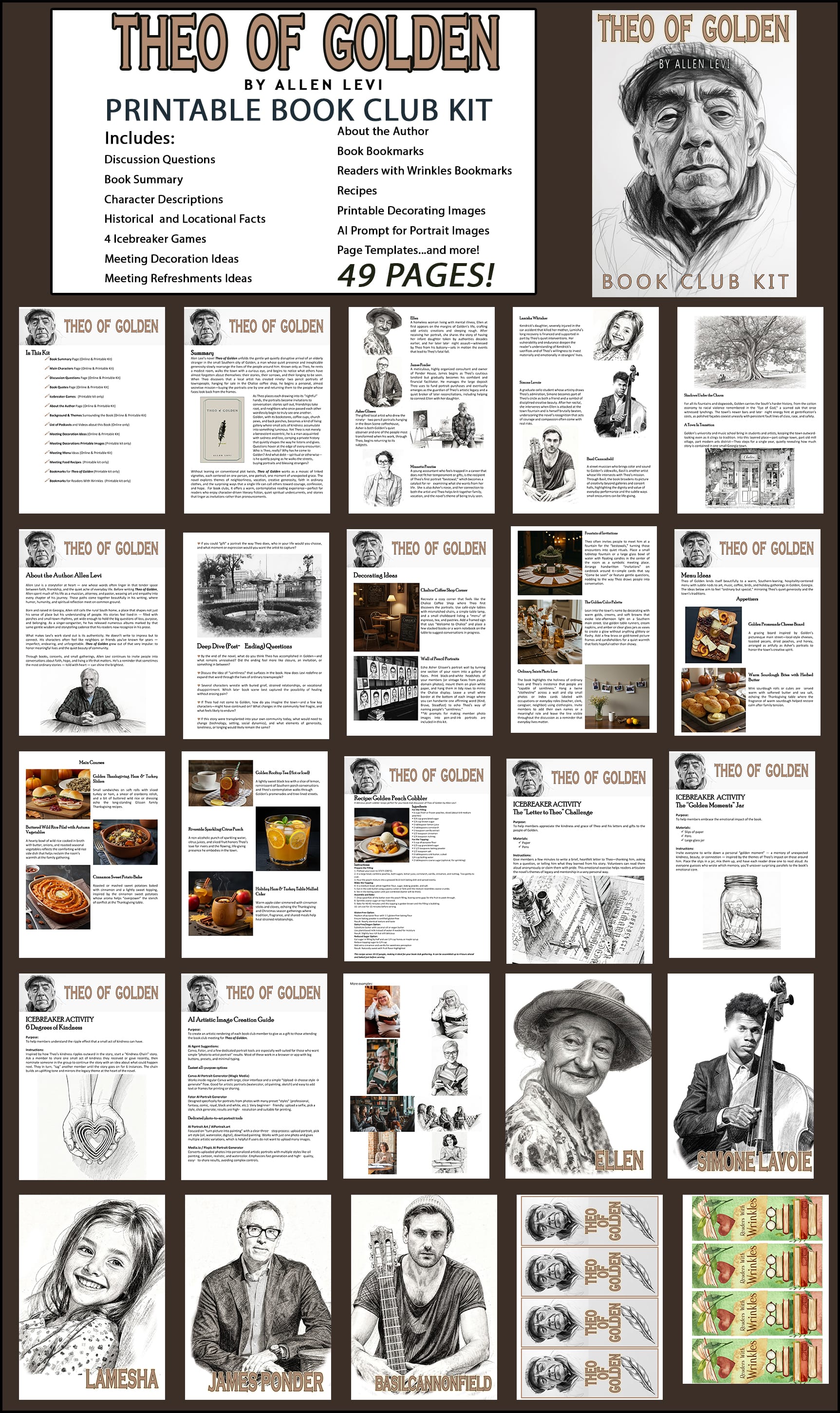
Theo of Golden printable BOOK CLUB KIT
The RWW book club kits provide everything you need to organize a great meeting with insightful discussions. These resources simplify book club preparation with character lists, book quotes, refreshment suggestions, recipes, and carefully prepared book club questions!
Comments