
- Date Published:
2024 - Length:
464 pages—Listening Time: 16 hr 48 minutes - Genre:
Historical Fiction - Setting:
640 BC - 2014, Ancient Mesopotamia (Tigris River), Victorian/Modern London (Thames River), and 2014 Turkey (near the Tigris); - Awards:
International Dublin Literary Award Nominated 2026; Orwell Prize Shortlist Political Fiction 2025; Indie Book Awards Britain Shortlist Fiction 2025; BookTube Prize Silver Fiction 2025; Stanford Travel Book of the Year Winner Viking Award for Fiction with a Sense of Place 2025; Europese Literatuurprijs Longlist 2025; The Gordon Bowker Volcano Prize Shortlist 2025; Goodreads Choice Awards Nominee Historical Fiction 2024; Goldsboro Books Glass Bell Award Shortlist 2025; NPR: Books We Love 2024; Chicago Public Library Best of the Best: Adults Selection Fiction 2024; All Connecticut Reads Shortlist Adults 2026; Mid-Continent Public Library Best Books Adult Fiction 2024 - Languages:
Dutch, English, French, German, and Spanish - Sensitive Aspects:
Genocide, war, violence, murder, persecution of the Yazidi people, racism, child abuse, rape and sexual violence (referenced rather than graphically depicted), sexual slavery and trafficking, homophobia, poverty and class-based suffering, domestic abuse, institutionalization and mistreatment related to mental health, suicidal thoughts, alcoholism, environmental destruction (especially of rivers and landscapes) - Movie:
As of early 2026, there are no confirmed movie or TV adaptations of There Are Rivers in the Sky. - Recommended for Book Club:
Yes!

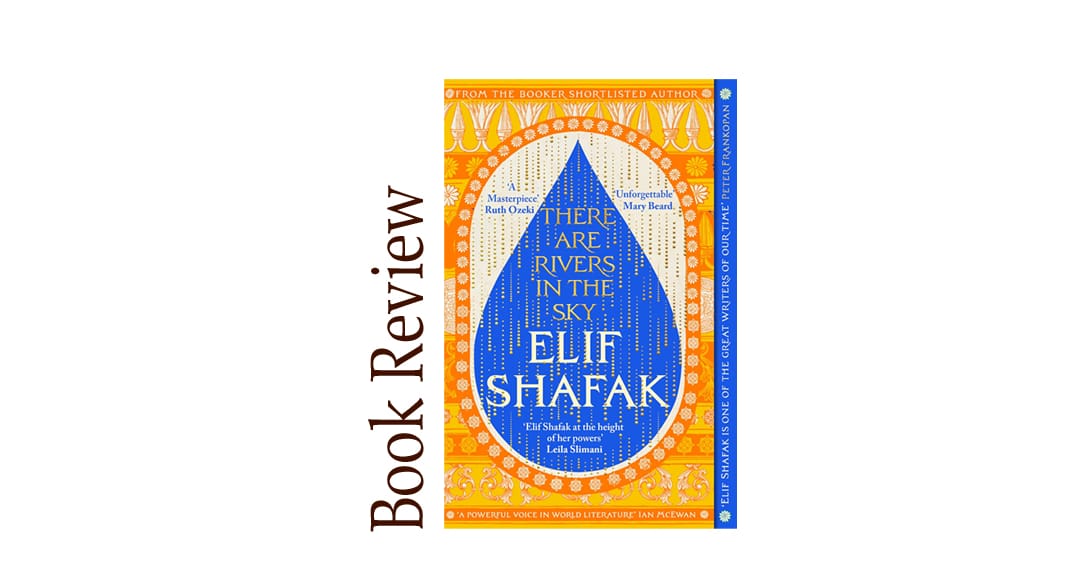
Some books whisper. Others rage. There Are Rivers in the Sky by Elif Shafak does both—it murmurs in poetry one moment, then roars with grief and urgency the next. You can practically feel the pulse of the Tigris running beneath its pages, carrying not just water but also stories, memories, and the debris of what humanity keeps destroying and rebuilding.
My education was lacking in the historical relevance of ancient Mesopotamia, Nineveh, and the Assyrians. I knew that there was a place called Nineveh from Sunday school, and I have a basic knowledge of the poem called Gilgamesh, but, until this book, I never really appreciated the significance and beauty of the place and all that happened there. Shafak has never been afraid of depth, but here she dives straight into the heart of everything that sustains and haunts us: water, culture, language, and loss. The novel moves fluidly between timelines—ancient and modern Iraq—tracing the lives of archivists, librarians, and families who cling to their fragile pasts while the world keeps burning around them. It’s a book about rivers, yes, but also about the unseen currents of compassion, faith, and resistance.
At its core, Shafak’s story wrestles with questions most of us avoid: Who gets to decide what’s worth saving? How do you catalog a culture when its people are being erased? Through the intertwined narratives of a water conservationist, a young Yazidi survivor, and an aging historian guarding relics of Mesopotamia, she builds a braided meditation on what it means to preserve life and meaning when both are under siege.
The beauty of this novel is its daring balance. It folds together the fragile politics of clean water, the moral urgency of artifact preservation, and the quiet heroism of libraries and archives—all set against the sickening backdrop of ISIS’s genocide of the Yazidi people. Shafak’s prose moves like a river: reflective on the surface, dangerous in its undercurrents, and never still for long.
It’s not just a story about loss; it’s a hymn to endurance. By the time you close the book, you’ll have to ask yourself: If stories are as vital as rivers, what happens when they dry up? This one was a tearjerker for me. Have tissues handy.

The story of There Are Rivers in the Sky unfolds across three main timelines, all quietly tethered to water, a lost poem, and the fate of the Yazidi people in Iraq.
In Victorian England, a boy named Arthur Smyth grows up in the filth and poverty along the Thames, with an abusive father and a mentally unstable mother. His extraordinary memory becomes his escape route, winning him a place at a publishing house, where he discovers a book about Nineveh and the Epic of Gilgamesh that will change the course of his life. Arthur eventually travels to Mesopotamia to work on archaeological excavations near the Tigris, where he befriends a Yazidi community in a village called Zêrav and grows close to a young woman named Leila. When local officials orchestrate a massacre of the Yazidis, fulfilling Leila’s grim prediction, Arthur is left haunted by both the violence and his complicity as an outsider who cannot save them.
In 2014, the novel shifts to Narin, a nine-year‑old Yazidi girl in Hasankeyf, living with her father Khaled and her grandmother Besma near the Tigris. Narin, who has a condition that will soon cause her to go deaf, is preparing for her baptism in the sacred waters when construction workers and looming dam projects disrupt the ceremony and signal the erasure of both landscape and culture. Besma decides to take her to Lalish in Iraq, the holiest Yazidi site, to complete the ritual, despite rising ISIS activity and warnings that travel is too dangerous. Their journey leads them into the path of ISIS militants; they flee toward the Sinjar mountains with other Yazidis, but Besma is killed and Narin is captured, eventually sold into sexual slavery to a commander who exploits Yazidi women.
In 2018 London, Zaleekhah (or Zaleekah), a hydrologist of Turkish origin, moves onto a houseboat on the Thames after separating from her husband and carrying long‑buried trauma from losing her parents in a flash flood on the Tigris as a child. Raised by her wealthy, image‑obsessed Uncle Malek, she’s become emotionally numb and is quietly planning to end her life, until she stumbles upon a book about Mesopotamia and Nineveh that reconnects her to her ancestral past. On the houseboat she befriends its owner, Nen, an Irish tattoo artist fascinated by Mesopotamian history, and their friendship deepens into a relationship that further strains Zaleekhah’s already tense ties with her uncle.
The plot tightens when Uncle Malek reveals that his granddaughter Lily urgently needs a kidney transplant and claims to have found a “donor.” Zaleekhah discovers that the donor is actually Narin, trafficked and being treated as a body to be bought and used, arranged through exploitative networks that profit from the Yazidi genocide and displacement. Horrified, Zaleekhah and Nen gather the money themselves, not to harvest Narin’s organ, but to buy her freedom and bring her out of Turkey.
In the closing movement, Zaleekhah and Nen travel with Narin back to Hasankeyf, where the past and present timelines converge. At a cemetery overlooking a landscape soon to be submerged by a dam project, Narin lays flowers on the graves of her grandmother Besma and Leila and shows Zaleekhah and Nen Arthur’s tombstone under an oak tree, revealing the thread that has quietly bound their stories across centuries. As they walk away together, the novel leaves them on the edge of a drowned world, carrying what remains: a rescued girl, buried lives, and the fragile continuity of memory flowing on like a river.

This is one of those novels that doesn’t just ask to be read; it asks to be witnessed. Here are some reasons to pick it up.
Interwoven timelines
Three storylines—Victorian excavation, contemporary London, and Yazidi Iraq—braid together into one emotional arc, so readers feel history, present, and future brushing up against each other.
Memorable characters
From a Yazidi girl fighting to survive captivity to a guilt‑haunted archaeologist and a hydrologist living on a London houseboat, each character feels distinct, flawed, and quietly unforgettable.
Powerful social themes—clean water as lifeline
The book shows how water is never just scenery: it’s survival, power, memory, and sometimes a weapon, making readers think about who has access to it—and who doesn’t.
Cultural and historical preservation
Artifacts, poems, ruins, and even half‑forgotten myths are treated like living things, raising the stakes for anyone who cares about libraries, museums, or the stories buried under our feet.
Spotlight on the Yazidi genocide—centering erased voices
The novel gives narrative space to Yazidi experiences—displacement, captivity, survival—without turning them into background tragedy, which helps readers grasp the human cost behind headlines.
Personalizing global news
Instead of statistics or distant reports, the book puts readers inside one girl’s journey, making the brutality of ISIS and the ongoing trauma impossible to look away from.
A love letter to books and memory—libraries, archives, and lost texts
Readers who adore books-about-books will find librarians, archivists, and fragile manuscripts at the heart of the plot, all asking what deserves to be saved when the world is burning.
Memory as resistance
The story suggests that remembering—people, rivers, languages, cities—is a quiet form of rebellion, something readers who keep journals, scrapbooks, or TBR lists will instantly connect with.
Evocative imagery
The prose is rich with river, sky, and desert imagery, but the sentences still feel clear and readable, making it easy to sink into the story even if you’re tired or distracted.
Emotional range
There are tender, funny, and even oddly hopeful moments woven into the bleakness, so readers don’t just endure the darkness; they also get small, sustaining flashes of light.

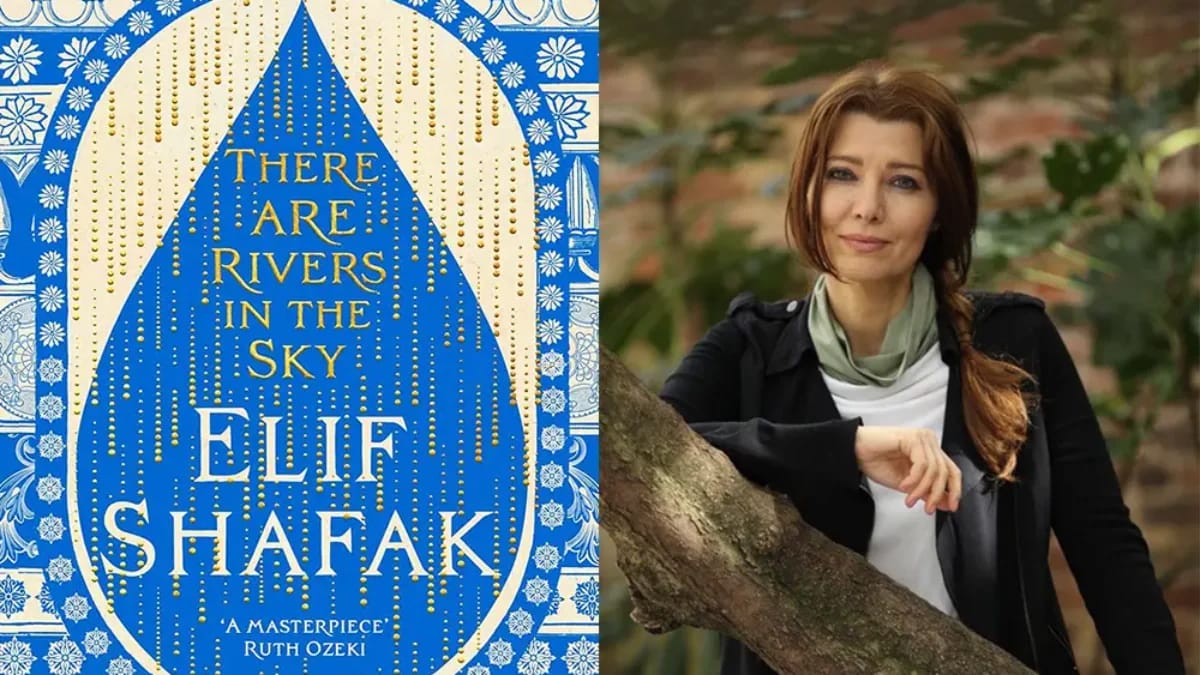
Get Elif Stafak Books
Discover Elif Shafak’s spellbinding novels—lyrical, layered stories that bridge East and West, exploring love, identity, and the power of storytelling with timeless emotional depth.
Bookshop.org was created as a socially conscious alternative to Amazon, with the goal of helping local, independent bookstores thrive. This is why Readers With Wrinkles supports their efforts. Please join us in this effort by purchasing your next read here.

Books that echo the multigenerational, river-bound, and gently magical sweep of There Are Rivers in the Sky often blend migration, memory, climate, and myth. Here are strong read-alikes with brief descriptions.
Elif Shafak Similar Books
- The Island of Missing Trees by Elif Shafak
A fig tree narrates a story of forbidden love in Cyprus and the intergenerational trauma experienced by a British‑Cypriot teen in London, blending migration, memory, and quiet magic. - 10 Minutes 38 Seconds in This Strange World by Elif Shafak
In the minutes after her death, a murdered woman in Istanbul relives key memories and the friends who loved her, in a lyrical, politically aware meditation on belonging and marginalization.
Rivers, Water, and Climate
- The Hungry Tide by Amitav Ghosh
Set in India’s tide country, this novel follows a marine biologist and translator amid storms, river dolphins, and resettled refugees, weaving folklore with questions of climate, language, and home. - Gun Island by Amitav Ghosh
A rare book dealer becomes entangled in an old Bengali legend that begins to mirror modern climate disasters and migrant journeys, blurring realism and myth across continents. - Rivers by Michael Farris Smith
In a storm-lashed near-future American South, a grieving man refuses to evacuate the flooded coast and instead navigates loss, violence, and fragile community along drowned highways. - All the Water in the World by Eiren Caffall
A young girl and her father traverse a climate‑ravaged New York City, trying to preserve cultural memory as rising seas and storms reshape their world.
War, Displacement, and Myth
- The Year of the Runaways by Sunjeev Sahota
Three young Indian migrants and one British‑Indian woman struggle to survive in England, revealing the human cost of economic migration in a richly textured, slow‑burn narrative. - The Beekeeper of Aleppo by Christy Lefteri
A Syrian beekeeper and his blind wife journey from war‑torn Aleppo toward Europe, where memories, sensory detail, and quiet symbolism convey both trauma and the persistence of hope. - Swim Home to the Vanished by Brandon Shay Kōdam
A grieving woman joins a mysterious family on a remote Minnesota lake, where myths, ritual, and water imagery entangle with secrets in a darkly magical, folkloric narrative.
Comments