

Table of Contents
- Date Published:
2017 - Length:
288 pages—Listening Time: 8 hr 9 minutes - Genre:
Fiction, Historical Fiction, Holiday - Setting:
1843 Christmas season; London, England - Awards:
Perennial Holiday Favorite - Languages:
English, Italian - Sensitive Aspects:
Infidelity, emotional affair, marital strain, emotional distress, period-typical sexism, class prejudice, mild violence, depictions of poverty and hardship, religious themes centered on Christmas and Christian charity - Movie:
There are no movie adaptations of this book - Recommended for Book Club:
Yes, especially for groups seeking holiday reads

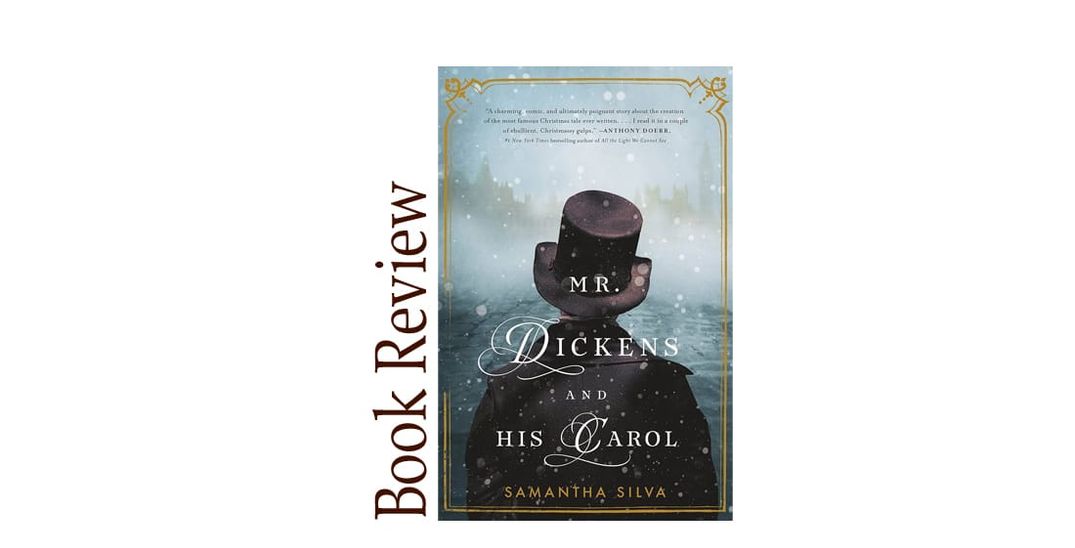
If you’ve ever sat down with A Christmas Carol and thought, “I wish I could crawl inside this world for just a little longer,” Samantha Silva has basically handed you the key and said, “Go on then. In you go.”
But here's the twist: Mr. Dickens and His Carol is not merely another retelling, albeit one adorned with a new layer of glitter. It’s a story about Charles Dickens himself, standing at that uncomfortable crossroads we don’t usually talk about when we romanticize “genius” and “classic literature”—the pressure, the money troubles, the fear that maybe the magic is gone this time. Sound a little…relatable?
Silva imagines Dickens as a man who is overworked, overcommitted, and dangerously close to losing his grip on what made his stories sing in the first place. Dickens finds himself under pressure from his publishers during the Christmas season, his last book didn't sell as expected, and his personal life is in disarray. And from all the mess comes the seed of A Christmas Carol.
What I love about this premise (and what I think you might, too) is that it doesn’t treat Dickens like a marble statue in a museum. It treats him like a person. A man with a temper. A man with doubts. A man who has to rediscover his own sense of wonder before he can offer it to anyone else.
You don’t need to be a Dickens scholar to enjoy this book. You don’t even have to like every adaptation of A Christmas Carol that’s ever marched across your TV screen in December. If you’ve ever hit a season of life where joy felt just a bit out of reach—where you needed something or someone to gently nudge you back toward it—this story will feel strangely, tenderly familiar.
As we step into this review, I’m not going to ask you to love Mr. Dickens and His Carol just because it’s “charming” or “heartwarming” (though it is both of those things). I want to show you how Silva pulls off a tricky magic act: honoring a beloved classic while reminding you that the person behind it was as messy and complicated as the rest of us. And by the end, you can decide if this is the Christmas novel that deserves a spot on your already-crowded holiday shelf—or maybe even a reread tradition of its own.

Imagine Charles Dickens, not as the marble bust on a library shelf, but as an overworked, underpaid mid-list author staring down a sales disaster. That’s where Mr. Dickens and His Carol begins. His latest book has flopped, his publishers are in a panic, and Christmas is looming like a deadline-shaped storm cloud. Their solution? “Write us a Christmas book. Make it short. Make it cheap. Make it sell.” No pressure, right?
Dickens is already stretched thin—money troubles, a house full of relatives eating him out of house and home, and the constant pressure to be a "Charles Dickens" public celebrity. At home, his wife, Catherine, is planning an extravagant holiday party he can’t afford, and all the festive cheer only makes him more irritable. When a cruel misunderstanding drives a wedge between him and his family, Dickens storms out into the London winter, angry, stubborn, and absolutely stuck.
And this is where the magic starts.
Alone in the city, cloak wrapped tight against the cold, he meets a mysterious young woman named Eleanor and her sharp-eyed son. They drift in and out of his days and nights like half-remembered dreams, tugging him through snow-dusted streets, shadowy alleys, cramped theaters, and charity bazaars. London itself becomes a character—crowded, grimy, glittering—and Dickens walks through it half as a man, half as a writer searching for a story.
As he wanders, bits and pieces begin to collect: a miser counting coins, a clerk with a gentle soul, and a toast to “God bless us, every one” that hasn’t been written yet but feels inevitable. Are the strange coincidences and encounters real? Are they imagined? Are these experiences something in-between, similar to how inspiration can sometimes feel like being haunted?
Samantha Silva lets you watch A Christmas Carol being born from the inside out. You see Dickens at his worst—petty, prideful, and exhausted—and then slowly, almost reluctantly, moved by the very compassion he’s running from. The ghosts he’s conjuring on the page start to look suspiciously like his own regrets: the people he’s neglected, the love he’s taken for granted, and the seasonal joy he’s turned into work.
By the time Dickens races to finish his “little Christmas book,” the question isn’t just whether it will save his career. It’s whether it will save him—his marriage, his sense of wonder, his faith that a story can actually change people, starting with the man holding the pen.
If you’re in the mood for a story that feels like slipping into a Victorian snow globe—full of candlelight, streetlamps, and a slightly cranky genius being gently, hilariously redeemed—this one is for you.

This book has it all: story, heart, and a dash of Christmas magic that isn’t syrupy. Here is why I think you will love it.
It feels like “behind the scenes” of a classic you already love
Just about everyone knows A Christmas Carol almost by heart; Silva’s novel imagines how Dickens might’ve created it, turning a familiar favorite into a fresh “making-of” story.
Dickens is a fully human, slightly frazzled main character
Instead of a great author name from a bookshelf, we get a man who’s worried about money, critics, family, and his fading shine, which makes him very relatable for anyone who’s lived long enough to reinvent themselves more than once.
It’s a Christmas story that isn’t too sweet
The book has twinkly lights and festive streets, sure, but it also leans into loneliness, grief, and pressure, so the warmth feels earned instead of Hallmark-level sugary.
Themes of second chances land especially well with seasoned readers
Like A Christmas Carol itself, this novel wrestles with regret, pride, and the chance to do better, ideas that hit differently when you’ve actually had a life’s worth of “What if I’d…?” moments.
Victorian London is vividly cozy and gritty at the same time
Silva takes you from gaslit theaters and bustling bookshops to foggy alleys and chilly streets, creating that immersive, old-world atmosphere that makes for perfect winter reading.
There’s just enough bookish nerd joy
Readers who love stories about writers and stories about stories will eat up the publishing drama, deadlines, inspiration droughts, and that delicious moment when the kindling of an idea finally catches fire.
Short, warmly written, and easy to sink into
The prose is inviting without being fussy, and the book is compact enough to finish in a couple of evenings—ideal for busy grandparent schedules or December to-do lists.
A gentle, witty humor runs through it
Silva gives Dickens a dry, slightly exasperated wit, and the social observations feel playful rather than mean, which keeps the tone light even when the stakes are emotional.
It honors Dickens without requiring a PhD in English lit
Fans of Dickens will spot clever nods and echoes of his characters, but casual readers never feel like they’re missing some secret code; it works as a standalone story first.
Perfect book club conversation starter
It opens the door to talk about creativity under pressure, what we owe our families, how we define success, and why we keep returning to A Christmas Carol decade after decade.

Purchase Samantha Silva Books
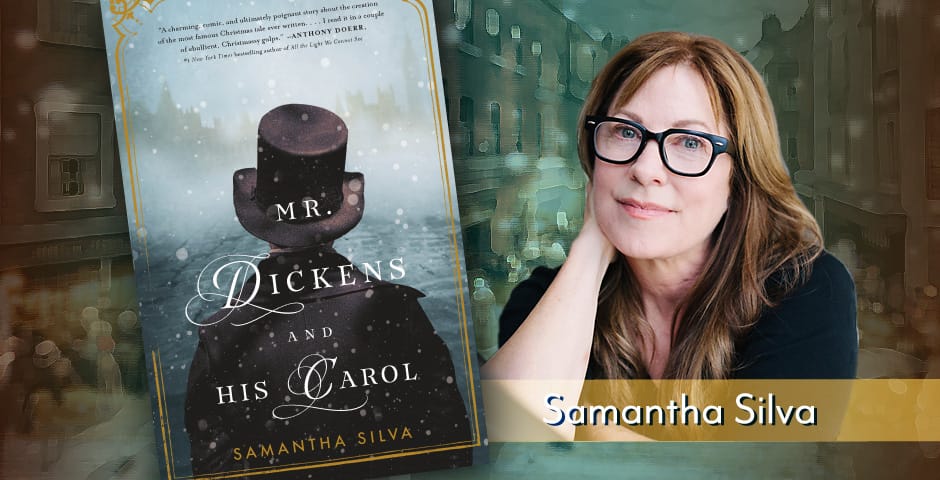
Samantha Silva crafts luminous, emotionally rich historical novels that breathe new life into iconic figures, inviting readers into intimate, gorgeously imagined worlds where art, love, and longing collide.
Bookshop.org was created as a socially conscious alternative to Amazon, with the goal of helping local, independent bookstores thrive. This is why Readers With Wrinkles supports their efforts. Please join us in this effort by purchasing your next read here.

Books that echo the blend of Dickensian atmosphere, holiday spirit, and behind‑the‑scenes storytelling in Mr. Dickens and His Carol include the following.
Dickens-inspired Tales
- The Man Who Invented Christmas by Les Standiford
A narrative nonfiction account of how Charles Dickens, facing financial and professional pressures, came to write A Christmas Carol and in the process helped redefine Victorian Christmas traditions. Like Silva’s novel, it follows Dickens himself as a character but leans more on documented history than on magical realism. - Jacob T. Marley by R. William Bennett
This novel retells A Christmas Carol from Marley’s point of view, imagining his life, sins, and struggle toward redemption before he ever appears at Scrooge’s bedside. It offers the same mix of moral reckoning and supernatural intervention that underpins Silva’s portrait of Dickens’s own transformation. - The Afterlife of Holly Chase by Cynthia Hand
A modern YA riff on A Christmas Carol in which a self-absorbed teenager fails to change after ghostly visits, dies, and is conscripted as the new Ghost of Christmas Past for a secretive organization. The book mirrors Dickens’s structure and themes—hauntings, second chances, and emotional awakening—while giving them a contemporary, character‑driven twist. - Miss Marley by Vanessa Lafaye and Rebecca Mascull
This novella imagines the untold story of Jacob Marley’s younger sister, tracing her journey through poverty, debt, and Victorian London into the margins of Scrooge’s world. Readers who enjoy Silva’s sympathetic, sideways look at Dickens’s universe often appreciate how this one expands the emotional stakes behind A Christmas Carol. - Marley by Jon Clinch
A darker, more gothic expansion of the Dickens mythos, this novel explores Marley’s criminal enterprises, his toxic partnership with Scrooge, and the moral rot beneath their fortune. Its richly atmospheric Victorian setting and focus on character backstory make it a strong companion to Silva’s imaginative prelude to A Christmas Carol.
Historical Christmas Fiction
- Christmas Bells by Jennifer Chiaverini
Chiaverini braids a contemporary Boston storyline with the Civil War–era life of poet Henry Wadsworth Longfellow, showing how he came to write the carol “I Heard the Bells on Christmas Day.” The dual timelines and reflective, gently hopeful tone evoke a similar mix of history, art, and hard‑won seasonal grace as Mr. Dickens and His Carol. - Last Christmas in Paris by Hazel Gaynor and Heather Webb
Told largely through letters, this World War I novel follows friends and lovers separated by the front, returning again and again to promises of spending Christmas together in Paris. Its epistolary form, historical detail, and bittersweet holiday framing suit readers who like their Christmas books to balance romance and nostalgia with wartime realism. - Christmas with the Queen by Hazel Gaynor and Heather Webb
Set in 1952, this story pairs a young reporter determined to cover Queen Elizabeth II’s first Christmas broadcast with a widowed New Orleans chef invited to cook for the royal household. The result is a mid‑century holiday tale full of duty, reinvention, and quiet romance, with the same kind of immersive, period‑rich atmosphere Silva brings to Victorian London.
Magical, Literary Seasonal Reads
- Christmas Days: 12 Stories and 12 Feasts for 12 Days by Jeanette Winterson
Winterson mixes ghost stories, love stories, and contemporary fables with recipes for festive dishes, creating a hybrid of story collection and holiday cookbook. Its blend of the uncanny, the heartfelt, and the celebratory makes it a good match for readers who enjoyed the whimsy and warmth in Mr. Dickens and His Carol. - Letters from Father Christmas by J.R.R. Tolkien
Based on the elaborate letters Tolkien wrote to his children, this book presents decades of “correspondence” from Father Christmas, complete with polar bears, goblins, and mishaps at the North Pole. Though more whimsical than Silva’s novel, it shares the sense of family, imagination, and invented tradition that underlies Dickens’s—and Silva’s—vision of Christmas. - The Life and Adventures of Santa Claus by L. Frank Baum
Baum offers a full origin story for Santa, from his adoption by forest spirits to his decision to bring toys to mortal children and the granting of his immortality. Like Silva’s Dickens, this Santa is treated as a mythic yet very human figure, and the book leans into the creation of holiday lore with a fairy‑tale tone. - The Christmas Mystery by Jostein Gaarder
Structured as an Advent calendar, this novel follows a child who discovers a mysterious calendar that sends him, chapter by chapter, on a time‑slip journey back toward Bethlehem. Its contemplative pacing and mix of everyday life with spiritual and historical reflection make it an appealing, slightly philosophical counterpart to Mr. Dickens and His Carol.

Keep the Pages Turning
This blog helps readers find their next favorite book and keeps book clubs thriving. If it’s helped you, would you consider supporting the next review?
Comments