
Table of Contents

- Date Published:
2007 - Length:
352 pages—Listening Time: 9-10 hours depending on version - Genre:
Fiction - Setting:
1940s to 1990s, New Jersey (Paterson, Rutgers) and the Dominican Republic (Santo Domingo, Baní) - Awards:
Pulitzer Prize Winner Fiction 2008; International Dublin Literary Award Shortlist 2009; Los Angeles Times Book Prize Finalist Fiction 2007; National Book Critics Circle Award Winner Fiction 2007; The Morning News Tournament of Books Winner 2008; Salon Book Award 2007; Anisfield-Wolf Book Award Winner Fiction 2008; Center for Fiction First Novel Prize Winner 2007; Massachusetts Book Award Winner Fiction 2008; Dayton Literary Peace Prize Winner Fiction 2008; Zora Awards Winner Fiction 2008; NAACP Image Award for Outstanding Literary Work Nominee Fiction 2008; Publishers Weekly's Best Books of the Year 2007; Booklist Editor's Choice: Adult Books 2007; The New York Times Notable Books of the Year 2007; San Francisco Chronicle Best Book of the Year 2007; Christian Science Monitor Best Book Fiction 2007; New York Times bestseller 2007; 1000 Books to Read Before You Die; 1001 Books You Must Read Before You Die 2010; Outstanding Books for the College Bound and Lifelong Learners 2009; Time Magazine's Best Books of the Year 2007; Harvard Book Store Top 100; The Most Important Books of the Last Twenty Years The Great American Novels 2007; New York Times 100 Best Books of the 21st Century; 100 Books to Read in a Lifetime; Future Classics: 50 Literary Greats; 50 Great Hispanic Novels Every Student Should Read - Languages:
Bosnian, Czech, Danish, Dutch, English, Finnish, French, German, Hebrew, Italian, Japanese, Korean, Norwegian, Polish, Portuguese, Spanish, Swedish, Turkish - Sensitive Aspects:
Sexual content, graphic sexual language, rape, attempted rape, statutory rape, sexual exploitation of minors, underage girls with much older men, misogyny, slut shaming, anti‑sex work attitudes, objectification of women, domestic violence, graphic physical violence, political violence under dictatorship, child abuse (physical and emotional), bullying, fatphobia and body shaming, homophobic language, use of ableist slurs, strong profanity, racism, anti‑Black colorism, racism toward Asians, anti‑Haitian prejudice, xenophobia, suicidal ideation, suicide attempts, severe depression, alcohol and substance use - Movie:
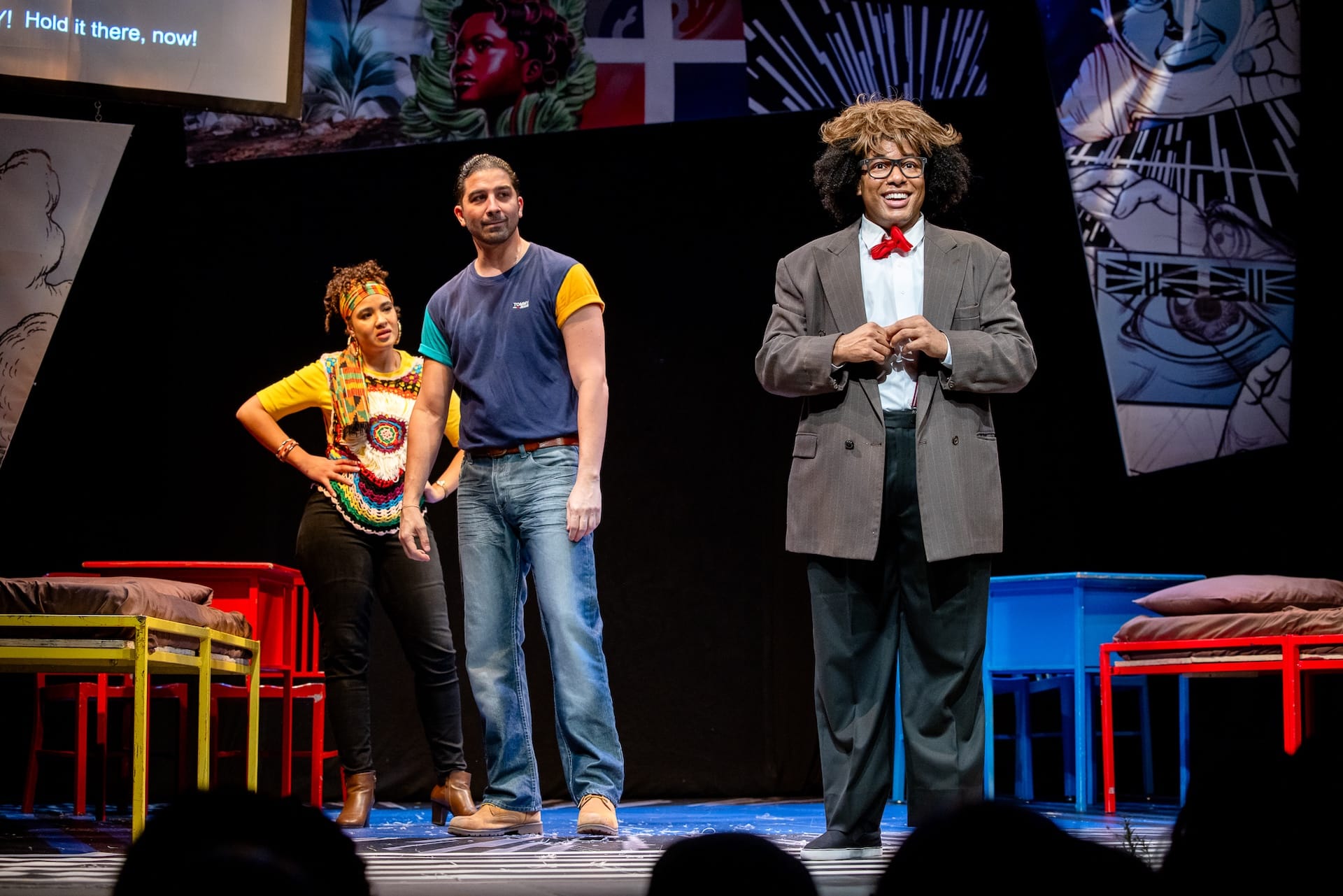
There isn't a major Hollywood movie adaptation of The Brief Wondrous Life of Oscar Wao, but there are successful stage adaptations, notably by Marco Antonio Rodríguez, commissioned by Repertorio Español, which premiered in New York and has toured, with another production announced for Goodman Theatre in 2026. - Recommended for Book Club:
Yes!

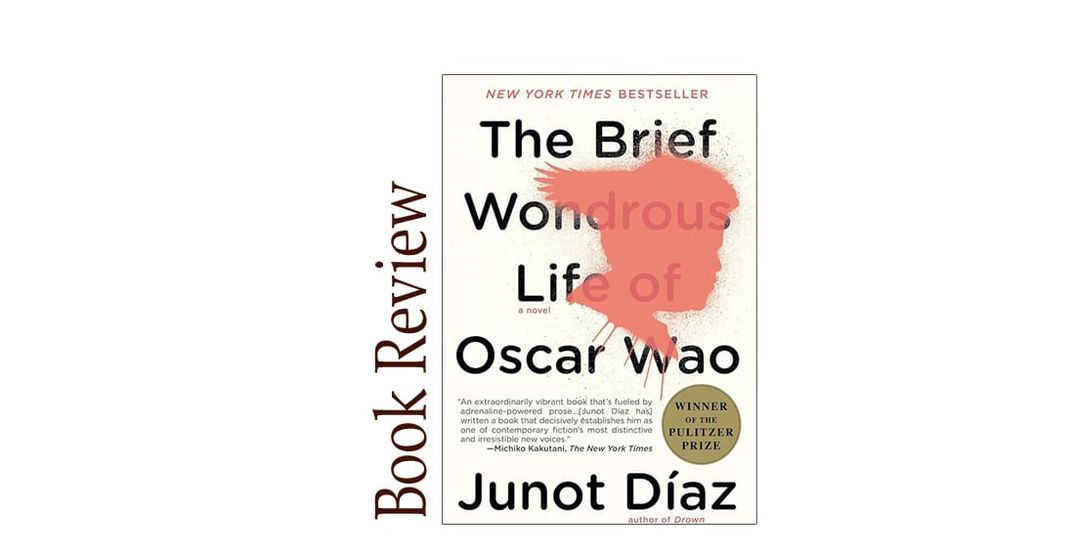
As book clubs everywhere start finalizing their reading lists for the year ahead, it feels like the perfect time to revisit some timeless classics. I have a long list of books that I have read in years past and rated a full 10 stars, but somehow, I've never had time to write full reviews for them. So, before your book club locks in its 2026 lineup, consider exploring a few of these unforgettable reads. The first book in this collection is The Brief Wondrous Life of Oscar Wao by Juno Diaz.
If you’ve ever felt like your life story didn’t quite fit the mold—that you were too much, too loud, too nerdy, too anything—then The Brief Wondrous Life of Oscar Wao will hit you right in the chest. Junot Díaz doesn’t just tell a story here; he hurls one at you, full force, like a mixtape of heartbreak, history, and comic-book dreams exploding in your hands. This isn’t your quiet, polite novel. It’s messy, hilarious, devastating, and—somehow—completely alive.
Oscar de León, our Dominican-American hero, isn’t the kind of protagonist glossy book covers are made for. He’s a sci-fi obsessed, Tolkien-quoting romantic living in New Jersey who can’t seem to catch a break in love or life. But that’s just the surface. Díaz cracks open Oscar’s world until you see the generations of family trauma, colonial hauntedness, and that infamous fukú (the Dominican curse!) that shadows everything they touch. You think you’re reading about one awkward guy’s love life, and suddenly you’re knee-deep in dictatorship, diaspora, and magic that doesn’t need a wand to feel real.
What makes Díaz’s storytelling so wild and intoxicating is that it never lets you forget where you are—or who you are. One minute you’re laughing at an absurd footnote about Trujillo’s love life; the next, you’re sitting there stunned, wondering how generational pain sneaks through bloodlines and bedtime stories. It’s a book that burns, and then it whispers. And if you’re lucky, it leaves you looking at your own life—your own inherited ghosts—a little differently.
So yes, on paper, it’s “the story of Oscar Wao.” But in truth, it’s the story of every outsider who’s ever dreamed big while the world told them they were small. And that’s a story worth reading.

At its core, The Brief Wondrous Life of Oscar Wao traces the doomed, luminous arc of Oscar de León—a kindhearted, awkward Dominican kid growing up in New Jersey who just wants to find love and write epic fantasy novels. But Díaz doesn’t tell Oscar’s tale straight. The story jumps between timelines and narrators, stitching together decades of family history, political brutality, and the lingering curse that seems to shadow them all—the dreaded fukú.
Oscar grows up as the odd one out in a family of beautiful, fierce survivors. His mother, Beli, escaped the Dominican Republic after a violent affair with a powerful man nearly got her killed. She raised her children with equal parts fire and fear, carrying the scars—physical and emotional—of the Trujillo regime. Then there’s Lola, Oscar’s sister: bold, restless, and desperate to escape her mother’s harshness. She loves Oscar but can’t save him from his own head, where galaxies of imagination collide with crushing loneliness.
As Oscar stumbles through adolescence, his obsession with love only deepens. He falls hard—for girls who don’t see him, for stories no one else believes in—and every heartbreak chips away at him. Meanwhile, the narrative flashes back to reveal the dark ancestry that shaped the family’s fate: Beli’s tragic youth in the Dominican Republic, her father Abelard’s downfall under Trujillo’s dictatorship, and the generations of suffering tied to resisting power. The curse isn’t a metaphor here; it’s almost tangible, threading doom through every choice they make.
Eventually, Oscar returns to the Dominican Republic as a young man, hoping to break the cycle and finally live out the romance he’s always dreamed of. But love, in Díaz’s world, is both salvation and destruction. His affair with Ybón, a woman tangled up with a violent police captain, seals his fate. The ending—brutal and strangely tender—feels both inevitable and mythic: Oscar finally lives and dies on his own terms, believing, against all odds, in the magic of love and stories that outlast us.

As if winning the Pulitzer Prize and just about every other literary honor is not enough, here are a few specific reasons to read this book.
It rewrites what a “family saga” can be
Forget tidy timelines and whispered generational secrets. This story jumps, interrupts, footnotes, and overlaps in ways that feel more like real family—chaotic, tender, and full of unspoken pain. Díaz peels back layers of the de León history until you realize you’re not just reading about one man’s life, but an entire lineage haunted by survival.
The voice is unforgettable
Narrator Yunior (Oscar’s friend and occasional antihero) is brash, brilliant, and brutally honest. He mixes street slang with literary references and doesn’t apologize for either. It feels like being told a secret by someone who knows too much but can’t look away—and you can’t either.
It’s funny in the middle of heartbreak
How often do you snort-laugh on one page and feel gut-punched on the next? Díaz pulls it off. His humor isn’t there to soften the story; it’s how his characters fight back against the weight of history. It’s survival through sarcasm and nerd references—a kind of emotional armor.
It marries the mythic and the everyday
The fukú isn’t just superstition—it’s history refusing to stay buried. The novel moves between brutal realism and magical whispers so seamlessly you stop questioning which parts are “real.” It’s all real in the way trauma and hope both are.
It sees the invisible people
The dreamers, the fat kids, the immigrants, the ones crushed by politics and poverty and still reaching for joy—Díaz gives them a voice that leaps off the page. Oscar may be tragic, but he’s also triumphant, because his imagination refuses to die quietly.
It lingers
Days later, you’ll still be thinking about Oscar and his family—their bad luck, their beautiful foolishness, their stubborn belief that love is worth the risk. It’s one of those rare books that change the way you see your own past, the way you talk about home, and maybe even the way you define courage.

Purchase Juno Diaz Books
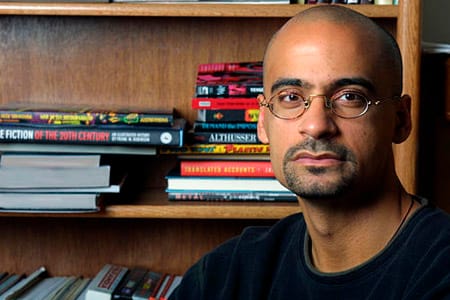
Junot Díaz’s books crackle with raw honesty and lyrical intensity, blending humor, heartbreak, and Dominican-American identity into unforgettable stories of love, loss, and survival.
Bookshop.org was created as a socially conscious alternative to Amazon, with the goal of helping local, independent bookstores thrive. This is why Readers With Wrinkles supports their efforts. Please join us in this effort by purchasing your next read here.

The following novels echo The Brief Wondrous Life of Oscar Wao in themes like diaspora, family curses and legacies, political history, dark humor, and formally playful narration.
Multigenerational & Diaspora
- White Teeth by Zadie Smith
A witty, fast-paced portrait of two London families from Jamaican and Bangladeshi backgrounds, this novel tackles immigration, history, and identity with sharp humor and an exuberant narrative voice. - Americanah by Chimamanda Ngozi Adichie
Following a Nigerian woman who immigrates to the United States and later returns home, this book blends romance, social critique, and questions of race and belonging in a voice that feels both intimate and sweeping. - The House on Mango Street by Sandra Cisneros
Told in lyrical vignettes, this classic follows a young Latina girl coming of age in Chicago, capturing the weight of culture, gender expectations, and dreams of escape in strikingly compressed scenes. - In the Time of the Butterflies by Julia Alvarez
A fictionalized account of the Mirabal sisters’ resistance to the Trujillo dictatorship in the Dominican Republic, this novel interweaves politics, martyrdom, and family bonds in an accessible, emotionally powerful narrative. - American Pastoral by Philip Roth
This novel examines how a seemingly ideal American life unravels when a successful businessman’s daughter turns to radical politics, using layered narration to probe history, identity, and national myths.
Nerdiness, Hybridity, and Experiment
- The Amazing Adventures of Kavalier & Clay by Michael Chabon
Centered on two Jewish cousins who create a comic-book hero in World War II–era New York, this novel mixes pop culture, history, and richly emotional storytelling in a way that will appeal to lovers of genre-infused literary fiction. - A Visit from the Goon Squad by Jennifer Egan
Linked stories orbiting the music industry play with time jumps, shifting points of view, and even a PowerPoint chapter, creating a formally inventive, darkly funny meditation on change and regret. - Ilustrado by Miguel Syjuco
When a controversial Filipino writer dies, his student-narrator reconstructs his life through manuscripts, interviews, and clippings, resulting in a fragmented, metafictional exploration of politics, diaspora, and family scandal.
Latin American & Caribbean Histories
- The Feast of the Goat by Mario Vargas Llosa
Set during the final days of Rafael Trujillo’s rule in the Dominican Republic, this novel braids together perspectives of the dictator, his conspirators, and a woman returning home, creating a tense portrait of power and trauma. - The Secret History of Costaguana by Juan Gabriel Vásquez
Mixing historical fiction and literary play, this book imagines the backstory of Joseph Conrad’s Nostromo through a Colombian narrator, blending national history, family drama, and sly metafiction. - Small Island by Andrea Levy
Tracing Jamaican migrants’ experiences in post–World War II Britain, the novel explores race, colonial legacies, and the pains of displacement with both warmth and biting social observation.
Identity, Coming-of-Age, and Trauma
- We the Animals by Justin Torres
Told in brief, intense chapters, this semi-autobiographical novel follows three brothers growing up in a volatile mixed-race family, capturing queerness, violence, and tenderness in stark, poetic language. - The Absolutely True Diary of a Part-Time Indian by Sherman Alexie
Illustrated and darkly comic, this story of a Native American teen who leaves his reservation school for a white one addresses poverty, racism, and hope with a voice that is raw, funny, and heartbreaking. - Transcendent Kingdom by Yaa Gyasi
A Ghanaian American neuroscientist investigates addiction and depression through her lab work while reckoning with her family’s immigrant past, fusing scientific inquiry, spirituality, and diaspora memory. - A Tale for the Time Being by Ruth Ozeki
A found diary connects a Japanese American writer in Canada with a bullied Japanese teenager, blending quantum physics, Zen, and family history into a layered story about time, narrative, and survival.
Comments