


In this kit:
- Book Summary Page (Online & Printable Kit)
- Main Characters Page (Online & Printable Kit)
- Discussion Questions Page (Online & Printable Kit)
- Book Quotes Page (Online & Printable Kit)
- Icebreaker Game: (Printable kit only)
- About the Author Page (Online & Printable Kit)
- Literary & Cultural Context (Online & Printable Kit)
- List of Podcasts and Videos about this Book (Online only)
- Meeting Decoration Ideas (Online & Printable Kit)
- Meeting Decorations Printable Images (Printable kit only)
- Meeting Menu Ideas (Online & Printable Kit)
- Meeting Food Recipes (Printable kit only)
- Printable decoration images (Printable kit only)
- Printable Bookmarks for The Correspondent (Printable kit only)
- Printable Bookmarks for Readers With Wrinkles (Printable kit only)
Every morning, Sybil Van Antwerp sits down to write letters. To her brother. To her best friend. To the president of a university who won't let her audit a class. To her favorite novelists—Joan Didion, Larry McMurtry, Ann Patchett—to tell them exactly what she thinks. At seventy-three, retired from a career as a lawyer and living alone in Annapolis, Sybil has spent decades keeping the world at a careful distance, communicating most honestly through the written word while deflecting real intimacy in person.
She is the divorced mother of two living adult children—a son and a daughter with whom she has always maintained complicated, cordial, but emotionally guarded relationships—and she carries quietly the lifelong wound of a son who died when he was eight. She was adopted, and the question of whether to seek out her birth parents hovers at the edges of her thoughts, unresolved and tender. All the while, her eyesight is gradually failing, a slow dimming that lends her letters an increasing urgency, as if she must say everything now before the light goes.
Woven throughout the novel are a series of unsent letters—addressed to an unnamed recipient—that accumulate into a private archive of everything Sybil has never been able to speak aloud. When letters arrive from someone she had deliberately put out of her mind, she is forced to reckon with the wreckage of an old legal case, a decision that has quietly shaped the lives of others.
The novel's elegantly controlled structure—built entirely from correspondence spanning a decade, from 2012 to 2022—reveals Sybil's life not through confession but through accumulation: her wit, her stubbornness, her canniness, and her grief all surfacing in the space between what she writes and what she means.
The Correspondent is, at its heart, a novel about what it means to live at arm's length from the people who love you and whether it is ever truly too late to close that distance. Shortlisted for the Women's Prize for Fiction and a PEN/Hemingway Award winner, Virginia Evans' debut is a quiet, luminous achievement—a portrait, as Ann Patchett wrote, of "a small life expanding."
Sybil Van Antwerp
Sybil Van Antwerp is the novel’s unforgettable center: a seventy-three-year-old retired law clerk living alone in Annapolis, Maryland. Divorced, fiercely intelligent, funny, exacting, and often emotionally guarded, she has made correspondence the organizing principle of her life. Through letters to family, friends, strangers, institutions, and beloved writers, Sybil says far more on the page than she can comfortably say aloud. As her eyesight worsens and long-buried grief resurfaces, she must confront the limits of the distance she has carefully kept between herself and the people who love her.
Daan Van Antwerp
Daan is Sybil’s former husband and the father of her three children. Their marriage ended long ago, but its history—and the shared loss that neither of them has fully escaped—continues to shape Sybil’s inner life and her relationships with their surviving children. Daan’s presence in the novel reveals the enduring complications of a family that has changed form without ever entirely letting go of its past.
Bruce Van Antwerp
Bruce is Sybil and Daan’s oldest surviving son. An adult with a family of his own, he is practical and concerned about his mother’s increasing isolation and declining vision. His relationship with Sybil is loving but complicated by her resistance to help, her sharp independence, and the emotional habits that have shaped their family for decades.
Fiona Van Antwerp Beaumont
Fiona is Sybil and Daan’s daughter, an architect who lives in London with her husband, Walt. Because of the physical distance between them—and Sybil’s tendency to keep even loved ones at arm’s length—their relationship can feel strained, formal, and frustratingly incomplete. Yet Fiona’s letters and calls also reveal a daughter who wants connection with her mother, even when neither woman finds it easy to ask for what she needs.
Gilbert “Colt” Van Antwerp
Gilbert, whom Sybil calls Colt, is Sybil and Daan’s son who died in childhood. Although he is absent from the novel’s present-day action, his loss is central to Sybil’s life and to the emotional architecture of the book. Sybil’s most private, unsent letters are addressed to him; in them, she allows herself a level of vulnerability, grief, fear, and self-reproach that she rarely shares with anyone else.
Rosalie Van Antwerp
Rosalie is Sybil’s closest friend and former sister-in-law: she is married to Lars, Daan’s brother. Their long friendship is one of the novel’s warmest and most revealing relationships. Rosalie knows Sybil’s history, understands her prickliness, and offers both affection and honesty as the years pass. Their correspondence reflects the rare comfort of being known by someone who has remained present through grief, marriage, divorce, aging, and change.
Felix Stone
Felix is Sybil’s beloved brother, who lives in France with his partner, Stewart. Their correspondence is affectionate, witty, and deeply familiar, offering readers a glimpse of Sybil in one of her least defended relationships. Felix is an important emotional anchor in Sybil’s life and a reminder that family connection can take forms very different from the conventional roles of spouse, parent, or child.
Harry Landy
Harry is the troubled teenage son of Judge James Landy, a former colleague of Sybil’s. His letters to Sybil create an unexpected intergenerational friendship marked by vulnerability, candor, and mutual curiosity. Harry’s struggles at school and at home invite Sybil into a relationship in which she can offer care without the entrenched resentments and expectations that complicate her family ties.
Theodore Lübeck
Theodore Lübeck is Sybil’s neighbor and a quiet, thoughtful presence in her daily life. His gestures of kindness and their growing connection offer a gentle counterpoint to Sybil’s longstanding isolation. Theodore becomes significant not because he forces change, but because he patiently makes room for companionship in a life Sybil has structured around solitude.
Hattie Gleason
Hattie Gleason is Sybil’s biological sister, discovered later in life as Sybil begins to explore the questions surrounding her adoption. Hattie’s arrival introduces the possibility of a family history Sybil never knew she had, while also raising difficult questions about identity, belonging, and whether a relationship can begin meaningfully after decades apart.
Mick Watts
Mick Watts is a Texas lawyer who becomes a late-life romantic possibility for Sybil. His presence challenges her assumptions about intimacy, independence, and what she may still want from the future. More than a conventional love interest, Mick represents the unsettling possibility that Sybil’s life is not finished—that she may still choose connection over retreat.
Ann Patchett (fictional version)
One of the novel's most delightful conceits is Sybil's long correspondence with her favorite authors, and the fictional version of Ann Patchett is among the most memorable. Sybil writes to Patchett with the forthright candor of a woman who has nothing left to lose, critiquing her books, praising her sentences, and eventually receiving a response that becomes a genuine exchange. These letters are comic, moving, and central to the novel's meditation on what literature can do for a solitary life.
Virginia Evans is an American novelist born on June 2, 1986, in South Carolina, who grew up primarily in Severna Park, Maryland. Her father managed retirement communities, and her mother was an event planner, an ordinary midcentury suburban upbringing that bore little outward resemblance to the literary ambitions quietly forming inside her. Evans studied English literature at James Madison University, where she also met her husband, Mark Evans.
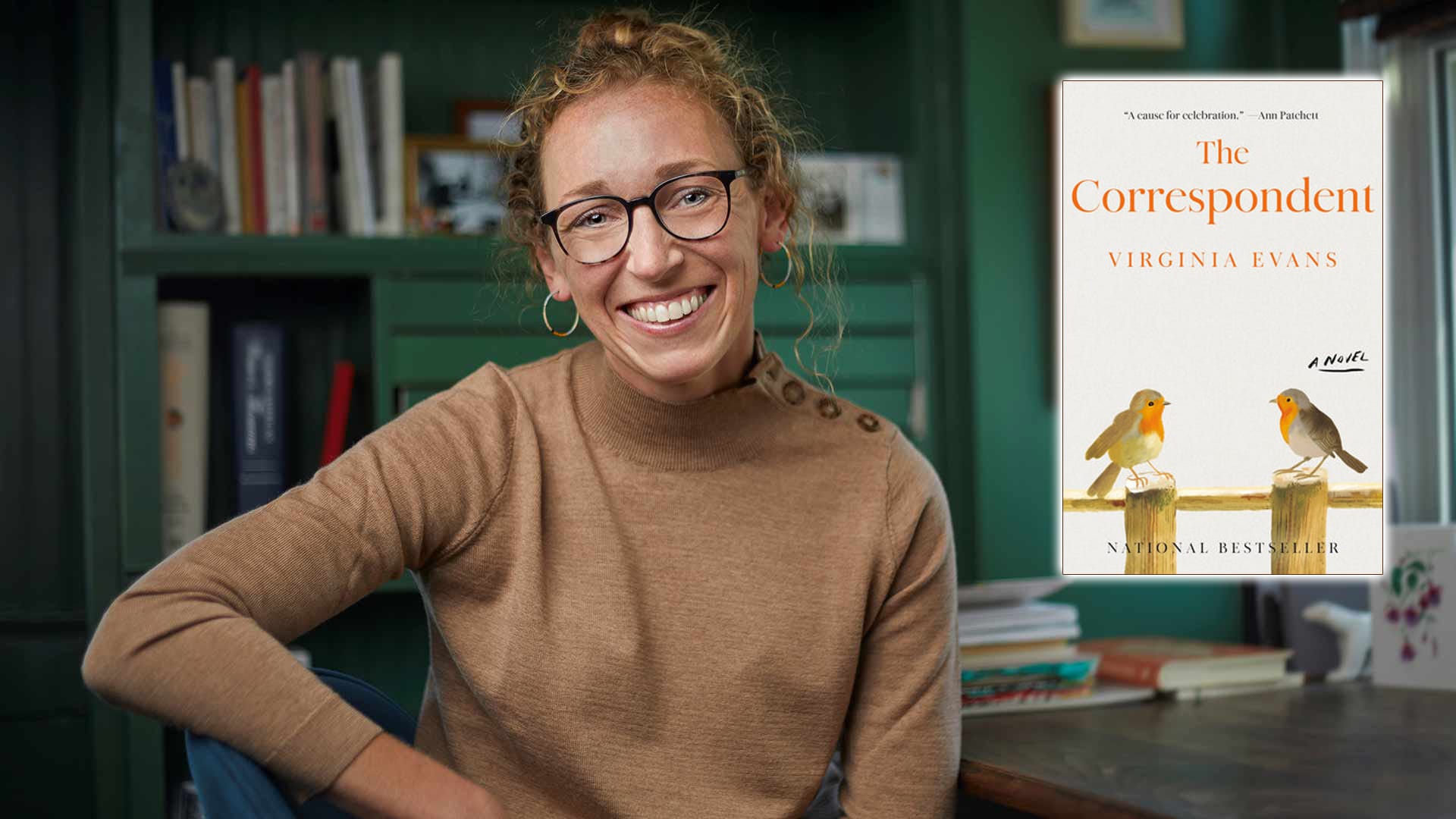
Before The Correspondent found the world, Evans spent eighteen years writing—completing seven full novels, none of which were published. She worked as a barista, as a scheduler for an orthopedic surgeon, and as a bankruptcy lawyer's assistant and ran her city's Rotary Club for seven years, all while continuing to write in the margins of an ordinary working life. In 2019, she moved her family to Dublin to pursue a Master's degree in creative writing at Trinity College Dublin, a decision that gave her both formal grounding and the permission she had long withheld from herself.
The Correspondent began as a private exercise—what Evans called a "palate cleanser" written with no intention of publication while her father-in-law was ill and the pandemic had suspended ordinary life. She wrote it, she has said, with a recklessness she never could have managed had she expected anyone to read it, drawing on inspiration from Helene Hanff’s 84 Charing Cross Road and the epistolary freedom it offered. Her agent insisted she submit it. The rest is publishing history.
The novel was a slow-burning success: it sold 550,000 copies by December 2025 and climbed to the top of the New York Times Fiction Best Seller List in February 2026. It won the PEN/Hemingway Award for Debut Novel and was shortlisted for the Women's Prize for Fiction. A film adaptation, produced by Lionsgate Films and starring Jane Fonda, was announced in March 2026. Evans lives in Winston-Salem, North Carolina, with her husband and two children.
"At seventy-three, Sybil has used her correspondence—witty and wise—to make sense of the world."
Speaker: Narrator/Sybil | Context: The novel's orienting premise, establishing Sybil's relationship to language as a primary mode of sense-making.
"Subtly told and finely made, The Correspondent is a portrait of a small life expanding."
Speaker: Ann Patchett (endorsement) | Context: The blurb that launched a thousand readers — and a perfect encapsulation of the novel's quiet ambition.
"Her last chapters are her best ones."
Speaker: Sybil (paraphrased by Evans) | Context: Evans describing Sybil's arc in interviews— the idea that a woman in her seventies is still, astonishingly, at the beginning of something.
"I had been writing books for a long time that had not been successful, and I had a book out for sale to editors, and it was not selling. And so I wrote this book."
Speaker: Virginia Evans | Context: Evans describing the unlikely origins of the novel— written at rock bottom, with no expectation of being read.
"It's never too late to write a few post-scripts."
Speaker: Narrator | Context: The novel's thematic thesis, delivered near the end, as Sybil begins the work of repair.
"I think I had the courage to do that because I didn't think anyone would ever see it."
Speaker: Virginia Evans | Context: On the creative freedom that comes from writing without an audience in mind.
The Correspondent arrives in a rich tradition of the epistolary novel—fiction told entirely through letters—that stretches from Samuel Richardson's Clarissa in the eighteenth century to Helene Hanff's beloved 84 Charing Cross Road, which Evans has named as a direct inspiration. What distinguishes Evans' novel from its predecessors is its use of one-sided correspondence: for much of the book, we read only Sybil's outgoing letters, inferring the responses from context, much as we piece together a life from its artifacts.
The novel is set between 2012 and 2022, a decade that encompasses transformative cultural shifts: the rise of email and digital communication as the dominant mode of exchange; the #MeToo movement and its reckoning with long-buried institutional wrongs; and the COVID-19 pandemic and its enforced isolation. Sybil's insistence on physical letters becomes, in this context, not merely a character quirk but a form of quiet resistance—a belief that some things are worth the effort of a stamp and the vulnerability of ink.
Age, vision loss, and the specific texture of late life are central concerns of the novel, placing it firmly in the company of works like Olive Kitteridge, A Man Called Ove, and Stoner, all of which Evans has cited as touchstones. The depiction of Sybil's gradual blindness is handled with clinical precision and emotional restraint—never pitying, always revelatory—making it one of contemporary fiction's most lucid portraits of aging.
The novel also engages with the ethics of the legal profession and the long tail of professional decisions made in youth. Sybil's old legal case—the source of the unsent letters and her deepest guilt—arrives as a reminder that our working lives are never truly separate from our moral ones, a theme with particular resonance for readers who have spent decades in careers that demanded compromises they are only now able to examine.
Finally, the novel's championing by Ann Patchett—who became an advocate for it before publication after Evans had written fictional letters in her voice—is itself a story about literary community, mentorship, and the unexpected ways one writer's generosity can alter the course of another's life. That a book about the transformative power of correspondence would find its audience through an act of correspondence is a symmetry that speaks to everything Virginia Evans was trying to say.
These questions are designed to encourage participants to think deeply, make personal connections, and explore the literary craft within the book. It is recommended that you choose 8–10 questions that would best suit your group. The first fifteen can be safely discussed with readers who have not yet finished the book, while the final five are best for a deep, reflective conversation after everyone has reached the end.
- The novel is told entirely through letters. What does this form allow Evans to do that a conventional narrative could not? What does it withhold?
- How does Sybil's wit function in her letters—is it a tool of connection or a weapon of deflection?
- Which of Sybil's correspondences did you find most revealing of her character, and why?
- How does Sybil's gradual vision loss shape the emotional arc of the novel? What does it mean that she is slowly losing the ability to read and write?
- What does the novel suggest about the difference between how we present ourselves in writing and who we actually are?
- Have you ever written a letter—sent or unsent—that said something you couldn't say aloud? What was that experience like?
- How does Sybil's relationship with literary figures (Joan Didion, Larry McMurtry, Ann Patchett) illuminate her loneliness Her self-regard?
- In what ways does the decade between 2012 and 2022 — including the pandemic — shape Sybil's story and her isolation?
- How does the novel portray the specific textures of aging: not just decline, but also liberation, clarity, and late-arriving honesty?
- What does the novel say about the relationship between professional life and moral life? Can we separate the lawyer from the person?
- Which relationship in the novel felt most true to your own experience of family or friendship?
- How does Evans use humor to make difficult material—grief, guilt, estrangement—bearable and even joyful?
- What role does the concept of "home" play for Sybil, living alone in Annapolis, far from her children?
- How did your feelings about Sybil shift over the course of the novel? Were there moments where you lost patience with her?
- What does the novel suggest about what women of Sybil's generation were asked to sacrifice and what they chose to protect?
Deep Dive (Post-Ending) Questions
- When the identity of the unsent letters' recipient is finally revealed, were you surprised? How does knowing change your reading of those letters in retrospect?
- Discuss Sybil's decision in the old legal case. Was it a moral failure, a human one, or both? Does the novel ask us to forgive her?
- The ending is deliberately quiet and open. Do you read Sybil's final letters as a resolution or as the beginning of something she will not live to finish?
- How does Evans handle the death of Sybil's son—present in the novel only as an absence? What effect does this absence create?
- If Sybil were thirty years younger, living now—would she still write letters? What would be gained or lost?
Here are 10 evocative, on-theme decorating ideas for a The Correspondent book club meeting, grounded in its Annapolis setting, epistolary form, legal career, gradual vision loss, and the decade of correspondence at the novel's heart. Use these to build warm tablescapes, reading nooks, and wall moments that echo Sybil's world of ink, wit, and hard-won intimacy. This Printable Book Club Kit includes a photographic image for each decorating idea!
Writing Desk Centerpiece
Arrange a vintage writing surface or tray with a fountain pen, a glass inkwell, a few folded letters, and a small candle—the essential still life of Sybil's mornings. A card beside it reading "Every morning, Sybil sits down to write" sets the room's intention immediately and invites guests to enter her daily ritual.
Letter Wall
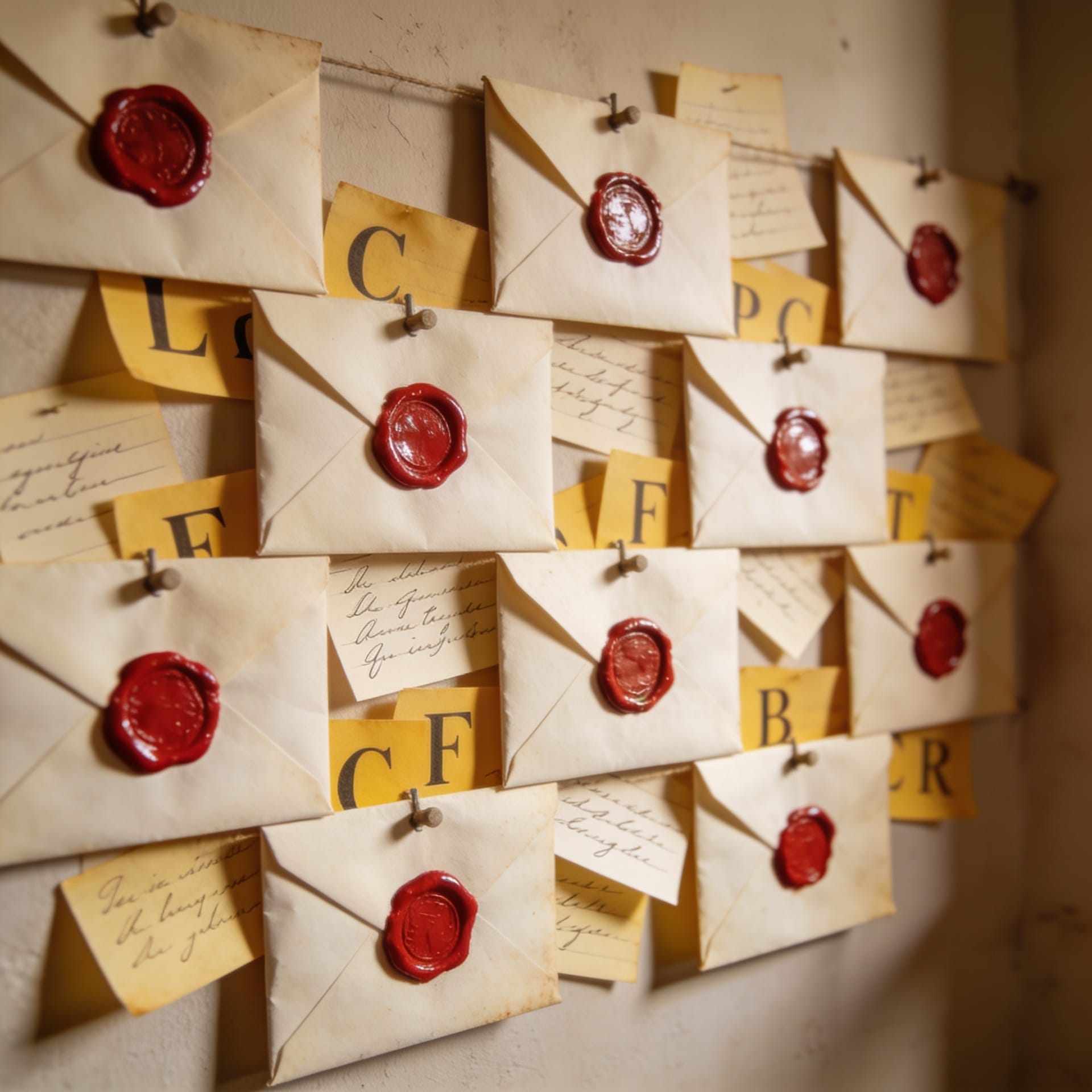
Pin or string up folded cream envelopes, wax seal stamps, and aged correspondence paper across a focal wall, evoking the decades of letters Sybil has accumulated and sent. A few visible lines from the novel—hand-lettered on index cards—suggest pages in transit, stories still in motion.
Annapolis Watercolor Accents
Place blue-and-white watercolor prints or postcards suggesting the Chesapeake Bay and Annapolis harbor to anchor the novel's geographic heart. Sybil's quiet life in that coastal city is the backdrop against which her inner world is enormous—the contrast between the modest exterior and the rich interior is a perfect decorating metaphor.
"Unsent Letters" Vignette
Create a small, intimate station with a sealed envelope labeled “To Be Opened," a quill pen, and a votive candle burning beside it—a nod to the novel's central mystery of the unsent letters and their unnamed recipient. This quiet corner invites guests to reflect on what they have left unsaid and to whom.
Reading Glasses and Fading Light
Arrange a pair of vintage reading glasses beside a slowly melting candle, a magnifying glass, and pale gauze fabric to reference Sybil's gradual vision loss with elegance and restraint. The imagery speaks to seeing and not-seeing, reading and being read—the novel's most insistent metaphor.
Literary Heroes Shelf
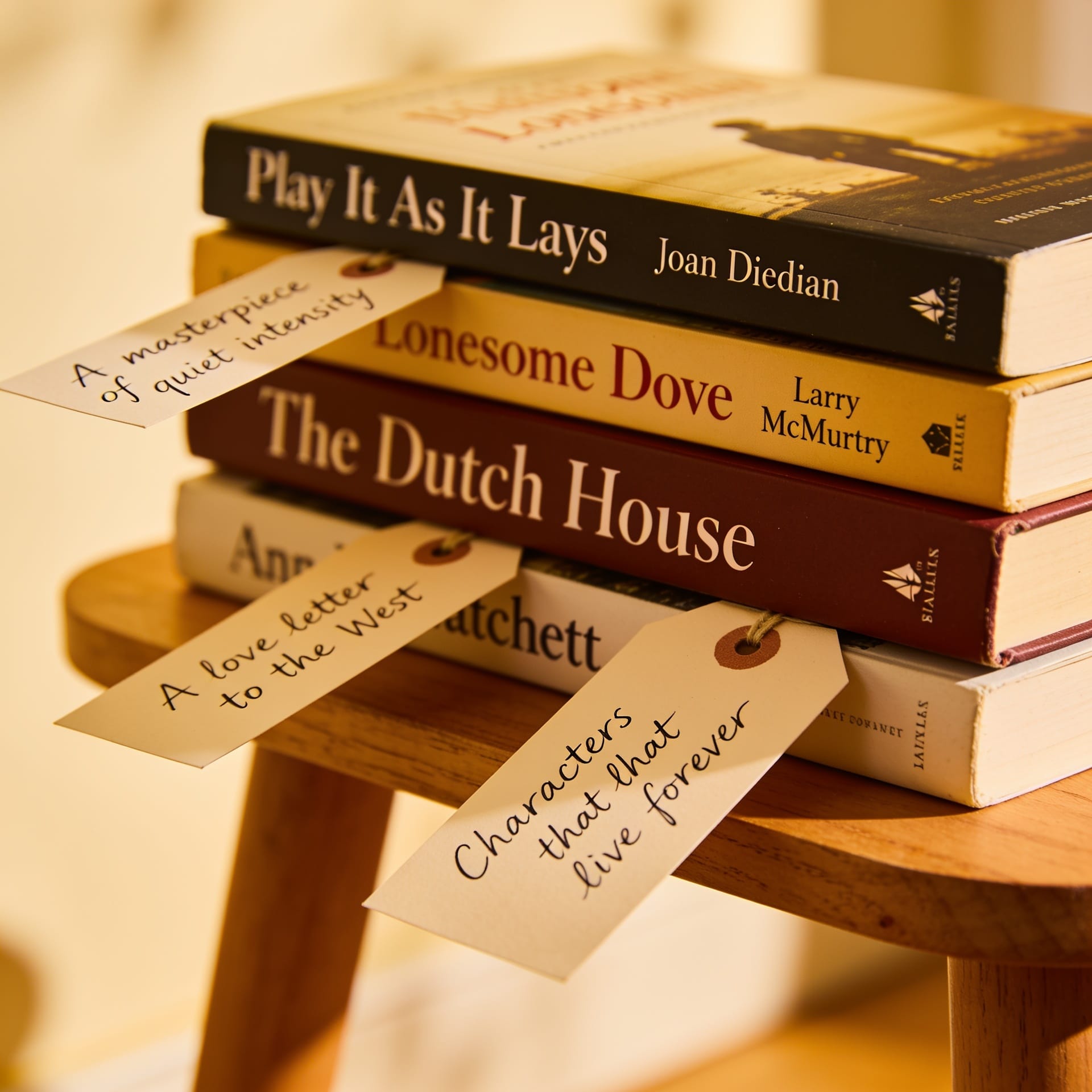
Line a small shelf with novels by Joan Didion, Larry McMurtry, and Ann Patchett—the authors Sybil writes to in the novel—with handwritten "fan letter" tags tucked into each spine. This detail rewards guests who have read the book while also sparking conversation about their own literary heroes and the letters they wish they had sent.
Legal Ledger Tablescape
Set a worn leather ledger, a small gavel, and a brass nameplate or business card holder on a side table to nod to Sybil's decades as a retired lawyer and the legal case that haunts the novel's second half. A card reading "The case she thought was closed" adds just enough intrigue without spoiling the mystery.
Decade Timeline Runner
Create a simple table runner using cards labeled with years—2012 through 2022—each bearing one brief event from the decade (a book title, a headline, a season change) to orient guests in the novel's timeline. The visual span of ten years makes visceral how much life Sybil contains in her letters and how much the world changed around her.
Correspondence Color Palette
Keep linens, ribbon, and flowers in cream, aged ivory, ink blue, and warm gold—the palette of stationery, candlelight, and old books. Texture is essential: linen over cotton, wax-sealed paper over modern card stock, and aged brass over chrome.

"Pen Pal" Place Cards
At each seat, leave a folded notecard with the guest's name and a single line from one of Sybil's letters—matched by instinct to the reader's personality. This small gift doubles as an icebreaker and echoes the novel's central argument that a well-chosen sentence can make someone feel entirely known.
- Icebreaker: Sealed With a Secret: A USPS Trivia Quiz (Activity in printable kit)
- Icebreaker: "Dear Sybil" Activity (In printable kit)
- Icebreaker: The Unsent Letter Confession Activity (In printable kit)
- Icebreaker: Literary Hero Hot Seat Game (In printable kit)
Here are themed menu ideas for appetizers, main courses, desserts, and beverages inspired by The Correspondent, honoring Sybil's Annapolis setting, her Chesapeake surroundings, her genteel solitary life, and the warmth of a decade of mornings spent writing. These dishes bring the novel's world to the table without demanding hardship on the plate.
Appetizers
Crab Salad Toasts
Maryland crab salad on toasted baguette rounds with lemon aioli and fresh dill—a nod to Sybil's Chesapeake Bay address and the coastal ease of Annapolis life. (Recipe in Printable Kit)

Smoked Salmon on Rye
Smoked salmon blinis with crème fraîche and capers, the kind of civilized first course a retired lawyer might serve at a small dinner party without calling it a dinner party.
Sharp Cheddar and Apple Board
A simple board of aged cheddar, crisp apple slices, walnuts, and honey—the pantry of a woman who lives alone and has strong opinions about what is worth keeping on hand.
Tomato and Herb Bruschetta
Classic bruschetta with garden tomatoes and fresh basil, a summer starter that feels at home in a well-tended small house near the water.
Main Courses
Maryland Crab Cakes
Pan-seared crab cakes with Old Bay remoulade, the signature dish of Sybil's adopted home state—generous, direct, slightly peppery, and entirely themselves. (Recipe in Printable Kit)
Roast Chicken with Herbs
Herb-roasted chicken thighs with lemon and garlic, the workhorse of the solitary cook's repertoire, elevated by attention and good ingredients.
Roasted Seasonal Vegetables
A platter of roasted seasonal vegetables with olive oil and sea salt—restrained, honest, and never trying to be more than it is.
Desserts

Lemon Pound Cake
Classic lemon pound cake with a simple glaze—bright and slightly tart, the kind of cake that keeps well and is best with tea. Sybil would approve. (Recipe in Printable Kit)
Spiced Pear Crisp
Warm spiced pear crisp with vanilla cream, a quietly seasonal dessert that feels like an October letter from an old friend.
Shortbread Cookies
Buttery shortbread stamped with a small envelope or quill image, a sweet nod to the novel's form and a practical gift to tuck into a pocket on the way home.

Dark Chocolate with Sea Salt
A plate of good dark chocolate broken into pieces—something Sybil would keep in a kitchen drawer for the mornings a letter went badly.
Beverages
Earl Grey and English Breakfast Tea
A proper tea service with Earl Grey and English Breakfast, the writer's morning companion and the beverage of first drafts and revisions.
Hot Apple Cider
Warm spiced apple cider (with or without bourbon), a fragrant cup that suits the novel's autumnal emotional register.
Sparkling Water with Lemon
Good sparkling water with lemon wedges for the clear-eyed guests who prefer to argue about books without interference.
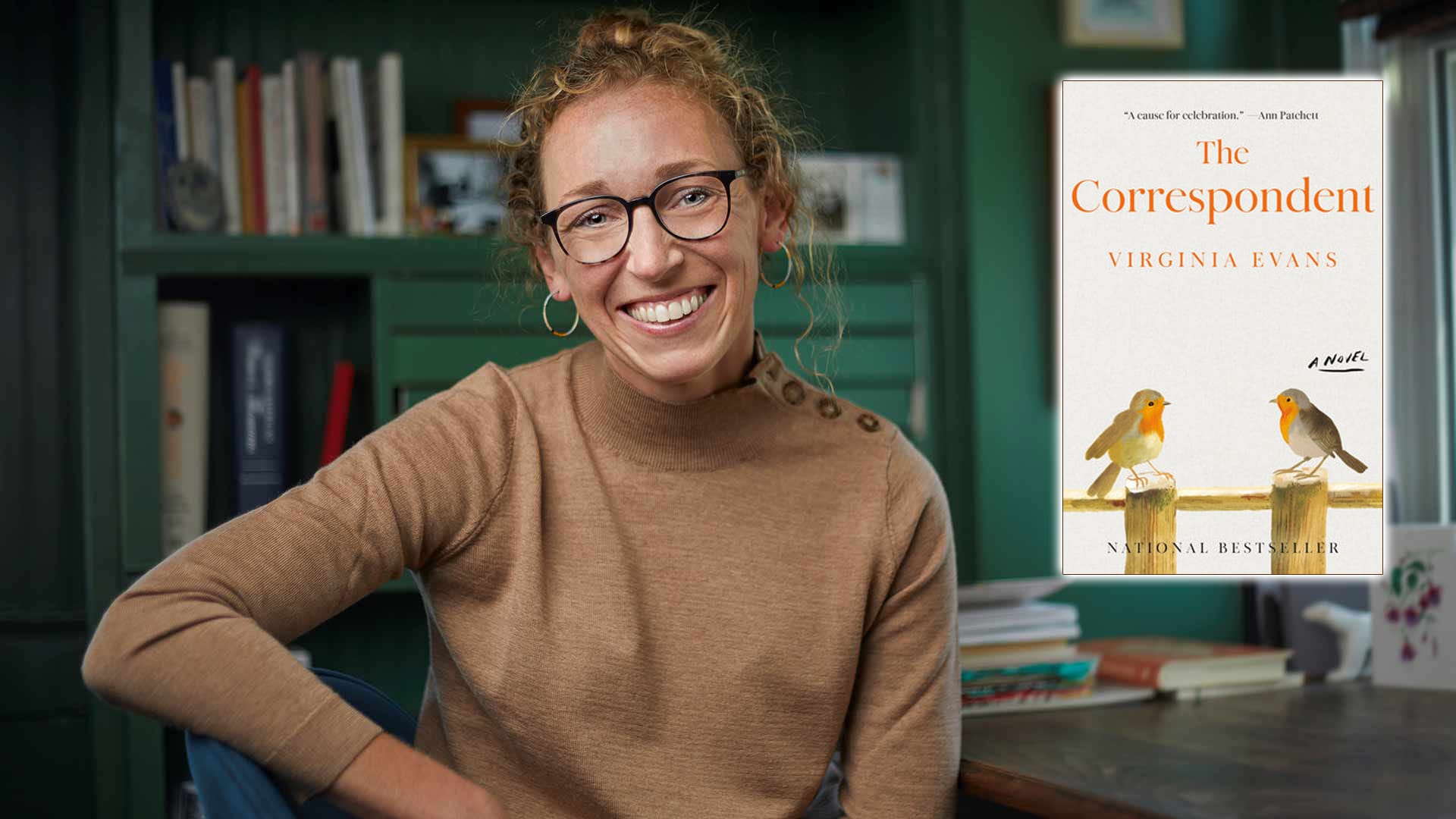
Get Virginia Evans's The Correspondent
Immerse yourself in Virginia Evans’s The Correspondent, a moving story of family, secrets, and resilience brought to life through unforgettable voices.
Bookshop.org was created as a socially conscious alternative to Amazon, with the goal of helping local, independent bookstores thrive. This is why Readers With Wrinkles supports their efforts. Please join us in this effort by purchasing your next read here.
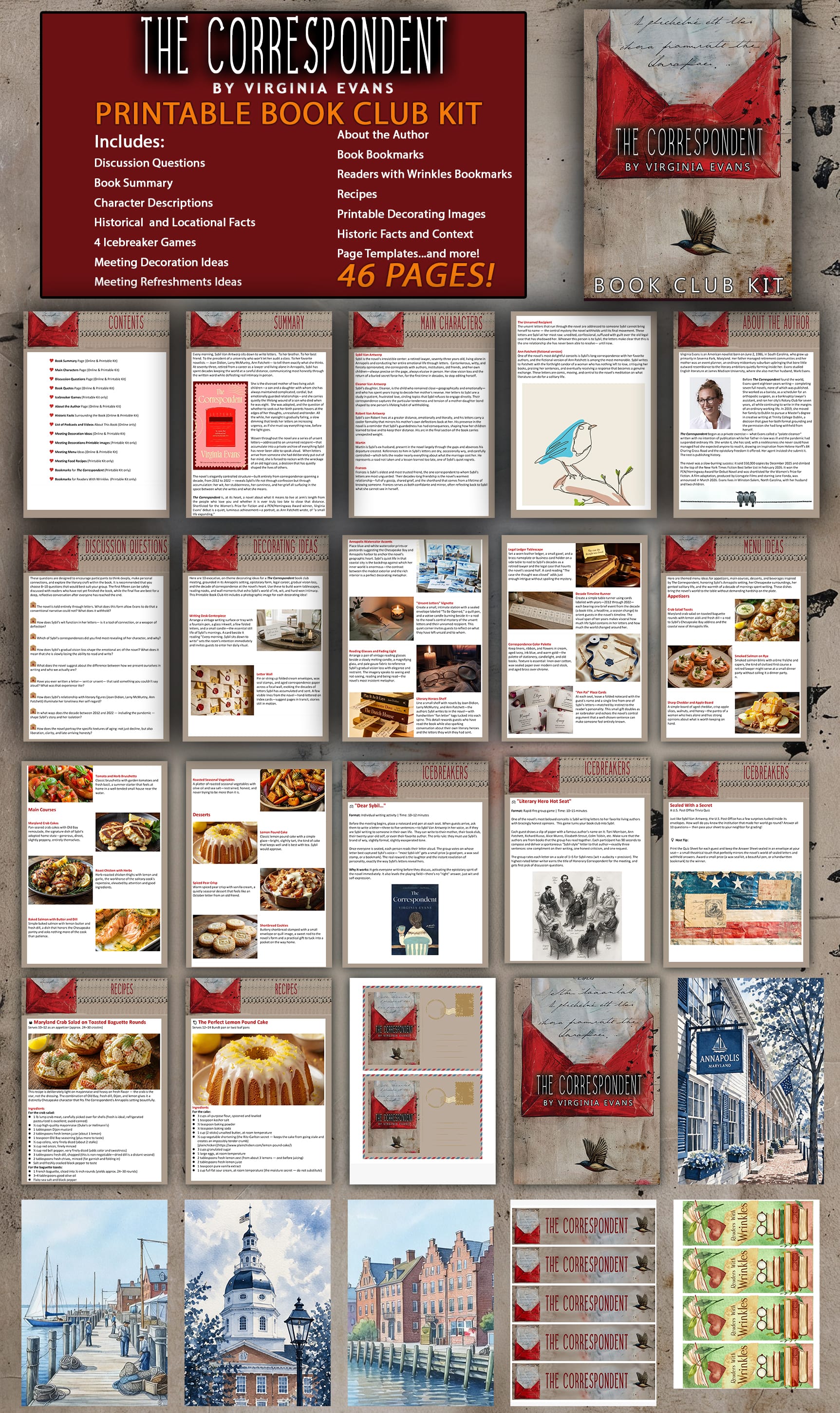
The Correspondent printable BOOK CLUB KIT
The RWW book club kits provide everything you need to organize a great meeting with insightful discussions. These resources simplify book club preparation with character lists, book quotes, refreshment suggestions, recipes, and carefully prepared book club questions!
Comments