

Table of Contents
Shelf Meets Silver Screen Series
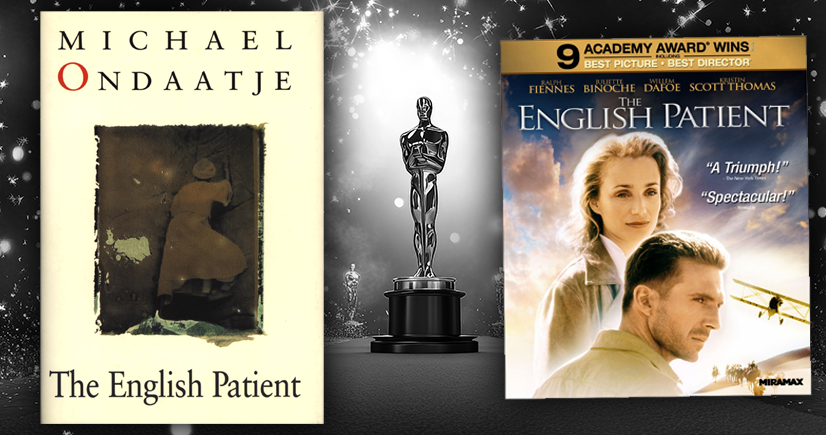
Book Awards:
- 🥇Booker Prize Winner 1992
- 🥇Governor General's Literary Award Winner Fiction 1992
- 🥇Commonwealth Writers' Prize Winner Best Book, Caribbean and Canada 1993
- 🥇Golden Man Booker Prize Winner 1990s
- 🥇Canada-Australia Literary Prize
- 🥇Trillium Book Award Winner 1993
Oscar Awards:
- In 1997 Nominated for 12 Academy Awards
- Won:
🏆Best Movie
🏆Best Director: Anthony Minghella
🏆Best Supporting Actress: Juliette Binoche
🏆Best Cinematography: John Seale
🏆Best Film Editing: Walter Murch
🏆Best Original Dramatic Score: Gabriel Yared
🏆Best Art Direction/Production Design: Stuart Craig & Stephenie McMillan
🏆Best Costume Design: Ann Roth
🏆Best Sound: Walter Murch, Mark Berger, David Parker & Christopher Newman
The English Patient began as a fragmented, lyrical war novel that quietly collected major literary prizes and then became a lush, old-school Hollywood epic that swept the Oscars with nine wins, including Best Picture and Best Director. Its journey from page to screen is a story of bold adaptation choices, stubborn producers, and a director willing to reshape a complex book without betraying its haunted heart.
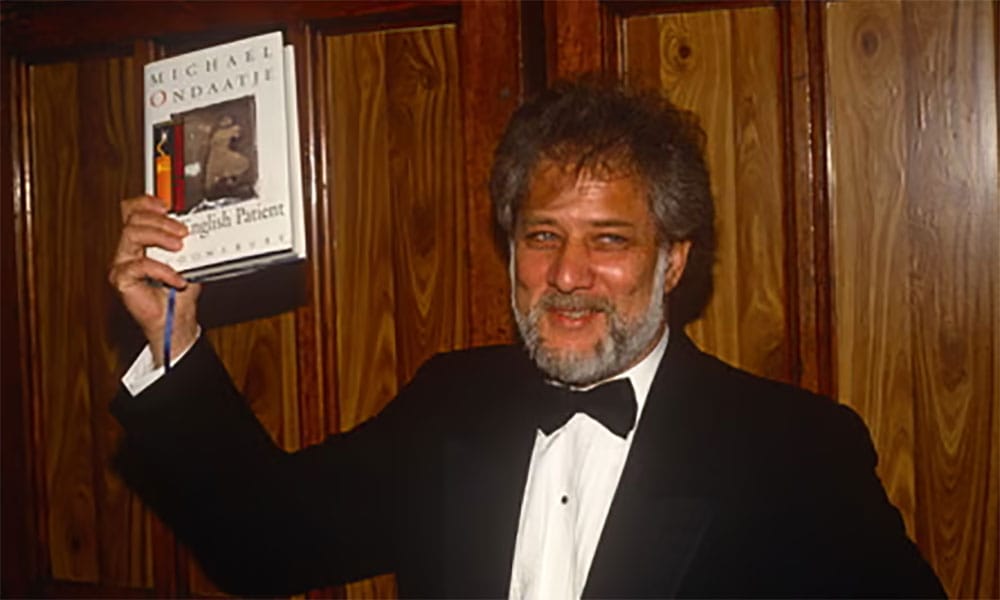
From quiet novel to prize magnet
Michael Ondaatje published The English Patient in 1992, a nonlinear World War II novel about four damaged people holed up in an Italian villa as the war ends. The book’s impressionistic structure, shifting viewpoints, and emphasis on memory over plot made it feel like an “unfilmable” darling from the start.
It won the Booker Prize in 1992 (shared that year), cementing its status in the British literary canon. It also took Canada’s Governor General’s Literary Award for fiction, pushing Ondaatje into international prominence. Decades later, to mark the Booker’s 50th anniversary, it received the one-off Golden Man Booker Prize as the public’s favorite winner of the past fifty years.
By the mid‑90s, The English Patient had the kind of pedigree that made film producers salivate—and screenwriters sweat.
How the adaptation actually got made
Producer Saul Zaentz, already famous for prestige literary adaptations like One Flew Over the Cuckoo’s Nest and Amadeus, optioned the novel and brought in British writer‑director Anthony Minghella. From the beginning, Ondaatje, Minghella, and Zaentz agreed the film could not be a dutiful, page‑by‑page version; they wanted a cinematic reinvention rather than a “faithful echo.”
Key creative decisions that shaped the movie:
- Minghella radically streamlined the narrative, centering the doomed desert affair between Almásy and Katharine and pushing other threads (like Caravaggio’s investigation) into a more conventional thriller-revenge arc.
- The script added explicitly cinematic scenes not in the book—like the dramatic car crash and sandstorm—to give the story visual propulsion.
- The ending was altered to give emotional closure, with Almásy asking Hana to end his life, whereas the novel resists that kind of neat resolution.
Ondaatje’s own interest in montage-like narrative—jumping in time, cutting between memories—gave Minghella permission to lean into cross-cutting and visual echoes rather than flattening the book into a straight chronological war story.
Why the film felt so “big”
When The English Patient premiered in 1996, it landed as a throwback epic: sweeping desert vistas, tragic romance, and a melancholy score, but with an introspective, character-driven core.
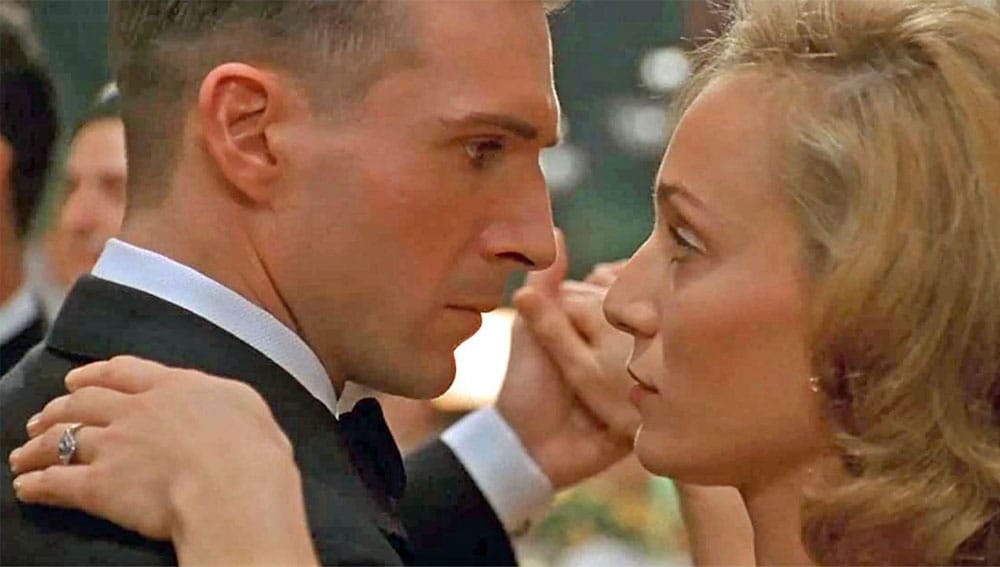
Ralph Fiennes and Kristin Scott Thomas anchored the central affair with high-voltage chemistry, while Juliette Binoche’s Hana gave the film its gentler, caregiving soul. Critics praised the film’s “rare eloquence” and emotional intensity, noting how it translated an inward, meditative novel into an accessible yet still haunting love story. The production leaned on the novel’s North African and Italian settings to create a sense of visual grandeur—exactly the kind of scale Academy voters traditionally favor.
In other words, the film wrapped a structurally ambitious book inside the familiar packaging of a World War II romance epic, letting different generations of viewers latch onto different emotional entry points.
From Booker darling to Oscar juggernaut
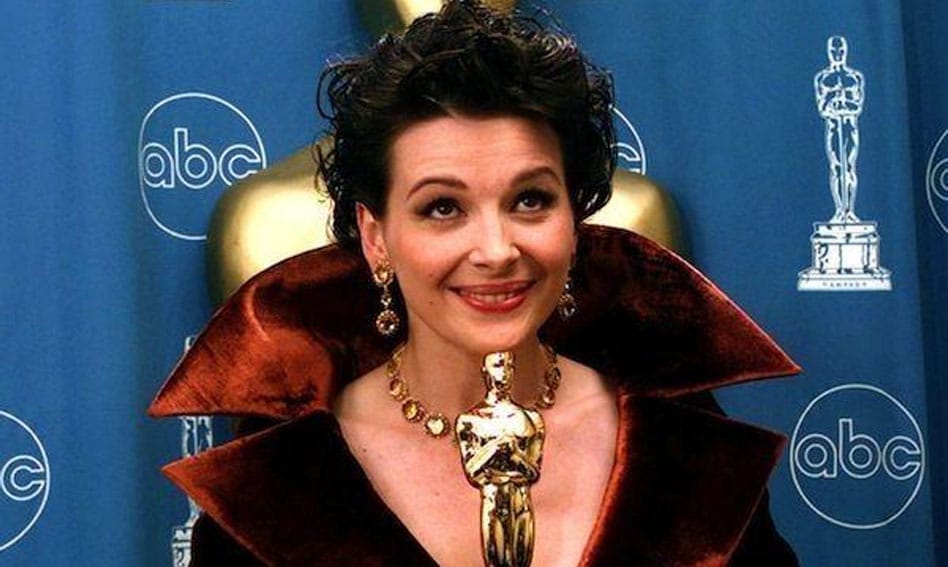
The Academy responded in a big way. At the 69th Academy Awards, The English Patient received twelve nominations and won nine Oscars, including Best Picture, Best Director (Anthony Minghella), Best Supporting Actress (Juliette Binoche), and awards for cinematography, editing, and score. It also became the first film to win the Best Editing Oscar for a digitally edited feature, underlining how formally adventurous it was beneath the classic surface.
The movie also picked up a Golden Globe for Best Motion Picture—Drama and multiple acting and directing nominations, turning a once-quiet novel into a full-blown cultural moment.
What this journey tells seasoned readers
For Readers with Wrinkles–type readers and viewers, The English Patient’s path is a reminder that “unfilmable” books can make deeply satisfying films when adapters honor tone and theme over literal fidelity. Minghella didn’t try to cram every page into the script; he identified the emotional spine—war’s scars, erotic obsession, the cost of loyalty—and built a new shape around it, with Ondaatje’s blessing.
If you loved the film years ago, the novel is worth revisiting now, especially with the Golden Man Booker context in mind; its layered, time‑slipping structure often resonates more with older readers who have their own archives of complicated memories. And if you started with the book and side‑eyed the adaptation, a rewatch can highlight how the movie, in its own medium, is doing something similar: piecing together a life from shards, asking what remains when the body, the maps, and even the names are burned away.
Here are reasons I think you might love reading or rereading The English Patient:
It’s a modern classic of literary fiction
The novel won the Booker Prize and later became the source for a Best Picture–winning film adaptation, so it sits firmly in the modern canon and rewards close, reflective reading.
Rich themes of identity and belonging
The book explores how nationality, war, and personal history complicate who we are, especially through Almásy, whose “Englishness” is a misreading that erases his real origins.
A powerful meditation on love and betrayal
The desert affair between Almásy and Katharine is intense, illicit, and morally messy, giving mature readers plenty to discuss about passion, loyalty, and the costs of desire.
Deep exploration of trauma and healing
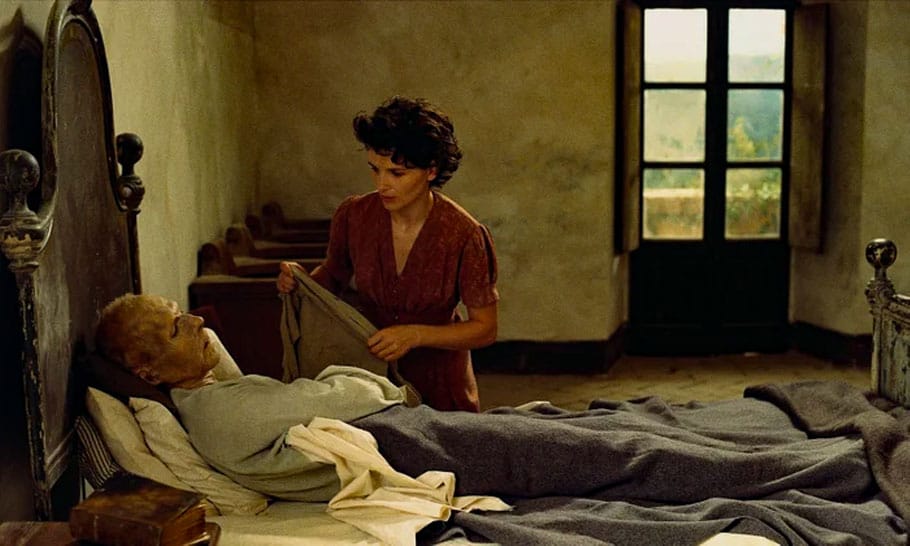
All four characters arrive at the villa physically and emotionally wounded, and the novel slowly uncovers how they move between denial, memory, and a tentative form of healing.
A perfect book-club “conversation engine”
Questions about guilt, complicity in war, racial dynamics (especially with Kip), and whether love can excuse betrayal make it ideal for nuanced, multi-perspective discussions.
Lush, atmospheric writing style
Ondaatje’s prose is sensuous and impressionistic, ideal for readers who enjoy language as much as plot and who like to linger over striking images of desert, villa, and war-torn landscapes.
Nonlinear structure that rewards rereading
The fragmented timeline and shifting viewpoints become clearer on a second read, revealing new connections between past and present, memory and confession.
Resonant questions about war and morality
Set around World War II, the novel probes how individuals navigate loyalty, espionage, and survival, blurring the lines between enemy and ally and complicating any simple hero/villain reading.
Complex, mature relationships (romantic and otherwise)
Beyond the central affair, the bonds between Hana and Kip, Hana and the patient, and Caravaggio and the others offer a range of late-in-life and war-forged connections that older readers can appreciate.
Strong, layered female character in Hana
Hana is not just a nurse or caretaker; she is grieving, stubborn, idealistic, and occasionally self-destructive, giving readers a nuanced portrayal of a woman grappling with loss and responsibility.
Rich intertextuality for literature lovers
The way the patient uses Herodotus and other texts as a kind of palimpsest of his life will appeal to readers who enjoy books about books, marginalia, and how stories sustain us.
Great pairing with the film adaptation
The novel and the Oscar-winning film diverge in emphasis and detail, making this a satisfying read–watch combo for your followers who enjoy comparing page and screen. [nytimes]
A contemplative pace for seasoned readers
Its slow unfolding, layered memories, and focus on interior lives suit mature readers who prefer reflective reading experiences over fast-twist plots.
Fresh relevance in a global, fractured world
Its questions about borders, nationalism, and what it means to be “from” somewhere feel newly urgent in today’s political climate, making a reread particularly timely.
Here are a few reasons you should queue up The English Patient for a watch or rewatch:
Lush, old-school epic romance
The central affair between Almásy and Katharine unfolds against the sweep of the Sahara and World War II, giving viewers that big, grown-up love story many modern films skip.
A film about memory and storytelling
The story is literally told from a sickbed through fragmented recollections, inviting viewers to piece together identity, guilt, and desire alongside the “patient.”
Rich themes for thoughtful discussion
It explores betrayal, loyalty, colonialism, identity, and the cost of desire—perfect fodder for mature readers who enjoy unpacking layers the way they would with a literary novel.
Two romances, not just one
Alongside the desert affair, the quieter relationship between nurse Hana and sapper Kip offers a tender, fearful, war-shadowed love story that balances the larger tragedy.
A setting that feels like another character
The desert is treated almost as a living force—beautiful, dangerous, and indifferent—shaping the characters’ choices and becoming a metaphor for both passion and desolation.
Exceptional performances from a stellar cast
Ralph Fiennes, Kristin Scott Thomas, and Juliette Binoche create nuanced, adult characters, with Binoche winning an Oscar for her role and all three leads widely praised.
A true Oscar-era heavyweight
The film earned 12 Academy Award nominations and won 9, including Best Picture, Best Director, and Best Supporting Actress, making it a cornerstone of 1990s prestige cinema.
Gorgeous, transportive cinematography
The sweeping aerial shots, golden desert light, and ruined Italian monastery are designed for viewers who love to sink into a film’s atmosphere as much as its plot.
Perfect for bookish viewers
With its roots in Michael Ondaatje’s Booker Prize–winning novel and its literary structure of layered timelines, it feels like reading a complex, beautifully written book on screen.
Mature, emotionally complex characters
These are adults making morally messy decisions and then living with the consequences, which resonates strongly with viewers who are past the typical “meet-cute” phase of life.
Rich historical backdrop without feeling like homework
Set amid the North African campaign and wartime Italy, the film uses history as context for intimate human stories, appealing to viewers who like historical fiction more than straight war movies.
Ideal for a reflective rewatch
On a second or third viewing, the nonlinear structure and early clues about identity, betrayal, and regret land differently, rewarding viewers who enjoy noticing craft and foreshadowing.
The 98th Academy Awards (2026 Oscars) will air live on Sunday, March 15, 2026, at 7 p.m. ET (4 p.m. PT). The ceremony will be broadcast from the Dolby Theatre in Hollywood on ABC and available to stream on Hulu. Comedian Conan O'Brien is set to host the event.
Comments