

Table of Contents
- Date Published:
2025 - Length:
240 pages—Listening Time: 6 hr 37 minutes - Genre:
Fiction, Fantasy - Setting:
18th Century; the village of Little Nettlebed in the county Oxfordshire. England - Awards:
NPR: Books We Love 2025; The New York Times Notable Books of the Year Fiction 2025; Kirkus Reviews Best Book of the Year Debut Fiction 2025; Globe and Mail Top 100 Book International Fiction 2025; Chicago Public Library Best of the Best 2025; Time Magazine's Must Read Books of the Year Fiction 2025; CHIRB: The Best Books We Read This Year 2025; Shelf Awareness Best Books of the Year Fiction 2025 - Languages:
English - Sensitive Aspects:
Misogyny, toxic masculinity, sexual harassment, implied sexual assault, infertility, alcoholism and alcohol abuse, graphic violence, murder, mob violence, persecution of girls and women, animal cruelty, animal death, disturbing childbirth and pregnancy imagery - Movie:
There is no current movie adaptation announced or released for The Hounding. - Recommended for Book Club:
Yes!

If you follow the news, you recently watched a community tear itself apart over something that started as nothing more than a rumor. Remember Springfield, Ohio, and the whisper campaign about Haitians eating cats and dogs? That's the kind of terrifying reality at the heart of The Hounding by Xenobe Purvis, and trust me when I say this book may make you uncomfortable in all the right ways.
We like to think we're better than our ancestors. More enlightened. More rational. But Purvis holds up a mirror that shows us the truth: we're still scared of what we don't understand, and that fear makes us dangerous.
The Hounding isn't just another book about prejudice—it's about prejudice in its purest, most insidious form. It's about rumors that start innocently enough but spread like wildfire through a community until someone's reputation, livelihood, or worse is destroyed. You know the ones I'm talking about. The rumors that get passed along with a knowing look and the phrase "I shouldn't say anything, but..."
What makes this book so powerful—and so deeply unsettling—is how Purvis shows us exactly what happens when good people do nothing. Because that's the real horror, isn't it? Not the obvious villains, but the neighbors who stay silent. The friends who look away. The community members who think, "It's not my problem."
The fear of the unknown becomes a match that ignites an entire community, and Purvis doesn't let us off the hook as readers. We're forced to ask ourselves: Would we be the ones whispering? The ones listening? Or the ones brave enough to speak up?
If you've ever wondered how ordinary people become complicit in extraordinary cruelty, you need to read this book.
What happens when a village decides you're too different to be human?
Five sisters—Anne, Elizabeth, Hester, Grace, and Mary Mansfield—are trying to survive the summer of 1700-something in Little Nettlebed, a tiny English hamlet where everyone's already got an opinion about them. Their grandmother just died, leaving them in the care of their nearly blind grandfather on his farm. They're grieving, isolated, and frankly, they've never fit in anyway. The villagers find them odd, maybe a bit too independent for girls who should know their place.
Enter Pete Darling, the village ferryman. He's drunk, bitter, and nursing a fragile ego that can't handle being ignored. When Anne refuses to speak to him one day, Pete feels disrespected—and in his twisted logic, that's unforgivable. So he does what wounded men have done throughout history: he lashes out with a lie so absurd it just might stick.
Pete claims he's seen the Mansfield sisters transform into dogs.
Dogs. Actual, literal dogs.
Here's where things get dangerous. There's a brutal drought scorching the countryside that summer. The river's drying up, Pete's ferry business is tanking, and everyone's on edge. Tensions are high, crops are failing, and people need someone to blame. The rumor spreads like wildfire. Other villagers suddenly "remember" seeing the transformation too, eager to be part of the drama.
The story unfolds through multiple villager perspectives—each one revealing their own prejudices, fears, and complicity in what's building. Pete insists angels have visited him, that his accusations are divinely authorized. The ambiguity is chilling: Did Pete hallucinate from heat and alcohol? Is this wishful thinking from a man who wants to punish women he can't control? Or is something supernatural actually happening in this already uncanny village?
The answer doesn't matter. The damage is done, and the sisters will pay the price.

Readers With Wrinkles followers are going to eat up The Hounding. Think gothic village claustrophobia, witch-trial vibes, and a sharp, feminist undercurrent—all in one eerie little package. Here are some reasons it’s a great fit:
You love a witch-trial adjacent story, not a retread
Set in 18th‑century Oxfordshire, after the peak of witch hunts, the book looks at what happens when superstition lingers even after the official trials fade away. It scratches that Salem itch without feeling like yet another courtroom drama.
Small‑village gossip is basically a horror novel
Little Nettlebed is one of those tight‑knit places where everyone “means well” but also knows your business and your grandmother’s maiden name. Watching a single rumor about the Mansfield sisters “turning into dogs” snowball into full‑blown hysteria feels uncomfortably, deliciously familiar.
Multi‑POV storytelling makes it a book‑club dream
The story unfolds through several villagers’ perspectives—but never the sisters’—so you’re constantly weighing whose version of events you trust. It’s practically designed for discussion: who’s lying, who’s afraid, and who’s just going along to get along.
It’s gothic, atmospheric, and wonderfully weird
You get drought‑cracked fields, strange creatures washing up on the riverbank, ominous ravens, and night‑time barking that may or may not be human. It’s spooky without being splattery, perfect for readers who like their horror psychological and slow‑burn.
Feminist themes without a lecture vibe
The book explores how girls’ bodies and behavior are policed, how male pride curdles into violence, and how “odd” women become targets. Those ideas are baked into the story, so you feel them in your gut rather than getting them in a thesis statement.
The sisters will break your heart, even from offstage
The Mansfield girls are mostly seen through other people’s fearful, envious, or prurient eyes, which makes their vulnerability hit even harder. They’re “the fierce one, the pretty one, the tomboy, the nervous one, the youngest”—instantly recognizable types that invite readers to pick “their” sister.
It plays with rumor like a character of its own
One drunken ferryman claims he saw the girls transform, and suddenly every misfortune—from dead hens to a dwindling river—is pinned on them. The way the lie mutates as it passes from mouth to mouth is catnip for readers who love stories about moral panics.
Perfect for fans of literary horror mash‑ups
It’s been pitched as The Crucible meets The Virgin Suicides, which is exactly the line between historical and uncanny that many readers adore. Think lush prose, emotional intensity, and dread that creeps rather than jumps.
Short, sharp, and packed with discussion hooks
This book isn’t a doorstopper; it’s a compact novel that still manages to tackle mob mentality, misogyny, and the cost of being “other.” Your club can finish it in a month and still have enough to talk about for hours.
It doubles as a cautionary tale for the present
Although it’s set centuries ago, the story feels eerily current in how quickly suspicion spreads and how eagerly people choose a convenient villain. It invites that delicious book‑club question: “How different are we from Little Nettlebed, really?”

Purchase The Hounding
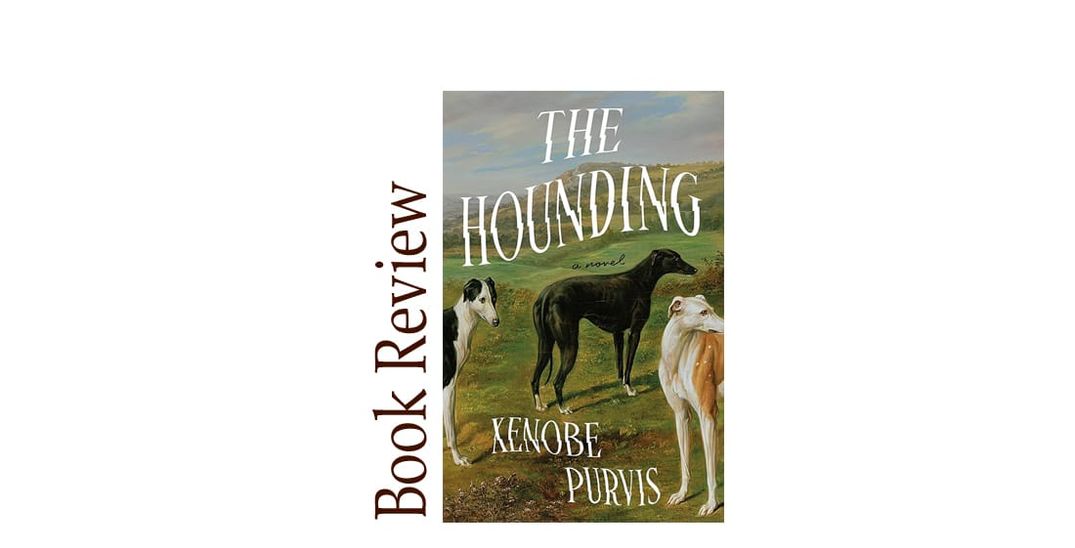
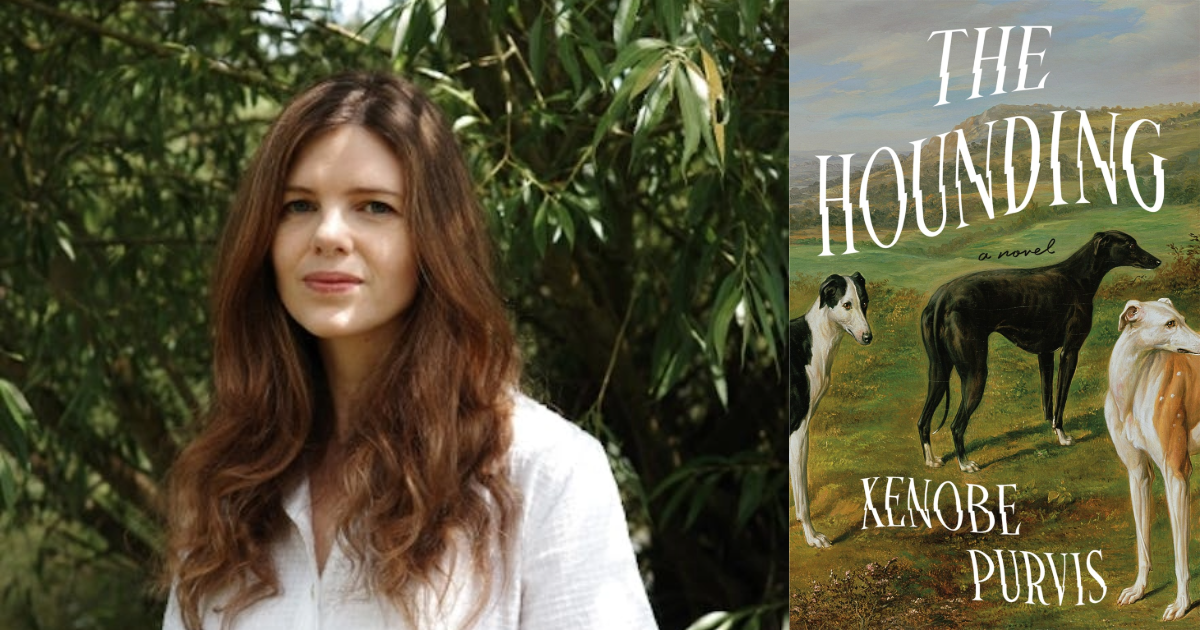
In The Hounding by Xenobe Purvis, five eccentric sisters in an 18th-century English village become the target of feverish superstition when rumors spread that they can transform into dogs, unleashing a wave of hysteria that turns their entire community against them.
Bookshop.org was created as a socially conscious alternative to Amazon, with the goal of helping local, independent bookstores thrive. This is why Readers With Wrinkles supports their efforts. Please join us in this effort by purchasing your next read here.

The Hounding sits at the intersection of historical fiction, gothic unease, and small‑village persecution, so the books below echo some mix of those elements—insular communities, threatened or “monstrous” girls/women, and simmering dread.
Insular sisters and village hostility
- We Have Always Lived in the Castle by Shirley Jackson
Two eccentric sisters live in near‑isolation with their uncle after the rest of their family is poisoned, while the nearby village seethes with suspicion and barely contained violence toward them. The story’s claustrophobic house, hostile townspeople, and ambiguous, possibly unreliable narration make it a natural companion to The Hounding. - The Virgin Suicides by Jeffrey Eugenides
In 1970s suburbia, five enigmatic sisters are watched obsessively by neighborhood boys who narrate the story years later, trying and failing to truly understand them. The novel mirrors The Hounding’s interest in how communities project fantasies, fears, and myths onto young women they refuse to see clearly.
Historical witchiness, rumor, and persecution
- The Essex Serpent by Sarah Perry
In 1890s Essex, rumors of a mythical serpent stalking the marshes collide with scientific curiosity and religious anxiety when a widowed amateur naturalist arrives and unsettles the village. Whispers of a monster, moral panic, and a richly atmospheric rural setting echo the superstitious paranoia swirling around the Mansfield sisters. - The Silent Companions by Laura Purcell
A young widow moves into her late husband’s crumbling country estate, where lifelike wooden figures and local superstition feed a terrifying chain of events spanning different timelines. It shares The Hounding’s gothic mood, historical setting, and the sense that a fearful community will always reach for supernatural explanations and scapegoats over the truth. - The Witch Elm by Tana French
After a brutal assault, a privileged man retreats to his family’s ancestral home, only for a skull to be discovered in the garden tree and long‑buried social tensions to surface. While contemporary, it similarly interrogates how communities rewrite the past and decide who gets cast as victim, suspect, or monster.
Marginalized women and bodily “transformation”
- Nightbitch by Rachel Yoder
An exhausted stay‑at‑home mother becomes convinced she is turning into a dog, her growing feral impulses blurring the line between mental breakdown and uncanny metamorphosis. Its blend of body horror, dark humor, and commentary on how society dehumanizes women resonates with The Hounding’s rumor of girls becoming dogs. - Silver Nitrate by Silvia Moreno‑Garcia
A sharp, horror‑laced novel about a talented but sidelined sound editor who gets drawn into an occult scheme connected to a cursed film and Mexico’s horror‑movie past. The book combines social critique, misogyny in creative industries, and creeping supernatural menace, akin to The Hounding’s mix of atmospheric horror and pointed social commentary
Keep the Pages Turning
This blog helps readers find their next favorite book and keeps book clubs thriving. If it’s helped you, would you consider supporting the next review?
Comments