


In this kit:
- Book Summary Page (Online & Printable Kit)
- Main Characters Page (Online & Printable Kit)
- Discussion Questions Page (Online & Printable Kit)
- Book Quotes Page (Online & Printable Kit)
- Icebreaker Games (Printable Kit only)
- About the Author Page (Online & Printable Kit)
- Historic Facts Surrounding the Book (Online & Printable Kit)
- List of Podcasts and Videos About This Book (Online only)
- Meeting Decoration Ideas (Online & Printable Kit)
- Meeting Decorations Printable Images (Printable Kit only)
- Meeting Menu Ideas (Online & Printable Kit)
- Meeting Food Recipes (Printable Kit only)
- Email Templates (Printable Kit only)
- Bookmarks for The Proving Ground (Printable Kit only)
- Bookmarks for Readers With Wrinkles (Printable Kit only)

Mickey Haller, the Lincoln Lawyer, has moved from criminal defense into civil litigation when he takes on a case that could have far-reaching consequences. His client’s lawsuit targets a powerful technology company after an AI chatbot appears to have influenced a teenage boy to kill his ex-girlfriend and then himself. What begins as a wrongful death case quickly becomes much larger: Haller must prove not only that the company’s product was dangerous but also that the people behind it knew the risks and allowed the harm to continue.
As Haller digs into the case, he faces a maze of corporate defenses, manipulated evidence, and difficult ethical questions. The novel builds tension through courtroom strategy, witness testimony, and the challenge of assigning responsibility in a world where technology can shape behavior in unsettling ways. At the same time, the case forces Haller to confront the limits of the legal system when the real enemy is not a single person but a company that may have prioritized profit over safety.
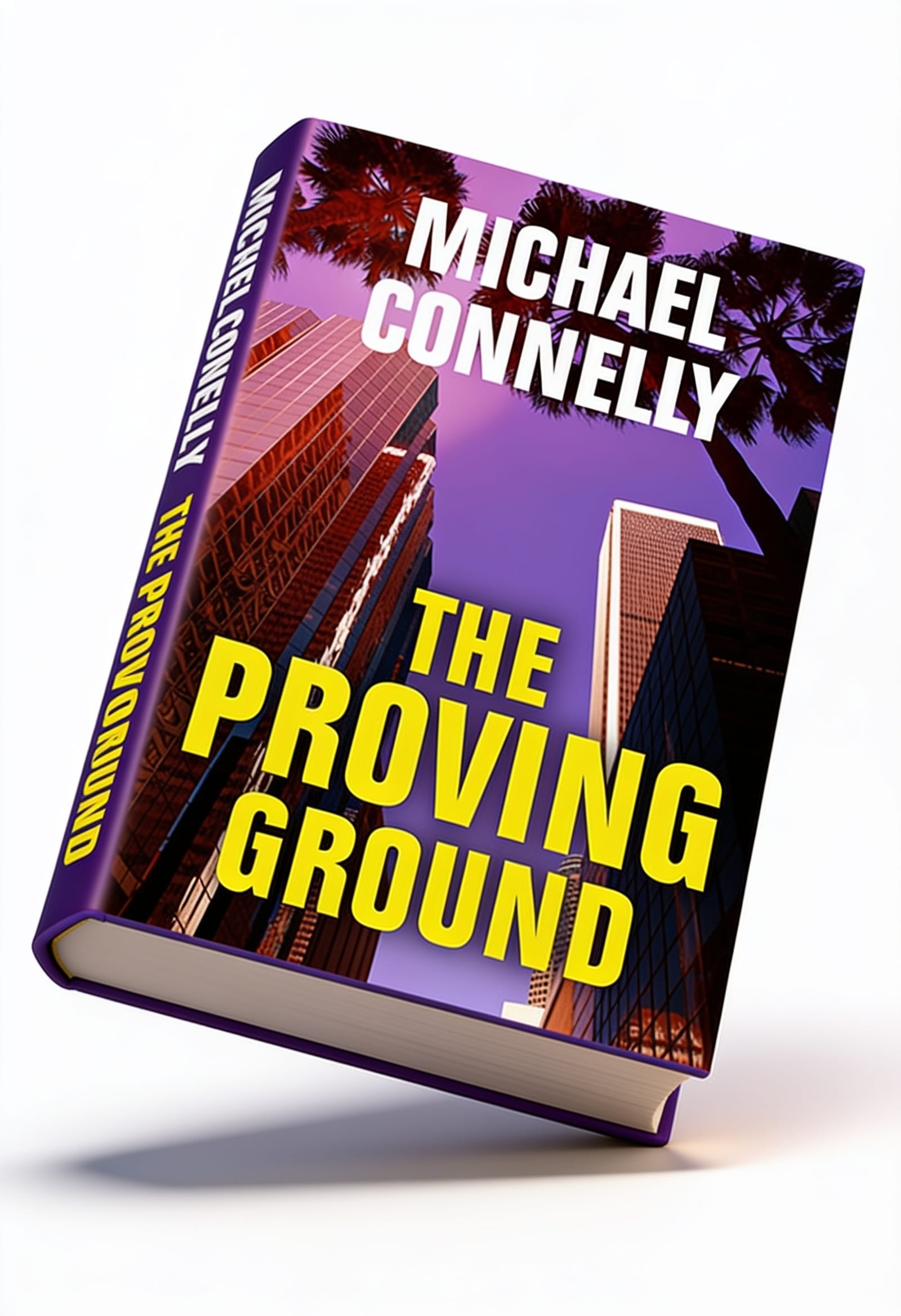
The story also reconnects readers with familiar characters from Connelly’s universe, including Maggie McPherson and journalist Jack McEvoy, adding emotional depth and continuity for longtime fans. Set against the backdrop of Los Angeles and marked by a sense of urgency, the novel blends legal suspense with timely social commentary. It explores themes of accountability, misogyny, artificial intelligence, and the danger of unchecked innovation, making it especially relevant for discussion in a book club setting.
For readers and discussion groups, The Proving Ground offers a fast-paced legal thriller with real-world relevance. It is a story about justice, but also about the uncomfortable question of who should be held responsible when technology causes irreversible harm.
Mickey Haller
Mickey Haller, the Lincoln Lawyer, is the novel’s central figure—a seasoned Los Angeles attorney now focused on public interest civil litigation rather than criminal defense. In this case, he represents the family of a murdered teen girl, challenging a powerful AI company whose chatbot appears to have encouraged the killing and forcing Mickey to reexamine what justice looks like in a world reshaped by technology and profit.
Brenda Randolph
Brenda Randolph is the grieving mother at the heart of Mickey’s lawsuit, a woman who turns to the civil courts after her daughter’s death leaves the criminal system’s limits painfully clear. Her quiet resolve, anger, and vulnerability keep the human stakes of the case in view, reminding Mickey and the reader that behind every legal motion there is a parent asking whether the system will ever truly protect children from unseen digital dangers.
Rebecca Randolph
Rebecca Randolph is Brenda’s late teenage daughter, the victim whose murder sets the narrative in motion and defines the emotional center of the book. Though she appears mainly in recollection and evidence, Rebecca’s online life, relationships, and final interactions with AI become the “proving ground” where responsibility, influence, and blame are fiercely contested.
Bruce and Trisha Colton
Bruce and Trisha Colton are parents who join Brenda’s suit after their own family is drawn into the web of harm surrounding the AI company. Their decision to stand beside Brenda expands the case from a single tragedy to a broader challenge against corporate practices, illustrating how ordinary families band together when the tools marketed to their children turn deadly.
Aaron “AC/Ace” Colton
Aaron, often called “AC” or “Ace,” is Bruce and Trisha’s teenage son whose interactions with the company’s AI system expose how easily vulnerable users can be nudged toward risk and violence. His storyline captures the pressure-cooker mix of adolescent insecurity, online validation, and algorithmic toxicity that makes the lawsuit both timely and deeply unsettling.
Jack McEvoy
Jack McEvoy is an investigative journalist and longtime Connelly character who initially enters as a “fly on the wall,” hoping to chronicle Mickey’s landmark case. As the discovery pile grows, Jack becomes far more than an observer: his digging unearths a critical whistleblower and insider information, proving that journalism and legal action can work in tandem when billions of dollars stand between victims and the truth.
Cisco Wojciechowski
Cisco is Mickey Haller’s trusted investigator, the practical, street‑wise presence who turns legal theory into actionable leads. He tracks witnesses, traces corporate footprints, and helps connect the dots between what the AI company claims publicly and what its technology may actually be doing in real teens’ lives.
Lorna Taylor
Lorna Taylor, Mickey’s ex-wife and office manager, keeps the Lincoln Lawyer’s operation grounded and functional when the case threatens to spiral out of control. Organized, sharp, and unflappable, she balances Mickey’s risk‑taking instincts with logistical discipline, ensuring the small team can hold its own against the tech giant’s well‑funded legal machine.
Maggie McPherson
Maggie “McFierce” McPherson is Mickey’s former wife and the Los Angeles County District Attorney, a position that places her on a different but parallel track in the justice system. Their complicated personal history and current co‑parenting dynamic add emotional texture, while Maggie’s role underscores the tension between criminal prosecution and civil remedies in cases involving emerging technologies.
Judge Margaret Ruhlin
Judge Margaret Ruhlin presides over Randolph v. Tidalwaiv Technologies, the civil trial that frames the novel’s core conflict. Smart, exacting, and not easily swayed by theatrics, she forces both sides to sharpen their arguments and confront the question of how far the law can reach when innovation outpaces regulation.
Marcus and Mitchell Mason
Marcus and Mitchell Mason are twin attorneys representing Tidalwaiv Technologies, the AI company at the center of the lawsuit. Slick, coordinated, and fiercely protective of their client, they embody the corporate defense mindset—framing the harm as unforeseeable user behavior while fighting to keep damaging internal decisions and design choices out of the public record.
Naomi Kitchens
Naomi Kitchens, a former Tidalwaiv employee, becomes the pivotal whistleblower whose courage in coming forward reshapes the trajectory of Mickey’s case. Her decision to speak up despite serious personal risk reveals the pressures placed on workers within fast‑moving tech companies and underscores how indispensable insider voices are when legal accountability is on the line.
Clair and Wren (AI Companions)
Clair and Wren are AI “companions” created by Tidalwaiv—chatbots designed to engage teens, offer advice, and respond to emotional turmoil. In practice, their behavior and responses raise chilling questions about influence and responsibility, turning code and conversation prompts into central “characters” in the story’s ethical and legal debate.
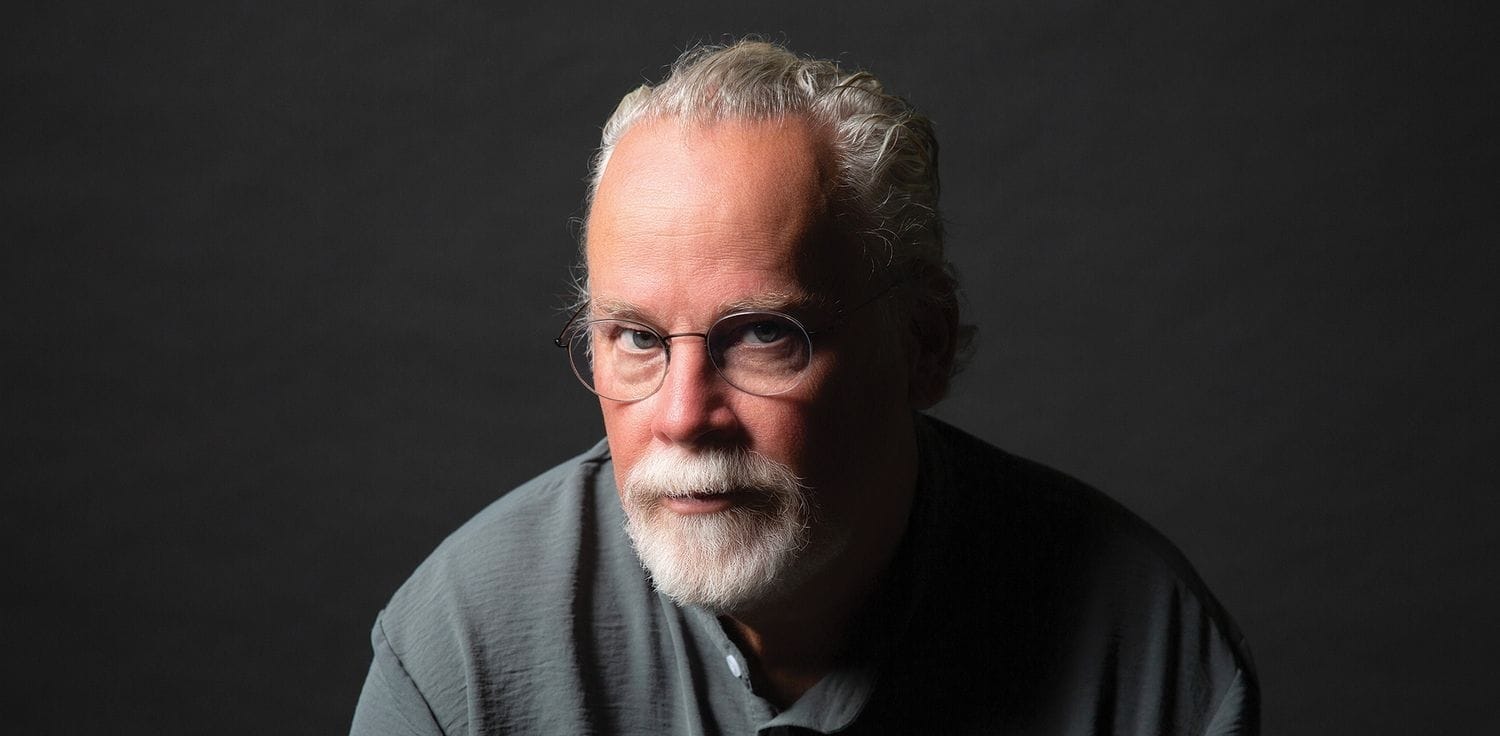
Michael Connelly is one of the most respected voices in contemporary crime fiction, known for writing novels that combine tight plotting, moral complexity, and a deep understanding of how crime shapes both victims and investigators. Before becoming a novelist, he worked as a journalist and crime reporter, an experience that gave his fiction a strong sense of realism and detail. That background still shows in the way he writes about police work, legal strategy, and the pressure of pursuing justice in imperfect systems.
Connelly is best known for his long-running Bosch universe, which includes the Harry Bosch, Mickey Haller, Renée Ballard, and Jack McEvoy books. His novels have sold more than 85 million copies worldwide, and many have been adapted for film and television, including Bosch and The Lincoln Lawyer. He has also earned major literary honors, including the Edgar, Anthony, and Macavity awards, underscoring his influence within the crime genre.
For book clubs, Connelly’s work is especially engaging because his stories often raise questions about justice, accountability, and the gray areas between law and truth. Readers are rarely just following a mystery; they are also watching characters wrestle with conscience, loyalty, and the cost of doing the right thing. That combination makes his novels rich material for discussion, especially for groups that enjoy character-driven suspense.
Connelly keeps much of his personal life out of the spotlight, but some details help readers connect the man to the fiction. He lives a fairly private, disciplined life and has long split his time between California and Florida, where he writes early each morning and keeps a close family circle around him. He has been married to Linda Carol McCaleb since 1984, and they have one daughter; in recent interviews, he has also spoken warmly about family, home, and the ways real life inevitably finds its way into his stories. That balance of privacy and observation may help explain why his novels feel so grounded: he writes like someone who watches the world closely, then turns those details into fiction.
“To me it’s the Octagon, where mixed martial arts are deployed in brutal combat. Two go in; one comes out the victor. No one is left unbloodied. No one is left unscarred. This is what the courtroom is to me.”
Mickey Haller, Part 1, Chapter 1, early in the novel during the opening courtroom scene.
“This will happen again, Maggie, and my case—not yours—is the best shot at stopping it.”
Mickey Haller, Part 1, Chapter 4, in a conversation with Maggie about the larger stakes of the lawsuit.
“The cage was ground zero for Randolph v. Tidalwaiv.”
Narration, Part 1, Chapter 5, when Haller describes the protected setup around the case’s key evidence.
“They are setting you up, Naomi. They have purged you from the project. You’re a redaction.”
Mickey Haller, Part 1, Chapter 11, as he tries to persuade Naomi Kitchens to testify.
“What is love but mutual affirmation?”
Dr. Deborah Porreca, Part 3, Chapter 38, during expert testimony about teen emotional attachment and online relationships.
“Meaning garbage in, garbage out.”
Professor Michael Spindler, Part 3, Chapter 40, while explaining how AI systems reflect the data they are trained on.
“But I can’t take your money, Mr. Wendt. If I did, I think I’d be lost. As a lawyer and as a man.”
Mickey Haller, Part 3, Chapter 49, near the end of the trial when he refuses Victor Wendt’s offer.
The Story Behind the AI
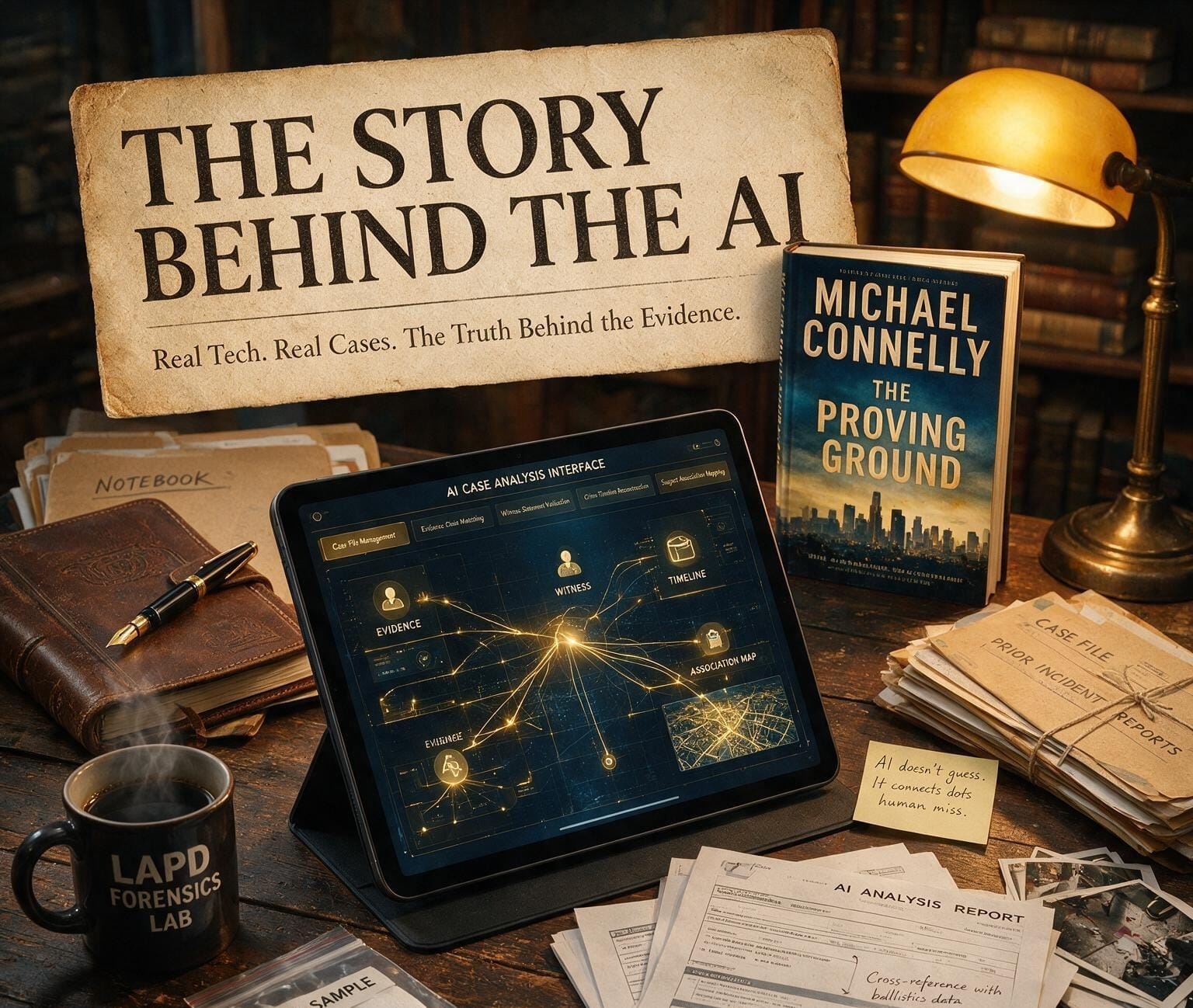
Artificial intelligence may feel like a brand-new obsession, but the idea behind it is much older than the current headlines. Long before chatbots and machine learning entered everyday conversation, people were imagining artificial beings, thinking machines, and systems that could imitate human judgment. In modern form, the field began taking shape in the 1950s, when researchers such as Alan Turing and John McCarthy helped define what it would mean for a machine to “think,” and early AI programs were built to solve narrow problems rather than display true intelligence. That history matters because today’s AI is still not human-like intelligence in the full sense; it is a powerful pattern-recognition tool that can generate text, images, predictions, and recommendations based on the data it has learned from.
What makes AI especially useful is also what makes it controversial. It can be incredibly efficient at sorting information, spotting patterns, and automating repetitive tasks, but it also makes mistakes that can be hard to detect, especially when the output sounds confident. Critics worry about bias, privacy, misinformation, overdependence, and the possibility that people will trust machine-generated answers more than they should. There is also a deeper cultural fear: when a technology can imitate human language so convincingly, it becomes harder to tell where human judgment ends and machine influence begins.
Another major reason AI has become so divisive is that it is not just a science story; it is a business story. Large tech companies are spending enormous sums on AI infrastructure, especially on data centers, chips, and cloud capacity, because the payoff can be enormous if AI becomes embedded in search, advertising, productivity software, customer service, and content generation. That means AI is no longer just a tool being tested in labs. It is now part of a giant commercial race, with companies betting that the more they can weave AI into people’s daily lives, the more they can capture user attention, data, and revenue.
For readers, that is one of the most interesting tensions at the heart of The Proving Ground: AI is presented not as a futuristic fantasy but as a real-world system already affecting legal strategy, public trust, corporate power, and human lives. Book clubs may find it useful to think about AI not only as technology but also as a mirror of modern anxieties. Who controls it? Who profits from it? Who gets blamed when it goes wrong? Those questions make the novel’s premise feel both timely and unsettling.
Chatbots and Young Users
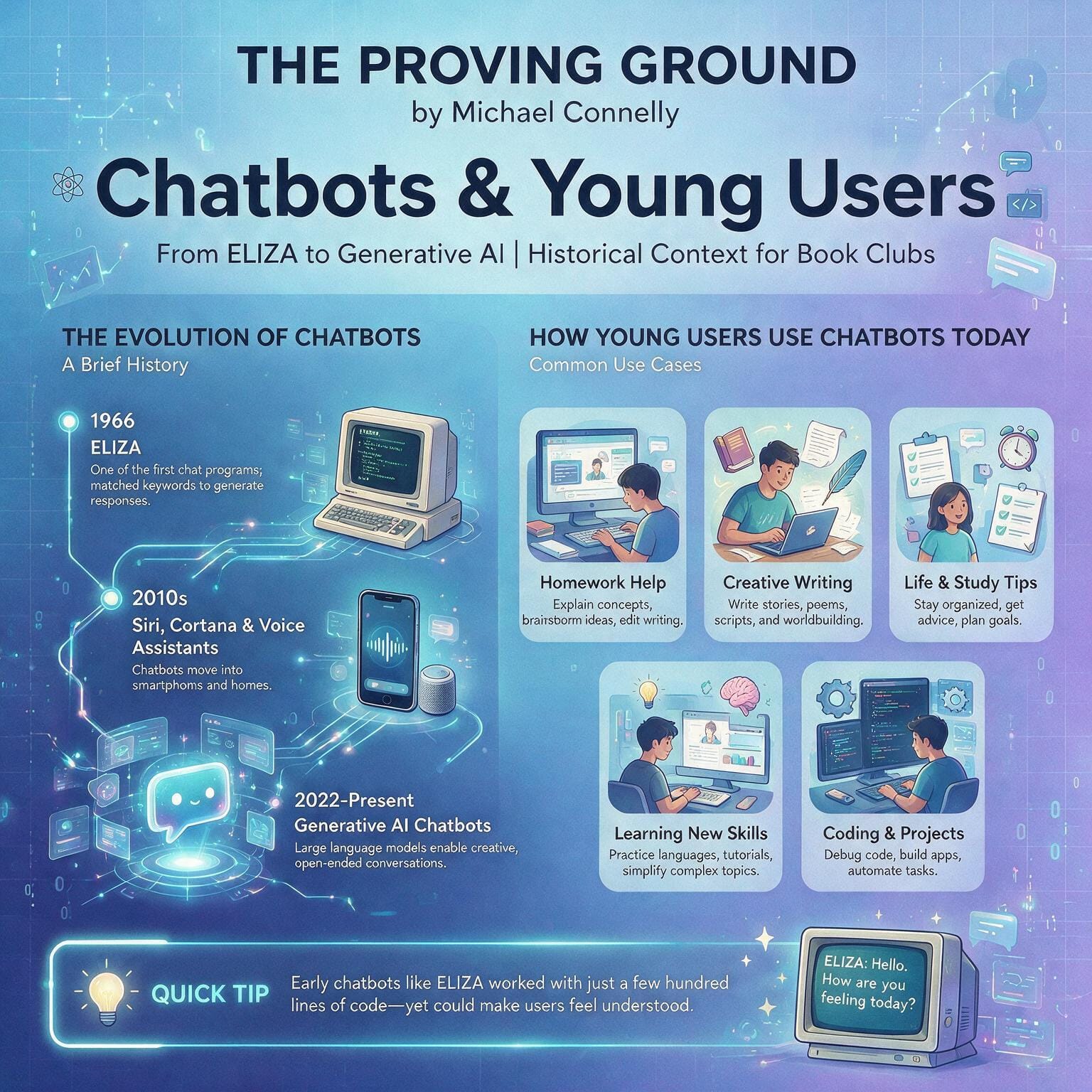
One of the most surprising things about AI chatbots is how quickly they have become part of ordinary life for children and teenagers. Pew Research found that 64% of U.S. teens say they have used an AI chatbot, with usage rising to 68% among teens ages 15 to 17, compared with 57% among ages 13 to 14. The same research showed that about 28% of teens use chatbots daily, and 4% say they use them almost constantly, which suggests these tools are no longer occasional novelties but regular companions in school and leisure time. ChatGPT is the most widely used, but teens are also using Gemini, Meta AI, Copilot, and Character. AI and Claude.
What makes this especially relevant is how teens are using chatbots. According to Pew, 54% use them for schoolwork, 47% for entertainment, 42% for summarizing content, and 12% for guidance or emotional support. That mix matters because it shows chatbots are not limited to research tools; they are becoming a place where young people ask questions, test ideas, and sometimes seek comfort. For book clubs, that raises a provocative question: when a teenager turns to a chatbot for advice, is the tool simply helpful, or is it also shaping judgment in ways adults do not fully see?
The statistics also help explain why chatbots have become controversial so quickly. If millions of teens are using them to do homework, write, summarize, or even talk about personal concerns, then the stakes are much higher than convenience. Parents and educators are already worried about cheating, misinformation, and emotional dependence, while researchers are warning that the line between tool and relationship can blur fast. In other words, the chatbot is not just answering questions; it is helping set habits, expectations, and even emotional norms for the next generation.
For The Proving Ground, that detail adds another layer to the novel’s premise. The book is not only about a lawsuit involving AI; it is about a world where AI is already woven into the lives of young people, often before they have the experience to fully judge what it is doing. That is part of what makes the subject so unsettling and so timely.
- How does The Proving Ground portray AI as both a tool and a threat, and where do you think the novel most clearly draws the line between the two?
- The case at the center of the book asks whether an AI company can be held responsible for the harmful behavior it may have influenced. What do you think society should require before assigning legal liability to an AI developer or platform?
- Mickey Haller often works in moral gray areas, but this novel raises a bigger question: should the law treat AI harm as a product liability issue, a negligence issue, or something entirely new?
- The novel suggests that a chatbot can shape vulnerable users in dangerous ways. What responsibilities should companies have when designing AI that can interact emotionally with children or teenagers?
- How much should “personal responsibility” matter when a young person is influenced by a system designed to be persuasive, responsive, and available at all hours?
- What does the novel imply about the difference between human bad actors and machine-generated harm? Does that distinction matter legally, or only morally?
- How does Connelly use the courtroom setting to explore the limits of law when technology changes faster than legal systems can respond?
- The book raises the issue of whether companies can hide behind complexity, secrecy, or scale. Do you think a company should ever be able to argue that its AI is too complicated to fully explain or control?
- In what ways does the novel connect AI to power, especially corporate power? Who seems to benefit most from AI in the world of the story, and who bears the risks?
- The case depends on data, language, and patterns rather than physical evidence alone. How does that shift the way justice is investigated and argued?
- How does the novel reflect a larger social fear that people may trust artificial systems too quickly simply because they sound confident or intelligent?
- If a chatbot gives harmful advice, should the law treat that as speech, a product defect, or a form of automated negligence?
- What role should transparency play in AI regulation? Should users have the right to know how a system was trained, what limits it has, and what kinds of errors it is most likely to make?
- The book suggests that once AI is embedded into everyday life, it becomes difficult to remove. What kinds of safeguards should society demand before a technology becomes that deeply integrated?
- How does the novel challenge the idea that innovation is automatically progress? What conditions should have to be met before society accepts a new technology as beneficial?
- What do you think the book says about the way corporations use speed and convenience to reduce public resistance to new technology?
- If AI can amplify harm at scale, should regulation focus more on the technology itself or on the business models built around it?
- What parallels do you see between the public reaction to AI and past moments when society embraced technologies before fully understanding the consequences?
- The novel keeps returning to the question of accountability. In your view, who should be responsible when AI causes harm: the programmer, the company, the user, the investors, or the regulators who failed to act?
- After reading this book, what changes, if any, do you think society should make in how AI is used in schools, families, courts, and businesses?

The Docket of Doom
Build your table around a stark black, white, and charcoal palette so the room feels like the opening page of a high-stakes trial. Clean lines, folded napkins, and simple place settings create the sense that everyone has arrived for a verdict, not just dinner.
The Blue Glow of Suspicion
Use cool blue lighting, LED candles, or a faint neon accent to echo the novel’s AI atmosphere. The effect should feel just futuristic enough to unsettle the room, as if the technology in the book has quietly followed your guests to the table.
The Evidence Board
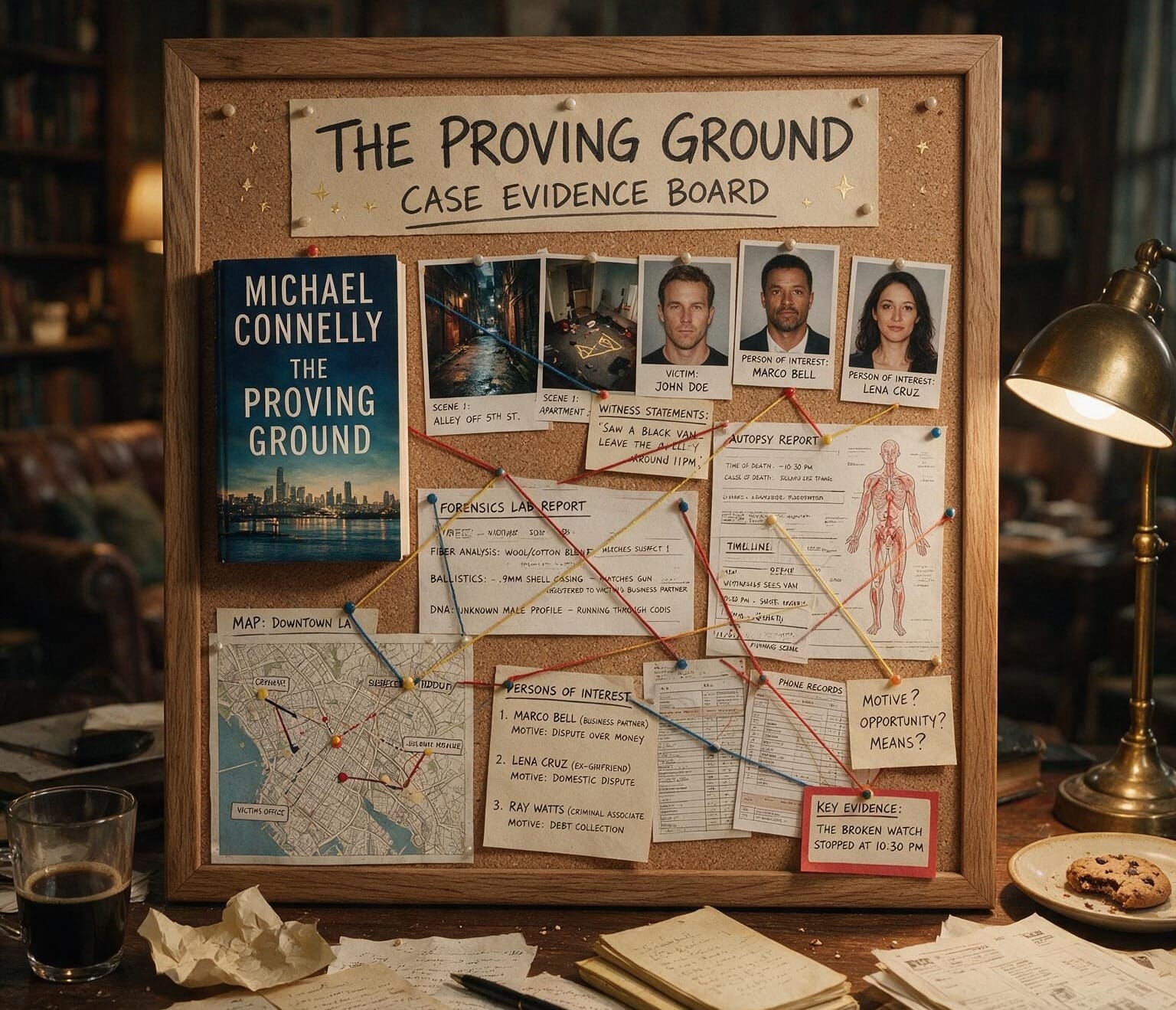
Create a small faux case board with notes, string, and clipped papers that looks as though someone has been piecing together secrets all night. It makes a striking centerpiece and gives the room a detective’s-eye view of the novel’s layered plot.
The Library of Last Arguments
Stack a few legal thrillers, old hardcovers, or books with dark spines to give the space a scholarly, almost judicial feel. This kind of display adds height and texture while also suggesting that every good story begins with a well-built case.
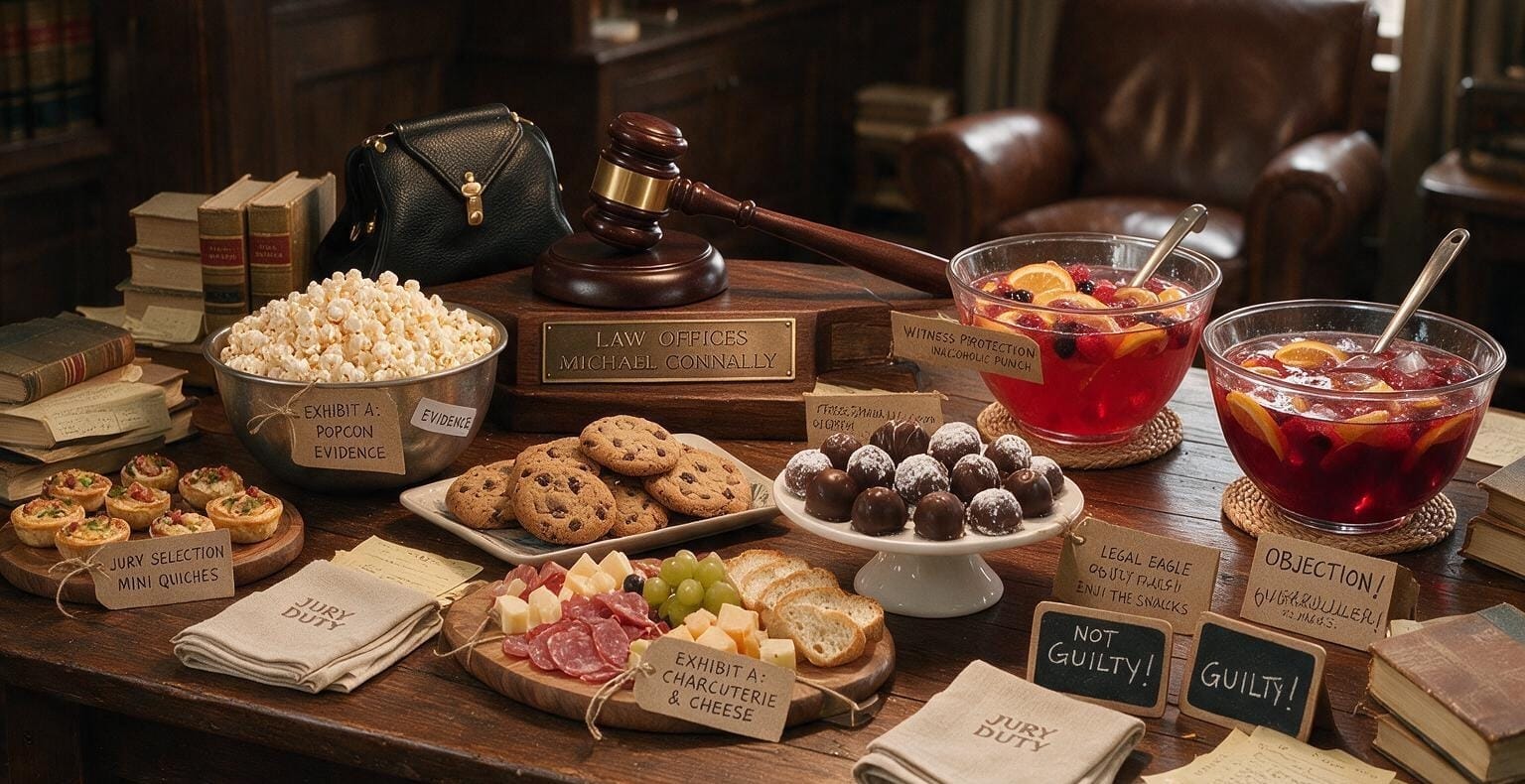
Exhibit A: The Snack Table
Label appetizers, desserts, or drinks with sly courtroom tags so the refreshments feel like part of the game. A bowl of popcorn becomes evidence; a tray of cookies becomes a testimony to good taste.
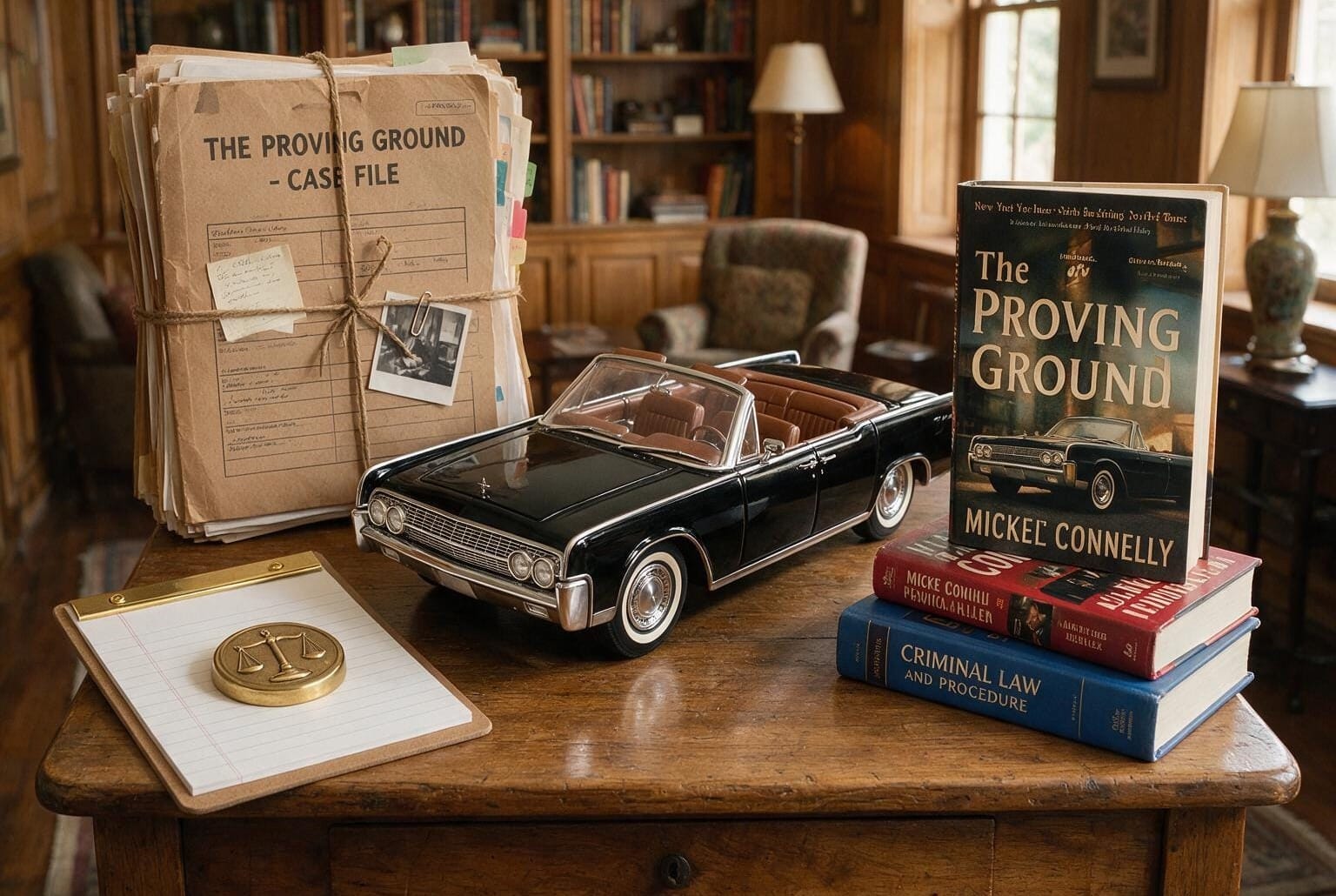
The Lincoln in the Library
Set up a small display with a vintage toy Lincoln, a car-shaped centerpiece, or even a printed image of a classic Lincoln Continental to nod to Mickey Haller’s signature wheels. You could place it on a side table with a few legal pads, a “case file,” or a stack of books to make it feel like Haller has just parked outside the meeting and stepped in to argue his next case. It’s a clever way to honor the Lincoln Lawyer identity while giving longtime fans an instant visual connection to the series.
The Gavel at Midnight
Place a small legal accent, such as a gavel, scales, or a courthouse figurine, somewhere prominent on the table or mantel. Even one object like this can anchor the entire room in the novel’s world of law, pressure, and consequence.
The Chatbot Corner
Set up a small side table or display with a laptop, tablet, or printed chatbot-style screen so the room feels like the novel’s AI has entered the conversation. You can make it playful by adding speech bubbles with mock prompts or questions, such as “What happens when code makes the wrong choice?” or “Who is accountable when the machine speaks?” It works especially well as a visual reminder that the book’s conflict begins with a conversation between a teenager and a chatbot.
The Circuit of Consequences
Use a sleek tech-inspired arrangement with cables, glowing LED lights, metallic objects, or printed code-style graphics to suggest the hidden machinery behind the AI world. The idea is to make the decor feel a little futuristic and a little unsettling, as if the room itself were wired into the story’s moral dilemma. This kind of setup helps reinforce the book’s central question: when technology scales quickly, who keeps control of the damage it can cause?

Sunset Over the City of Angels
Create a Los Angeles-inspired corner with warm amber, peach, and deep orange tones that echo a California sunset. You can layer in palm leaves, city-skyline prints, or even a few clean, modern touches that suggest the polished-but-restless energy of LA. This works especially well for The Proving Ground because the novel lives in a city of contrasts: beauty and traffic, glamour and danger, sunshine and wildfire smoke.
- Icebreaker: Exhibit AI (Activity in printable kit)
- Icebreaker: In the Driver's Seat—Lincoln Car Icebreaker Quiz (In printable kit)
- Icebreaker: Judgment Call–AI Edition Activity (In printable kit)
Appetizers
Opening Statement Crostini
Crisp toasted crostini topped with whipped ricotta, roasted cherry tomatoes, and a drizzle of balsamic glaze. Light, polished, and easy to serve, these feel like the perfect first argument for the evening.
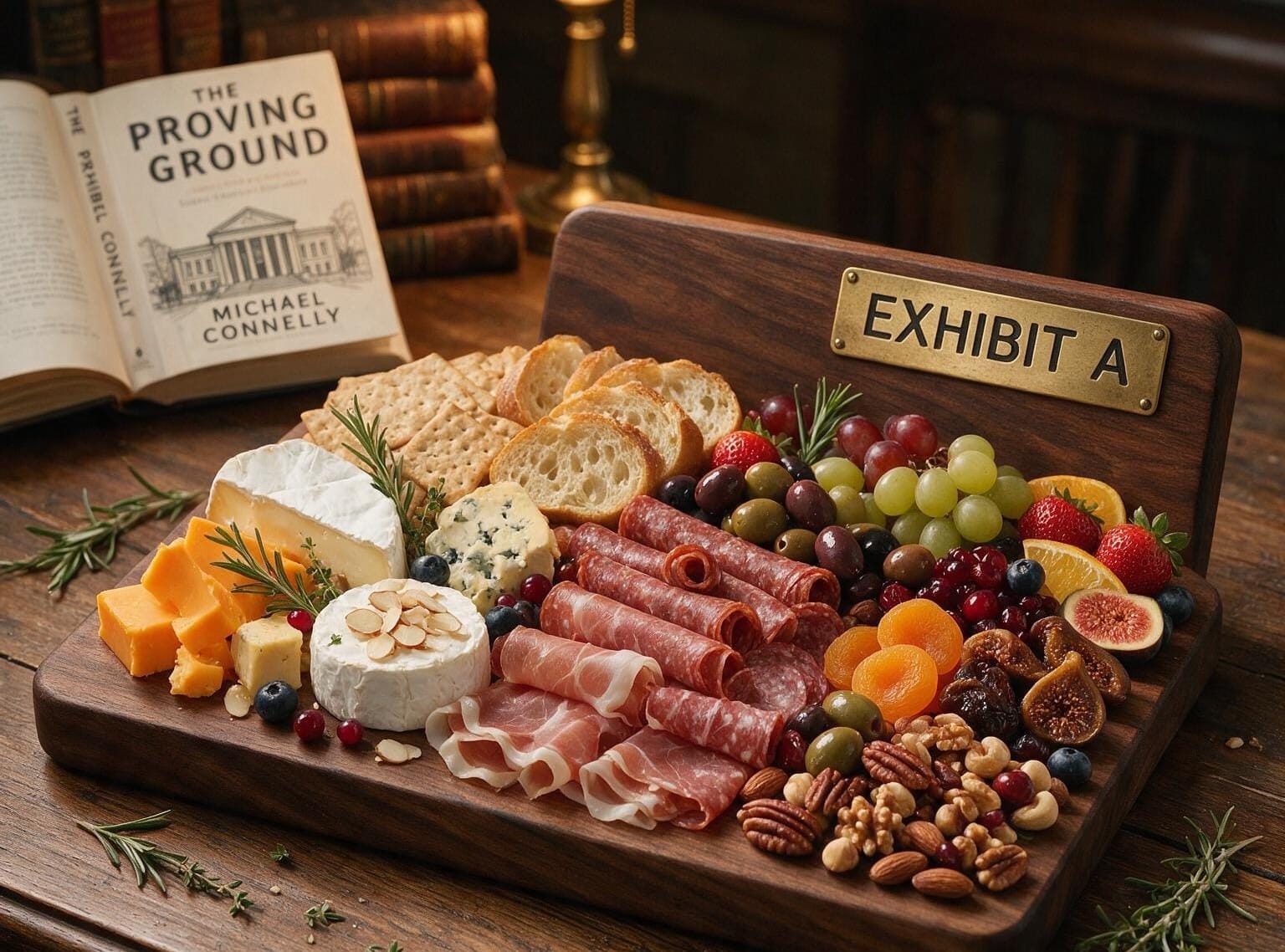
Exhibit A: Charcuterie
A well-curated board of cheeses, cured meats, olives, nuts, and fruit arranged with deliberate precision. It is equal parts elegant and strategic, just like a case being built piece by piece.
Sidebar Stuffed Mushrooms
Savory mushrooms filled with herbed cheese, breadcrumbs, and garlic. Bite-sized and rich, they make a smart starter for a book club that likes to linger over conversation.
Entrees
Verdict Pasta
A hearty pasta dish, such as penne with marinara, roasted vegetables, or chicken, served in a big family-style bowl. Comforting and substantial, it gives the table the feeling of a meal that means business.
The Lincoln Lane Chicken
Herb-roasted or grilled chicken served with a bright lemon sauce, rice, or potatoes. The dish feels classic and steady, a fitting nod to Mickey Haller’s controlled, no-nonsense style.

High-Stakes California Bowls
Grain bowls with grilled salmon, avocado, citrus, greens, and a light vinaigrette. Fresh and modern, these bowls echo the novel’s Los Angeles setting and its contemporary edge.
Desserts
Final Argument Brownies
Rich chocolate brownies cut into neat squares and served with a dusting of powdered sugar. They are simple, persuasive, and hard to refuse.
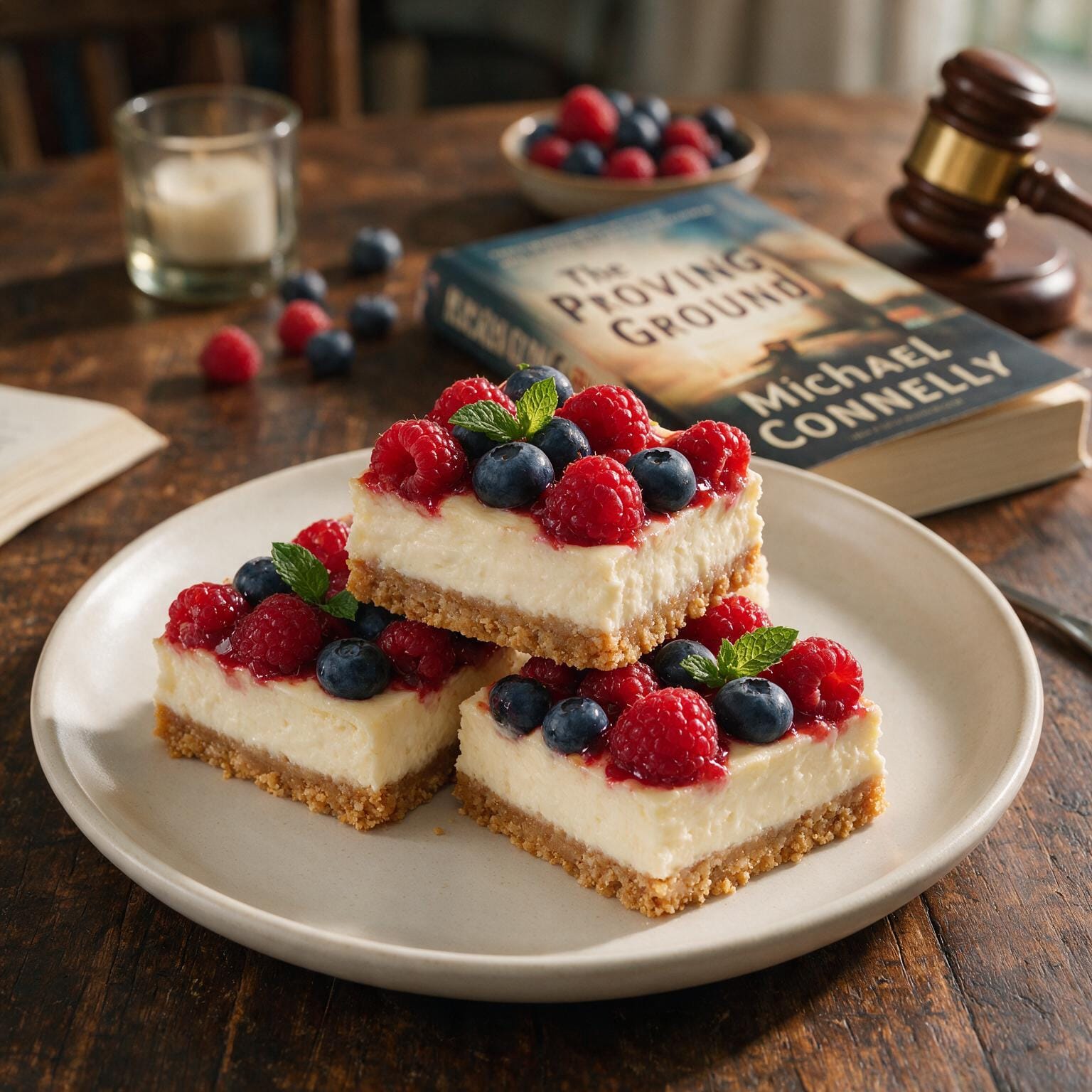
Reasonable Doubt Cheesecake Bars
Creamy cheesecake bars with a graham cracker crust and berry topping. The layered texture makes them feel just a little more dramatic than an ordinary dessert.
Closing Bell Cookies
Classic sugar or chocolate chip cookies served on a platter at the end of the meal. Familiar and satisfying, they signal that the discussion is winding down without losing warmth.
Beverages
Motion for Mocktails
A citrusy nonalcoholic drink with sparkling water, fruit slices, and mint. Fresh and lively, it keeps the atmosphere bright while still feeling polished.
Gavel Ginger Fizz
Ginger ale or ginger beer mixed with lime and served over ice. The drink has a little bite to it, which makes it a fitting match for a tense legal thriller.
Chamber of Chardonnay
A crisp white wine that pairs nicely with lighter appetizers and California-style dishes. It gives the gathering a relaxed but refined book-club feel.
Get Michael Connelly Books
Michael Connelly delivers gripping, character-rich crime and legal thrillers that blend razor-sharp plotting, moral complexity, and timely real-world issues into utterly addictive page-turners.
Bookshop.org was created as a socially conscious alternative to Amazon, with the goal of helping local, independent bookstores thrive. This is why Readers With Wrinkles supports their efforts. Please join us in this effort by purchasing your next read here.
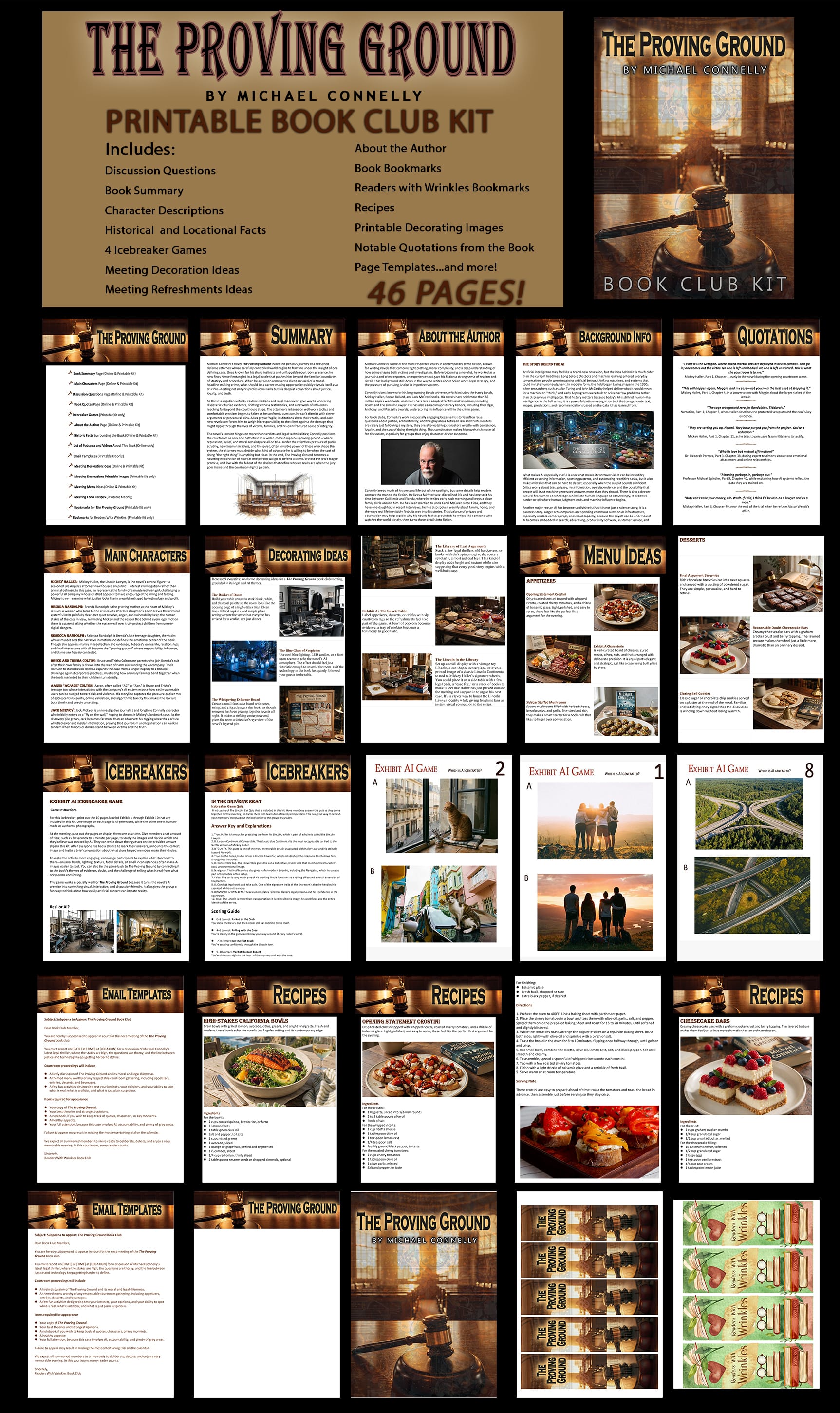
The Proving Ground printable BOOK CLUB KIT
The RWW book club kits provide everything you need to organize a great meeting with insightful discussions. These resources simplify book club preparation with character lists, book quotes, refreshment suggestions, recipes, and carefully prepared book club questions!
Comments