
If you love watching bookish history happen in real time, today is your day. The 2026 Pulitzer Prize for Fiction is being announced this afternoon, and somewhere a handful of authors are pretending to be “totally calm” while refreshing the Pulitzer site every 30 seconds. Why should you care? Because this is one of the rare moments when the hushed act of reading collides with live drama, surprise winners, and at least one collective gasp across literary social media groups.
How to watch today’s announcement
The Pulitzer Prizes are being announced via livestream today at 3 p.m. Eastern (2 p.m. Central, if you’re watching with me in real time). The official video is hosted by the Pulitzer organization, and it will cover all categories—journalism, books, drama, and music—but we’re here for fiction.
You can watch the ceremony here:
The official Pulitzer livestream on YouTube: [2026 Pulitzer Prize Announcement Livestream YouTube]
The Pulitzer site’s “watch it here” page includes an embedded video and information about past winners and finalists. The 2026 Pulitzer Prize Announcement pulitzer
It’s not a long spectacle—think brisk press conference rather than Oscars—but there’s a particular thrill in hearing the words “The winner in fiction is…” and realizing that your next reading obsession has just been launched into the stratosphere.
What the Pulitzer for Fiction actually rewards
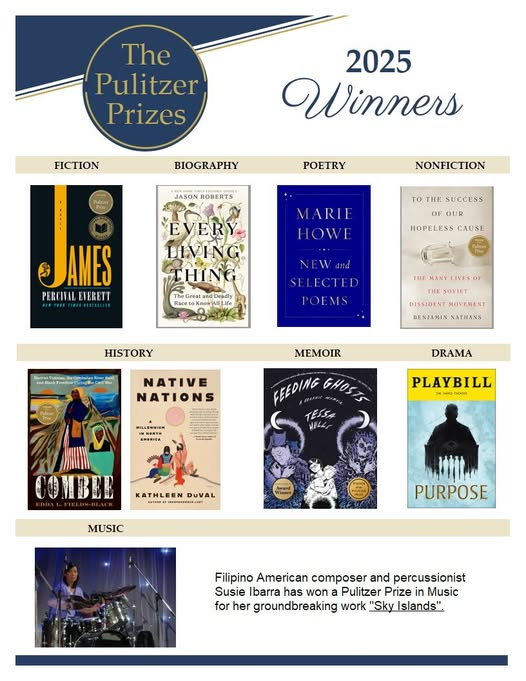
Under all the hype, the Pulitzer for Fiction is pretty specific about what it’s looking for. The prize goes to “distinguished fiction by an American author, preferably dealing with American life,” for a book published in the previous calendar year. That means this year’s award is looking back at 2025’s novels and story collections, not something that just dropped last week.
Behind the scenes, books are formally submitted (often by publishers), and a jury of writers, critics, and scholars reads through the eligible titles and forwards a small group of finalists to the Pulitzer Board. The board then chooses one winner—sometimes aligning with critical buzz, sometimes swerving delightfully left and picking the book everyone “meant to get to.” It’s not about popularity, sales, or vibes alone; it’s about craft, thematic depth, and how powerfully a work engages with the messy, layered thing we call American life.
Also important: the list of finalists is not rolling out ahead of time. Finalists are announced only at the same moment as the winners—no longlist, no shortlist, no months of drip-fed suspense. Before that announcement, everyone is guessing in the dark, which is half the fun and all the chaos.
Why the secrecy around finalists matters
There’s something almost old-fashioned about the fact that the Pulitzer doesn’t tease its fiction finalists for weeks in advance. Until the ceremony, all we know is that a jury has done its homework and passed along a set of “nominated finalists” to the board; those names only go public once the winners are read out, category by category.
The result is this weirdly pure suspense. No betting on an official shortlist, no social‑media campaigns yelling “justice for X!” based on leaked noms. Just a lot of passionate readers and critics making educated guesses—and then either basking in vindication or scrambling to buy the surprise winner five minutes after the announcement. If you’ve ever wanted to feel like you’re at a very nerdy sporting event, this is your moment.
My predictions (from 5 to 1)
Are these guaranteed? Absolutely not. Will I still rank them with ridiculous confidence? Of course. Here’s my personal prediction ladder for the Pulitzer Prize for Fiction, starting with a long shot and climbing up to “I will be doing a happy dance if this happens” territory.
A Guardian and a Thief by Megha Majumdar
On paper, A Guardian and a Thief sounds like catnip for the Pulitzer jury: morally thorny, politically awake, yet anchored in intimate human stakes. Its mix of crime, migration, and responsibility feels very current, and the title alone suggests that the line between protector and predator might be thinner than we’d like to admit. I have it in fifth place only because the field is brutally strong this year; in another year, this kind of ambitious, socially charged novel might be a frontrunner.
If the Board wants something that interrogates power while remaining readable, don’t be surprised if this one pops up among the named finalists.
The Correspondent by Virginia Evans
If the Pulitzers love anything, it’s a novel that stares straight at the news and asks, “What is this doing to us?” The correspondent seems built for that: a story orbiting around journalism, truth‑telling, and the emotional cost of witnessing the world’s worst moments for a living. The book has been popping up on multiple prediction lists, which suggests it’s earned both critical respect and that intangible “this feels important” glow. Read my full review here.
Why only fourth? My hunch is that while it’s timely and thematically rich, the board may lean toward books that push a little harder on innovative form or voice this year. Still, if the winner turns out to be a novel about the stories we tell and who gets to tell them, I won’t be shocked to see The Correspondent at the podium.
Flashlight by Susan Choi
Flashlight has serious "jury-favorite" energy: formally inventive, psychologically intricate, and unafraid to get weird in the best way. Susan Choi has a reputation for smart, structurally daring fiction, and that kind of risk-taking has appealed to the Pulitzer in the past, especially when it’s paired with emotional heft rather than cleverness for its own sake.
I’m slotting it in third because it feels like the perfect finalist: a book that critics adore, that pushes the novel form a bit, and that readers love to argue about. If it wins, I’ll happily eat my bracket; if it “only” lands as a finalist, it will still get the bump in readership that a Pulitzer nod brings. Read the full review here.
Buckeye by Patrick Ryan
Oh, Buckeye. This is the one that keeps turning up in prediction videos, reading challenges, and breathless text messages between book friends. Patrick Ryan’s novel has that classic Pulitzer combination: specific in setting yet sweeping in emotional reach, rooted enough in American life to feel grounded but expansive enough to resonate widely.
It’s the book I can most easily picture people handing around for years after today’s announcement, saying, “Have you read this yet?” I’m putting it in second place because it feels like the “consensus” choice—beloved, sturdy, thematically rich—which sometimes wins and sometimes gets edged out by something stranger. If Buckeye is called as the winner, it will be one of those deeply satisfying "Yes, that makes sense” moments. Read my full review here.
The Antidote by Karen Russell
My top prediction—and the one I’ll be semi‑dramatically clutching my metaphorical pearls over—is The Antidote. Karen Russell already has a reputation for off‑kilter, fabulist fiction that still slices straight to the heart of contemporary anxieties, and that blend can be irresistible when a prize committee wants something both imaginative and serious. The title suggests a cure, poison, or maybe the uncomfortable truth that the thing we think will save us comes with side effects we never planned for.
Why do I think it might win? It feels like a book that can hold a lot: climate dread, capitalism, family loyalty, and the surreal ways we cope when the world doesn’t make sense. If the Board is looking for a novel that’s formally confident, emotionally resonant, and unmistakably about American life in this strange era, The Antidote checks every box in a pen so dark it might as well be a permanent marker. Read my full review here.
Why you might want to watch (or at least care who wins)
Maybe you don’t usually tune into prize announcements live. Totally fair. But the Pulitzer for Fiction is one of the rare awards that can actually change a writer’s life overnight—and shift what whole classrooms, book clubs, and libraries pick up next. Past winners have gone from “people in my niche know this” to “everyone’s aunt is reading it on vacation and texting the group chat about it.”
If you’re a reader, watching the announcement is like getting a curated reading list from a panel of very opinionated, very well‑read strangers who spent a year doing the homework for you. If you’re a writer, it’s a reminder that the kind of deep, careful, ambitious work that doesn’t always dominate bestseller lists can still be celebrated in a big public way. And if you’re just Pulitzer‑curious, there’s something delightful about seeing which predictions land, which ones miss, and which book suddenly skyrockets from “I’ve heard of it” to “I guess I’m reading this next.”
So, will The Antidote take it? Will Buckeye pull ahead? Will the board zag and choose something none of us saw coming? There’s only one way to find out in real time.
Will you be watching live today, or are you more of a “catch the winner and curl up with the book later” reader?
"Put it before them briefly so they will read it, clearly so they will appreciate it, picturesquely so they will remember it, and above all, accurately so they will be guided by its light." ~Joseph Pulitzer

Comments