
- Date Published:
April, 2026 - Length:
384 pages—Listening Time: 12 hours 59 minutes - Genre:
NonFiction, Biography - Setting:
November, 2019 and subsequent years; London, United Kingdom - Awards
New Yorker Best Books of the Year (Best of the Year So Far) Nonfiction 2026; Sunday Times Number One Bestseller 2026; New York Times Bestseller 2026 - Languages:
English, German - Sensitive Aspects:
Graphic description of a real-life death by balcony jump and drowning; suicidality and contested suicide ruling by authorities; possible assault and physical violence against a teenager by criminal associates; depictions of drug dealing, gangland debt collection, extreme violence in the London underworld; references to suspected murder and unprosecuted violent crimes; discussion of police and coroner failures; themes of financial crime, dirty money, and exploitation tied to oligarchs and London’s wealth inequality; family trauma and unresolved grief; portrayals of racist or xenophobic attitudes around immigration, oligarch wealth, and London’s class stratification; drug use; and ethical questions around true crime and narrative journalism - Movie
London Falling by Patrick Radden Keefe is being adapted into a television series. A24 acquired the screen rights to turn the book into a TV show. - Recommended for Book Club:
Yes!

Let me confess something right up front: when I picked up London Falling, I knew basically nothing about the story Patrick Radden Keefe was about to tell. I thought I was in for “serious nonfiction about geopolitics, probably grim, maybe dry.” Instead, I found myself in the middle of a high-stakes thriller about how London quietly became one of the world’s favorite playgrounds for dirty money, Russian oligarchs, and crimes that happen in plain sight while the authorities politely avert their gaze.
And I don’t mean crime in the abstract. I mean actual Russian-linked killings and financial schemes on British soil that were investigated just enough to look responsible, then quietly shelved. I learned things I didn’t even know I didn’t know—about how many suspicious deaths with potential Russian connections were brushed off as suicides or accidents, and how the British state often seemed more worried about upsetting Moscow or deterring foreign investment than about protecting its own citizens. If you’ve ever thought, “Surely someone is in charge of this,” this book will gently, methodically dismantle that comforting illusion.
Keefe walks you through a London where dazzling townhouses and glossy law firms double as stage sets for a darker story: hundreds of billions of dollars in potentially illicit funds wash through UK banks every year, much of it linked to organized crime and kleptocratic regimes. The National Crime Agency itself has warned that money-laundering at this scale is a “strategic threat” to the UK’s economy and reputation—and yet the system keeps humming along, because it’s lucrative, complicated, and, frankly, useful to a lot of powerful people. That tension—between public statements of outrage and private tolerance—is one of the book’s most unsettling threads.
For Readers with Wrinkles followers who love a good character-driven narrative, London Falling delivers that too, just in nonfiction form. You meet oligarchs who treat London as a safety deposit box for their fortunes and a stage for their feuds. You meet British “professional enablers”—bankers, lawyers, PR gurus—who help smooth the edges of reputations and transactions, sometimes aggressively silencing journalists who get too close. You see a capital that wants to be both a guardian of democracy and the global concierge for anyone with enough cash, no questions asked. It’s messy, human, and quietly horrifying.
What makes this a significant historical read is the way Keefe shows London not just as a backdrop but as a central character in the story of 21st-century kleptocracy. Almost 40% of global dirty money is estimated to flow through the City of London and related offshore hubs; that’s not a side note, that’s a structural choice. Policy decisions going back to the Thatcher-era “Big Bang” and beyond created a financial environment so open—and often so weakly enforced—that London became the world’s dirty-money capital, even as officials publicly insisted there’s “absolutely no place for dirty money” in the UK. The gap between the rhetoric and the reality is the beating heart of this book.
So if you’re wondering whether London Falling is “too niche” or “too political” for your TBR, I’d argue it’s the opposite. This is the kind of narrative nonfiction that quietly reorients how you see headlines, history, and even those glossy London real estate photos in your Instagram feed. By the time you’re done, you won’t just have read about Russian crime being allowed to happen in London—you’ll understand the ecosystem that makes looking the other way feel, to the people in charge, like the easiest option. And once you see it, you can’t unsee it.

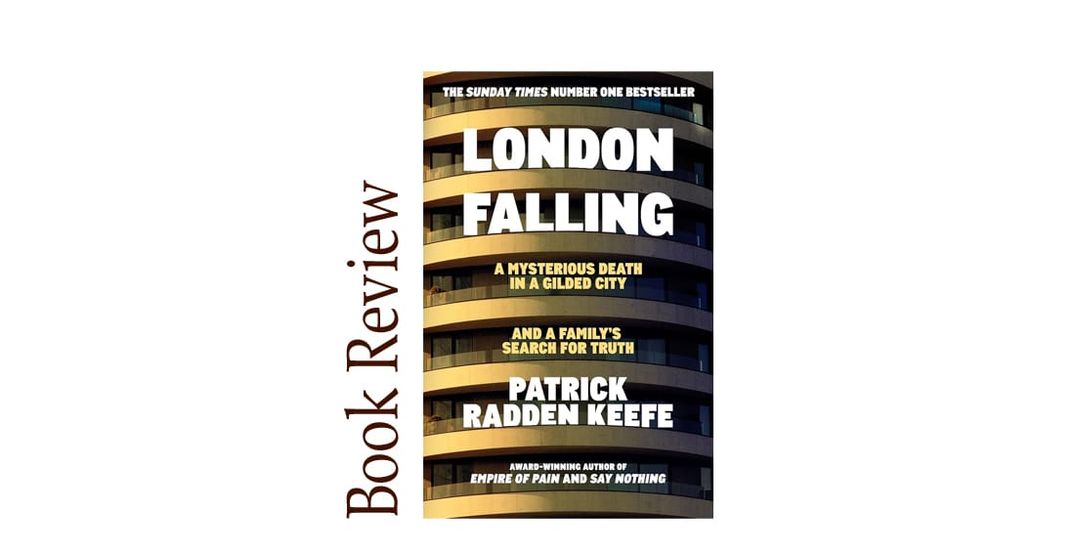
London Falling starts with a single, haunting moment: a young man steps out onto the balcony of a luxury riverside apartment in London, across the Thames from the MI6 headquarters, and falls to his death in the cold, dark water below. From there, Patrick Radden Keefe pulls the camera back and asks the questions the official investigation never really answered—who was this teenager, how did he end up in that glittering building, and what kind of city makes a story like his possible?
At the book’s core is Zac Brettler, a 19-year-old from a thoughtful, middle-class, Anglo-Jewish family in Maida Vale, raised by parents who survived, and were shaped by, some of the darkest chapters of 20th-century European history. As he grows up, Zac becomes obsessed with wealth, status, and the glamorous danger of gangster films, gradually reinventing himself as someone who might plausibly belong to London’s ultra-rich underworld. He spins elaborate stories about being connected to Russian oligarchs and foreign business empires, slipping into a persona that feels part Walter Mitty fantasy, part self-directed social experiment.
Keefe follows Zac into the orbit of two much older men: Akbar Shamji, a polished but financially shaky entrepreneur, and Verinder “Indian Dave” Sharma, a violent debt collector with deep ties to the criminal world. Both men see Zac as a potential conduit to immense, shadowy wealth, and both are with him on the night he dies at Riverwalk, a tower that embodies London’s transformation into a playground for opaque global capital. The book traces how their relationships with Zac evolve, how he moves between parental home and high-rise fantasy, and how, bit by bit, he’s drawn into a world that’s much more dangerous than the movies he loves.
Around that intimate story, London Falling builds a broader portrait of the city itself. Keefe shows how London reinvented its riverfront from docks and factories into luxury developments owned through offshore shell companies, often sitting eerily empty—“ghost mansions” for foreign money. He uses Zac’s path as a way into the larger ecosystem of London’s underworld: drug-fueled violence, speculative real estate schemes, professional “fixers,” and institutions that seem curiously willing to leave hard questions unanswered.
The investigation into Zac’s death—police interviews, surveillance footage, and forensic details—runs through the book like a cold current, but the focus is less on solving a tidy mystery than on revealing how many things can go wrong and go largely unchallenged when money, secrecy, and vulnerability collide in one gilded city. It’s as much about a family’s search for truth and meaning as it is about crime, and by the end, you’re left with a story that feels personal, political, and profoundly unsettling—without needing any big twist to make its point.

This one got under my skin in a way I wasn’t expecting. I picked it up thinking, “Okay, smart true crime, I’ll learn a bit about London and move on.” Instead, London Falling shifted how I think about cities, money, parenting, and even how we tell stories about crime. Here are the main reasons I think Readers with Wrinkles folks should read it—with a quick note under each.
It reads like a novel, hits like history
Keefe gives you a tight, character-driven narrative that feels like literary fiction: a flawed, searching young man; complicated parents; a morally slippery supporting cast; a city that acts like a character. You’re turning pages for the story, but you walk away with a deeper understanding of contemporary London, kleptocracy, and the way “respectable” systems quietly enable very unrespectable things.
It’s a devastating portrait of a family
The book isn’t just “crime in the city”; it’s about parents who have already lived through historic trauma, watching their son drift into a world they don’t understand. Keefe treats them with real emotional intelligence—no voyeurism, no cheap drama—so you feel their bewilderment and grief without the book ever tipping into melodrama.
It shows how fantasy and capitalism collide
Zac’s obsession with money, status, and gangster aesthetics feels uncomfortably familiar, like Instagram hustle culture meets Scorsese. The book asks, what happens when a teen’s fantasies don’t stay online or in their head but find just enough real-world oxygen in a city built to flatter wealth and encourage performance?
It exposes the “respectable” criminal ecosystem
We’re used to thinking of crime as something that happens in alleys and back rooms; Keefe shows you the polished version—luxury towers, lawyers, fixers, opaque deals, and people who genuinely believe they’re just “doing business.” If you enjoy digging into systems rather than just individual bad guys, this is catnip: the book quietly maps how many people need to look the other way for one “mysterious death” to stay mysterious.
It’s a masterclass in narrative nonfiction craft
For those of us who write online, this is a textbook in disguise: scene work, pacing, character development, strategic withholding, and ethical interviewing. You can feel Keefe constantly balancing access and empathy—staying skeptical without turning cruel, and staying humane without going soft.
It reframes London as a moral landscape
If you’ve ever romanticized London’s skyline, this book doesn’t tell you you’re wrong—it just layers in what’s happening behind those glass facades. You see how policy decisions, real estate trends, and global finance shape a city where a teenager can slip into dangerous circles simply by wanting to belong to its shiniest version.
It respects complexity—no neat, comforting answers
There’s no tidy “and here’s exactly what happened and who’s to blame.” Instead, you get ambiguity, conflicting testimonies, bureaucratic inertia, and human frailty. That makes the book frustrating in the best way: you’re forced to sit with uncertainty, which is exactly what Zac’s family had to live with.
It’s the kind of book that changes how you read the news
After London Falling, headlines about “unexplained deaths,” “foreign money in real estate,” or “government hesitancy to act” feel different. You start to notice the patterns: how a story like Zac’s can be officially “resolved” without really being understood, and how often that might be happening around us.

Get Patrick Radden Keefe Books
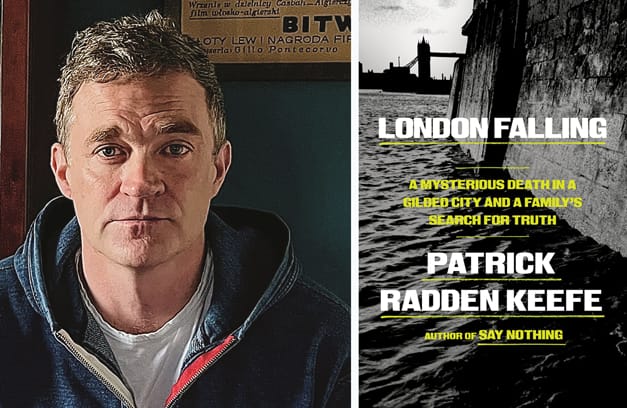
Dive into Patrick Radden Keefe’s books—meticulously reported true crime and narrative nonfiction that read like propulsive literary thrillers, exposing the hidden worlds of power, corruption, and consequence.
Bookshop.org was created as a socially conscious alternative to Amazon, with the goal of helping local, independent bookstores thrive. This is why Readers With Wrinkles supports their efforts. Please join us in this effort by purchasing your next read here.

Here is a list of books that have the same "feel" as London Falling that you might enjoy.
Say Nothing by Patrick Radden Keefe
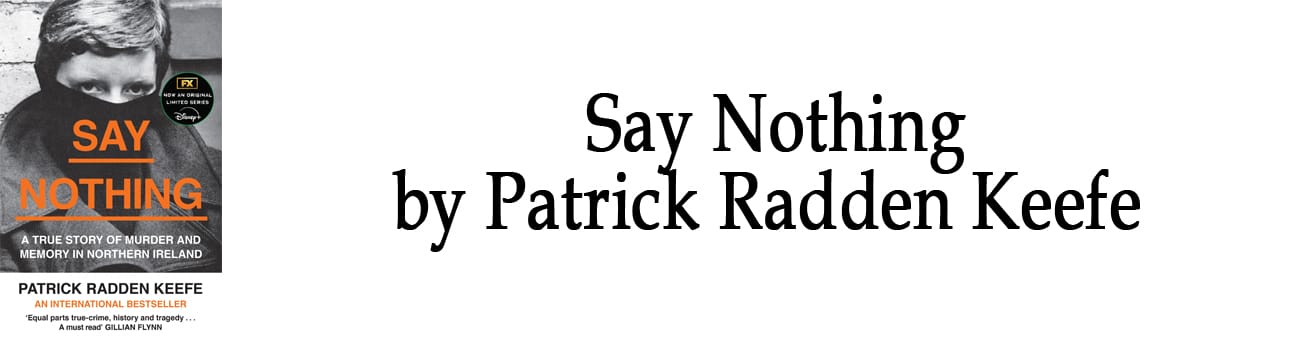
A narrative investigation into a notorious disappearance during the Troubles in Northern Ireland, following one family and a web of paramilitary, political, and personal betrayals. Like London Falling, it blends true crime with political history and moral ambiguity, using one mysterious act of violence to open up an entire hidden world.
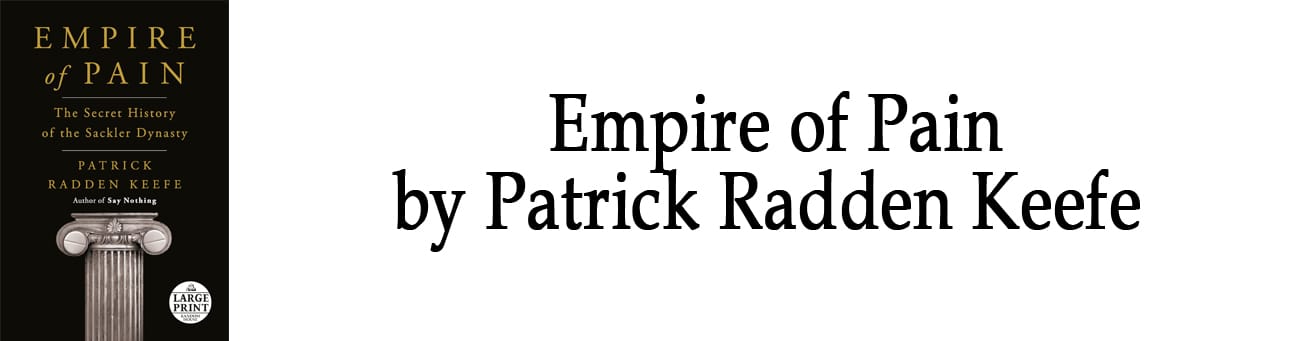
Empire of Pain by Patrick Radden Keefe
A sweeping history of the Sackler family and their role in the opioid crisis, following how a respected dynasty helped unleash a public health catastrophe. It’s similar to London Falling in its mix of meticulous reporting, character-driven storytelling, and its focus on how “respectable” institutions quietly enable harm.
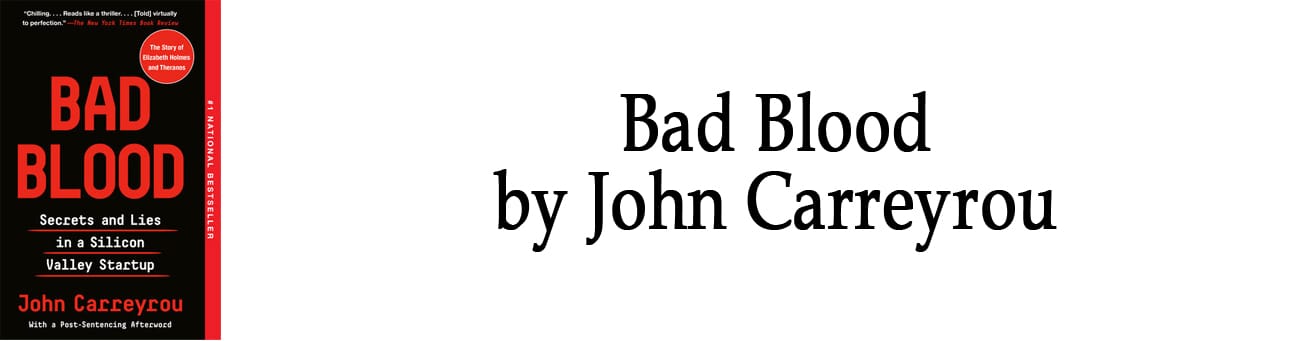
Bad Blood by John Carreyrou
The inside story of Theranos and Elizabeth Holmes, charting how a biotech mirage fooled investors, patients, and much of Silicon Valley. Like London Falling, it reads like a thriller while exposing a culture that rewards image, secrecy, and ambition over truth, and shows how systems fail to ask hard questions.
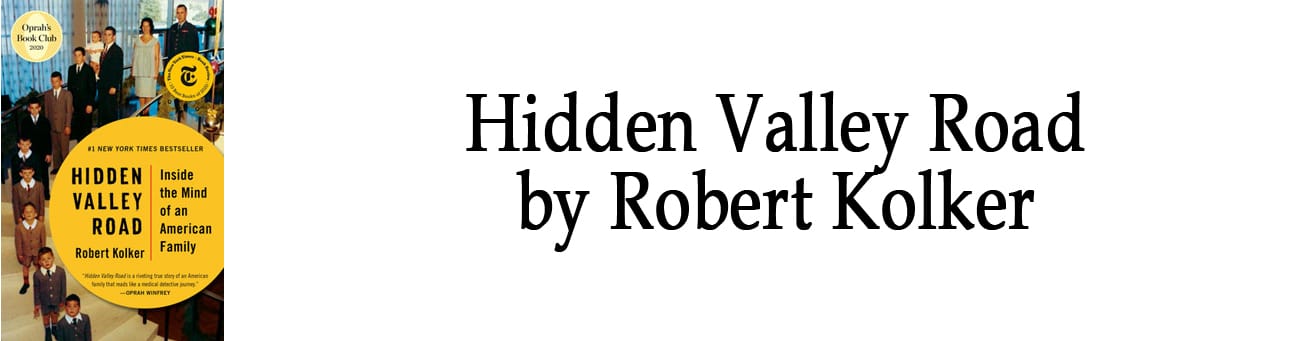
Hidden Valley Road by Robert Kolker
A deeply reported portrait of a Colorado family with twelve children, six of whom are diagnosed with schizophrenia, interwoven with the history of psychiatric research. It resembles London Falling in the way it centers a single family’s private tragedy while zooming out to show the broader scientific and social landscape around them.
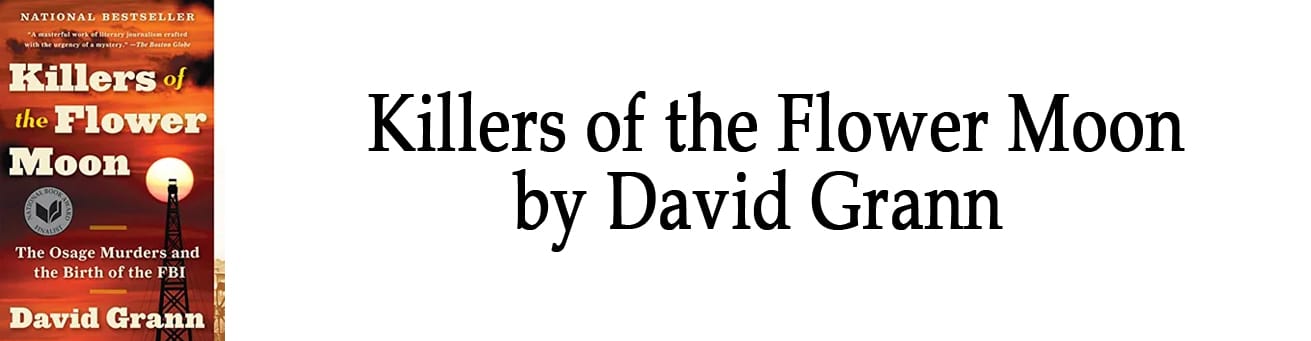
Killers of the Flower Moon by David Grann
A reconstruction of the murders of Osage Nation members in 1920s Oklahoma and the birth of the FBI, revealing a network of greed, racism, and institutional complicity. Like London Falling, it takes a specific case and shows how it’s inseparable from the larger system—money, power, and a state willing to look away until forced to care.
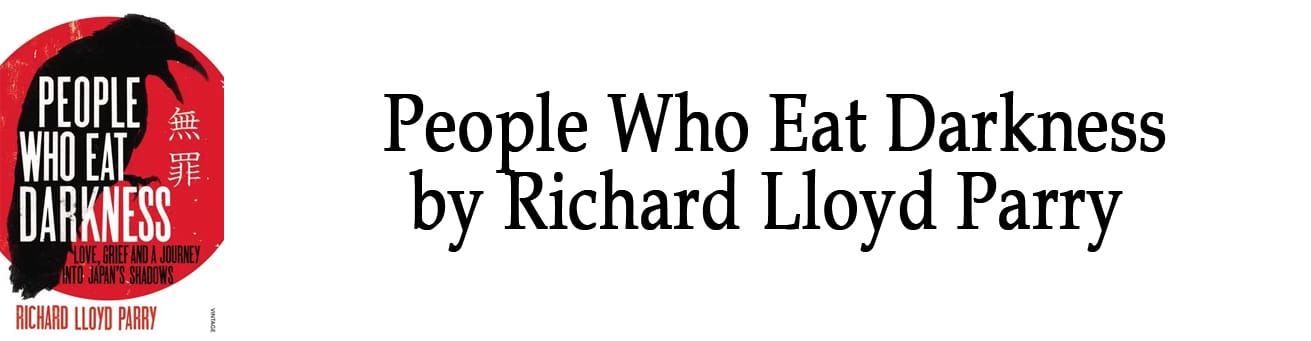
People Who Eat Darkness by Richard Lloyd Parry
An investigation into the disappearance and murder of Lucie Blackman in Tokyo, threading together her life, the nightlife economy, and Japanese policing and media. It echoes London Falling in its focus on a young person abroad, murky adult worlds, and the way a city’s culture and institutions shape the handling of one haunting crime.
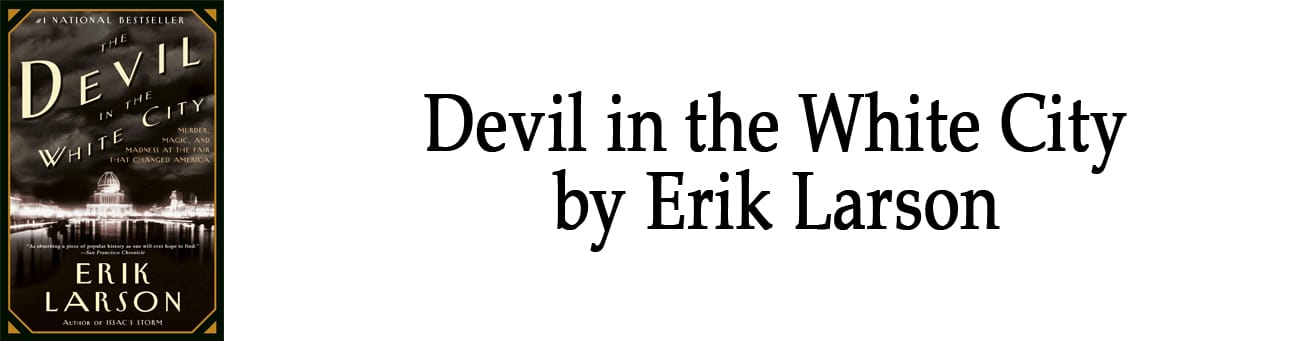
Devil in the White City by Erik Larson
A dual narrative about the building of the Chicago World’s Fair and a serial killer who used the fair’s energy and anonymity to prey on victims. This one is like London Falling in how it turns a city into a character—a place whose architecture, ambition, and spectacle create the perfect backdrop for hidden violence.
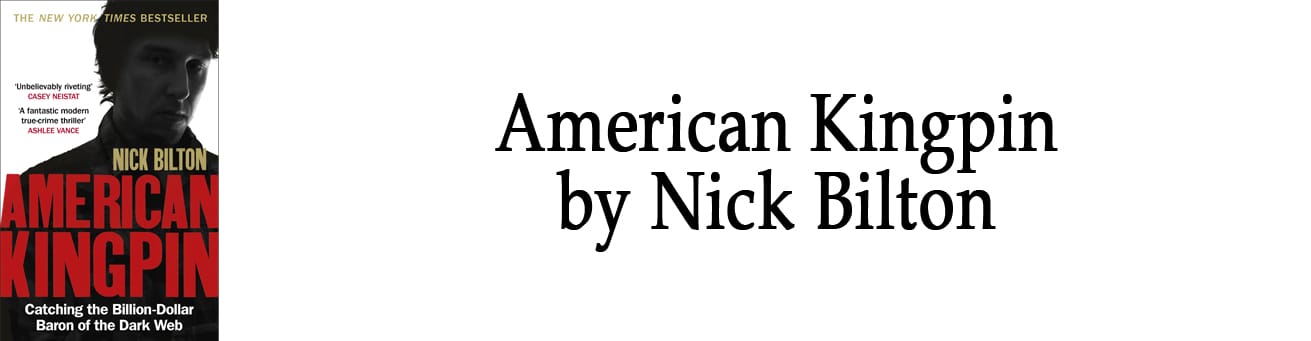
American Kingpin by Nick Bilton
The rise and fall of Ross Ulbricht, creator of Silk Road, and the sprawling online marketplace for drugs and illegal goods that grew around him. It shares London Falling’s strengths: a propulsive, character-focused narrative, rich reporting, and a sharp look at how modern systems (in this case, the internet) let crime flourish in plain sight.
Paid Subscriber Perk!
Love the book we just reviewed? Paid subscribers can now download an exclusive printable list of books with a similar vibe—perfect for planning your next read or curating your book club’s picks. It’s a handpicked, beautifully designed list guide you won’t find anywhere else.
Unlock your next favorite reads—become a paid subscriber today to get instant access to these printable book lists!
Comments