


In this kit:
- Book Summary Page (Online & Printable Kit)
- Main Characters Page (Online & Printable Kit)
- Discussion Questions Page (Online & Printable Kit)
- Book Quotes Page (Online & Printable Kit)
- Icebreaker Games (Printable Kit only)
- About the Author Page (Online & Printable Kit)
- Historic Facts Surrounding the Book (Online & Printable Kit)
- List of Podcasts and Videos About This Book (Online only)
- Meeting Decoration Ideas (Online & Printable Kit)
- Meeting Decorations Printable Images (Printable Kit only)
- Meeting Menu Ideas (Online & Printable Kit)
- Meeting Food Recipes (Printable Kit only)
- Bookmarks for The Calamity Club (Printable Kit only)
- Bookmarks for Readers With Wrinkles (Printable Kit only)
Kathryn Stockett's novel The Calamity Club unfolds the audacious and heartbreaking story of a band of women who refuse to be swallowed whole by poverty, hypocrisy, and a society determined to keep them in their place. Set in Oxford, Mississippi, in 1933—the bleak peak of the Great Depression—the story begins in the Lafayette County Orphan Asylum, a crumbling institution where mold climbs the walls and the "unadoptable" older girls are treated as afterthoughts rather than children. Among them is eleven-year-old Meg LeFleur, a sharp-witted, fiercely spirited girl who has been exiled from the classroom by the orphanage's cruel chairlady and left to spend her days alone in a damp, airless office, puzzling over why her mother never came home on that Christmas Eve two years ago.

Into this world steps Birdie Calhoun, a twenty-four-year-old unmarried woman from a struggling Delta farming family who has traveled to Oxford to appeal to her socialite sister, Frances, for help. Frances has married into wealth and position, and Birdie hopes to convince her to share some of that security with their ailing family back home. But as Birdie volunteers at the orphanage and grapples with its falsified finances, she is horrified by the conditions Meg and the other girls endure. Without authorization, she and Meg secretly scrub the walls, paint the grim office a defiant robin's-egg blue, and tear the boards from a sealed window to let in light and air. It is the first act of resistance in what will become something far bolder.
As Frances's seemingly charmed life begins to crack and reveal its lies—and as the wider net of corruption, cruelty, and institutional failure tightens around the women of Oxford—Birdie encounters Charlie, a woman with little left to lose and a dangerous idea forming in her mind. Together with an unlikely and wonderfully mismatched sisterhood of spinsters, sex workers, and orphans, the three devise an audacious scheme to reclaim what society has denied them. The Calamity Club is a riotous, wrenching, deeply compassionate story about women who decide that calamity, wielded together, can be the beginning of something new.
Meg Lefleur
Meg is an eleven‑year‑old orphan at the Lafayette County Orphan Asylum, sharp‑eyed and resilient despite years of abandonment and institutional cruelty. Labeled “feebleminded” by those in power yet reading far above her grade level, she survives through wit, imagination, and a stubborn hope for a real home.
Birdie Calhoun
Birdie is a twenty‑four‑year‑old unmarried woman sent to Oxford, Mississippi, to beg her wealthier sister for money during the Great Depression. Practical, book‑smart, and quietly outraged by injustice, she becomes Meg’s ally and later a key architect and bookkeeper of the Calamity Club.
Charlie Lefleur
Charlie is Meg’s mother, a working‑class woman whose past affair with Dr. Welty Pittman has catastrophic consequences when Garnett Pittman targets her for public “moral” punishment. Branded and sterilized under eugenics laws, she channels her desperation into fierce resourcefulness, founding the Calamity Club as a risky path toward reuniting with her daughter.
Garnett Pittman
Garnett is the powerful chairlady of the Lafayette County Orphan Asylum and a leader in local anti-vice campaigns, the novel’s primary antagonist. Cloaked in Christian respectability, she weaponizes “moral purity” and eugenics to control vulnerable women and children, turning Meg and Charlie into targets of a deeply personal crusade.
Frances Calhoun Tartt
Frances is Birdie’s socially ambitious younger sister, married into the respected Tartt family and desperate to maintain her standing in Oxford society. When her husband’s financial scandal ruins them, she’s forced into the orbit of the Calamity Club, shedding some of her pretenses as she confronts what survival really costs.
Mrs. Viktoria Tartt
Mrs. Tartt is the widowed matriarch of the Tartt family, a woman of strict decorum whose genteel life collapses under economic ruin. Faced with losing everything, she shockingly agrees to host the Calamity Club in her home, transforming from a bridge‑club grand dame into a pragmatic partner in the women’s risky enterprise.
Tom Heidelberg
Tom is Meg’s adoptive father in the wealthy Heidelberg household, a Yale‑educated man whose charm masks deep personal and marital instability. His attempt to use Meg’s adoption to repair his finances and sense of purpose ultimately exposes the moral compromises and emotional fractures in his marriage to Lucille.
Lucille Heidelberg
Lucille is Tom’s glamorous but troubled wife, whose drinking and hunger for status drive much of the tension in Meg’s adoptive home. She initially sees Meg as a means to regain the family allowance and polish her image, revealing how performative “respectability” can coexist with neglect and manipulation.
Welty Pittman
Dr. Welty Pittman is Garnett’s husband and a respected physician whose secret affair with Charlie results in Meg’s birth. His hidden sin becomes the buried engine of Garnett’s rage, turning personal humiliation into a public campaign against “feebleminded” women like Charlie and her daughter.

Kathryn Stockett is an American novelist best known for her breakout debut, The Help, which became a global bestseller and a major motion picture exploring race, domestic labor, and female friendship in 1960s Mississippi. With The Calamity Club, she returns to her home state to tell another historical, character‑driven story centered on women, poverty, and found family during the Great Depression.
Born and raised in Jackson, Mississippi, Stockett grew up surrounded by the region’s complicated history and social hierarchies, influences that shape the Southern settings, class dynamics, and moral conflicts in her fiction. Before becoming a full-time author, she worked in publishing and marketing, experiences that sharpened her ear for voice and her instinct for stories that resonate with a wide general readership.

Stockett’s work is often praised for its vivid, accessible prose and memorable, emotionally rich female characters who navigate systemic injustice with humor and grit. At the same time, her novels invite serious discussion about representation, privilege, and who gets to tell certain stories—making her books especially suitable for thoughtful, mature book clubs.
In The Calamity Club, Stockett leans into themes she has explored before—found family, moral courage, and the collision of public “respectability” with private desperation—while widening her lens to include orphans, sex workers, spinsters, and socialites all caught in the economic freefall of the 1930s. This blend of historical detail and emotionally driven storytelling makes her an ideal author for groups who enjoy both immersive plots and nuanced, ethically complex conversations.
“If you give a girl a taste of fresh air and then take it away, she will grow fierce and wild to get that fresh air back again.”
Speaker: Meg Lefleur (narration/reflection)
Location: Early in the novel, as Meg describes her life at the Lafayette County Orphan Asylum and the cost of losing freedom.
“This slapped-together band of misfits made me feel, for the first time, that I truly belonged. How the hell, I wondered, did I ever get so lucky?”
Speaker: Birdie Calhoun (narration)
Location: Mid‑novel, after the Calamity Club has formed and Birdie begins to recognize the found‑family she’s building with the women and Meg.
“I have been told I tend to overthink things. Well I have known enough people to underthink things and could stand to put a little more thought in their decisions.”
Speaker: Birdie Calhoun
Location: Early to mid‑novel, as Birdie reflects on her habit of questioning everything and on the careless decisions of those around her.
“My entire life’s assignment is to ask questions. Why else are we even here?”
Speaker: Meg Lefleur
Location: Mid‑novel, when Meg begins to push back against the labels put on her and embraces her curiosity as resistance.
“Unfortunately, paint can’t fix what’s rotten down deep, Meg. There is bound to be a life lesson in there somewhere.”
Speaker: Birdie Calhoun
Location: Early to mid‑novel, in a scene where Birdie uses the image of a decaying house to talk about the deeper rot in families, institutions, and society.
“Sometimes you wash the spoon, sometimes the spoon washes you, so be sure and put a apron on.”
Speaker: Flossy (one of the sex workers)
Location: Middle of the book, in the brothel scenes, where Flossy’s earthy humor turns domestic work into a metaphor for how life can knock you around.
“All I’m asking for is a decent view, some hard candies, and something to damn read. Is that too much to ask for in life?”
Speaker: Mrs. Viktoria Tartt
Location: Mid‑novel, when Mrs. Tartt’s world is collapsing and she distills her longings down to small comforts and dignity.
“There were Christian people and there were good people but the two didn’t necessarily always overlap.”
Speaker: Birdie Calhoun
Location: Mid to late novel, as Birdie reflects on Garnett, the church ladies, and the gap between professed faith and actual kindness.
“In a couple years most those big girls’ll be having one illegitimate baby after the next, just like their mamas.”
Speaker: Garnett Pittman
Location: Early in the book, in the orphanage context, revealing Garnett’s eugenic, classist contempt for the orphan girls and their mothers.
“My mama left me on purpose and mamas do not come back.”
Speaker: Ava (Meg’s friend at the orphanage)
Location: Early novel, in the orphan scenes, as Ava forces Meg to repeat these words to confront the reality of her abandonment.

Orphanages in Depression‑Era Mississippi
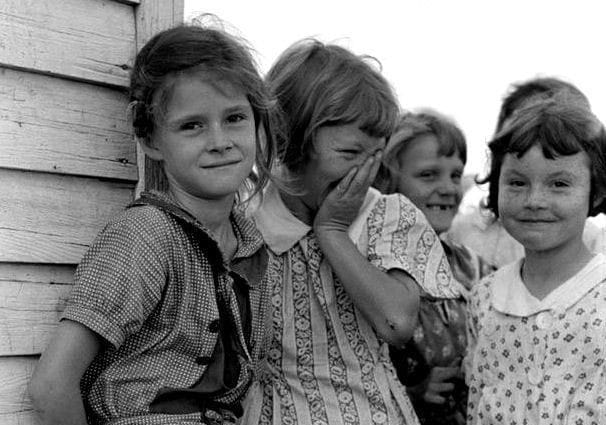
The Calamity Club is set in 1933 Oxford, Mississippi, at the height of the Great Depression, when orphanages and “asylums” were overcrowded and underfunded institutions that often doubled as labor pools for factories and farms. Children like Meg Lefleur, labeled “unadoptable” or "feeble-minded," could be kept in these facilities for years, isolated, undereducated, and treated more as burdens or future workers than as children with rights and needs.
In the novel, the Lafayette County Orphan Asylum reflects this reality: a dilapidated building with a moldy ceiling, overflowing with children and babies waiting for adoption but governed by rigid, punitive rules. Bright, advanced girls are punished for stepping outside their assigned roles, and decisions about their futures are made by local “ladies” and boards rather than by trained child‑welfare professionals. This mirrors historical patterns in which poor and orphaned children, especially girls, were subject to moral judgment and institutional control as much as to care.
Morality Laws and Policing of Prostitution
The book also draws on early‑20th‑century “morality” campaigns that targeted prostitution and so‑called sexual deviance, especially among poor women. In many U.S. jurisdictions, including Mississippi, women suspected of sex work or “promiscuity” could be arrested, tested for sexually transmitted infections, and detained under public‑health or anti‑vice laws. Authorities framed these policies as protecting soldiers, students, and “respectable” citizens from venereal disease and moral corruption, while in practice they criminalized and stigmatized women’s bodies and livelihoods.
In The Calamity Club, Birdie, Charlie, and the women of the brothel confront this double standard: brothels are both condemned and tolerated, and sex workers are policed for disease and for violating norms of female respectability. The novel uses its story to highlight how “good Christian citizens” and anti-vice groups wielded moral rhetoric to regulate poor women’s sexuality while ignoring the demand side—wealthy men, students, and community leaders—who purchased sex.

Eugenics and Sterilization of “Immoral” Women
Stockett explicitly anchors the novel in the era of American eugenics, inspired by real laws that allowed states, including Mississippi, to sterilize people classified as “insane, idiotic, imbecilic, feebleminded, or epileptic.” In practice, these categories often swept in poor women, sex workers, unmarried mothers, and anyone deemed “promiscuous” or morally suspect, blurring medical, social, and religious judgments.
Nationally, court decisions like Buck v. Bell (1927) upheld compulsory sterilization of those labeled “unfit,” giving legal cover to programs that targeted institutionalized people and women accused of sexual immorality. In Mississippi, eugenic thinking fed into broader campaigns to “purify” the population, disproportionately affecting women considered deviant, poor, or of the wrong race.
In the novel, Charlie is arrested on morality charges and sterilized under such laws; this plotline is directly linked to Stockett’s research into Mississippi statutes and their impact on women’s bodies and futures. Her experience shows how the state could permanently strip a woman of the ability to bear children as punishment for poverty, sex work, or perceived promiscuity, even as the same society depended on and profited from her labor.
For book clubs, this historical context opens up a difficult but vital conversation: The Calamity Club is not only about an orphanage and a brothel; it’s also about how law, medicine, and morality once combined to police poor women’s bodies—through institutionalization, anti-vice raids, and forced sterilization—and how those legacies still echo in debates over reproductive rights and the criminalization of sex work today

- Meg is labeled “feebleminded” while clearly intelligent and perceptive. How did you respond to the way adults, institutions, and laws misread and misname her? Where do you see similar dynamics in our world today?
- Birdie and Meg form an unlikely bond across age, class, and experience. What makes their relationship work, and where does it strain? How central is their bond to the emotional heart of the novel?
- How did you feel about Charlie’s choices—both before and after she was targeted by Garnett and the eugenics system? Do you see her actions more as recklessness, courage, desperation, or something else?
- Garnett believes she’s protecting society through “moral” reforms and eugenics policies. Did you see her as purely villainous or as a product of her time and beliefs? How does the novel complicate the idea of “good intentions”?
- The Calamity Club itself is a risky, morally gray enterprise. Did you find it empowering, exploitative, or both? How did the club change your view of the women who participate in it?
- How does the novel portray sex workers like Flossy and Ruby alongside “respectable” women like Frances and Mrs. Tartt? Which characters surprised you most as the story unfolded?
- Stockett often puts children at the mercy of adult decisions and systems. How did Meg’s experiences with adoption, poverty, and institutional care affect you as a reader? What moments in her storyline felt most devastating or hopeful?
- The book juxtaposes public respectability (church, charity boards, social clubs) with private secrets and cruelties. Which scene best captures that tension for you, and why?
- How did you respond to Tom and Lucille Heidelberg as adoptive parents? Do you think the novel offers a critique of adoption as practiced in that era, or is it more focused on the particular flaws of this household?
- The setting—Depression‑era Mississippi—shapes almost every choice the characters make. In what ways does economic desperation drive the plot, and in what ways do characters resist or transcend their circumstances?
- Found family is a major thread in the novel: orphans, outcasts, and “ruined” women building something together. Which relationship or makeshift family in the book felt most believable or moving to you?
- How did the novel’s use of humor, particularly in bleak situations, affect your reading experience? Did the comic moments deepen the seriousness, relieve it, or occasionally undercut it?
- For readers of The Help, how does The Calamity Club compare in tone, themes, and emotional impact? Did you find your expectations shaped by her earlier work, and did the book meet or subvert them?
- If you could ask Meg, Birdie, or Charlie one question after the events of the novel, whom would you choose—and what would you want to know?
- Looking back on the ending, do you feel the characters received the justice or resolution they deserved? Is there anyone you’re still worrying about or hopeful for after closing the book?


Here are 10 evocative, on-theme decorating ideas for a The Calamity Club book club meeting, grounded in its Mississippi Depression era setting.
“Respectable Ladies” Tea Parlor Corner
Set up a corner that mimics the Tartt/Calhoun parlor, channeling the public respectability the book critiques. Drape a lace tablecloth, lay out mismatched teacups and saucers, and place a silver tray with hard candies or lemon drops. Frame a faux church bulletin or “Ladies Anti‑Vice Committee” notice to hang above the table, subtly winking at Garnett’s moral crusades.
Calamity Club Speakeasy Signage
Without going full brothel, nod to the club’s clandestine vibe. Make a “Members Only” or “Calamity Club Tonight” sign with gold paint on black cardstock, and hang it on the door or near the snacks. You can add a “Knock three times” note for fun—no one has to knock, but it sets the tone of secrecy and rebellion.
Orphanage Classroom Chalkboard Quotes
If you have a small chalkboard (or a framed black poster board), turn it into the “orphanage classroom.” Write one or two key lines from the book in chalk, with the attribution: “Lesson of the Day – Birdie Calhoun” or “Meg’s Question of the Day.” You can change the quote mid‑meeting or invite members to add their own lines as the discussion progresses.

Depression‑Era Pantry Display
Set up a small “pantry” vignette to capture the economic hardship of the Depression. Arrange basic food items like beans, cornmeal, flour, and canned peaches in plain glass jars or simple tins with handwritten labels. Add a small sign that reads “Birdie’s Kitchen – Making Do” or “Mrs. Tartt’s Last Pantry,” hinting at how these women stretch what they have.
Brothel Glamour Without the Grit
For a clever nod to the Calamity Club’s sex‑worker world that still feels book‑club friendly, decorate a side table with vintage “glam” accents: a feather boa draped over a chair, a string of faux pearls, a compact mirror, and an old perfume bottle. Frame a card that says “Flossy & Ruby’s Dressing Table” to keep it character‑centric rather than provocative.

“End of Prohibition” Bar Cart
Style a small bar cart or side table as if Oxford is just coming out of Prohibition. Use simple glass bottles with homemade labels (“Bootleg Gin,” “Speakeasy Rye," or “Bathtub Punch”)—you can fill them with water, iced tea, or mocktails if you prefer. Add a hand‑lettered sign: “Prohibition’s Almost Over – Calamity Club Refreshments" and a single vintage‑style tumbler or coupe glass for ambiance.
Depression‑Era Radio Listening Spot
Arrange a vintage‑style radio (or a box/prop that looks like one) on a side table with a folded newspaper and a pair of reading glasses. Add a note: “Evening News, 1933 – Breadlines, Bank Runs, and Bad Decisions.” This corner suggests how information and rumors travel in the book’s world, tying into the way Garnett and the “respectable” ladies learn about and police others.

Tin‑Can Lanterns and “Bare Bulb” Lighting
For a subtle Depression-era feel, punch small holes in clean tin cans and place LED tea lights inside to create improvised lanterns. Combine these with a bare‑bulb lamp (or lamp with no shade) to evoke the harsh, simple lighting of boarding houses, orphanages, and back‑room clubs. It’s atmospheric but not too dark, and it visually bridges Meg’s orphanage and the Calamity Club's back rooms.

Nickel Movies and Dance Hall Posters
Print or hand‑draw a couple of faux posters advertising “Nickel Movies” or “Dance Hall Tonight – Live Band.” Make them look slightly worn, with simple fonts and limited colors, and tape them near your main seating area. These hint at the era’s cheap entertainment options and contrast with the hidden worlds of orphanages and brothels that the novel exposes.
Speakeasy Password Door
At your entryway, tape up a subtle “Password Required” sign, as if guests are entering a secret Prohibition‑era bar. Underneath, write a fun password related to the book (e.g., “Birdie sent me” or “I’m here for Meg”). Members can say the password when they arrive—or just smile at the joke—and it instantly sets a clandestine, 1930s atmosphere.
- Icebreaker: Sealed With a Secret: "Hard Times, Hidden Truths" Quiz (Activity in printable kit)
- Icebreaker: "Respectable or Just Plain Good" Activity (In printable kit)
- Icebreaker: "Calamity Club Classifieds" Activity (In printable kit)
- Icebreaker: "Make Do & Mend: Choics Under Pressure" Activity (In printable kit)
Here are some Depression‑era‑friendly menu ideas you can adapt for your Calamity Club meeting.
APPETIZERS

Cornbread Bites with Honey Butter
Serve mini squares or muffin‑style cornbread with a small dollop of honey butter on top. This nods to simple, filling orphanage and farm food—something Meg might have dreamed of and Birdie’s family would have relied on when money was tight.
Deviled Eggs “Ladies’ Auxiliary Style”
Plate deviled eggs on a pretty tray as if Garnett’s church ladies or the Tartts were hosting a respectable afternoon gathering. They capture that tension between polished social surfaces and the darker moral campaigns simmering underneath.
Pickled Vegetables and Saltines
Offer a small tray of pickled okra, cucumbers, or green beans alongside plain saltine crackers. This dish feels very Depression‑era and “make‑do,” fitting a pantry like Birdie’s or Mrs. Tartt’s when fresh produce is scarce and preserving is essential.
MAIN ENTREES

Chicken and Dumplings Skillet
A comforting, one-pot dish that could easily sit on Birdie’s family table or in a boarding house kitchen. Serve a simple chicken and dumplings in a large skillet or Dutch oven, emphasizing warmth, starch, and thrift rather than luxury.
Red Beans and Rice “Boarding‑House Style”
Cook red beans with onions and a bit of smoked sausage or ham, served over rice. It feels right for the orphanage or for the women of the Calamity Club feeding a crowd cheaply and heartily and captures the Southern setting in a recognizable way.
Ham Steak with Fried Apples
Offer thin slices of ham and a side of cinnamon‑kissed fried apples. It’s the kind of meal that might appear when fortunes temporarily rise—something Mrs. Tartt or the Heidelbergs could serve to project stability, even when the finances are shaky.
DESSERTS

Bread Pudding with Raisins
Use stale bread, milk, eggs, sugar, and raisins to make a rustic pudding. It’s a pure “make‑do” dessert: something an orphanage kitchen or a thrifty brothel cook could pull together from scraps, sweet enough to feel like a treat in hard times.
Depression‑Era Chocolate Sheet Cake
Bake a simple cocoa‑based sheet cake (often made with oil instead of butter and fewer eggs) and cut it into squares. Serve it as “Calamity Club Cake,” the kind of dessert that might show up when Birdie, Meg, and Charlie are trying to celebrate small victories.
Peach Cobbler “Tartt Family Recipe”
Create a basic peach cobbler (canned or fresh peaches) with a biscuit topping. It suggests both farm abundance and dwindling prosperity at the Tartt home—something Mrs. Tartt might cling to as a symbol of the old life she’s trying to preserve.
BEVERAGES
Sweet Tea and Lemon “Front Porch Pitcher”
Serve a pitcher of classic Southern sweet tea with lemon slices. It fits any household in Oxford—Calhouns, Tartts, and Heidelbergs—and can be offered as the main non‑alcoholic drink for your club.
Prohibition‑Era “Gin” Mocktail
Mix tonic water with a squeeze of lime and a sprig of rosemary or juniper-leaning herb to evoke a gin and tonic without the alcohol. Call it the “Calamity Club Special,” a wink at Prohibition and the brothel‑speakeasy atmosphere.

Coffee with Evaporated Milk
Offer strong coffee served with evaporated milk or canned cream instead of fresh, plus sugar cubes if you like. It feels very Depression‑practical and could belong in the orphanage kitchen, a boarding house, or the back rooms where the women plot their next move.

Get Kathryn Stockett Books
Emotionally brilliant! You'll want to read every word this masterful Kathryn Stockett writes the kind of characters who climb off the page and take up permanent residence in your heart—flawed, fearless, and unforgettable long after the last chapter ends.
Bookshop.org was created as a socially conscious alternative to Amazon, with the goal of helping local, independent bookstores thrive. This is why Readers With Wrinkles supports their efforts. Please join us in this effort by purchasing your next read here.
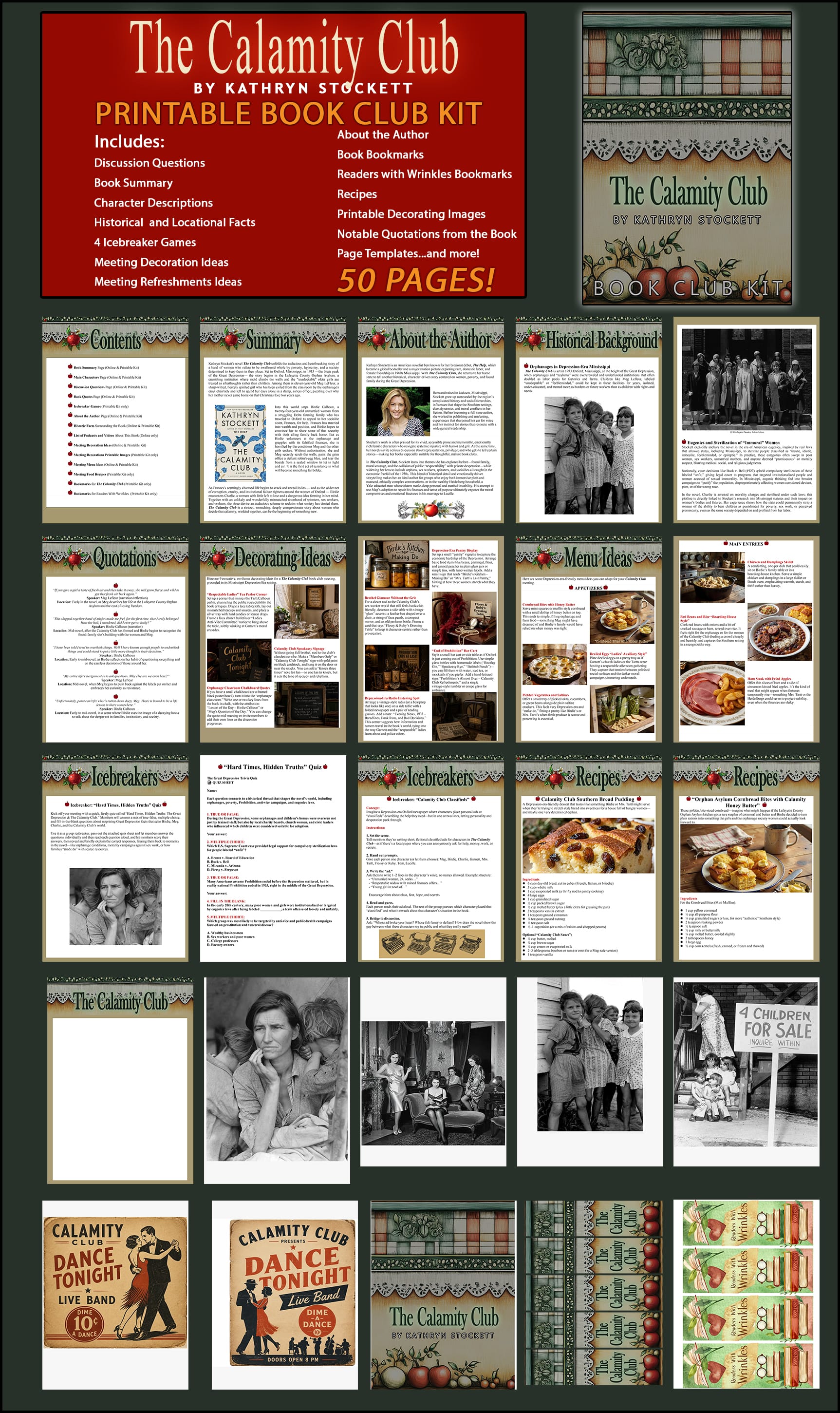
The Calamity Club printable BOOK CLUB KIT
The RWW book club kits provide everything you need to organize a great meeting with insightful discussions. These resources simplify book club preparation with character lists, book quotes, refreshment suggestions, recipes, and carefully prepared book club questions!
Comments